Which Shape of Corten Steel Planter Is Right for Your Garden?
Date:2026.07.22
Share to:
When designing a garden, most people focus on selecting plant varieties and coordinating color schemes, but they often overlook one key detail—the design of the planters. In garden landscaping, weathering steel planters are by no means merely containers for flowers; they are standalone elements of landscape design.
The design of rusty steel planters directly influences the final appearance of the garden in multiple ways and is the key distinction between an ordinary yard and a professionally designed landscape. Choosing the right design allows the overall space, architectural style, and plant arrangements to blend seamlessly; choosing the wrong design, however, can make even the most exquisite plants appear out of place and disjointed.
Spatial Proportions: Planters of different shapes have varying visual volumes. Tall, slender designs extend the vertical perspective, while wide, square designs create a sense of stability and solidity in the space, directly determining the overall harmony of the area.
Visual Style: Geometric, angular designs complement modern minimalist styles, while rounded, curved designs align with natural, rustic styles; the shape itself serves as a stylistic language.
Plant Growth: Planter shapes define the space and direction for root growth; their width, narrowness, depth, and shallowness directly accommodate the growth habits of different plants.
Landscape Layering: Combining planters of varying heights, shapes (square or round), and lines (curved or straight) enriches spatial depth and prevents the garden from appearing monotonous or flat.
Key Design Features and Core Applications of Mainstream Corten Steel Planters
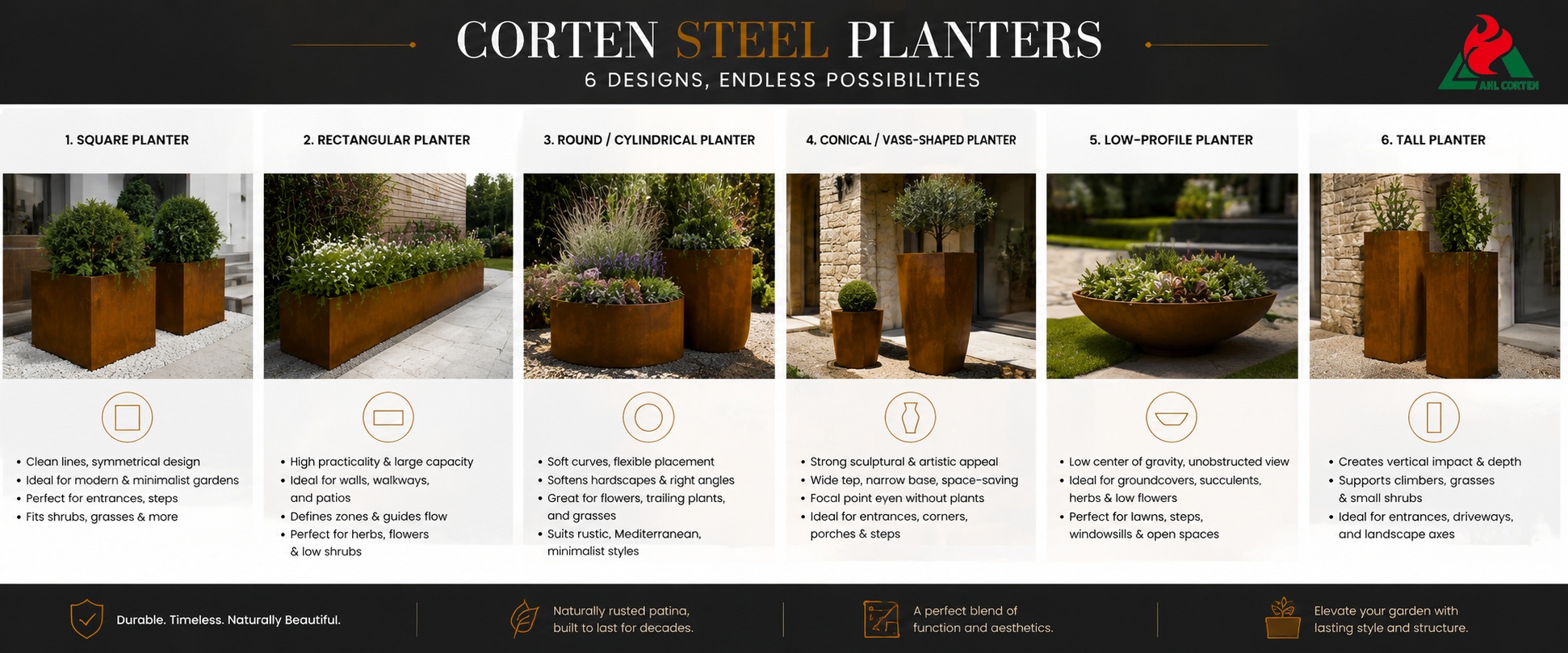
There is a wide variety of weathering steel planters available on the market, and each design has its own distinct style and practical advantages. Below is a detailed explanation of the suitable scenarios for six mainstream designs to help you precisely match your garden’s needs.
1. Square Weathering Steel Planters
With their clean lines and symmetrical structure, these square planters are a classic choice for modern, minimalist, and industrial-style gardens. Whether placed individually or arranged in groups, they create a clean and tidy visual effect.
The Square Corten Steel Planter exudes a strong sense of order, perfectly complementing geometric building facades and neatly laid paving surfaces, making it highly versatile. At the same time, its ample interior space accommodates medium-sized shrubs, ornamental grasses, and other greenery, preventing plants from becoming top-heavy and maintaining a balanced silhouette.
Placed symmetrically on either side of the garden gate or steps, these planters instantly create a sense of ceremony, enhancing the sophistication of your garden at a low cost.
2. Rectangular Rusted Steel Planter
The rectangular planter is an extension of the square design, with its greatest advantage being its maximum practicality. It can replace traditional flower beds, allowing for the mass planting of greenery, herbs, and low-growing shrubs to create a cohesive floral landscape.
Their elongated shape is ideal for placement along walls, walkways, and the edges of patios. They do not take up depth space while clearly defining functional zones and guiding foot traffic.
In the garden, they can serve as soft dividers to separate leisure areas, planting zones, and dining areas. Lighter and more stylish than solid fences, they achieve a triple effect: planting, zoning, and decoration.
Unlike the sharp lines of square planters, round and cylindrical planters feature soft, flowing lines with no obvious orientation restrictions, offering exceptional placement flexibility.
If your courtyard features predominantly straight-lined paving and right-angled architectural structures, pairing it with round planters can effectively soften the space, break up a rigid and formal atmosphere, and make the courtyard feel more natural and relaxed.
The vertical lines of cylindrical planters accentuate the natural forms of plants, making them ideal for bushy flowers, hanging greenery, and ornamental grasses, allowing the planter to blend seamlessly with the plants’ contours. They also complement a variety of styles—including rustic, Mediterranean, and minimalist—and are second only to square planters in versatility.
4. Conical/Vase-Shaped Weathering Steel Planters
Cone-shaped and vase-shaped planters possess a strong sculptural and design-oriented aesthetic. Unlike conventional planters, which serve primarily as “accent decorations,” these can become the visual focal point of a garden.
With their wide tops and narrow bases, these planters feature elegant contours and a small footprint that minimizes space usage while delivering a powerful visual impact. Even without lush greenery, they stand as artistic landscape accents in their own right.
They are ideal for placement on either side of an entrance, in a patio corner, or on porch steps, serving as the perfect finishing touch to create a personalized, artistic garden atmosphere.
5. Low-Profile Weathering Steel Planters
The low, flat design significantly lowers the visual center of gravity, ensuring it does not obstruct the view or create a sense of oppression, while delivering a subtle yet sophisticated landscape effect.
The shallow basin design is perfectly suited for groundcover plants, succulents, low-growing flowers, herbs, and other shallow-rooted greenery, providing ample space for lateral plant growth.
Ideal for placement at the junction of lawns and hardscaped areas, on either side of steps, or beneath windowsills, it creates a naturally layered landscape while maintaining an unobstructed view of the garden—perfect for gardens with expansive views but limited space.
6. Tall Corten Steel Planter
The tall planter creates a strong sense of vertical extension, guiding the eye upward to quickly become a visual landmark in the garden and enhancing the sense of depth in the space. With ample height and soil depth, it is suitable for climbing plants, tall ornamental grasses, and small shrubs, providing stable support for climbing greenery. Commonly placed at garden entrances, along both sides of driveways, and along landscape axes, just a few of these planters can create a dignified and sophisticated sense of ceremony, making them a staple iconic element in high-end garden design.
Choosing Corten Steel Planter Designs Based on Garden Size
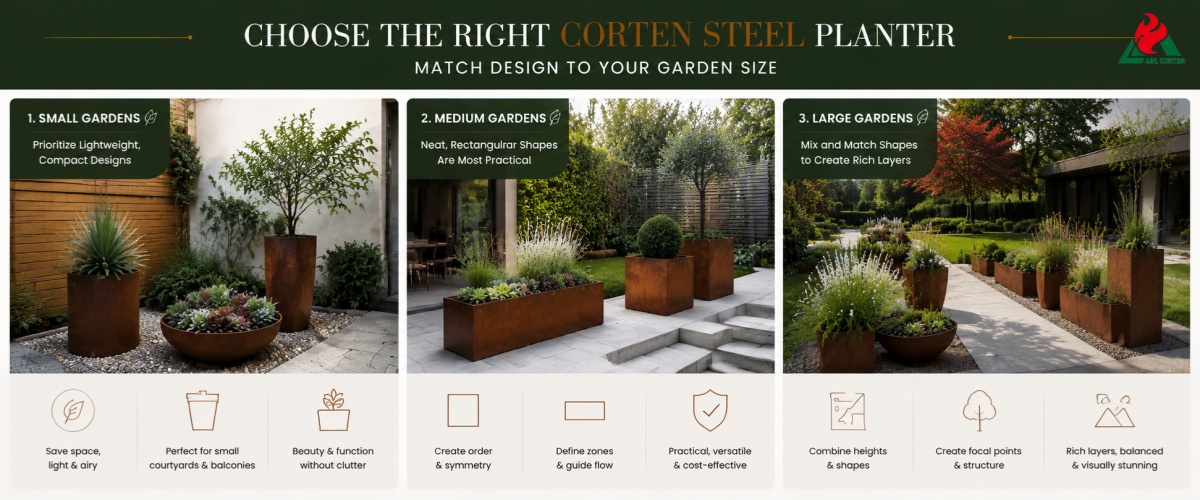
The same planter placed in gardens of different sizes can create vastly different effects. Selecting a design that matches your garden’s size helps avoid issues like overcrowding or an unbalanced, empty look, ensuring the landscape proportions are just right.
1. Small Gardens: Prioritize Lightweight, Compact Designs
In small gardens, avoid placing large, bulky planters with sharp edges, as they can make the space feel cramped and confined. Opt for round, conical, or narrow rectangular planters instead.
These designs take up minimal floor space and appear visually light. They meet both planting and decorative needs without encroaching on activity areas, creating a high-quality landscape with a compact footprint.
2. Medium-Sized Gardens: Neat, Rectangular Shapes Are Most Practical
Most medium-sized gardens are clearly divided into distinct zones for relaxation, planting, and circulation, making square and rectangular planters the optimal solution. Square planters can be arranged symmetrically to enhance a sense of spatial order, while rectangular planters allow for precise zoning and boundary definition. With their moderate proportions and high adaptability, they offer the best value for money.
3. Large Gardens: Mix and Match Shapes to Create Rich Layers
Large courtyards have ample capacity, and a single shape can easily appear sparse and monotonous; therefore, we recommend a mixed-style approach. Use tall planters to create focal points along the central axis, square and rectangular planters to define the boundaries of large zones, and round or conical planters as accents to brighten the space. By combining varying heights, curves and straight lines, and round and square shapes, you can create a three-dimensional landscape with a harmonious interplay of elements, avoiding the hollow and dull feel of large spaces.
Selecting Rusted Steel Planter Shapes Based on Plant Habits
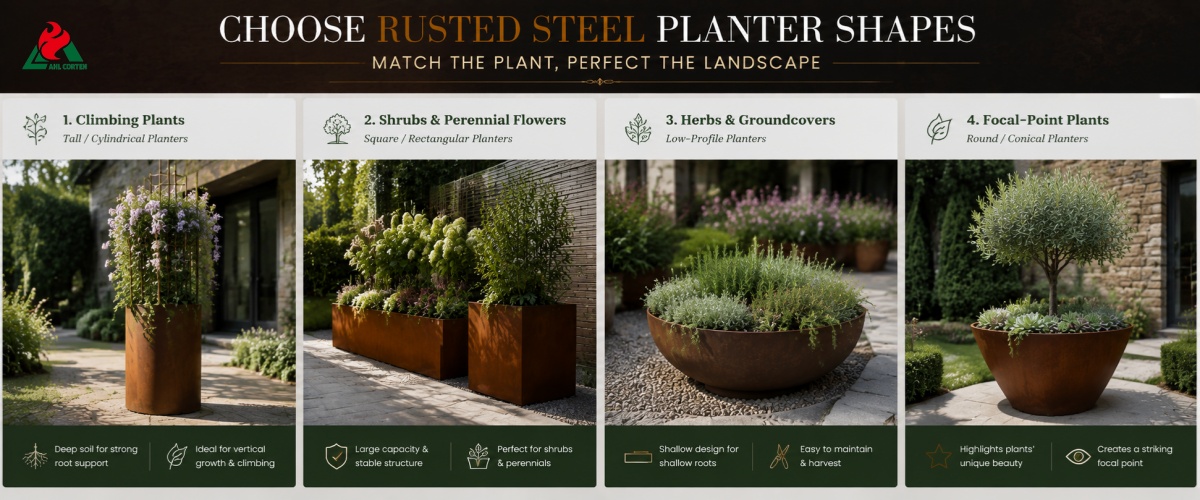
The shape of a planter not only affects its visual appeal but also directly determines the growth of the plants. Choosing a shape that matches the characteristics of the plant’s root system and growth habit is essential to balancing aesthetics with healthy growth.
1. Climbing Plants: Tall/Cylindrical Planters
Climbing plants such as clematis, ivy, and climbing roses require deep soil layers to stabilize their root systems and rely on vertical space to grow upward. Tall, cylindrical planters provide ample soil depth; when paired with supports, they perfectly showcase the plants’ climbing forms and create smooth, upward-reaching landscape lines.
2. Shrubs and Perennial Flowers: Square/Rectangular Planters
Shrubs and perennial flowers have well-developed root systems and vigorous growth, requiring stable and ample growing space. Square and rectangular planters offer large capacity and sturdy construction, supporting the plants’ growth over many years while preventing roots from bursting the planter or the plants from toppling over. They also facilitate landscaping in rows.
3. Herbs and Groundcover Plants: Low-Profile Planters
Groundcovers and herbs such as rosemary and thyme have shallow root systems and primarily spread horizontally. Low, wide planters accommodate their growing habits, allowing roots to spread freely without pressure. At the same time, the low profile makes pruning and harvesting convenient, offering exceptional practicality.
Focal-point plants—such as ornamental trees, distinctive succulents, and artistic foliage plants—are best paired with round or conical planters. The simple, understated design of these planters does not overshadow the plants, allowing their form to stand out and creating an elegant “one plant, one scene” effect.
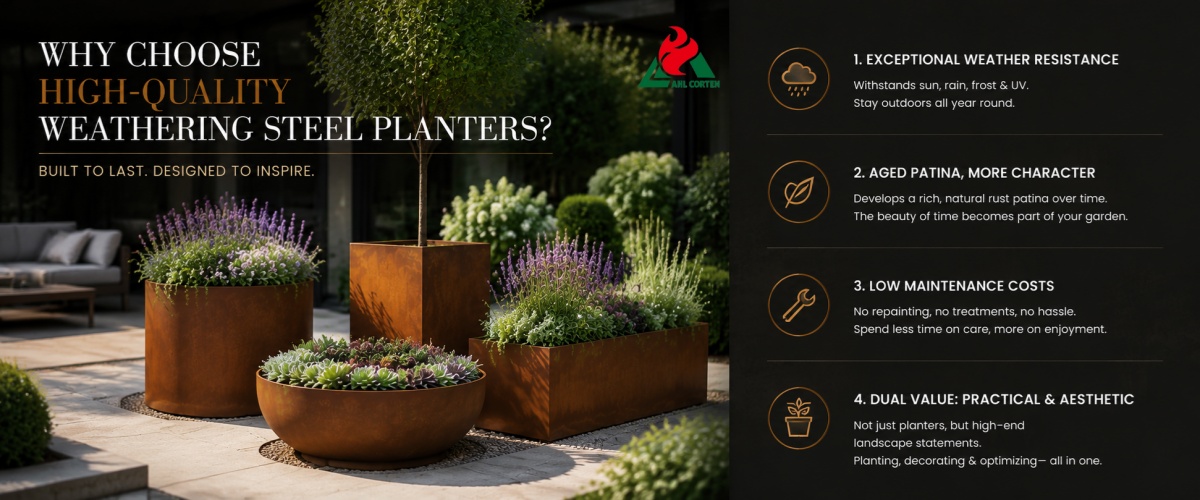
Compared to plastic, ceramic, and wooden planters, high-quality weathering steel planters are a long-term investment for your yard, combining practicality with value retention—offering advantages throughout their entire lifespan.
1. Exceptional Weather Resistance for Year-Round Outdoor Use
The surface of weathering steel forms a stable protective oxide layer that withstands sun exposure, rain, frost, and UV radiation. Unlike plastic planters that age and crack, or ceramic planters that freeze and shatter, these planters can remain outdoors year-round without needing to be moved indoors.
2. Aged Patina: Gains Character Over Time
Wooden planters fade and rot, while ordinary metal rusts through and breaks. In contrast, the rusted patina of weathering steel planters deepens and matures over time, developing richer textural layers—making the passage of time a unique decorative asset.
3. Low Maintenance Costs: Hassle-Free and Effortless
No need for frequent repainting,防腐 treatment, or pest control—maintenance costs are virtually zero. By eliminating cumbersome maintenance procedures, users can focus on enjoying their garden scenery, and the long-term cost-effectiveness far exceeds that of ordinary planters.
4. Dual Value: Combining Practicality and Aesthetics
They serve not only as fully functional planting containers but also as standalone, high-end landscape decorations. Integrating planting, landscaping, and space optimization into one, they are a core garden soft furnishing asset that ordinary planters cannot replace.
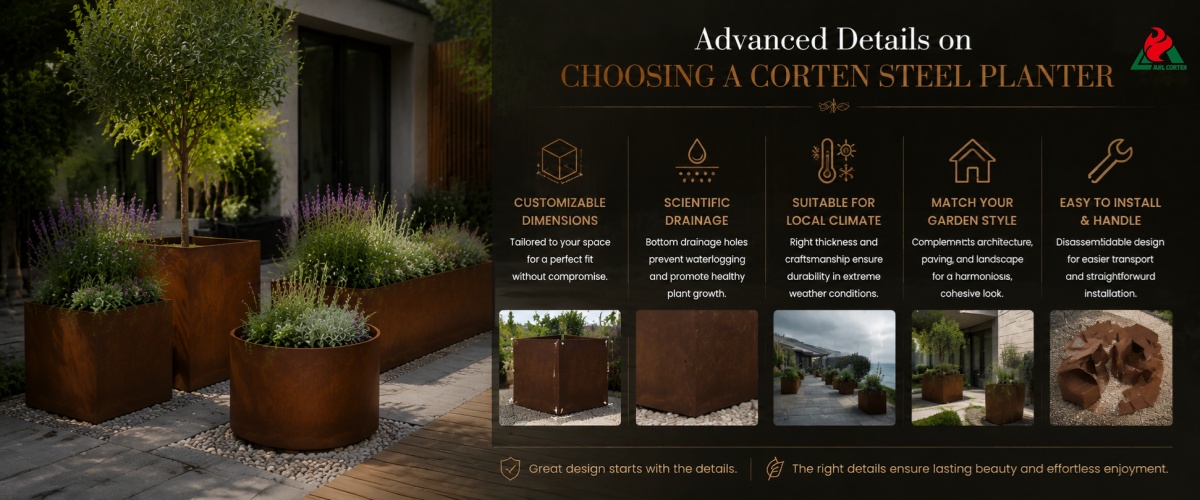
Advanced Details On Choosing a Corten Steel Planter
Choosing the right design is just the foundation; the specific details directly determine the long-term user experience, so be sure to verify these carefully during your purchase.
Customizable Dimensions: Since garden spaces and placement locations vary, planters with customizable dimensions can be precisely tailored to fit your site, eliminating the need for compromises.
Scientifically Designed Drainage: Bottom drainage holes are essential for plant health, effectively preventing waterlogging and root rot while accommodating the growth needs of various plants.
Suitability for Local Climate: In areas with extreme temperature fluctuations, high salt fog along the coast, or heavy rainfall, verify the panel thickness and manufacturing process to ensure the planter is built to withstand local extreme weather conditions and remains durable over time.
Compatibility with Overall Garden Style: Planters should complement the building’s exterior, paving materials, and the overall landscape aesthetic to avoid visual discord caused by stylistic clashes.
Ease of Installation and Handling: Large weathering steel planters are quite heavy, so prioritize models that can be disassembled for transport and are easy to install to avoid handling difficulties once delivered.
Frequently Asked Questions (FAQ) About Corten Steel Planters
Q1: What Shapes of Weathering Steel Planters are Best Suited for Small Gardens?
Prioritize round, conical, or narrow rectangular designs. They appear visually light and take up minimal floor space, preventing small areas from feeling cramped while providing an elegant, unobtrusive decorative effect.
Q2: How Do I Choose Between Square and Round Corten Steel Planters?
There is no absolute superiority; the key consideration is your stylistic needs. Square planters suit gardens seeking a neat, minimalist, or industrial aesthetic; round planters are ideal for gardens aiming to soften the space and create a natural, warm atmosphere. Mixing both styles can achieve a harmonious blend of strength and softness.
Q3: Can Rectangular Weathering Steel Planters Be Used As Space Dividers?
Absolutely. Their elongated shape is ideal for placement along walls, walkways, or the edges of patios. They can gently delineate functional zones and organize traffic flow, offering a more open and aesthetically pleasing alternative to solid fences.
Q4: What Plants are Suitable for Conical Planters?
They are ideal for focal plants such as topiary, succulents, and small shrubs. These planters have a strong artistic flair; when paired with simple plants, they complement each other without overshadowing one another, maximizing the visual impact of the landscape.
Q5: Do Tall Planters Take Up Too Much Space?
No. Tall planters have a small footprint at the base and rely on vertical extension to create a visual impact, so they don’t waste floor space. They are an excellent choice for creating a sophisticated, ceremonial atmosphere in small spaces.
Conclusion: Choose the Right Design to Let Planters Enhance Your Garden’s Aesthetic
Each design of rusted steel planters offers unique stylistic advantages and is suited to specific settings. Square planters are neat and versatile; rectangular ones are practical and all-purpose; round ones exude a soft, soothing charm; conical ones convey artistic sophistication; low-profile models offer an airy, natural feel; and tall ones radiate grandeur and dignity.
The optimal approach to selecting a design is never simply to “choose the most attractive style,” but rather to make a comprehensive match based on three key factors: the size of the garden, its overall style, and the characteristics of the plants.
A weathering steel planter that is precisely tailored to its setting is not merely an isolated ornament; it seamlessly integrates into the core of the garden’s landscape, making the entire space more harmonious, sophisticated, and endowed with a timeless, enduring aesthetic.

.jpg)
 Fill In The Inquiry