Are Corten Steel Planters Harmful to Plants and Pets?
Date:2026.05.28
Share to:
In modern garden and commercial landscape design, corten steel planters have become a popular choice. They combine a minimalist industrial aesthetic with a natural, vintage charm, and the reddish-brown rust patina that naturally forms on their surface over time adds character to the landscape the longer they are used.
Today, these planters are widely used in high-end private villa gardens, urban commercial plazas, and other settings, serving as a key landscape element that enhances the quality of the space. However, before purchasing and installing them, most homeowners and designers share the same safety concerns.
The primary concerns center on three key points: Will rusting steel planters leach harmful substances and damage plant roots? Could pets licking them or children touching them cause allergies or poisoning? And will planters exposed to intense summer heat burn family members or pets?
This article will comprehensively address the safety facts regarding weathering steel planters from various angles—including material properties, plant cultivation, pet safety, installation solutions, and daily maintenance—to help you completely eliminate purchasing concerns and confidently create a visually stunning, hazard-free modern garden landscape.
First, let’s establish a key conclusion: Genuine weathering steel planters are non-toxic to plants, pets, and humans, and pose no safety hazards. The “rust hazard” that people worry about is fundamentally different from the harmful rust found on ordinary sheet metal.
1. Material Composition Is Non-Biotoxic
The core alloy elements of weathering steel are iron, copper, chromium, and nickel—all harmless trace elements commonly found in nature. It contains no heavy metals such as lead, cadmium, or mercury that can cause bioaccumulation toxicity, and will not release toxic substances upon prolonged contact with soil or water sources.
The most significant characteristic of weathering steel is its self-protective nature. After undergoing cycles of wet and dry weathering, a dense crystalline oxide layer (natural rust layer) forms on its surface.
This protective layer firmly seals the internal structure of the steel, blocking subsequent electrochemical reactions and preventing the steel from continuing to rust or leach impurities. Once formed, the protective layer is stable, odorless, non-volatile, and free of toxins that could flake off.
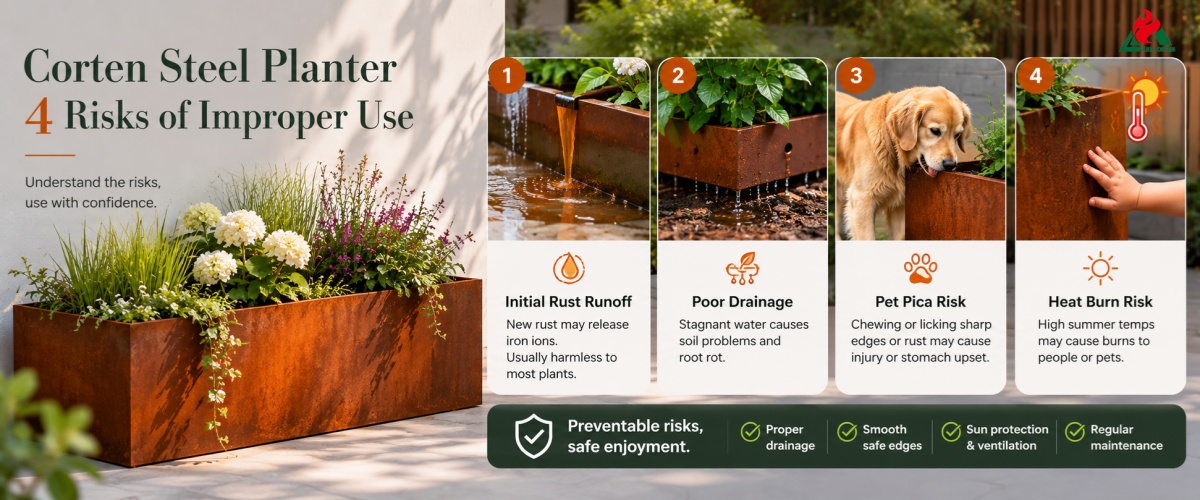
Corten Steel Planter Risks: 4 Issues Caused by Improper Use & Installation
Weathering steel is inherently safe, but complex outdoor environments, non-standard construction practices, and inadequate maintenance can give rise to four types of secondary risks. These issues are often mistakenly attributed to “toxic steel,” but they can in fact be completely avoided through proper procedures.
1. Initial Rust Runoff Affects Sensitive Plants
The first 1–6 months after installing a rusted planter box constitute the oxidation and stabilization period, during which the surface protective layer has not yet fully stabilized. Rainwater runoff during rainy weather can produce reddish-brown rust water containing free iron ions.
If this rusty water overflows over a large area and seeps directly into plant root systems, it can cause localized soil iron levels to exceed safe limits, resulting in minor effects on acid-loving plants sensitive to iron deficiency. Most common houseplants are not only unaffected but can even benefit from the trace iron supplementation.
2. Defective Drainage Design Leading to Soil Deterioration and Root Rot
Some non-standard corten planters on the market lack a scientifically designed drainage slope; their drainage holes are too small or blocked, making them highly prone to the formation of stagnant water layers.
Prolonged waterlogging and oxygen deprivation in the soil trigger reduction reactions, fostering mold growth and causing root rot in plants. At the same time, waterlogged conditions hinder the formation of a protective layer on the inner walls of the planter, accelerating localized rusting. This plant mortality is mostly caused by physical waterlogging, not material toxicity.
3. Pet Pica Behavior Causing Physical Injury
While the surface of weathering steel is non-toxic, cats and dogs exhibit pica behavior, such as licking and chewing on hard objects. Sharp, unpolished edges and rough rust particles peeling from the surface of planters pose safety hazards.
Prolonged chewing on the edges and accidental ingestion of rust particles can irritate the gastrointestinal mucosa, leading to vomiting and indigestion. Sharp edges may also scratch the pet’s mouth, nose, and tongue.
4. Risk of Burns Due to Heat Conduction in Summer
Steel is an excellent conductor of heat. Under the scorching summer sun, the surface temperature of the metal planter can rise rapidly. Plant leaves in close contact with the planter walls are prone to heat damage and wilting. Prolonged skin contact with the planter’s exterior by pets or children may also result in localized burns, representing a classic risk of physical heat exposure.
Corten Steel Planters and Plants: Safe, Controllable & Garden-Friendly
The health of garden plants depends not on the weathering steel material itself, but on three key factors: the rusting cycle, the drainage system, and soil maintenance.
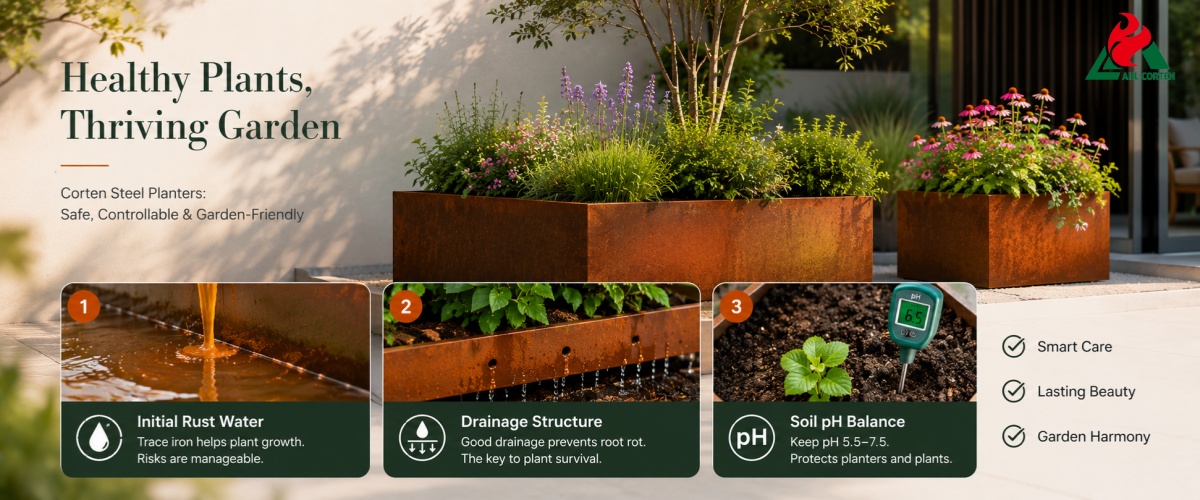
1. Initial Rust Water: Benefits Outweigh Drawbacks, and Risks Are Manageable
Iron is an essential trace element for plants to synthesize chlorophyll. A small amount of rust water seeping into the soil during the initial stages can replenish iron in plants and promote growth.
Only when highly concentrated rust water accumulates and comes into contact with extremely sensitive plants will mild leaf chlorosis occur. This issue can be completely avoided through color-locking pretreatment and proper drainage.
2. Drainage Structure: The Core Factor Determining Plant Survival
As the horticultural adage goes, “To nurture flowers, first nurture the roots; to nurture the roots, first control the water.” Ninety percent of plant deaths in planters stem from poor drainage, not issues with the steel material.
Non-standard planters that are flat without a slope or have blocked drainage holes create a sealed, waterlogged environment. Stifling heat in summer and freezing temperatures in winter can lead to root asphyxiation and rot, fostering the growth of harmful mold.
3. Soil pH: Impacting Plant Lifespan and Plant Health
Soil pH directly affects rusted steel planter stability and plant growth. Long-term use of highly acidic growing media and frequent application of acidic fertilizers can damage the protective coating on the planter’s inner walls, accelerating steel leaching.
Maintaining soil pH within the neutral to slightly acidic range of 5.5–7.5 protects the round planter box’s structure while meeting the growth requirements of most garden plants. In coastal areas with salt spray or environments with high-fertility maintenance, rigorous soil management and anti-corrosion barriers for the inner walls are essential.
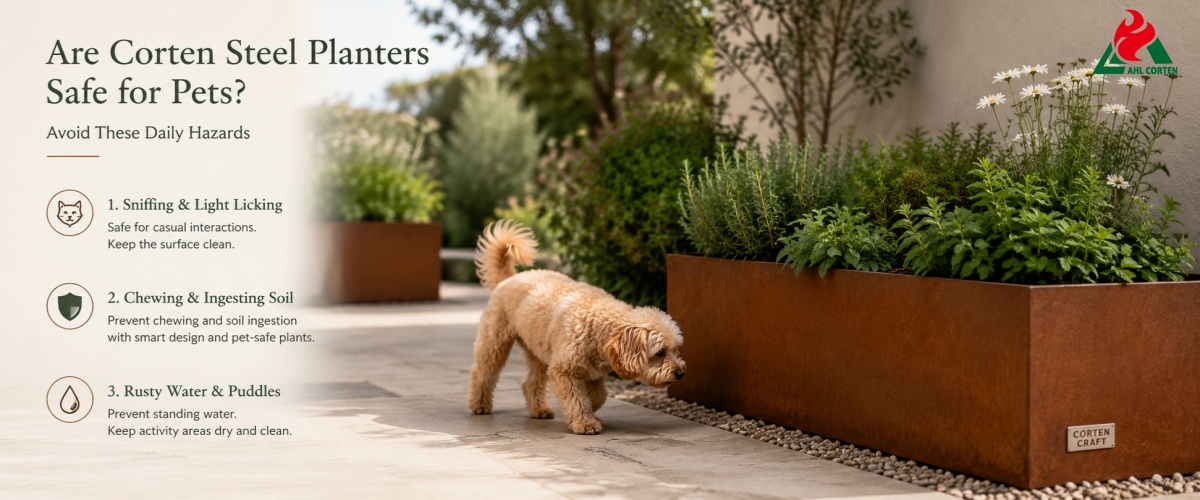
Are Corten Steel Planters Safe for Pets? Avoid These Daily Hazards
From a toxicological perspective, weathering steel is completely safe for cats and dogs. By considering the daily behaviors of household pets, simply avoiding risks in three specific scenarios ensures the harmonious coexistence of people, pets, plants, and planters.
1. Casual Sniffing and Light Licking of Planters
The stabilized protective layer of weathering steel is dense and safe; it does not release toxins through skin contact or dissolution by saliva. There is no need to worry if pets occasionally sniff or lightly lick the planter.
The only potential hazard is that the surface of outdoor planters can easily accumulate bird droppings, insect eggs, and pesticide residues. It is recommended to regularly rinse the exterior with clean water to keep it clean. When purchasing, prioritize planters with folded edges and rounded, polished corners to prevent sharp burrs from scratching your pet.
2. Chewing On Planters and Ingesting Rust Particles From Soil
Puppies and pets with pica tendencies often chew on the edges of planters or dig up and eat the soil. Rough rust particles and hard impurities entering the digestive tract can cause mechanical irritation, vomiting, and indigestion. To address this, consider using tall, upright corten planter boxes, or plant non-toxic herbs like rosemary or mint around the edges—plants that pets tend to avoid—to create a natural barrier.
3. Stepping In or Accidentally Ingesting Rusty Water
During the initial rusting phase of the corten steel planter, overflowing rusty water can easily pool on the ground. Pets may get their fur dirty from stepping in it, and accidentally ingesting this water—which contains high concentrations of iron ions and bacteria—can very easily lead to sudden diarrhea. By laying gravel at the bottom to channel runoff or installing a concealed drip tray, you can keep the pet’s activity area dry and clean, eliminating the risk of standing water.
3 Step Professional Installation for Creating Plant-Friendly Corten Steel Planters
Follow this three-step landscape-grade installation process to preserve the corten steel planter’s vintage texture, protect the plant roots, and ensure 30 years of long-lasting use.
1. Install an Inner Barrier Layer to Separate Metal from Soil
A protective barrier layer must be installed before filling with soil. In typical rainy climates, high-strength geotextile fabric is recommended, as it is permeable to water and air while preventing direct contact between the soil and the steel.
For environments with extreme cold, intense heat, or high acidity, we recommend applying 10–20mm extruded polystyrene (XPS) boards or applying an eco-friendly anti-corrosion coating. This provides both corrosion and rust protection while creating a temperature-regulating buffer layer to prevent roots from freezing in winter or scorching in summer.
2. Optimize Bottom Drainage and Establish a Ventilation and Convection System
Ensure that each planter has at least two drainage holes of 15mm or larger at the bottom. Lay a 5–8cm layer of expanded clay or crushed stone at the bottom as a drainage layer, then cover it with geotextile before filling with nutrient-rich soil.
Planters should be equipped with risers and placed 2–3cm above the ground to create a ventilation layer at the bottom, allowing accumulated water to dry quickly and eliminating root rot and soil suffocation at the source.
3. Factory-Grade Pre-Rusting and Color-Locking to Prevent Initial Contamination
1–2 weeks before transplanting plants, complete standardized pre-treatment: wipe away surface oil residue and spray water for 3–5 consecutive days to create a wet-dry cycle, accelerating the formation of a protective layer.
Once a uniform, fine initial rust layer has formed on the surface, apply a professional weather-resistant color-locking agent. Curing the rust layer in advance prevents rust-stained water from washing off later and contaminating the garden landscape and plants.
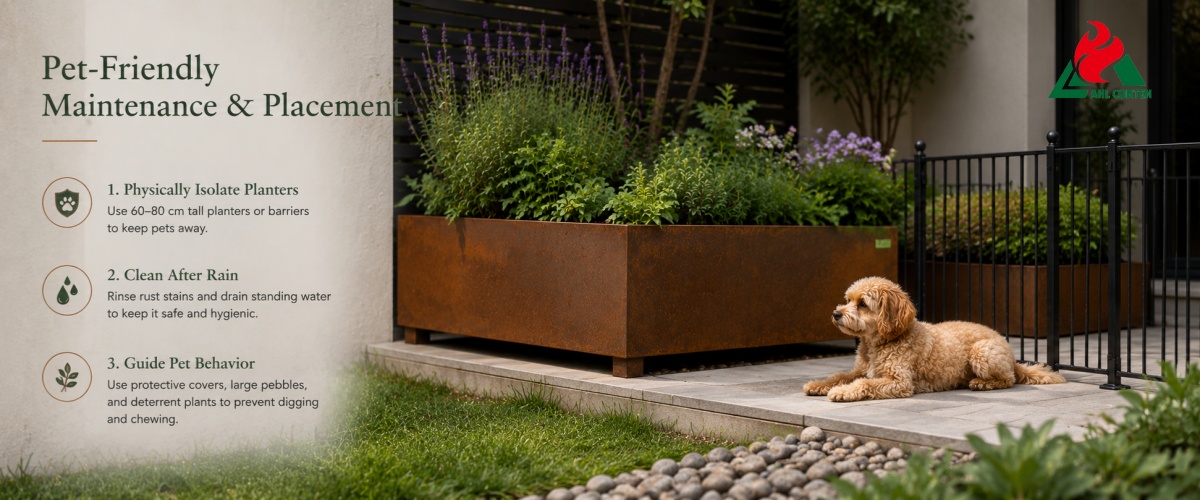
Pet-Friendly Maintenance and Placement Strategies for Homes
1. Physically Isolate Planters to Prevent Pet Contact
Households with pets should prioritize 60–80 cm tall freestanding or island-stylerusted planter boxes, which are beyond the reach of pets’ chewing and touching. For low planters, pair them with fences or green barriers to create a protective boundary that pets cannot approach.
2. Regular Post-Rain Cleaning to Eliminate Standing Water Hazards
During the initial rusting phase after installation, conduct a quick 5-minute inspection and cleanup following heavy rain. Rinse residual rust stains from the exterior walls and drain standing water to prevent the accumulation of bacteria and iron ions.
3. Behavioral Interventions to Prevent Digging and Chewing
For pets that dig or chew, lay a fine-mesh protective net or large pebbles (5 cm or larger) over the topsoil. Combine this with deterrent plants like catnip or lavender to gently correct your pet’s exploratory behavior.
Addressing Common Misconceptions to Completely Dispel Safety Concerns
1. Do Corten Steel Planters Continuously Leach Metal Toxins and Contaminate the Soil?
No. Weathering steel possesses self-limiting rust-proofing properties. After 6–18 months of outdoor wet-dry cycles, a dense and stable protective rust layer forms on the surface, completely blocking internal metal reactions. There is virtually no subsequent metal leaching, ensuring long-term stability of the soil environment.
2. Will Rust Water Alter Soil pH and Harm Plants?
This is a common misconception. Rust water primarily consists of iron oxide and iron hydroxide, which are chemically stable. Its solubility in standard gardening soil is extremely low; it will not acidify or alkalize the soil but will simply provide plants with natural iron.
3. Can Pets or Children Be Poisoned If They Occasionally Lick The Surface?
It is completely non-toxic. Genuine weathering steel contains no accumulated heavy metal toxins, and the stable rust layer emits no volatile substances or irritating metallic odors. As long as the product is a qualified item with rounded, polished edges, occasional contact or light licking poses no health risks.
4. Will the Inner Lining Affect Root Aeration and Drainage?
Not if made from compliant materials. High-strength geotextile fabric is permeable to water and air, allowing roots to breathe and water to circulate freely. XPS insulation boards are only attached to the inner walls for temperature regulation, and ample drainage channels are left at the bottom—this protects the roots and reduces the risk of root rot.
5. Is It Necessary to Apply An Additional Layer of Waterproof Sealant to Protect the Planter?
We do not recommend applying sealant indiscriminately. Ordinary sealants and varnishes have poor resistance to temperature fluctuations and will crack and peel off within 1–2 years. A sealed layer of stagnant water will form beneath the paint film, causing hidden corrosion that destroys the planter’s natural patina and shortens its lifespan.
6. Does the Peeling of the Surface Rust Layer Indicate Material Damage?
This is not damage but a normal aging process. Loose, flaky rust will naturally peel off in the early stages, eventually being replaced by a mature protective layer with uniform color, dense texture, and resistance to peeling. This is a sign that the planter is stabilizing and becoming durable over the long term.
Ready to Choose the Right Corten Steel Planters for You?
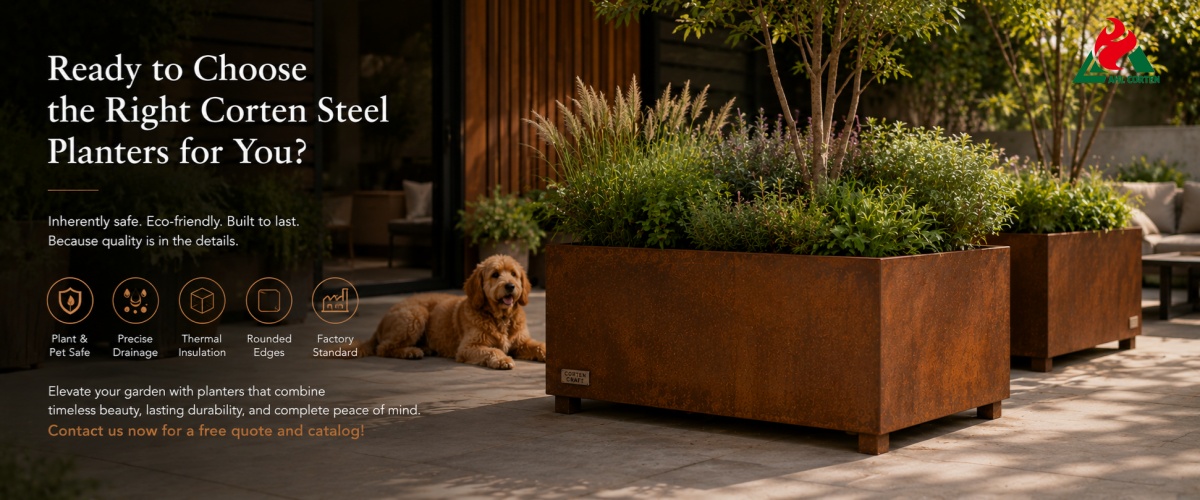
In summary, weathering steel planters are inherently safe, eco-friendly, and durable high-end landscape building materials. All safety hazards to plants, pets, and family members stem from non-standard manufacturing processes, incorrect installation, and improper maintenance—not the material itself. High-quality custom corten metal planters, through standardized factory processes such as color-locking, rounded edge polishing, thermal insulation, and precise drainage, can completely eliminate various secondary risks.
They preserve the vintage industrial aesthetic of your garden while safeguarding the health of your plants, pets, and family, making them the top choice for garden landscaping that balances aesthetics, practicality, and safety. Looking for custom metal planters that are completely hazard-free and built to last? Backed by professional factory craftsmanship, we offer a one-stop solution for your garden’s safety and aesthetic needs.Contact us now for a free quote and catalog!


 Fill In The Inquiry