5 Ways Corten Garden Rings Protect Trees & Boost Curb Appeal
Maintaining a healthy, visually striking landscape requires a practical balance between plant health and architectural structure. Corten garden rings provide a clean, long-lasting solution for framing trees, defining planting beds, and separating turf grass from decorative root zones.
A durable form of metal tree ring edging, a corten steel tree ring creates a sharp, permanent border that immediately elevates the overall look of residential yards and commercial grounds alike.
However, it is essential to set realistic expectations: while a corten tree surround helps contain mulch, suppress invasive weeds, and shield trunks from maintenance equipment, it is an architectural feature rather than a substitute for proper arboricultural care.
Rake alone cannot fix compacted soil or improper watering. To achieve the best results, the ring’s dimensions, profile height, and installation method must be tailored to the tree's root system and site conditions.
Below, we explore the top five practical ways a tree surround can protect trees and boost curb appeal, followed by a complete guide on sizing and installation without harming your trees.
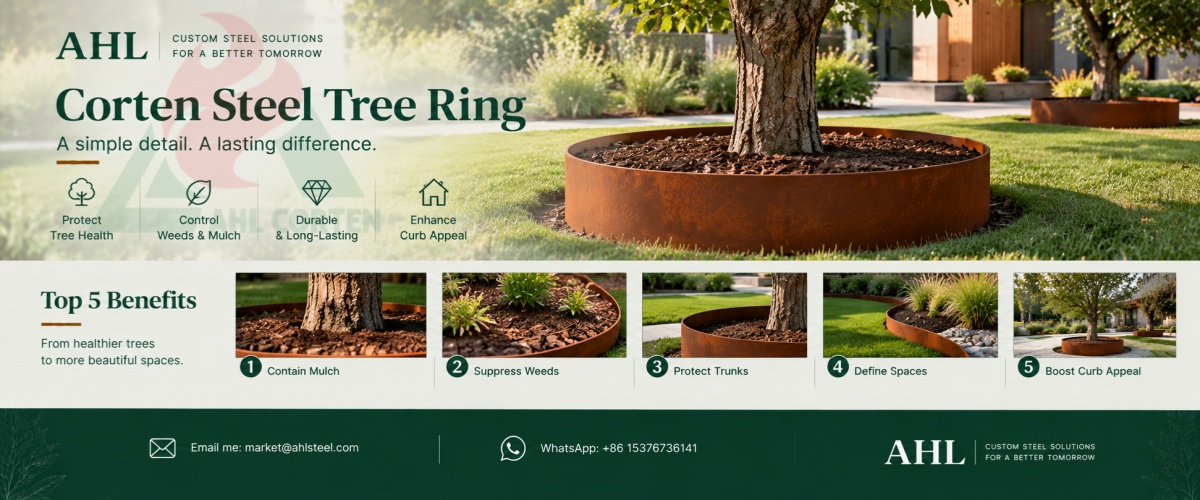
Quick Answer: What Do Corten Garden Rings Do?
| Benefit |
How the Ring Helps |
| Defines the Tree Bed |
Creates a clear, tidy boundary between the planting area and the surrounding landscape. |
| Contains Mulch |
Helps keep mulch, soil, or decorative gravel within the planting area instead of spreading onto the lawn or paths. |
| Reduces Lawn Encroachment |
Separates turf from the tree bed, helps limit grass spread, and can make mowing around the tree easier. |
| Helps Avoid Tool Damage |
Provides a visible maintenance boundary around the trunk area, helping keep mowers and string trimmers away from the bark. |
| Adds Visual Appeal |
Brings a consistent, architectural finish to tree beds and helps create a more intentional landscape design. |
5 Ways Corten Garden Rings Protect Trees
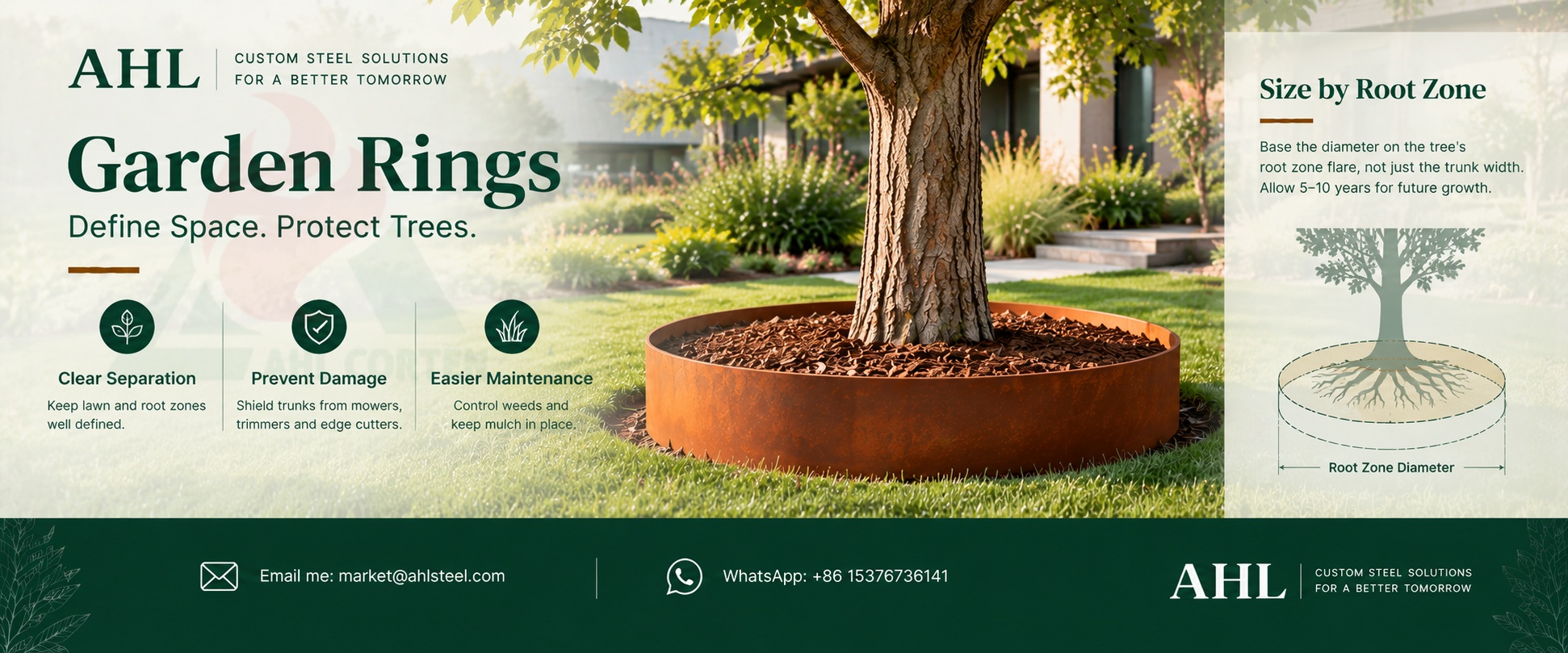
1. Define Planting Areas and Reduce Accidental Damage
The primary advantage of installing garden rings is to create a clear, physical division between lawn areas and sensitive root zones. Open soil surrounding tree trunks is frequently invaded by encroaching turf grass and weeds, competing directly for soil nutrients and moisture. Establishing a dedicated perimeter allows property owners to maintain clean separation, simplify weed management, and establish dedicated mulch beds.
Beyond defining space, corten rings act as a defensive barrier against mechanical maintenance hazards. Lawn mowers, string trimmers, and edge-cutters are the leading causes of accidental trunk damage. Repeated impacts from string trimmers strip the outer bark and disrupt the tree's vascular layer (cambium), leading to permanent scarring, stunted growth, or disease infection. A raised steel ring keeps maintenance equipment at a safe distance.
Technical Detail — Sizing by Root Zone: When specifying ring dimensions, base the diameter on the tree's overall root zone flare rather than current trunk width. Select a size that accommodates anticipated trunk expansion over the next 5 to 10 years to prevent root constriction or the need for early replacement.
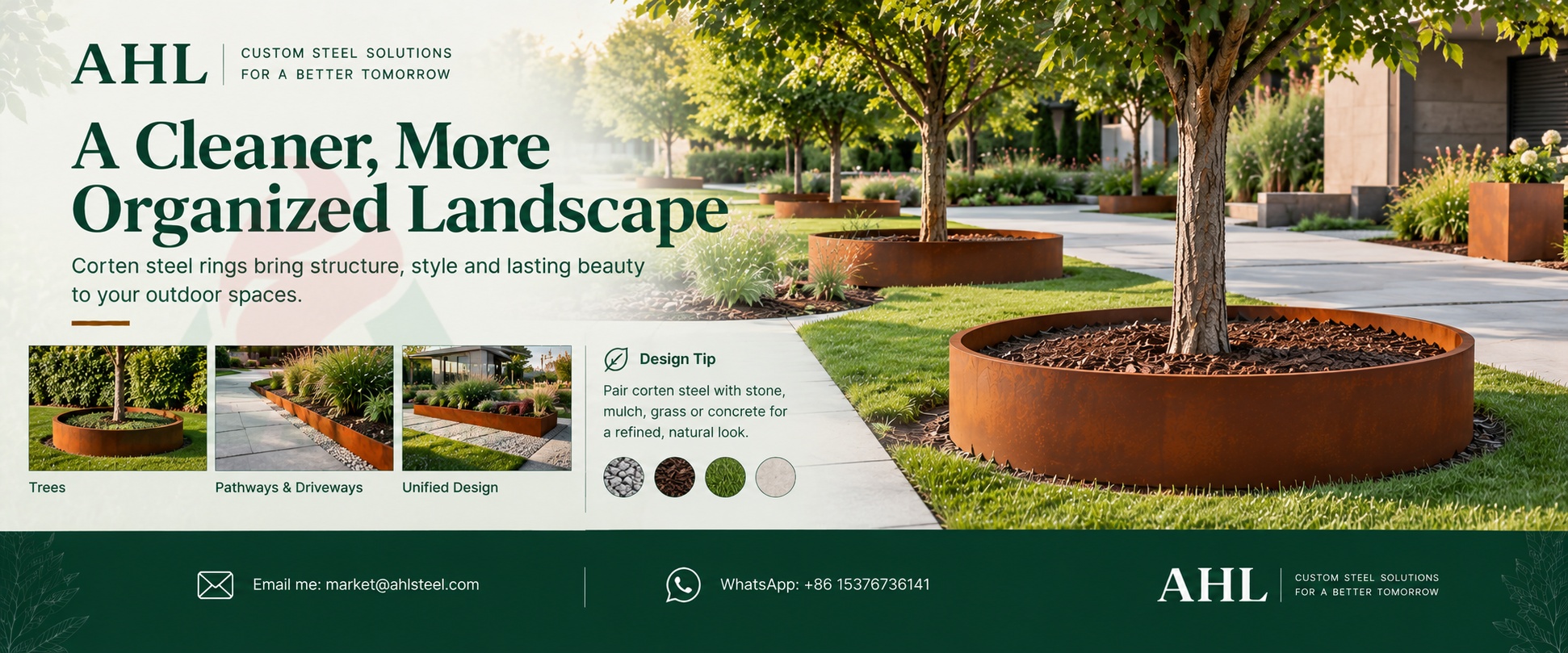
2. Create a Cleaner, More Organized Landscape
Circular steel edging introduces geometric balance and visual order to open landscape designs. Whether installed around specimen trees on expansive lawns or aligned along driveways and stone pathways, Corten rings establish deliberate focal points. Their clean lines frame soft plantings, transforming isolated trees into intentional design features rather than standalone elements.
Using consistent ring sizes, uniform profiles, and repeated design themes creates cohesive visual continuity across both residential neighborhoods and large commercial plazas. Matching tree rings with complementary metal features—such as Corten lawn edging, raised planter boxes, or architectural screens—brings a polished, professional unity to the entire property.
Design Tip — Material Coordination: The warm, organic brown and orange tones of weathered Corten steel provide striking visual contrast when paired with light gray stone gravel, dark hardwood mulch, bright green lawn turf, or polished concrete paving.
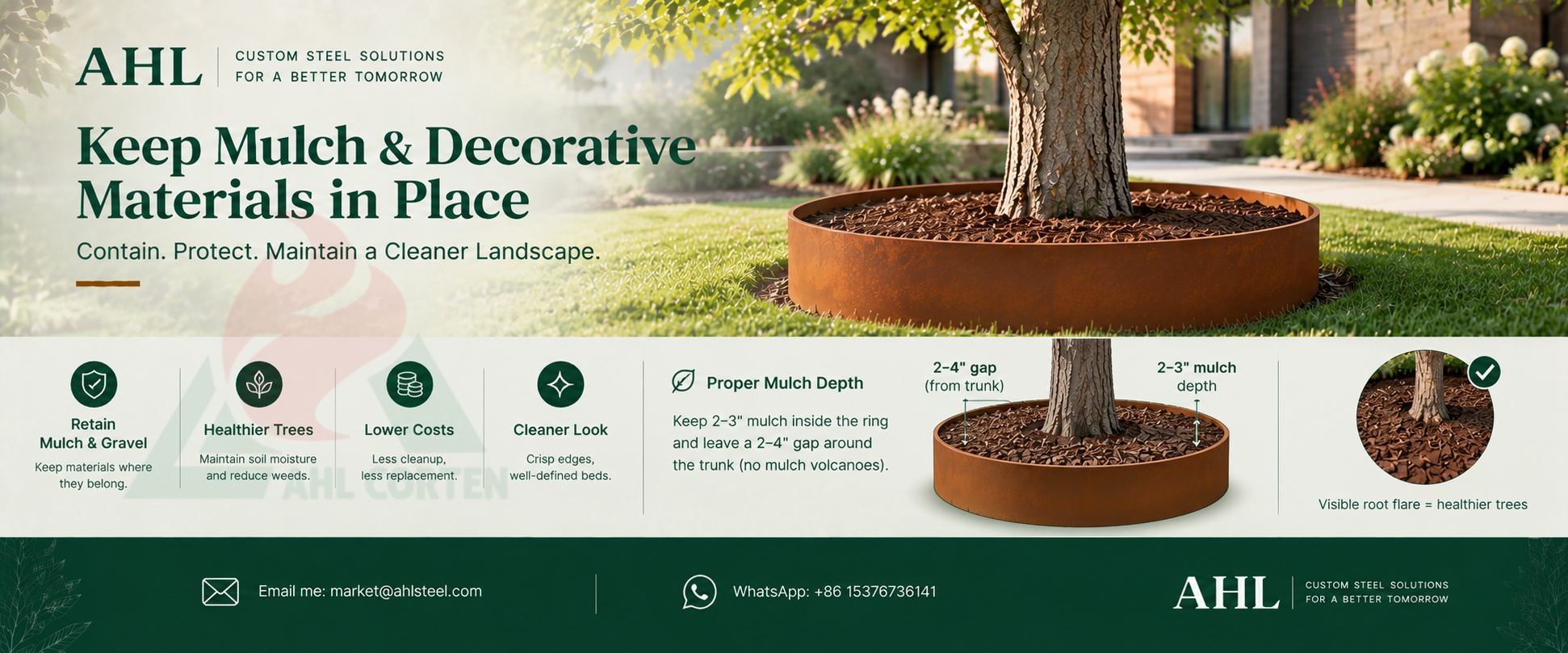
3. Keep Mulch and Decorative Materials in Place
Wind, heavy rain, and routine garden maintenance often scatter mulch, compost, or decorative gravel across nearby lawns and walkways. Corten tree rings serve as a retaining barrier, locking organic top layers and decorative aggregates firmly inside the bed. Containing these materials minimizes ongoing cleanup, reduces material replacement costs, and maintains a clean, crisp edge along turf lines.
Proper mulch retention directly benefits tree health by maintaining steady soil moisture and suppressing weed growth. However, applying mulch correctly inside the ring is critical:
Technical Detail — Protecting the Root Flare: Maintain a proper mulch depth of 2 to 3 inches inside the ring, but never pile material directly against the tree trunk (commonly known as "mulch volcanoes"). Always leave a 2- to 4-inch gap around the base to keep the root flare visible. Trapping excess moisture directly against the bark promotes fungal decay, pest infestations, and trunk rot.
4. Develop a Durable, Low-Maintenance Garden Feature
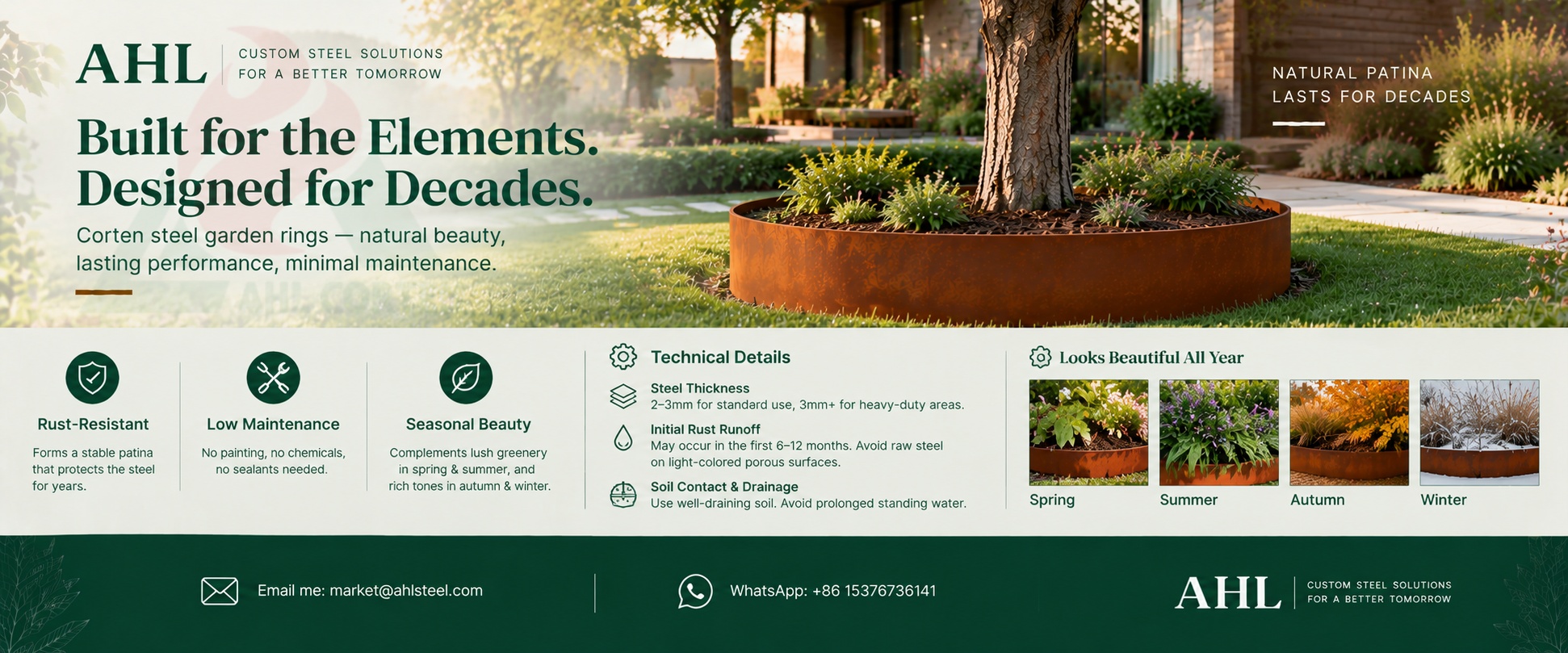
Unlike traditional timber edging that rots, or plastic borders that crack under freeze-thaw cycles, Corten steel is built for decades of outdoor exposure. When exposed to alternating wet and dry weather, the alloy forms a tightly adhering, stable oxide layer (patina). Once fully developed, this patina acts as an impervious barrier against deep structural rust, eliminating the need for periodic painting, chemical rust-inhibitors, or protective sealants.
The natural aesthetic of Corten steel continuously adapts to seasonal changes. During spring and summer, its rich earthy tones complement vibrant green foliage; in autumn and winter, the deep reddish-brown patina harmonizes beautifully with dormant grass and architectural hardscapes.
Technical Details — Weathering Considerations & Material Life:
- Steel Thickness: Choose a minimum thickness of 2mm to 3mm for standard garden applications, or 3mm+ for heavy-duty commercial zones subject to high impact.
- Initial Rust Runoff: During the first 6 to 12 months of natural weathering, rain will wash light iron oxide runoff onto surrounding surfaces. Avoid placing raw, un-weathered steel directly on porous, light-colored concrete or stone unless a pre-rusted finish or protective drainage channel is utilized.
- Soil Contact & Drainage: Ensure the base ring is installed in well-draining soil. Prolonged standing water or continuously submerged conditions can disrupt the patina-forming process and shorten service life.
5. Increase Curb Appeal with a Professional Finish
Installing weathering steel tree rings delivers a high-end, custom appearance that elevates the overall presentation of any property. By framing entrances, defining front-yard planting beds, and highlighting key specimen trees, these features signal deliberate design and meticulous grounds management. For commercial properties, hotels, and residential estates, this polished look creates a memorable first impression for visitors, clients, and prospective buyers.
Custom manufacturing options allow tree rings to be tailored precisely to the architectural requirements of any project. AHL Group offers extensive OEM/ODM customization across key specifications:
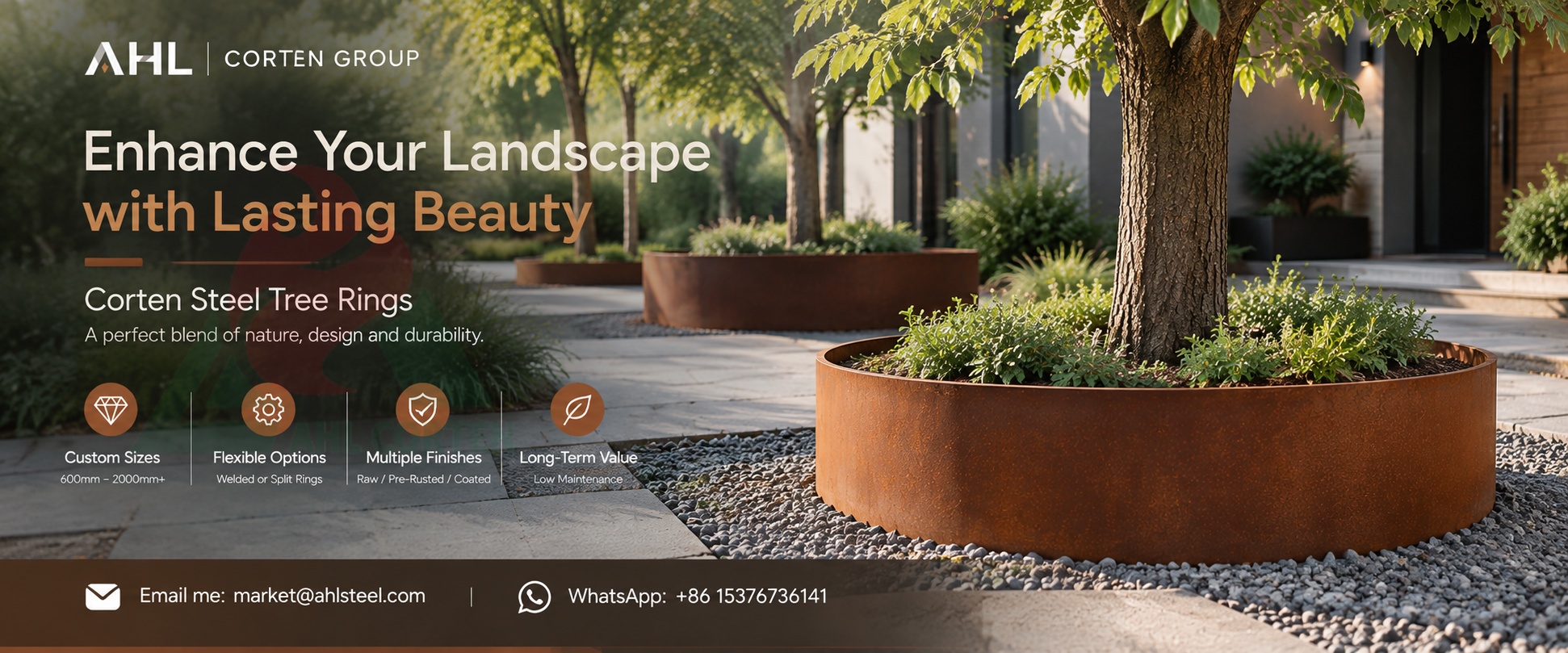
- Custom Diameters & Profile Heights: From compact 600mm residential rings to expansive 2000mm+ commercial tree surrounds.
- Flexible Fabrication Formats: Single-piece welded rings for new plantings, or modular bolt-together split rings designed for wrapping around established trees without root disturbance.
- Surface Finishes: Available in natural raw steel (for natural weathering), factory pre-rusted patina (for immediate installation without runoff), or custom protective coatings.
While professional landscaping improvements consistently enhance visual presentation and property marketability, choosing timeless, low-maintenance materials like corten steel ensures long-term value without the burden of ongoing repair costs.
How to Choose and Install Corten Garden Rings
Please strictly follow these standard steps during selection and installation to ensure a long-lasting, healthy, and stable tree ring feature:
1
Sizing & Space Planning
Verification Method: Measure the mature root flare; ensure a clear gap of at least 12 to 18 inches between the bark and the inner edge.
Measure the tree's root flare area rather than just its juvenile trunk. Providing adequate distance prevents trunk constriction as the tree matures, promotes healthy air exchange, and accommodates anticipated growth over the next 5 to 10 years without requiring early replacement.
2
Profile Height Selection
Verification Method: Check that 1/3 to 1/2 of the ring depth is buried for flush installations, or confirm structural anchoring for raised profiles.
Select a profile height appropriate for your landscape style, typically ranging from 100mm to 300mm. When flush-mounting with lawn borders, partially bury the lower edge for ground stability. For elevated planter rings, verify wall thickness and internal anchoring stakes to prevent outward bowing under soil pressure.
3
Site Preparation & Trench Excavation
Verification Method: Level the trench base with sand or gravel; confirm major structural roots remain undamaged.
Trench a circular guide path at a consistent depth along the planned boundary. Level the trench bottom using packed gravel or coarse sand to ensure a stable foundation. Never cut, sever, or heavily compact major structural tree roots during excavation.
4
Assembly & Ground Anchoring
Verification Method: Check that joining seams sit completely flush and ground stakes hold the ring rigidly without wobbling.
For modular split rings around established trees, wrap the segments around the trunk, align the joining tabs, and fasten securely with stainless steel hardware. Drive internal ground anchoring stakes firmly into the soil to lock the tree ring permanently in place.
5
Material Selection & Quality Verification
Verification Method: Inspect steel plate thickness (minimum 2mm–3mm) and confirm smooth, burr-free laser-cut edges.
Evaluate steel grade, plate thickness, and manufacturing precision prior to installation. Specifying factory-direct, pre-engineered Corten steel solutions ensures precise curvature tolerances, structural integrity, and seamless hardware fit for long-term outdoor performance.
Frequently Asked Questions
Are Corten Steel Tree Rings Safe for Trees?
Yes, corten steel tree rings are completely safe for trees when properly sized and installed. Weathered steel does not leach harmful synthetic chemicals or toxic coatings into the surrounding soil. To protect tree health, ensure the ring leaves sufficient clearance around the trunk flare for growth, keep mulch a few inches away from the bark to prevent rot, and allow natural soil aeration and water drainage.
What Size Metal Tree Ring Edging Should I Choose?
Choose a tree ring diameter based on the tree's root flare and anticipated growth over the next 5 to 10 years, rather than just its current trunk width. As a general rule, provide at least 12 to 18 inches of clearance between the bark and the inner edge of the ring. For smaller specimen trees, a 600mm to 900mm ring works well, while mature or fast-growing commercial trees usually require a 1200mm to 2000mm+ surrounds.
Does Corten Steel Stain Concrete or Paving?
During the initial weathering phase (typically the first 6 to 12 months), rain will wash light iron oxide runoff onto surrounding porous surfaces like light-colored concrete or natural stone paving. To prevent staining, you can install the ring on gravel or stone beds, select factory pre-rusted corten steel, or allow the natural patina to fully stabilize before placing it near sensitive hardscapes.
Can Corten Garden Rings Be Customized for Large or Established Trees?
Yes. For existing, established trees where a solid ring cannot be slid over the canopy without root or branch disturbance, metal garden rings can be custom fabricated in modular, split bolt-together segments. These multi-piece systems wrap seamlessly around established trunks and fasten with flush internal hardware, offering custom diameters, wall heights, and steel thicknesses tailored to large commercial or residential projects.
Conclusion: Protect Trees While Elevating Garden Design
Incorporating corten ring planter into your outdoor landscape achieves the perfect balance between practical plant protection, long-term material performance, and sophisticated visual appeal.
By creating clean, physical borders around root zones, these rings shield delicate trunks from maintenance equipment, retain essential mulch layers, and eliminate weed encroachment.
Simultaneously, the rich, evolving patina of weathering steel introduces timeless architectural warmth that enhances lawns, pathways, and commercial plazas for decades without ongoing maintenance.
Whether you are designing a high-end residential yard or specifying modular surrounds for a public commercial development, AHL Group provides full OEM/ODM custom manufacturing to bring your landscape vision to life.
From custom diameters and split bolt-together configurations to proprietary pre-rusted finishes, we deliver engineered rusted steel tree rings tailored to your exact project specifications.
Need a Factory Quote for Corten Steel Tree Rings?
Send your drawings, size list, quantity, and destination country. Corten Factory can support custom weathering steel fabrication, export packing, and project quotation.
Back

 Fill In The Inquiry