Focus On The Latest News
Home > News
Do Corten Steel Water Features Need a Pump?
Date:2026.10.09
Share to:
While a corten steel water feature might appear to be nothing more than a simple metal basin, a water wall, or a fountain, its performance relies on far more than just the steel structure itself. The need for a water pump depends on whether the feature is designed for a static display or intended to create a dynamic effect with continuously flowing water.

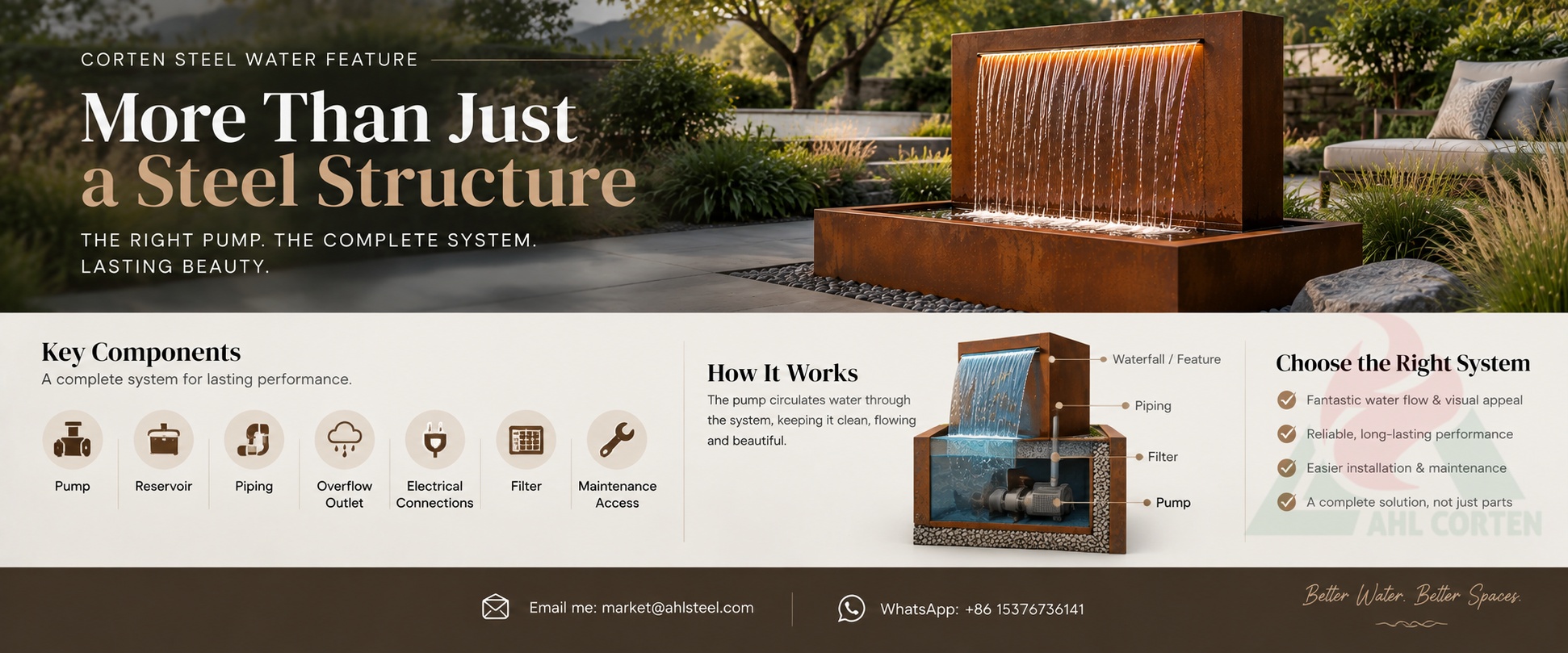
A complete outdoor water fountain system typically comprises a pump, a reservoir, piping, an overflow outlet, electrical connections, a filter, and an access point for maintenance. For homeowners and landscape professionals alike, understanding these components is a crucial part of the planning process.

This guide details when a pump is required, how the circulation system operates, which pump types perform best, and why selecting a complete, well-integrated system yields a more reliable and aesthetically pleasing water feature than sourcing individual components separately.

corten water fountain pump

 
Want the Latest Catalog of Metal Water Features? Contact Us!


Quick Answer
: Do Water Features Need a Pump?


Most corten steel fountains need a pump if they are designed to circulate water. A pump moves water from a hidden reservoir or basin to a spout, water wall, blade, bowl, or waterfall outlet, then returns it for reuse.

A still water bowl or decorative basin can work without a pump, but it will not create movement, sound, or continuous circulation.
For a reliable feature, choose a pump based on the water feature's lift, flow requirements, pipe length, and reservoir capacity.

Water Feature Type Does It Need a Pump? What the Pump Does Best For
Still Corten Water Bowl Not always. No circulation; water remains static. Minimalist displays and reflective garden accents.
Corten Fountain Bowl Usually yes. Lifts water to a central spout or bubbler. Patios, courtyards, and focal-point gardens.
Corten Water Wall Yes. Feeds water evenly across the spillway or water blade. Modern residential and commercial landscapes.
Corten Waterfall Yes. Delivers sufficient flow and head pressure to the outlet. Larger gardens, hotels, and feature landscapes.
Corten Rain Curtain Yes. Creates a stable, continuous curtain of water. Architectural entrances and premium outdoor spaces.
Corten Pondless Feature Yes. Recirculates water through an underground reservoir. Safer, cleaner, low-profile landscape designs.
Want the Latest Catalog of Metal Water Features? Contact Us!


When Does a Water Feature Need a Pump?


A Pump Is Needed to Move Water


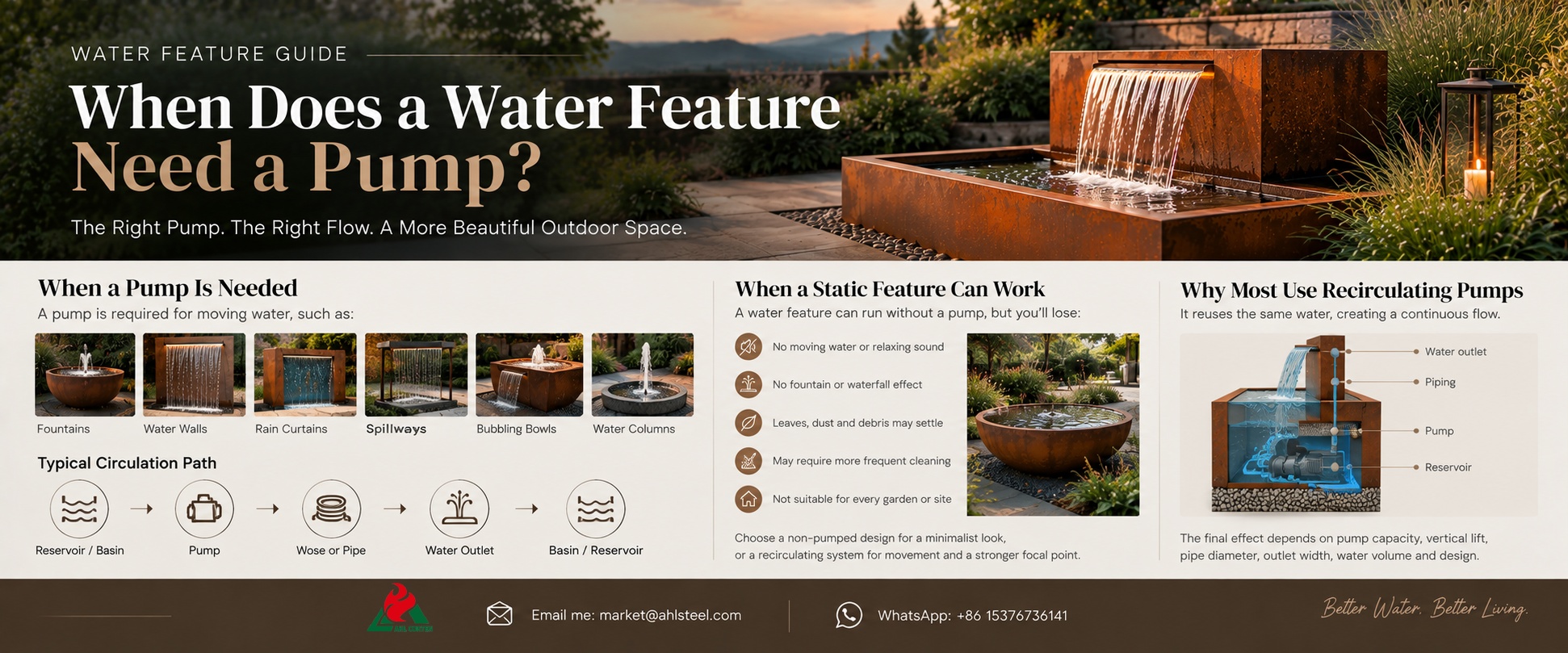
Fountains, waterfalls, water walls, rain curtains, spillways, bubbling bowls, and water columns all need a pump to create continuous movement. The pump is not simply an optional accessory—it is the operating engine behind a recirculating water feature.

Typical Circulation Path:

Reservoir or basin → Pump → Hose or pipe → Water outlet → Basin or reservoir

Water is collected in a hidden or visible basin, pumped upward through concealed pipework, released through a spillway, nozzle or outlet, and then gravity returns the water to the collection area for reuse. Without a pump, there is no circulation, no fountain effect, and no continuous waterfall or water wall.


When a Static Water Feature Can Work Without One


A
Corten steel bowl, shallow reflecting basin, or decorative rainwater vessel can function without a pump if the owner wants a quiet, still-water appearance. However, there are important trade-offs:

No moving water or relaxing water sound

No fountain or waterfall effect

Leaves, dust, and debris may settle more easily

Stagnant water may require more frequent cleaning depending on climate and location

Standing water may not be suitable for every garden or site

Customers who prefer a minimalist reflective water feature can choose a non-pumped design, while those seeking movement and a stronger landscape focal point should consider a complete recirculating system.


Why Most Outdoor Fountains Use Recirculating Pumps


Most
modern outdoor fountains reuse the same water through a recirculating pump system. The pump sends water upward through hidden pipes, and gravity returns the water to the reservoir. The final result depends on more than simply turning on a pump—pump capacity, vertical lift, pipe diameter, outlet width, water volume, and water-feature design all influence the flow effect.


Want a Free Quote on Corten Steel Water Fountain? Contact us! 


How Does a Pumped Corten Water F
ountain
 Work?


1. The Core Components of a Recirculating System


An
outdoor water feature pump system consists of several integrated components that work together to create a reliable, low-maintenance water display.
Component Function Buyer Consideration
Submersible Pump Moves water through a recirculating system. Check flow rate, head height, noise level, energy use, and service access.
Reservoir or Basin Stores return water before it is recirculated. Confirm capacity, load-bearing design, water-level allowance, and maintenance access.
Pipework and Hose Carries water from the pump to the outlet. Review pipe diameter, connection quality, route length, concealment, and access for repairs.
Spillway, Nozzle, or Outlet shapes and releases the visible water effect. Specify gutter-sheet width, required flow, sound level, water drop, and splash control.
Filter or Pump Pre-Filter Helps protect the pump from leaves, sediment, and other debris. Consider cleaning frequency, replacement availability, and convenient access for servicing.
Power Connection Runs the pump safely and reliably. Confirm local electrical compliance, GFCI/RCD protection, outdoor-rated connections, and weatherproof covers.

2. From a Hidden Reservoir to a Water Wall or Waterfall


Water is collected in a basin or hidden underground reservoir, pumped to the highest point of the feature, released through a spillway or outlet, and then returned to the water collection area. A level installation matters—a weir wall, spillway, or blade that is even slightly uneven may send more water to one side, increasing splashing and reducing the visual quality of the flow.


3. Why the Pump Must Stay Submerged

Most submersible pumps need to remain covered with water during operation. If water levels become too low, the pump may run dry, overheat, or lose performance. Hot weather, wind, evaporation, splash, and long operating hours can reduce water levels. Users should check water levels regularly and follow the pump manufacturer's minimum-water-level guidance.


What Type of Pump Is Best for a Corten Water Feature?


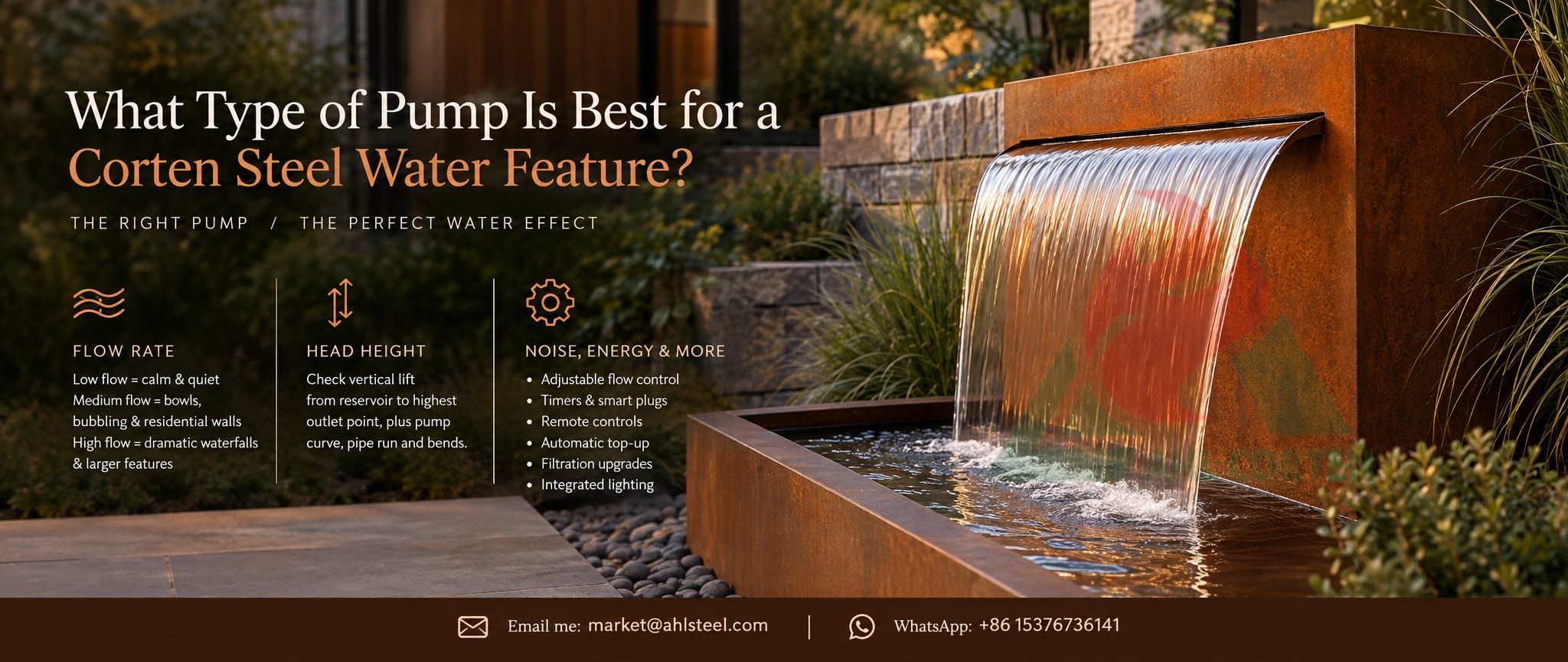
1. Choose the Flow Rate for the Water Effect You Want


Flow rate directly affects the appearance and sound of the water feature:

Low flow creates a calm, quiet, gentle water effect
Medium flow suits small fountain bowls, bubbling features, and residential water walls
Higher flow creates a stronger waterfall, wider sheet of water, or more dramatic commercial landscape feature

The correct flow rate should be matched to the outlet style, water feature size, desired sound, and acceptable splash level—not generic one-size-fits-all pump numbers.


2. Check the Head Height Before Choosing a Pump


Head height is the vertical distance the pump must lift water from the reservoir to the highest outlet point. Buyers should not choose a pump based only on its maximum flow rate—they should check the pump performance curve to see how much flow remains at the actual installation height.


The higher the
metal water feature is, the longer the pipe run, and the more bends in the system, the more pump performance is required. Ask a technical specialist, installer, or pump supplier to confirm the pump curve, required flow rate, pipe diameter, and outlet requirements before final production.


3. Consider Noise, Energy Use, Access, and Controls


Select a pump that is quiet, durable, suitable for the planned operating hours, and easy to remove for servicing. Optional upgrades include:

Adjustable flow control
Timers
Smart outdoor plugs
Remote controls
Automatic water top-up systems
Filtration upgrades
Integrated lighting systems

Complete water-feature solutions are more reliable than buying unrelated parts separately. A professional supplier should confirm the water feature dimensions, outlet style, water lift, pipe route, climate, power availability, and maintenance needs before recommending a pump.


Want a Custom Corten Water Feature? Contact Us! 


How
t
o Choose a Water Feature Reservoir Solution?


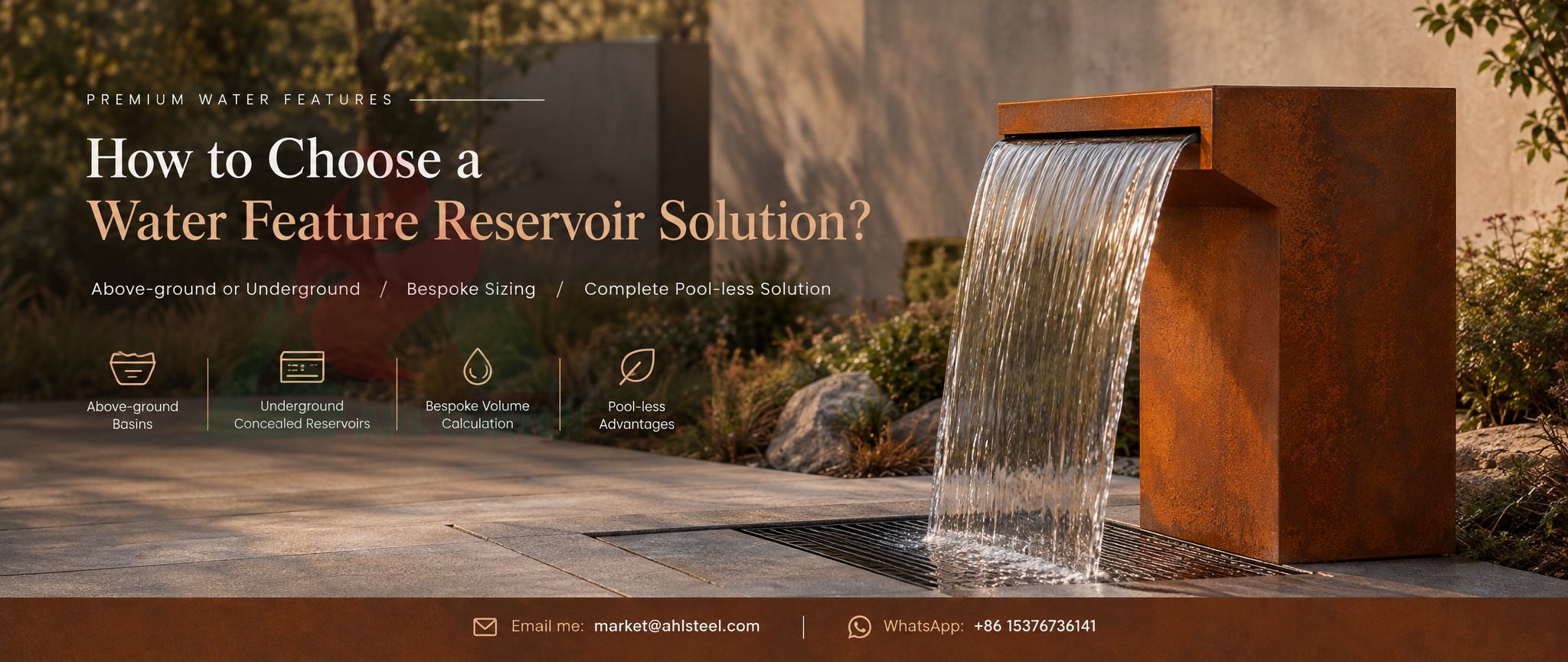
Reservoirs are categorised into two types: above-ground basins and underground concealed reservoirs.


Comparison
o
f the 2 Reservoir Types


1. Above-ground water basins: Suitable for freestanding water features, small garden fountains and exposed water features on terraces.
2. Underground concealed reservoirs: Suitable for pool-less cascades, water curtains, rain curtains and water columns; commonly used in modern commercial landscaping.

Concealed reservoirs allow the water to be hidden beneath stonework, grilles or landscape rocks, creating a cleaner, more minimalist visual appearance. However, concealed systems must include access hatches to facilitate future maintenance of the pump and filter, as well as water level checks.


How to Determine the Volume of a Water Storage Tank


The volume of a water storage tank must be calculated by taking multiple factors into account:

The dimensions of the water feature, pump flow rate, water held in the pipework, return flow volume after the pump is switched off, losses due to evaporation and splashing, local climate, and the width of the outlet.
The volume of a water storage tank is a bespoke calculation, there is no standard formula; it is generally calculated by a specialist supplier during the quotation stage.


Advantages of Pool-less Water Features


Metal water features without a visible reservoir offer the sound of flowing water and dynamic visual effects without the need for a large exposed pool.

They are ideal for modern private gardens, courtyards, hotel entrances, restaurant terraces, commercial landscapes and roof gardens, and are well-suited to projects seeking a minimalist, clean aesthetic.

The complete solution includes a weathering steel structure, a concealed reservoir, pump, pipework and installation instructions, ensuring greater system stability.


Want a Custom Corten Water Feature? Contact Us! 


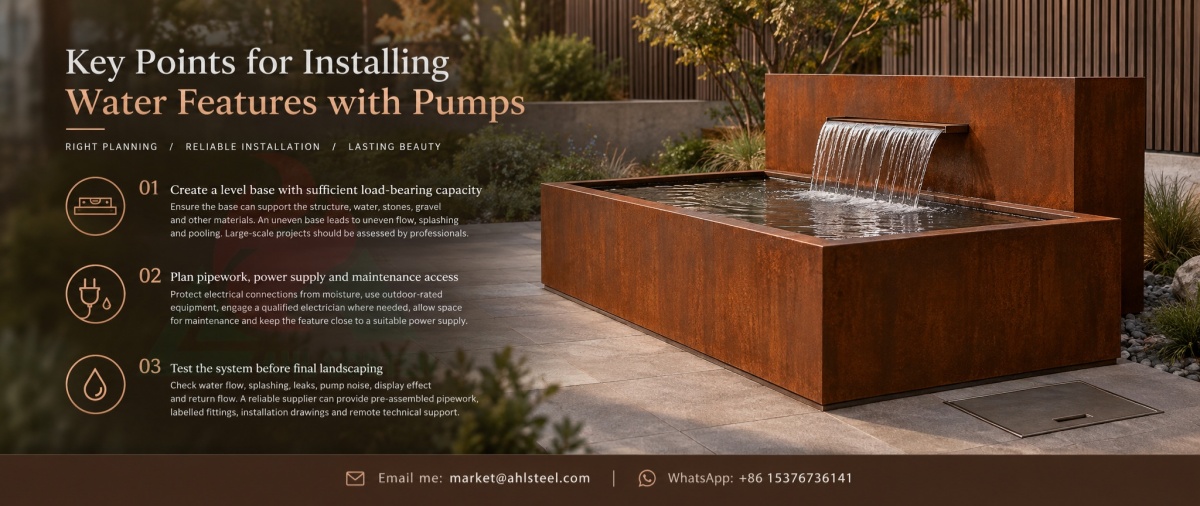
Key Points for Installing Corten Water Features with Pumps


1. Creating a Level Base with Sufficient Load-Bearing Capacity


The base must be stable and level, capable of supporting: the dead weight of the weathering steel structure, the weight of the water when full, landscape stones/gravel, the water basin cover and other landscaping materials.

An uneven base will result in uneven water flow, splashing and localised pooling, which will detract from the overall aesthetic. For large-scale commercial water features, it is advisable to consult professional landscape contractors to assess the structural load-bearing capacity.


2. Plan Pipework, Power Supply and Maintenance Access in Advance


Before a
metal garden pond is delivered and installed, plan in advance for power supply, pipework, drainage, water replenishment and maintenance access.

- Ensure electrical connections are properly protected against moisture in outdoor environments
- Use electrical equipment specifically designed for outdoor use and comply with local electrical regulations
- Where necessary, engage a qualified electrician to carry out the work
- Allow sufficient access space for maintenance of pumps and filters; do not seal access points beneath permanent paving
- Position the water feature as close as possible to a suitable power supply


3. Ensure the Entire System Is Tested Before Finalizing the Landscaping


Before covering the reservoir with decorative layers such as landscape stones, plants or paving, carry out a full trial run of the entire system to check:
whether the water flow is even; whether splashing is contained within the catchment area; whether there are any leaks at pipe joints; whether pump noise meets standards; whether the water display effect complies with the design; and whether water can flow back into the reservoir normally.

A reliable supplier can provide pre-assembled pipework, labelled fittings, installation drawings and remote technical support, thereby reducing the risk of installation failure.

outdoor water feature pump

 
Want to Create a Unique Corten Steel Waterfall? Contact Us!


FAQ


1. Do All
Rusted
 Steel Water Features Require a Pump?


No. Static weathering steel basins and shallow still-water basins do not require a pump. However, water features that require flowing water effects—such as water curtains, cascades, overflows, rain curtains and fountains—must rely on a pump to deliver water to the outlet and achieve water circulation.


2. What Size Pump Should
I
 Choose for a Water Feature?


The pump specification depends on the target flow rate, head, pipework length, outlet width and the desired water flow effect. The higher and wider the water curtain, the more powerful the pump required. When selecting a model, do not rely solely on the maximum flow rate; instead, consult the pump’s performance curve at the actual head.


3. Can a Water F
ountain
 Operate Without a Reservoir?


The vast majority of recirculating circular corten steel ponds require a reservoir to collect the recirculated water and ensure the pump remains continuously submerged. The reservoir may be an above-ground structure integrated into the basin itself, or a concealed, underground reservoir without a visible tank. The reservoir capacity must be calculated on a case-by-case basis according to the specific water feature and local environment.


4. How Often Should
t
he Water Feature Pump Be Cleaned?


The cleaning frequency depends on the amount of fallen leaves and dust in the surrounding area, water quality and daily operating hours. Routinely check the water level and inlet; clean the filter and impeller in accordance with the pump manufacturer’s instructions. In locations beneath trees or in dusty environments, cleaning should be carried out more frequently.


5. Can a
Corten
 Water Feature Be Left Outdoors During Winter?


The weathering steel structure itself can withstand winter outdoors. However, in regions prone to freezing, the pipework, water reservoir and pump system must be protected against freezing. Before a prolonged period of low temperatures sets in, drain any standing water from the system; if necessary, remove the pump and disconnect the power supply to minimise the risk of damage from freezing and cracking.


Are You Ready to Choose a Corten Water Feature for Your Garden?


Weathering steel water features can be designed either as tranquil, still-water mirror-like landscapes or as dynamic, flowing visual focal points; the key difference between the two lies in the water circulation system.

Weathering steel water features with flowing water effects must be fitted with a water pump; still-water versions do not require one. A fully integrated system, designed to work in harmony, ensures the long-term, stable operation of the water feature and delivers the desired aesthetic.

If you have a garden or commercial water feature project, please feel free to provide the project dimensions, your desired water flow effects, the installation site and information on the local climate. We can tailor a rain curtain water feature australia solution for you, including the appropriate reservoir, pump configuration and installation guidance.


Back
Next:
Back to list
Fill In The Inquiry
After receiving your enquiry, our customer service staff will contact you within 24 hours for detailed communication!
* Name:
*Email:
* Telephone/Whatsapp:
Country:
* Inquiry: