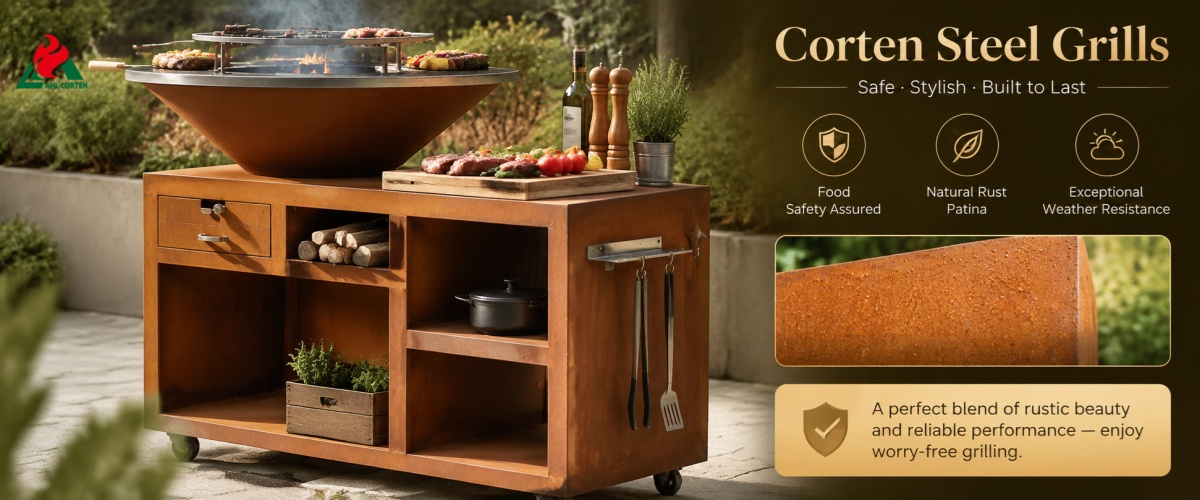
Thanks to their unique vintage rust-colored appearance and exceptional weather resistance, Corten steel grills have become a popular choice for outdoor grilling in backyards. However, the vast majority of users have one key concern when purchasing and using them: Will the rust layer on the grill’s surface flake off and contaminate food, compromising food safety? This article provides a clear and definitive conclusion: High-quality weathering steel grills that are designed to meet safety standards and feature proper material zoning will not cause rust to contaminate food under normal use. The rust color of weathering steel is a natural aesthetic feature of the material, not a safety hazard. As long as you follow the specific usage guidelines and perform basic maintenance, you can enjoy both a visually appealing outdoor kitchen appliance and a safe, hygienic grilling experience. Next, we’ll address all your questions comprehensively from various perspectives, including material principles, safety logic, usage guidelines, and purchasing tips.
What Exactly Is the “Rust” on a Weathered Steel Grill?
Weathered Steel ≠ Ordinary Rusting Steel
Weathering steel, also known as patina steel, is a specialized steel developed specifically for outdoor environments. Its rusting mechanism is entirely different from that of ordinary steel. When ordinary steel rusts, the rust layer becomes loose and prone to flaking off, causing continued corrosion of the underlying steel. In contrast, when weathering steel comes into contact with air, rain, and moisture, it gradually forms a dense oxide layer known in the industry as a “patina.” This oxide layer exhibits natural hues such as orange-red and rusty brown, gradually changing color over time and depending on the climate, giving each barbecue grill a unique, vintage look.
2 Key Functions of Weathering Steel’s Rust Layer
The stable rust layer on the surface of weathering steel serves only two core purposes, neither of which relates to food safety: First, outdoor protection. The dense oxide layer acts as a barrier against air and moisture, preventing further oxidation and corrosion of the steel beneath, significantly extending the grill’s lifespan and making it suitable for challenging outdoor environments such as open-air courtyards and patios. Second, decorative aesthetics. The natural gradient rust-colored finish blends seamlessly with greenery, stone, and wooden garden elements, creating a sophisticated outdoor ambiance. Important Reminder: This rust layer serves a protective and decorative purpose; it is not a food-grade safe coating and must never come into direct contact with food.
Stable Rust Layer vs. Loose Rust Debris: Don’t Confuse These Two Types of “Rust”
Many users’ safety concerns stem from confusion between these two types of rust, whose safety properties are worlds apart. Stable rust layer on high-quality weathering steel grill exteriors: Dense in structure and firmly bonded to the steel surface, it does not peel, flake, or fall off, making it a safe protective coating. Loose rust residue caused by poor quality or improper maintenance: Powdery and prone to flaking, it commonly appears on untreated bare steel or aged cooking surfaces. It easily falls off during high-temperature friction or when stir-frying ingredients, contaminating food and making cleanup more difficult.
Scientific Material Zoning in High-Quality Steel Barbecue Grills
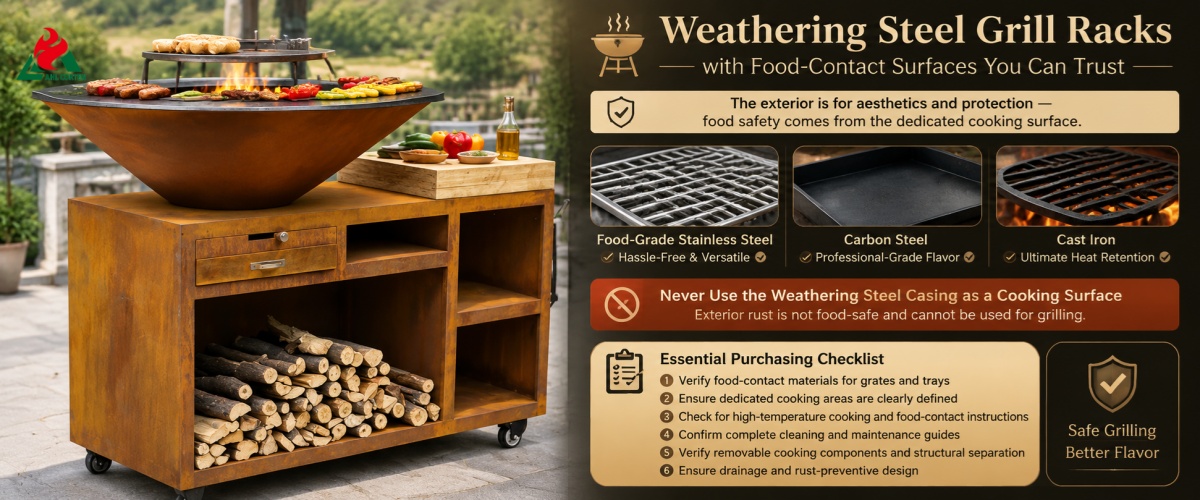
Professional-brand weathering steel barbecue grills do not use a single type of steel throughout the entire unit; instead, they feature a functional zoning design that balances aesthetics, durability, and safety: 1. Weathered Steel Zones: Used exclusively for the outer shell, base, and support frame to provide protection against wind and rain and create a vintage appearance; 2. Food-contact areas: Components that come into direct contact with food—such as grill grates, baking pans, and griddle plates—are uniformly made of food-grade stainless steel, cast iron, or specialized carbon steel; 3. Structural optimization: Features include insulation, drainage, and ventilation designs to prevent rust particles from the outer shell from falling into the cooking area at the source.
Does Rust From a Corten BBQ Grill Really Get Into the Food?
1. With Its Compliant Design, the Rust On the Outer Shell Never Comes Into Contact With The Food
This high-quality, structurally optimized rusted steel bbq grill features a cooking area that is completely physically isolated from the weathering steel outer shell. Food comes into contact only with dedicated food-grade cooking components throughout the entire process, and the stable rust layer on the outer casing does not come into direct contact with food. Combined with sealed edges, partitioned compartments, and drainage and debris-removal designs, this physically eliminates any possibility of rust flakes or rusty water contaminating the food. Before purchasing or using the product, simply verify these four points for complete peace of mind: the material of the cooking components, specifications for food-contact surfaces, a removable and cleanable design, and the structural separation between the body and the cooking area.
2. Absolute No-No: Do Not Grill Directly on the Weathering Steel Exterior
No matter how stable or aesthetically pleasing the rust layer on the exterior may be, it is strictly prohibited to place food directly on it for grilling. There are four key risks: 1. Loose surface oxides can easily adhere to the surface of food; 2. The weathered steel surface is rough and porous, allowing grease and food residue to penetrate, making thorough cleaning impossible; 3. High temperatures and friction from spatulas accelerate the peeling of the rust layer, producing large amounts of rust debris; 4. The bare steel surface causes food to stick, resulting in a poor grilling experience and posing serious hygiene risks. Industry safety regulations clearly stipulate that weathering steel is only suitable for structural and exterior components of barbecue grills; food-contact surfaces must be made of specialized food-grade materials.
3. Identification and Treatment of Abnormal Rust Layers
If the cooking surface exhibits abnormalities such as a reddish tint, peeling, powdery rust stains, or rough corrosion—which do not constitute the normal patina of weathering steel—immediate action is required. Treatment Steps: Immediately stop using the affected cooking surface → Clean loose rust debris and residual stains according to the manual → Inspect for deep corrosion, cracks, or deformation → Reapply protective oil → Replace the component promptly if severely damaged. Note: Even after thorough cleaning and maintenance, a corten steel exterior cannot be converted into a food-grade cooking surface.
4. Core Advantages of High-Quality BBQ Grills in Rust and Contamination Prevention
Genuine, high-end weathering steel barbecue grills mitigate food safety risks through multiple design features: material combinations tailored to functional zones, removable independent cooking components, grease and debris drainage structures, and comprehensive user and maintenance manuals. They preserve the unique, natural, vintage aesthetic of weathering steel while ensuring barbecue hygiene and safety through professional food-grade cooking components, achieving a perfect balance of aesthetics and practicality.
Weathering Steel Grill Racks with Food-Contact Surfaces You Can Trust
The weathering steel exterior is primarily for aesthetics and protection; what truly determines grilling safety and flavor is the dedicated food-grade cooking surface. Currently, there are three mainstream high-quality materials available.
1. Food-Grade Stainless Steel Grill Grates: The Hassle-Free, Versatile Top Choice
Ideal for everyday home barbecuing, its key advantages are corrosion resistance, easy cleaning, and no need for frequent seasoning. It resists rapid rusting after washing and drying, is suitable for grilling all kinds of ingredients—including meat, vegetables, and seafood—and requires minimal daily maintenance. When purchasing, be sure to look for specific “food-grade” and “high-temperature resistant” labels to avoid ordinary, low-quality stainless steel materials.
2. Carbon Steel Cooking Rigs/Grill Pans: The Choice for Professional-Grade Barbecue Flavor
Carbon steel bbq grill offers excellent heat conductivity and strong high-temperature stability, producing a rich, charred flavor—making it the top choice for seasoned outdoor barbecue enthusiasts. Before use, preheat the grill and apply oil to season the surface, forming a stable protective oil film. After each use, promptly remove residue, dry thoroughly, and apply a thin coat of cooking oil to prevent moisture and rust. With regular maintenance, it will provide long-term, reliable performance.
3. Cast Iron Grill Grates: The Ultimate Tool for Retaining Heat
Cast iron has exceptional heat retention and insulation capabilities. Once preheated, it maintains an even and stable temperature, producing uniform grill marks on food and enhancing the caramelized flavor.
The drawbacks are its heavy weight and higher maintenance requirements. After use, never soak it in water for extended periods; dry it promptly and apply oil to prevent cracking or warping caused by extreme temperature changes. Minor rust can be removed and the surface re-seasoned, but severely corroded grills must be replaced immediately.
4. Clear Red Line: Weathering Steel Casing Must Never Be Used as a Cooking Surface
Regardless of whether a stable rust patina has formed, it is strictly prohibited to directly grill food on weathering steel bodies, casings, or steel plates that are not explicitly labeled as such by the manufacturer. The surface oxide layer lacks food safety certification and is not approved for cooking use; never make subjective judgments about material safety based on appearance alone.
5. Essential Purchasing Checklist: Key Verification Points for Food-Contact Surfaces
When purchasing a weathering steel grill, carefully verify the following details to avoid safety hazards: 1. Verify that specific materials for grill grates, baking trays, and cooking rings are clearly labeled; 2. Clearly identify designated cooking areas that come into contact with food; 3. Ensure the product comes with usage instructions for high-temperature cooking and food contact; 4. Verify that comprehensive guides for initial use, preheating, cleaning, and maintenance are provided; 5. Confirm that cooking components are removable and replaceable, and that the main body is completely isolated from the cooking area; 6. Ensure the product includes designs and instructions for drainage, debris removal, and rust-preventive water treatment.
First-Time Use of the New Corten BBQ Grill: Zero-Contamination Pre-Treatment Steps
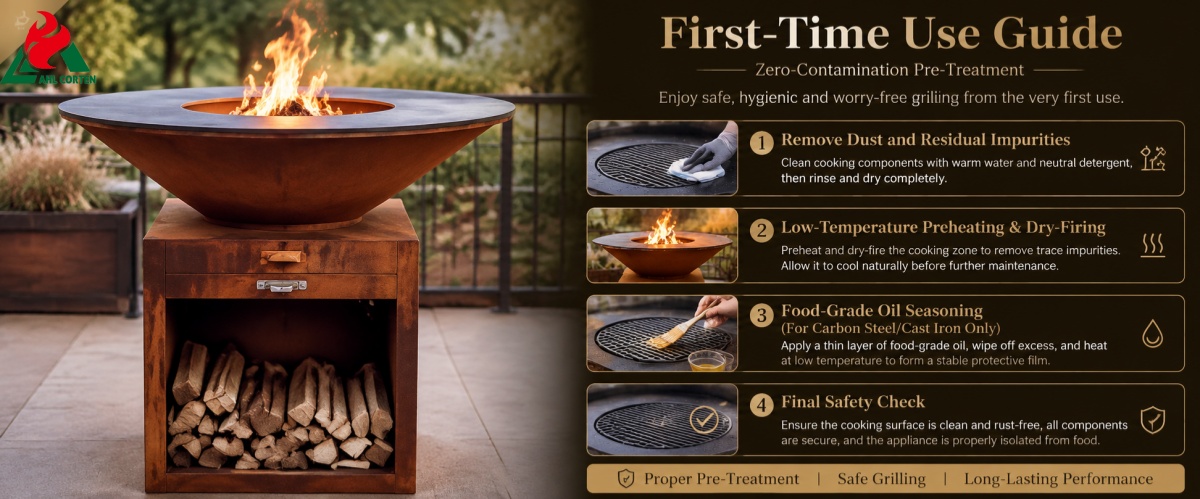
When using a brand-new weathering steel BBQ grill for the first time, no treatment of the outer shell is required; simply perform pre-treatment on the food-contact surfaces to eliminate contamination at the source.
1. Removing Dust and Residual Impurities
After unpacking, inspect the cooking components (such as the grill grate and baking tray) and remove any dust, metal debris, or packaging residue left over from shipping. Wipe them down with warm water, a neutral detergent, and a soft sponge. Rinse thoroughly and dry completely. Do not use corrosive cleaning products such as strong acids, strong alkalis, or bleach.
2. Low-Temperature Preheating and Dry-Firing to Remove Impurities
Follow the instructions in the user manual to preheat and dry-fire the cooking zone in a well-ventilated area free of flammable materials. Gradually increase the temperature to remove trace amounts of oil and impurities left over from production and shipping. Allow the unit to cool naturally after dry-firing before proceeding with further maintenance.
3. Food-Grade Oil Seasoning (For Carbon Steel/Cast Iron Only)
Carbon steel and cast iron cooking components must undergo seasoning. Apply a thin layer of food-grade cooking oil to the completely dry surface, wipe off any excess oil, and heat at a low temperature to allow the oil film to stabilize and cure.
A thin, even oil film provides three benefits: non-stick, moisture resistance, and rust prevention, helping to avoid oil buildup, smoke, and sticking. For stainless steel components, follow the instructions in the product manual regarding whether to apply oil.
4. Final Safety Check Before Grilling
Before you begin grilling, complete a final inspection: ensure the cooking surface is free of rust particles and cleaning agent residue; verify that all components are securely installed; confirm that the appliance housing is completely isolated from the food; and check for any abnormalities such as cracks, peeling, or severe rust.
Corten BBQ Grill Daily Maintenance: Preventing Rust from Contaminating Food in the Long Term
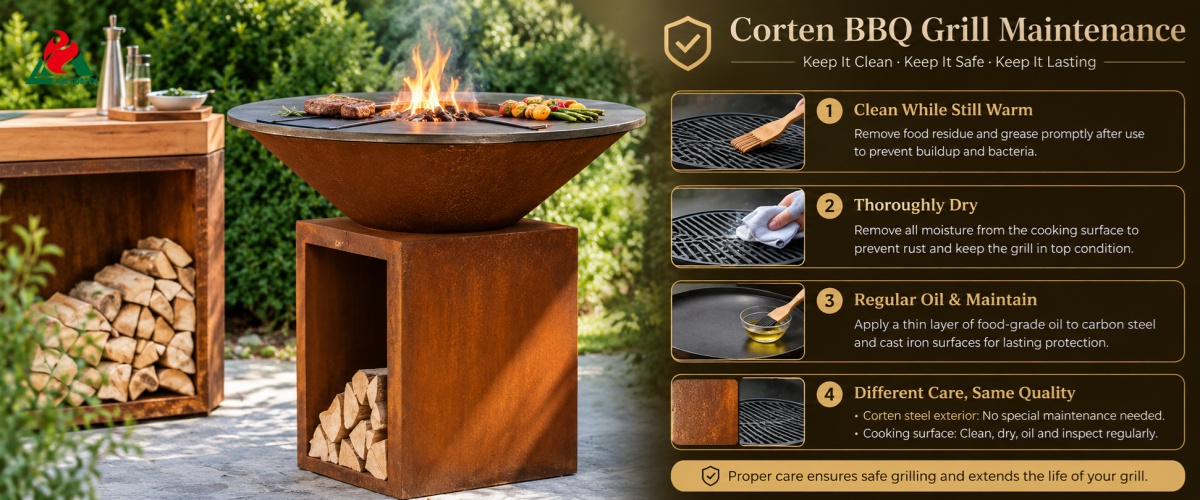
Proper daily cleaning and maintenance are key to preventing rust residue from contaminating food and extending the grill’s lifespan. The maintenance guidelines for the weathering steel exterior and the cooking surface are completely different; do not confuse them.
1. Clean Food Residue and Grease While Still Warm
After barbecuing, wait for the metal BBQ grill to cool to a safe temperature, then promptly remove any remaining food and grease. Use a soft, dedicated brush or wooden spatula to clean debris from crevices, preventing grease and residue from accumulating and carbonizing over time, which can breed bacteria and cause rust. Do not use cleaning tools made of materials that shed fibers or are likely to scratch the surface.
2. Thoroughly Dry to Prevent Rust Caused by Moisture
After cleaning, ensure all moisture is completely dried off—this is essential for preventing rust on carbon steel and cast iron components. Pay close attention to standing water on the grill pan, moisture in the grill grate gaps, damp ash inside the grill, and clogged drain holes. Keep the cooking area dry and well-ventilated to prevent moisture-induced rust at its source.
3. Regularly Oil and Maintain the Cooking Surface
Once the carbon steel and cast iron components are completely dry, apply a thin layer of food-grade cooking oil to create a barrier against air and moisture. When not in use for extended periods, store the pan in a dry, well-ventilated area and protect it from dust and water. Before using the pan again, preheat it and inspect the surface. If rust spots or peeling appear, thoroughly remove the rust, dry the pan, and re-season it before use.
4. Distinguish Between Maintenance Procedures for the Exterior and Cooking Surface
Weathering steel exterior: No special maintenance is required. Simply ensure drainage remains unobstructed, avoid prolonged water accumulation, and allow a natural vintage patina to form. Food-grade cooking surfaces: It is essential to consistently clean, dry, oil, and inspect the cooking surface regularly. Do not neglect the daily maintenance of the cooking components just because the exterior requires no special care.
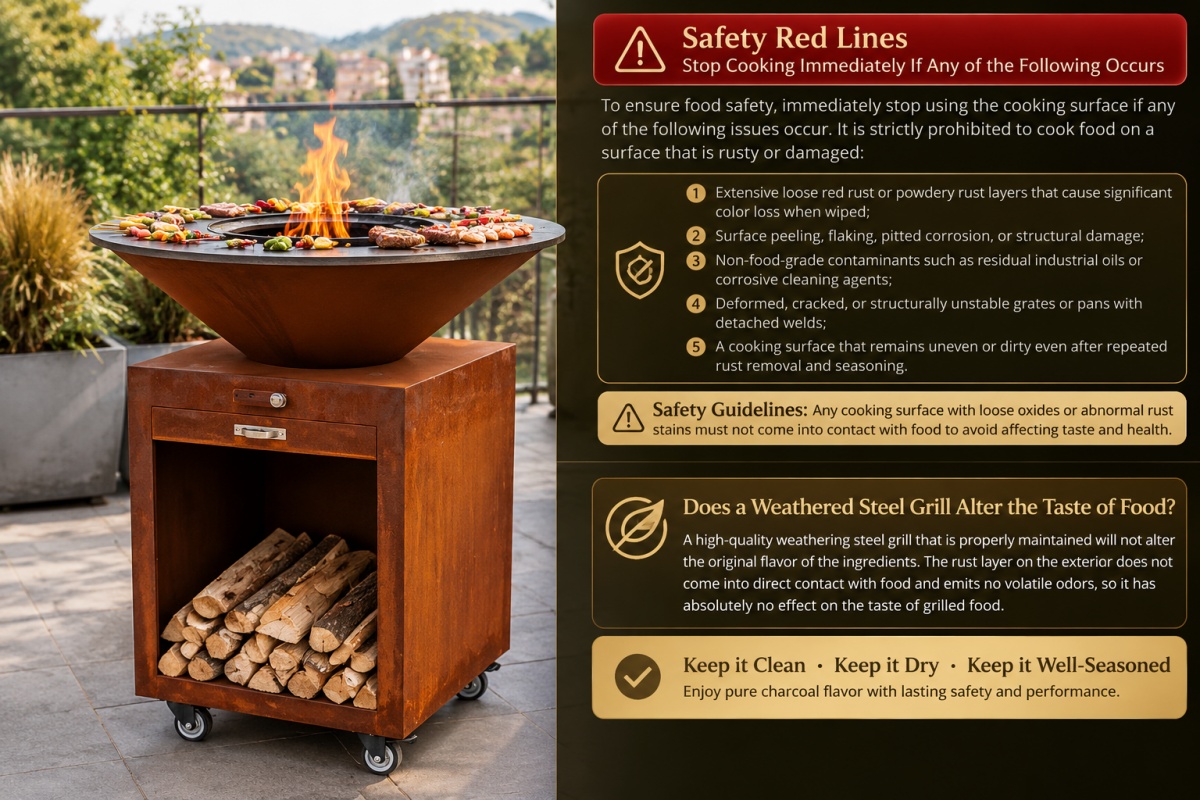
Safety Red Lines: Stop Cooking Immediately If Any of the Following Occurs
To ensure food safety, immediately stop using the cooking surface if any of the following issues occur. It is strictly prohibited to cook food on a surface that is rusty or damaged:
1. Extensive loose red rust or powdery rust layers that cause significant color loss when wiped; 2. Surface peeling, flaking, pitted corrosion, or structural damage; 3. Non-food-grade contaminants such as residual industrial oils or corrosive cleaning agents; 4. Deformed, cracked, or structurally unstable grates or pans with detached welds; 5. A cooking surface that remains uneven or dirty even after repeated rust removal and seasoning. Safety Guidelines: Any cooking surface with loose oxides or abnormal rust stains must not come into contact with food to avoid affecting taste and health.
Does a Weathered Steel Grill Alter the Taste of Food?
Many users worry that rust will give food a metallic taste, but rest assured: a high-quality weathering steel grill that is properly maintained will not alter the original flavor of the ingredients. The dense, stable rust layer on the weathered steel exterior emits no volatile odors and does not come into direct contact with food, so it has absolutely no effect on the taste of grilled food. Any metallic or bitter taste you may detect is never caused by the weathering steel itself, but rather by poor-quality cooking surfaces, uncleaned loose rust particles, accumulated carbonized grease, or unmaintained bare steel surfaces. As long as you consistently clean, dry, and season the bbq grill after each use, you can lock in the pure aroma of charcoal-grilled food while maintaining both its aesthetic appeal and exceptional grilling flavor.
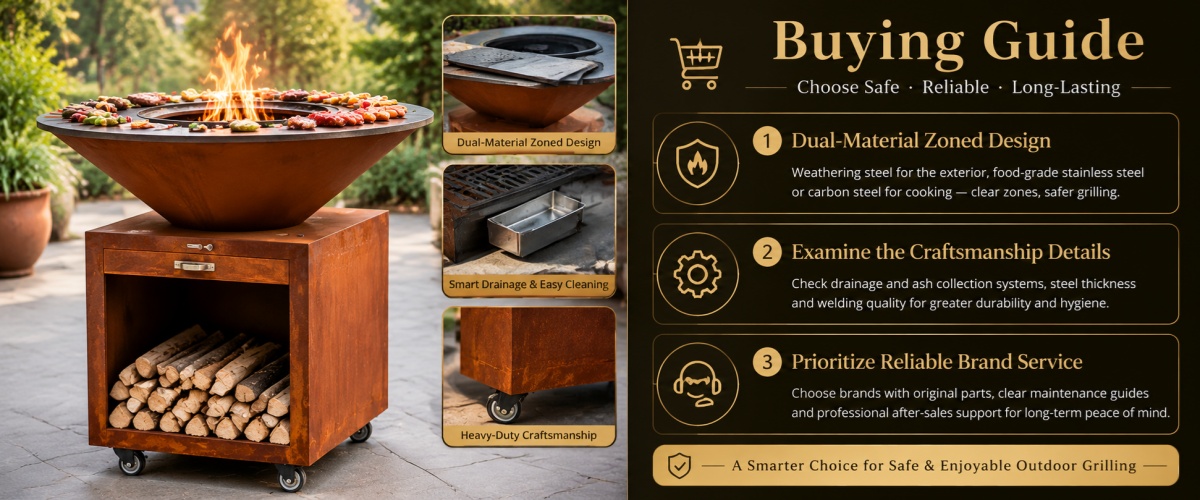
Buying Guide: How to Choose a Safe and Reliable Weathering Steel Grill
When selecting a weathering steel grill, don’t be swayed solely by its vintage, rust-colored appearance; focus instead on the structural design, material composition, and craftsmanship details.
1. Look for a Dual-Material Zoned Design
A high-quality product is always a combination of an “aesthetic exterior” and a “professional cooking core.” Weathering steel handles the exterior appearance and outdoor protection, while food-grade stainless steel, carbon steel, and cast iron are responsible for cooking the food—with clearly defined zones and physical separation.
2. Examine the Craftsmanship Details
Pay close attention to features such as sloped grease drains, grease collection and storage, and ash-collection drawers to prevent grease spills, ash buildup, and water accumulation that could lead to contamination. Also, check the thickness of the steel body and the welding工艺 to eliminate issues like high-temperature deformation and dirt accumulation in gaps.
3. Prioritize Reliable Brand After-Sales Service
Cooking components are high-frequency consumables. Prioritize brands that offer replacement with original manufacturer parts, comprehensive maintenance guides, and professional after-sales guidance to ensure long-term safe use.
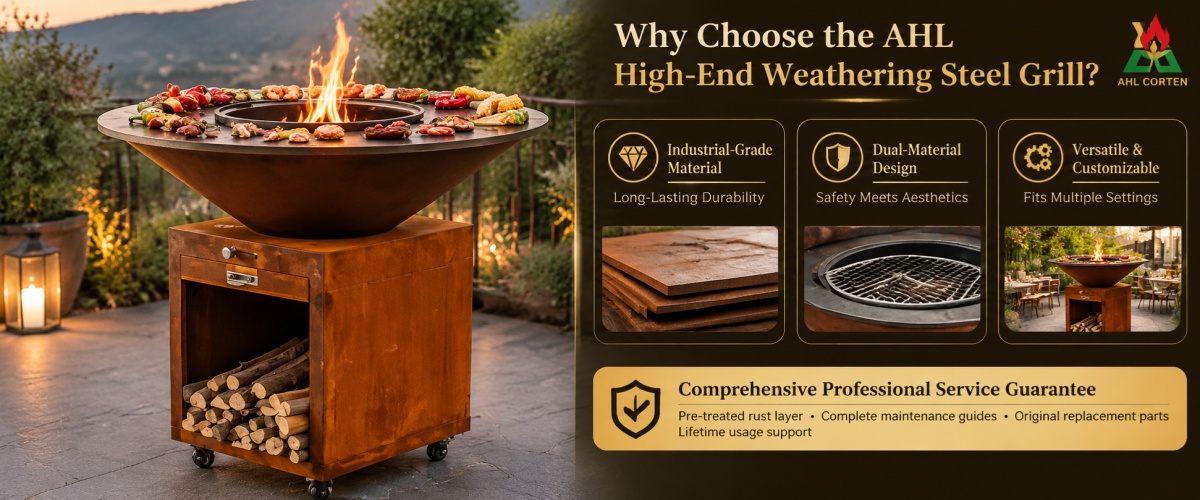
Made from SPA-H industrial-grade weathering steel, it offers exceptional outdoor weather resistance. It can withstand year-round exposure to sun and rain, naturally developing a unique, vintage patina—making it not just a grilling appliance, but also a work of art for your garden.
2. Scientific Combination of Dual Materials: Safety Meets Aesthetics
The vintage corten steel exterior is paired with food-grade carbon steel grilling pans and 304 stainless steel grilling grates, offering a premium, textured appearance while ensuring cooking safety—truly embodying the philosophy of “art on the outside, professionalism on the inside.”
3. Versatile for Multiple Settings, Customizable
Suitable for a variety of settings—including home gardens, bed-and-breakfast terraces, and commercial outdoor campsites—it comes in a full range of sizes and can be customized to meet the grilling needs of different group sizes and scenarios.
Comprehensive Professional Service Guarantee
The product leaves the factory with a pre-treated, stable rust layer and comes with complete guides for seasoning, maintenance, cleaning, and rust prevention. We provide original replacement parts and lifetime usage guidance, eliminating all user concerns throughout the entire process.
Frequently Asked Questions About the Corten BBQ Grill (One-Stop Answers to Common Queries)
Q1: Will The Rust Layer On The Grill’s Exterior Flake Off And Contaminate The Food?
Not at all under normal use. The oxide layer of mature weathering steel has a dense structure and extremely strong adhesion, so it won’t flake off easily. Additionally, since the body is physically separated from the cooking area, there is no risk of contamination as long as you don’t cook food directly on the exterior.
Q2: Is Weathering Steel Suitable For Use In Barbecue Grills?
It is highly suitable for structural housing but not for the cooking surface. Weathering steel is heat-resistant, weather-resistant, and resistant to deformation, making it an excellent structural material for outdoor barbecue grills. However, since it has not undergone food-grade certification, direct contact with food is strictly prohibited.
Q3: Is The Rust On Weathering Steel Toxic?
The stable rust layer consists primarily of iron oxide, which is non-toxic in itself. However, loose rust particles are not food-grade substances; accidental ingestion can affect taste and irritate the stomach and intestines. Therefore, as long as direct contact is avoided, there is no need to worry excessively about poisoning.
Q4: Can I Grill Meat Directly On The Surface Of Weathering Steel?
This is strongly discouraged. The bare surface of weathering steel lacks a non-stick protective layer, making it extremely easy for food to stick and burn. Additionally, high-temperature friction can cause rust particles to flake off, contaminating the food and posing a hygiene risk.
Q5: Can I Continue Using a Grill Grate If It Shows Minor Rust?
If there is only minor rust, you can thoroughly remove the rust, dry the grate, and re-season it before continuing to use it. If extensive peeling, powdering, or deep corrosion occurs, the cooking components must be replaced immediately to eliminate safety hazards.
Q6: How Can You Prevent Rust From Contaminating Food At The Source?
Remember the core principle of twelve words: material separation, hot oil seasoning, and thorough drying throughout the process. Use dedicated food-grade cooking components, season and seal the surface with oil regularly, and clean and dry them after each use to completely avoid risks.
Summary: Are You Ready To Choose The Outdoor Corten BBQ Grill That’s Right For You?
The vintage rust color of corten steel BBQ grills is a natural advantage of the material, not a safety hazard. There’s no need to be afraid of “rust”; simply understand the core logic: weathering steel tubes offer aesthetics and durability, while food-grade materials ensure safe cooking. As long as you avoid the misconception of “grilling food directly on the outer shell,” and ensure proper pre-treatment of the new grill, daily cleaning and drying, and regular maintenance with oil, you can completely eliminate the risk of rust contamination. AHL’s premium weathering steel BBQ grill seamlessly blends outdoor architectural aesthetics with a safe grilling experience through its scientific dual-material design and professional craftsmanship. It serves not only as an artistic accent piece that elevates the style of your backyard but also as professional grilling equipment suitable for everyday gatherings and outdoor leisure, ensuring every outdoor grilling session is both worry-free and delicious. Explore the AHL weathering steel grill series today and unlock a premium outdoor grilling lifestyle that combines stunning aesthetics with superior safety. Get a Quote



 Fill In The Inquiry