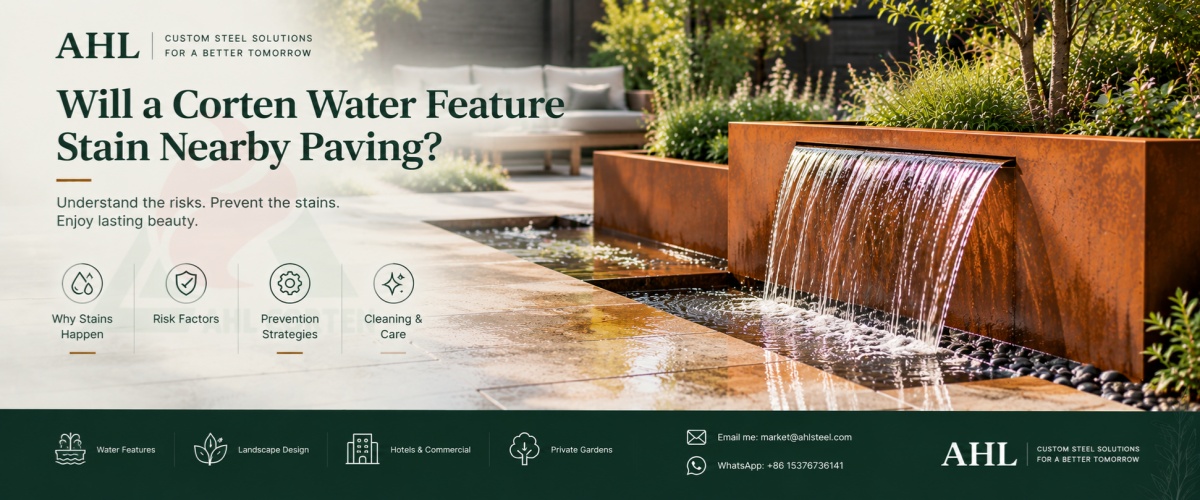
Will a Corten Water Feature Stain Nearby Paving?
Weathered steel water features, with their unique rust-colored patina, have become a highly sought-after landscaping element in private gardens, hotels, and commercial landscapes.
The rustic, raw metallic texture, paired with flowing water, blends seamlessly with the natural outdoor environment, making it a favorite among landscape designers and property owners.
However, many homeowners, contractors, and property managers share the same concern: Will the rust-colored water flowing from a corten outdoor water feature stain the surrounding paving?
Simply put: During the initial weathering phase of the steel, if drainage and installation planning are not properly executed, the flowing rust water can indeed stain light-colored, porous paving surfaces.
The good news, however, is that through proper structural design, standardized installation, and ongoing maintenance, the risk of rust staining can be significantly reduced or even completely eliminated.
This article will explain the underlying principles behind stain formation and the various risk factors that can exacerbate contamination, while also sharing practical prevention strategies, stain removal methods, and customized product selection recommendations.
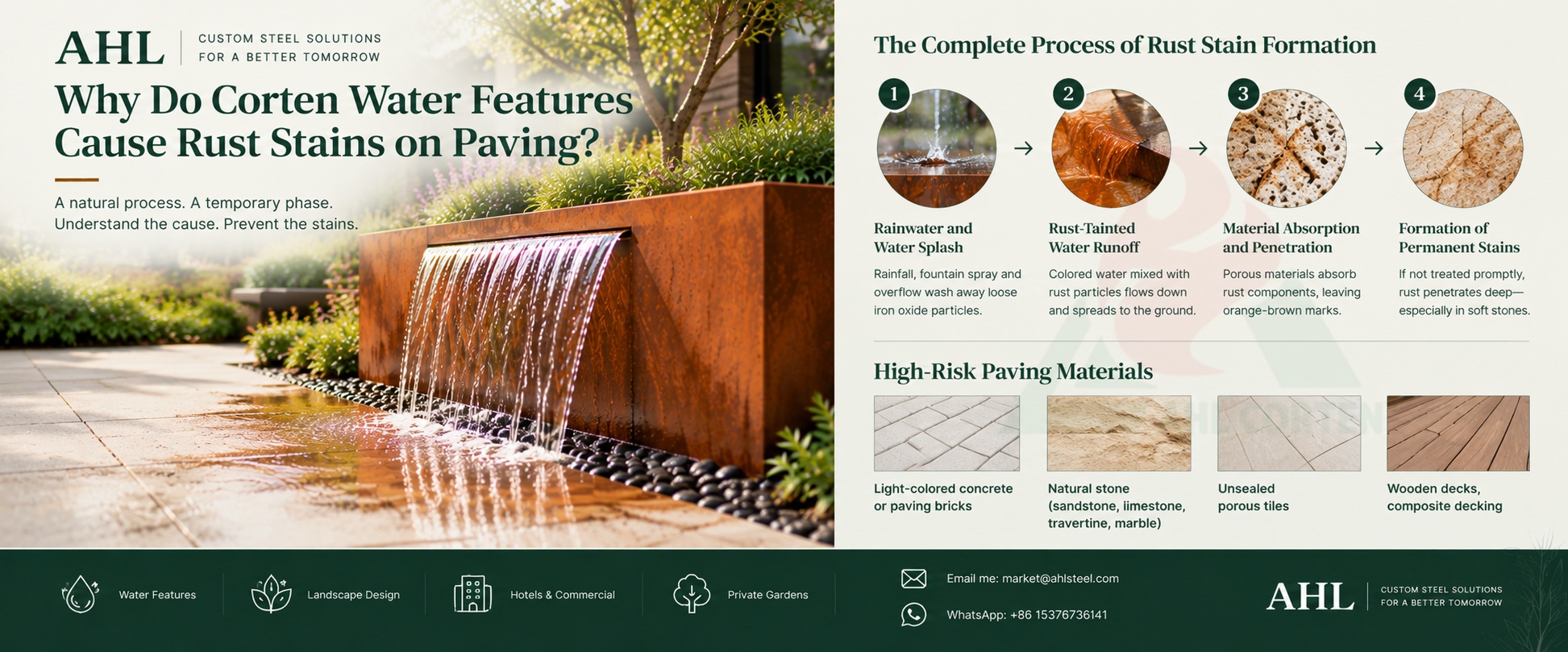
Why Do Corten Water Features Cause Rust Stains on Paving?
Weathering steel, also known as corten steel, relies on a controlled oxidation reaction to form its signature rust-colored protective layer.
During the initial weathering period of 6 to 12 months after installation, the protective oxide layer has not yet fully stabilized, and iron oxide particles continue to flake off the steel surface—this is the source of rust stains.
The Complete Process of Rust Stain Formation
1. Rainwater and Water Splash: Rainfall, fountain spray, and overflow from cascades wash away loose iron oxide particles from the surface of the weathering steel.
2. Rust-Tainted Water Runoff: Colored water mixed with rust particles flows down the water feature structure and spreads to the surrounding ground.
3. Material Absorption and Penetration: Porous materials directly absorb rust components, leaving orange-brown marks on their surfaces.
4. Formation of Permanent Stains: If not treated promptly, rust will penetrate deep into the stone—especially in the case of precious, soft stones—and the stains will become permanent.
List of High-Risk Paving Materials
- Light-colored concrete or paving bricks
- Natural stone: sandstone, limestone, travertine, marble
- Unsealed porous tiles
- Wooden decks, composite decking
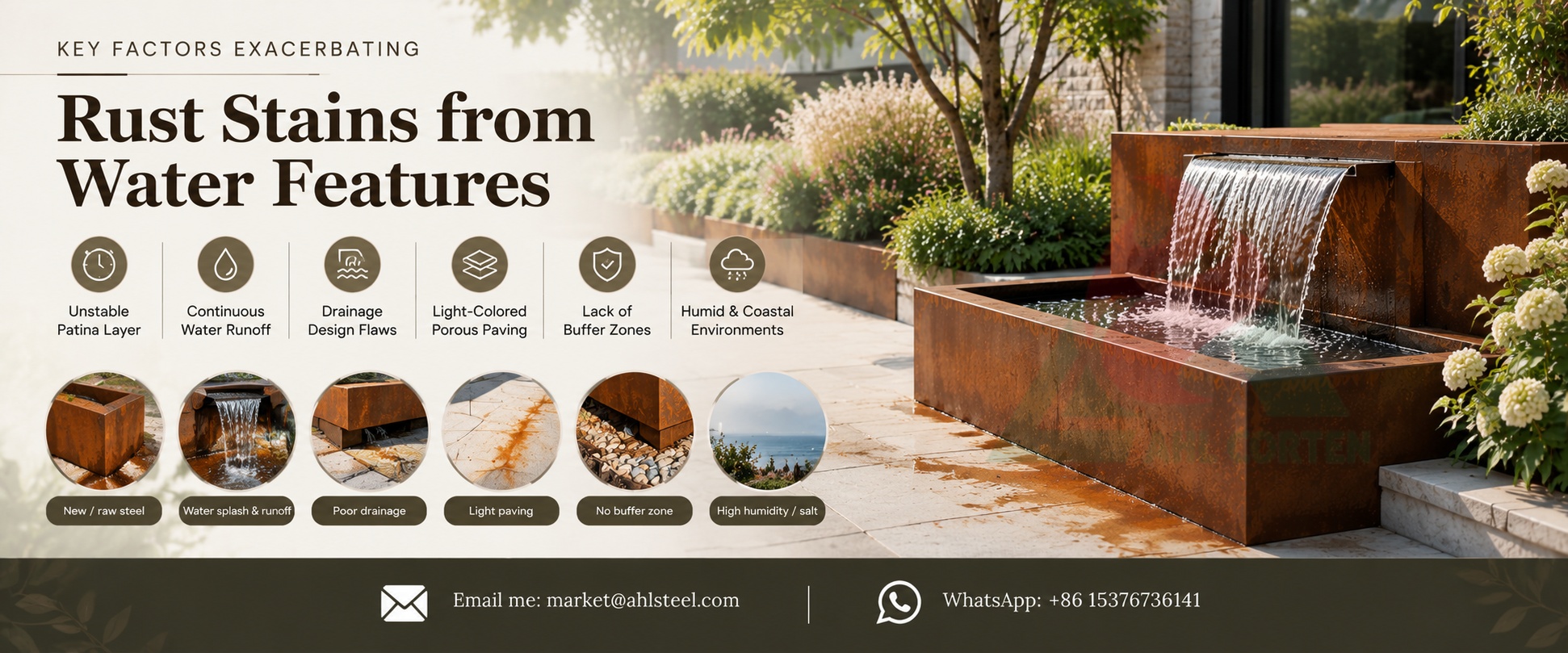
Key Factors Exacerbating Rust Stains from Water Features
Not all bespoke rusted steel water features will cause severe staining; however, the following conditions significantly increase the likelihood of paving becoming stained.
1. The Patina Layer Has Not Yet Stabilized
Brand-new, raw weathering steel released from the factory experiences the highest rate of rust leaching during the oxidation phase in the first 6 to 12 months. Factory-pre-weathered finished products leave the factory with a stable rust layer, significantly reducing initial rust leaching.
2. Continuous Water Runoff
Long-term water runoff over the surface of weathering steel accelerates the shedding of iron oxide. Water splashes generated by drop weirs, fountain nozzles, and cascading structures can expand the area affected by rust-stained water.
3. Design Flaws in Drainage Structures
The absence of drip edges, overflow channels, or catch basins allows water to flow uncontrollably in all directions. Standing water at the base of water features creates localized hotspots where the ground is repeatedly saturated.
4. Light-Colored, Porous Paving Adjacent to Water Features
On materials such as light-colored concrete and sandstone, rust stains are highly visible to the naked eye. Porous materials are more prone to absorbing rust than dense, sealed materials.
5. Lack of Buffer Zones
The base of the garden water fountain rests directly on the finished paving, causing rusty water to come into direct contact with the surface materials. Without a gravel strip or planting area serving as a buffer, rusty water can flow directly onto sensitive paving surfaces.
6. High-Humidity, Rainy, and Coastal Environments
In persistently damp environments, weathering steel struggles to form a stable protective film, prolonging the time it takes for rust to form. Coastal salt fog accelerates steel corrosion, further increasing the discharge of rusty water.
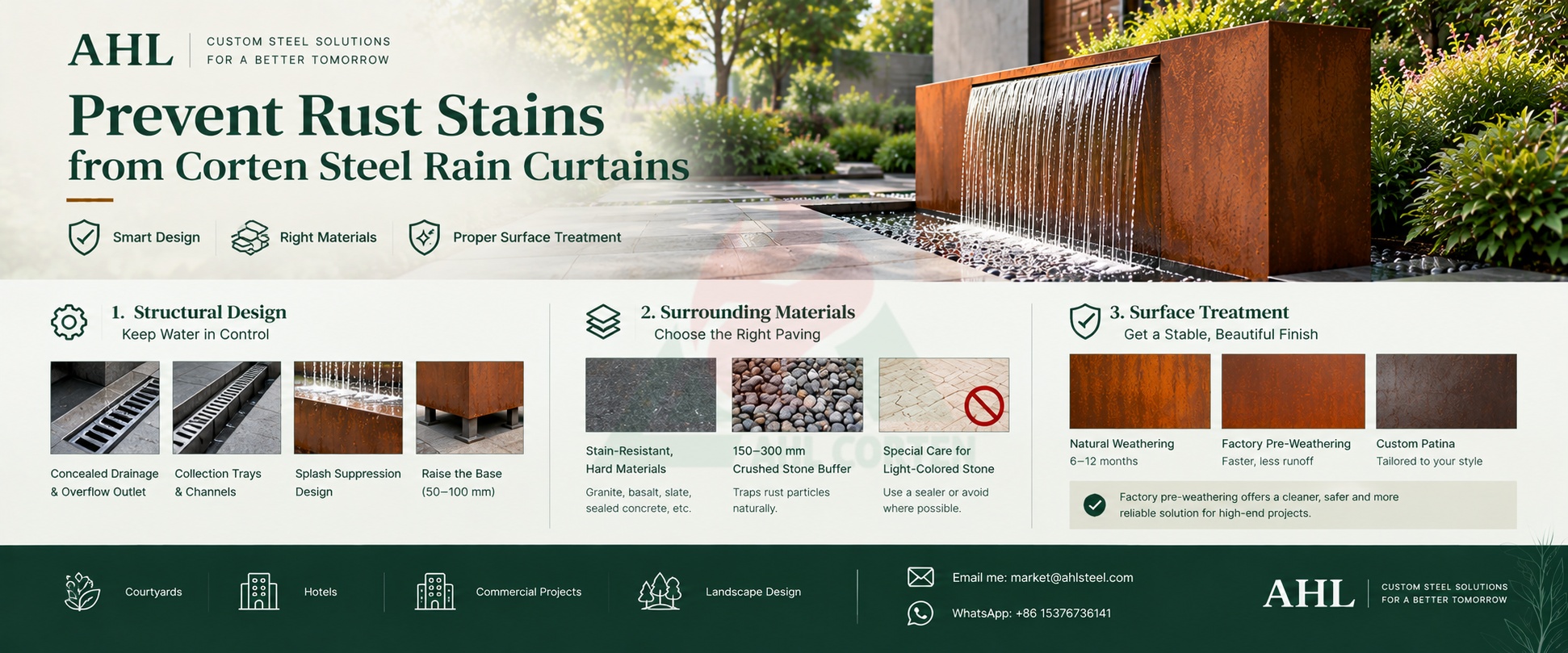
How to Prevent Corten Steel Rain Curtains from Staining Paving
To avoid rust stains, you can address the issue from three perspectives: structural design, selection of surrounding materials, and steel surface treatment.
Optimize the Structural Design of the Garden Water Fountain
1. Install Concealed Drainage and a Separate Overflow Outlet
Install concealed drainage channels paired with independent overflow channels to carefully plan the water flow path. Direct excess water away from walkways, patios, and light-colored paving areas.
2. Install Water Collection Trays and Channels
Install water collection trays and channels at the base of the water feature. Provide drainage holes to direct all seepage to designated drainage points.
3. Splash Suppression Design
Optimize the shape of weirs, select appropriate nozzles, and refine the edges of cascades to limit the range of splashing. Reduce water flow velocity and minimize the spray radius to prevent water from splashing beyond the water feature’s boundaries.
4. Raise the Water Feature Base
Use a base or support feet to raise the entire water feature by 50 to 100 millimeters. This creates a physical barrier from the ground paving, improves air circulation, and reduces moisture buildup at the base.
Selecting Appropriate Surrounding Paving Materials
1. Prioritize Stain-Resistant, Hard Materials
For the area surrounding a rain curtain water feature, dark-colored granite, basalt, slate, or sealed concrete are recommended. Crushed stone and river pebbles can absorb rust-stained water without leaving visible stains.
2. Create a 150- and 300-Millimeter Crushed Stone Buffer Zone
Create a ring of crushed stone around the perimeter of the water feature. Rust particles will remain trapped in the gaps between the crushed stone aggregates rather than adhering to the decorative paving surface.
3. Solutions for Light-Colored, Porous Stone
Avoid installing bespoke water features directly on unsealed sandstone or limestone whenever possible. If project constraints necessitate their use, apply a penetrating stone sealer to the stone surface before the paving work is completed.
Selecting the Appropriate Weathering Steel Surface Treatment
There are three mainstream surface treatment options available on the market:
1. Natural on-site weathering: Bare weathering steel naturally develops a rust patina outdoors over 6 to 12 months.
2. Factory pre-weathering: A uniform and stable rust layer is created through a chemical process prior to shipment, significantly reducing initial rust runoff.
3. Custom patina process: Special rust tones are customized to match the project’s design style.
Advantages of Factory Pre-Weathering
- Delivers a uniform and attractive rust color upon arrival, eliminating the need to wait for natural oxidation
- Significantly reduces initial rust runoff, minimizing the risk of contamination during installation
- Ideal for high-end projects with tight deadlines or where light-colored stone is used in the surrounding area
AHL offers custom surface treatments for courtyards, hotels, and commercial landscape projects, ensuring both aesthetic appeal and low pollution risk from the moment installation begins.
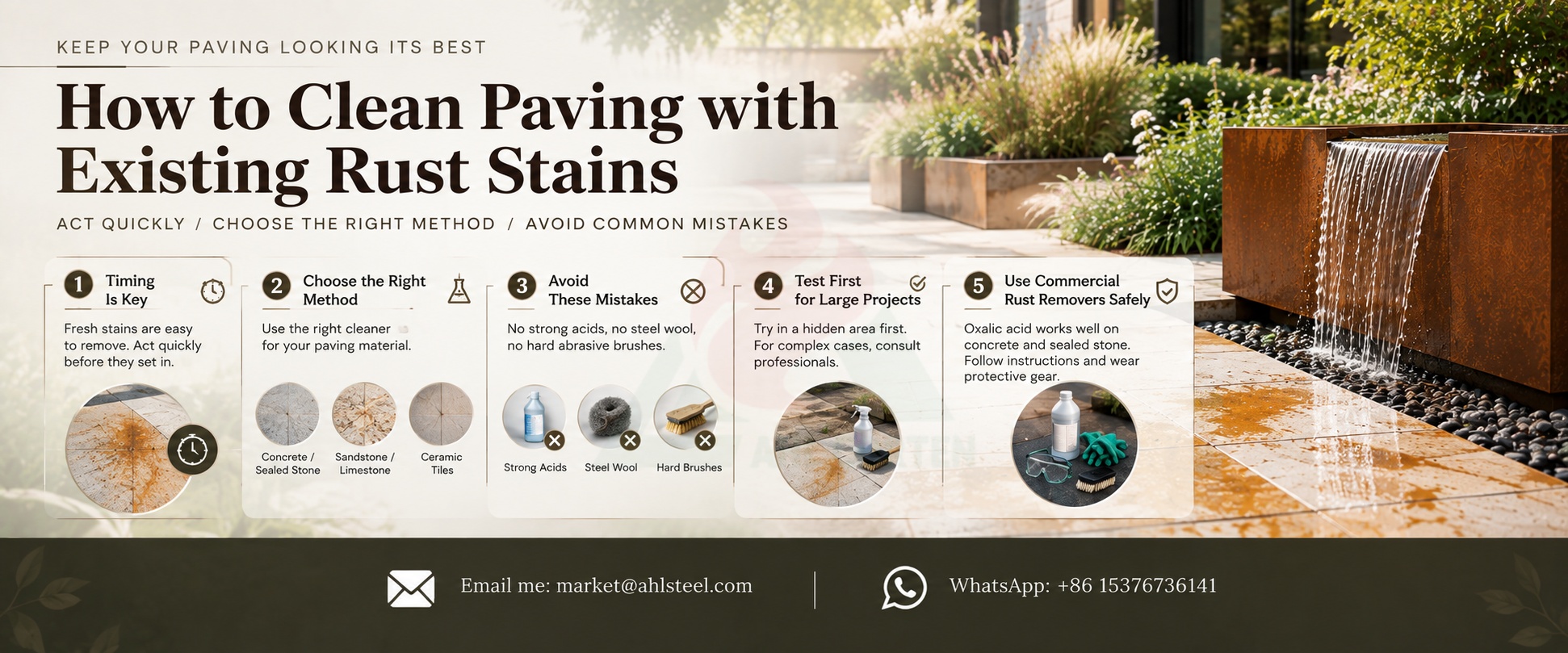
How to Clean Paving with Existing Rust Stains
Once rust stains appear on the paving surface, they must be addressed promptly to prevent the stains from becoming permanently set.
1. Timing Is Key
Fresh rust stains are very easy to remove; however, if left for weeks or even months, the rust seeps into the pores, making removal exponentially more difficult.
2. Choose the Right Cleaning Method Based on the Paving Material
- Concrete and sealed stone: Use a neutral cleaner mixed with warm water and wipe with a soft-bristled brush.
- Natural stone such as sandstone and limestone: Use a specialized iron oxide remover for stone.
- Ceramic paving tiles: Test on a small, inconspicuous area first; a diluted citric acid solution may be used.
3. Mistakes to Strictly Avoid
Never use concentrated hydrochloric acid, strong industrial acids, or high-concentration undiluted white vinegar on natural stone, as these will corrode and etch the stone’s surface. Do not use steel wool or hard abrasive brushes, as they will scratch the finish.
4. Always Test First for Large-Scale Projects
For large commercial areas, test cleaning agents in a concealed corner first to confirm they cause no damage before proceeding with full-scale application. For complex situations, consult your stone supplier and a professional installation team.
5. Precautions for Using Commercial Rust Removers
Oxalic acid-based rust removers work well on concrete and sealed stone. Strictly follow the product instructions and wear protective gear such as gloves and safety goggles.
Key Points for Long-Term Maintenance of Steel Water Features
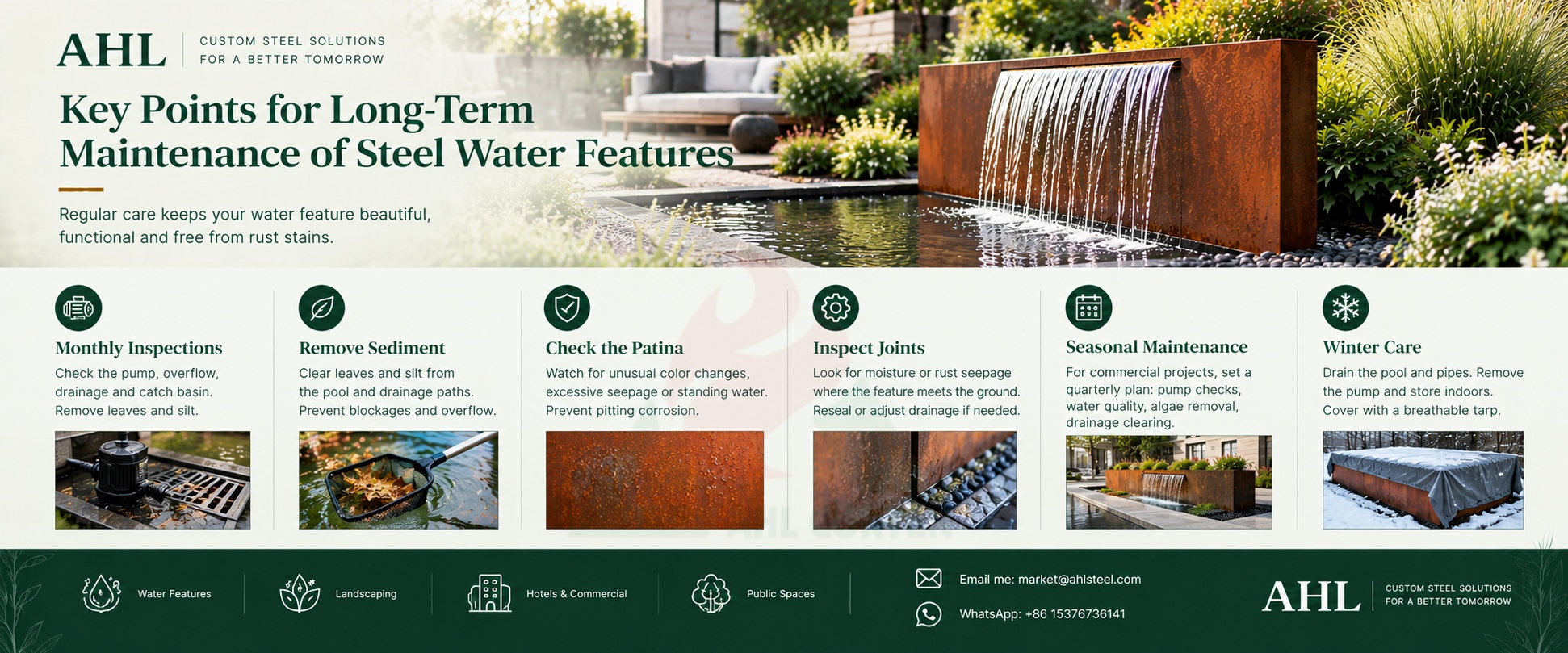
Proper daily maintenance not only extends the service life of large garden water features but also helps continuously manage the risk of rust stains.
1. Routine Monthly Inspections
Regularly check the condition of the water pump, overflow outlet, drainage channels, and catch basin. Promptly remove fallen leaves and silt to prevent drainage holes from becoming clogged.
2. Promptly Remove Sediment
Clear fallen leaves and silt from the pool cavity and drainage pathways. Clogged drains can cause unexpected overflow, which is a common cause of rust stain contamination.
3. Observing the Condition of the Patina
Pay attention to the color of the rust layer and check for unusually heavy seepage or localized water accumulation. Promptly address any areas of standing water to prevent pitting corrosion of the steel.
4. Inspect Joints
Examine the joints where the landscape water fountain meets the ground for signs of persistent moisture or rust seepage. If water accumulation or leaks occur, reapply sealant or adjust the drainage structure.
5. Seasonal Maintenance for Commercial Projects
For hotels, restaurants, and public landscapes, it is recommended to establish a quarterly maintenance plan. This should include pump inspections, water quality control, algae removal, and drainage system clearing.
6. Winter Maintenance in Cold Regions
Thoroughly drain the pool and all piping to prevent structural damage caused by ice expansion. Remove the pump and store it indoors to protect it from freezing. Cover the corten water feature with a breathable, waterproof tarp to shield it from ice and snow while allowing moisture to escape.
Why are Custom Corten Water Features Recommended?
Compared to standardized off-the-shelf products, custom rustic garden fountains offer multiple aesthetic and practical advantages.
1. Dimensions and Water Flow Tailored to Site Conditions
The shape, dimensions, and water flow paths are customized based on the actual layout of the garden. Drainage and overflow systems are designed specifically for the on-site paving and planting layout, reducing the risk of pollution at the source.
2. Consistent Style Across All Landscape Elements
Modern outdoor water features can be paired with weathering steel planters, screens, and garden edging from the same series. The entire landscape features a consistent rust-colored texture, creating a unified and harmonious outdoor space.
3. Integrated Pollution-Prevention Design from the Start
Hidden drainage, drip edges, and water collection channels are built in during the production phase. Rust-related water issues are addressed through structural engineering rather than remedial measures after completion.
4. Adaptability to Diverse Settings
- Private Gardens: Customizable dimensions and appearance to meet personalized landscaping needs
- Hotels and Commercial Spaces: High strength and durability, suitable for high-traffic outdoor areas
- Retail and Business Parks: Commercial-grade craftsmanship, facilitating large-scale implementation
- Parks and Public Projects: Stable and uniform finished appearance
5. Balancing Artistic Aesthetics and Durability
Combining the expressive power of sculptural art with the long lifespan of weathering steel, these products require minimal maintenance and continuously enhance the value of the landscape.

Frequently Asked Questions: Corten Water Features
1. Will Bespoke Water Features Inevitably Stain the Surrounding Paving?
Not necessarily. With a well-designed drainage system, a gravel buffer zone, and appropriate paving choices, staining can be completely prevented. Using pre-weathered products and raising the base can further reduce the risk.
2. How Long Does It Take for a Corten Steel Fountain to Develop a Stable Rust Patina?
In a natural outdoor environment, initial discoloration appears within 2 to 3 weeks; a noticeable rust surface forms within 6 to 12 months; and a complete, stable patina takes 1.5 to 3 years to develop. Factory pre-weathering can complete the oxidation process in just a few days.
3. Can Light-Colored Natural Stone Be Used Next to a Water Feature?
Porous, light-colored stones such as sandstone and limestone are high-risk materials. If their use is unavoidable, apply a penetrating protective sealer before installation and ensure a complete drainage system and a gravel buffer zone.
4. Can the Factory Pre-Weathering Process Truly Reduce Rust Water Contamination?
Yes. The pre-weathering treatment creates a stable oxide film, significantly reducing rust water leaching during the early stages of the project compared to untreated material. This makes it particularly suitable for light-colored paving areas and projects with tight schedules.
5. How Do You Remove Rust Stains from Paving?
For fresh stains, scrub gently with a soft brush using water and a neutral detergent; for stubborn rust stains, use a stone-specific iron remover or diluted citric acid (be sure to test on a small area first); never use strong acids or wire brushes on natural stone.
6. Are Corten Water Features Suitable for Humid Coastal Areas?
They can be used, but the design requirements are more stringent. Ensure proper drainage to prevent water accumulation; elevate the base and install drip edges; prioritize pre-weathered steel; and minimize direct, continuous exposure to salt spray.
7. What are the Key Design Considerations for the Drainage System of Corten Water Features?
Install concealed drainage and independent overflow outlets; Use drip edges and catch basins to direct water away from sensitive surfaces; install a gravel buffer zone; elevate the base by 50 to 100 millimeters; ensure the ground has a drainage slope of ≥2% to prevent water accumulation.
Are You Ready to Choose an Outdoor Corten Water Feature that’s Right for You?
A corten waterfall feature does not necessarily mean it will stain the surrounding paving; the key lies in professional structural design, reliable drainage solutions, and appropriate material combinations.
By incorporating built-in concealed drainage, raising the base, adding a gravel buffer zone, and selecting the right paving materials and surface treatments for the steel, rust staining issues can be effectively resolved.
AHL specializes in custom weathering steel water features. Our products integrate anti-staining drainage structures, and surface treatments can be tailored to different projects, serving everything from private gardens to large-scale commercial landscapes while balancing artistic appeal with engineering reliability.
Back


 Fill In The Inquiry