What Should You Avoid When Cleaning a Corten Water Feature?
Date:2026.08.17
Share to:
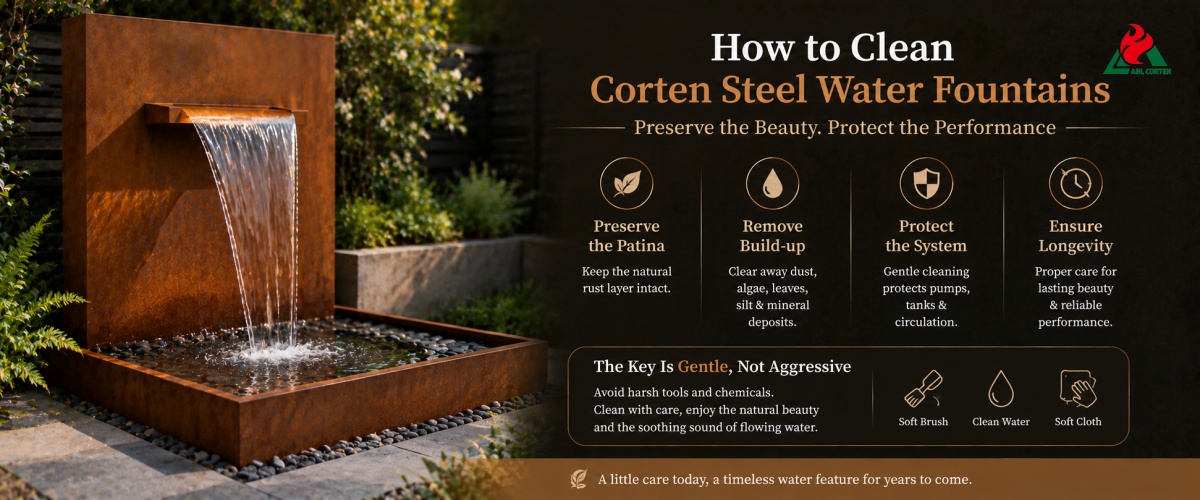
Corten water fountains are currently a popular choice for gardens, patios, and commercial landscapes. With their natural, vintage rust-colored finish and the soothing sound of flowing water, they blend seamlessly into a variety of outdoor settings. Additionally, the material itself offers excellent weather resistance, allowing it to withstand outdoor weather conditions over the long term.
Many users have misconceptions about maintenance, believing that cleaning means “scrubbing vigorously to completely remove rust.” In reality, weathering steel water features consist of a metal surface, a pump, a water tank, and a water circulation system—a complex structure. Blindly using excessive force, improper tools, or harsh cleaning agents can directly damage the structure and appearance of the water feature, significantly shortening its lifespan.
The key to cleaning a Corten steel waterfall is not to wipe away all rust, but to remove dust, algae, fallen leaves, silt, and mineral deposits while preserving as much of the stable, protective rust layer (patina) as possible. Only through proper, gentle maintenance can the water feature retain its natural texture and operate reliably over the long term.
Weathering steel, also known as patina steel, naturally forms a dense oxide layer—referred to in the industry as a “patina”—after prolonged exposure to air, rain, and moisture. This rust layer is not a sign of rust damage but rather a protective barrier inherent to the steel.
2. The 3 Core Benefits of a Stable Patina
Protects the Base Material: A dense patina acts as a barrier against air and moisture, slowing deep corrosion of the steel and extending the lifespan of water features at their source. Naturally Gradual Color Evolution: Weathering steel water features exhibit a gradual color transition, starting with an initial orange-red hue, progressing to a reddish-brown in the middle stage, and eventually settling into a mature, deep brown-gray vintage tone. Natural color variations are normal and contribute to their unique aesthetic value. Enhanced Aesthetic Texture: The mature patina has a warm, rich texture that perfectly complements outdoor elements such as greenery, gravel, natural wood, and stone, creating a natural and sophisticated garden atmosphere.
3. Key Cleaning Principles
Maintenance Core Principle: Remove only loose rust residue, algae, silt, fallen leaves, water scale, and grease; strictly preserve the intact and stable aged rust layer. Forcibly sanding or removing rust will expose the bare steel surface, causing the water feature to rust repeatedly, resulting in a mottled appearance and completely ruining the aesthetic effect.
Absolute No-No #1: Do Not Use Any Abrasive or Hard Cleaning Tools
1. List of Tools to Avoid Completely
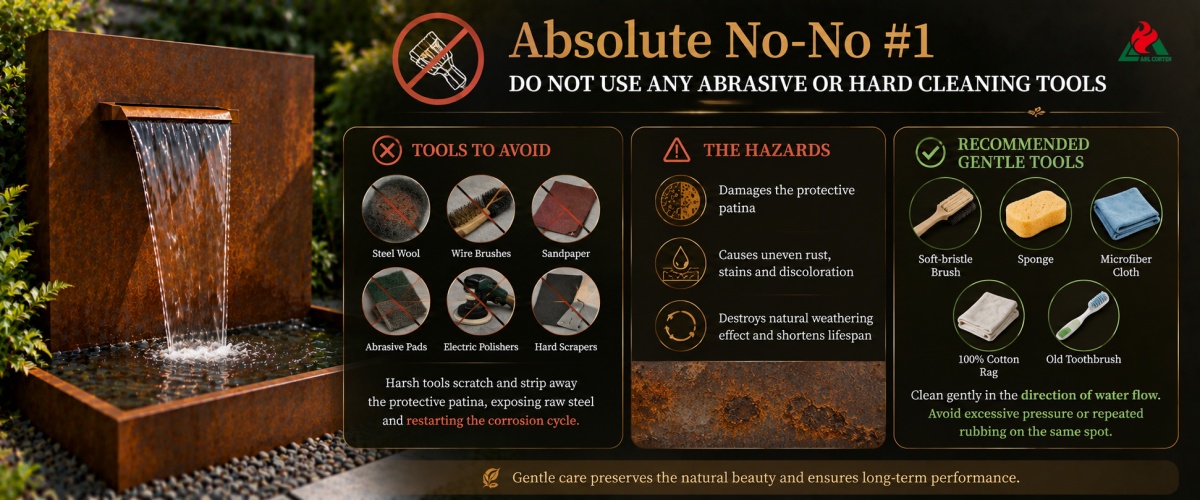
During daily cleaning and deep maintenance, it is strictly prohibited to use any abrasive tools, such as steel wool, wire brushes, sandpaper, abrasive cleaning pads, electric polishers, or hard scrapers.
2. The Serious Hazards of Aggressive Scrubbing
These harsh tools will directly scratch and strip away the protective patina, exposing the raw steel. The exposed steel surface will quickly rust in localized areas, forming orange-yellow mottled rust spots and resulting in a disjointed, uneven overall color. More seriously, artificially damaging the patina will restart the steel’s corrosion cycle, causing the metal water feature to lose its natural, stable weathering effect and permanently damaging its appearance and texture.
3. The Official Recommended Gentle Cleaning Tools
Safe tools suitable for weathering steel water features include: soft-bristle brushes, sponges, microfiber cloths, 100% cotton rags, and old toothbrushes. Hard-to-reach areas such as small crevices, laser-cut holes, weld seams, and water outlets can be gently cleaned with an old toothbrush. When cleaning, wipe in the direction of the water flow and avoid repeatedly rubbing the same spot with excessive force.
Absolute Taboo #2: Avoid Strong Acids, Strong Alkalis, and Chlorine-Based Chemical Cleaners
1. Prohibited Chemical Products
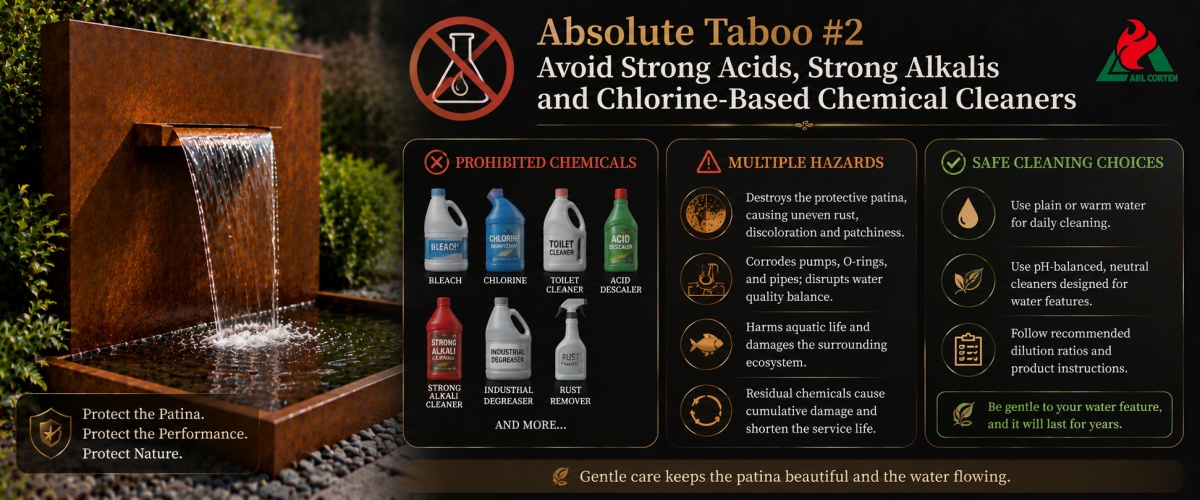
The use of bleach, chlorine-based disinfectants, toilet cleaners, strong acid descalers, strong alkali cleaners, industrial degreasers, non-specialized rust removers, and other types of potent chemical products is strictly prohibited.
2. Multiple Hazards of Chemical Cleaning
Strong chemicals directly dissolve and strip away the protective patina, causing large areas of bright orange rust spots and mottled discoloration on the surface of the water feature. This results in an irreparable “patchy” appearance and accelerates localized corrosion and aging. At the same time, chemical residues can enter the water circulation system, corroding water pumps, O-rings, and pipes, and disrupting the water quality balance. If the water feature contains live plants or ornamental fish, these residues can also harm aquatic life and the surrounding ecosystem. Residual chemicals will repeatedly act on the steel and equipment as the water circulates, causing cumulative damage over time and significantly reducing the overall service life of the water feature.
3. Selecting Safe Cleaning Agents
For daily cleaning, prioritize the use of plain or warm water. When necessary, use neutral, pH-balanced maintenance agents specifically designed for water features, giving priority to products that are eco-friendly to aquatic ecosystems, and strictly follow the recommended dilution ratios. It is not recommended to treat stubborn scale directly with strong acids. Instead, try softening it first with warm water and wiping it away, or consult the manufacturer or professional maintenance personnel for targeted treatment.
Absolute No-No #3: Neglecting Maintenance of the Water Pump and Entire Water Circulation System
1.Common Maintenance Misconceptions
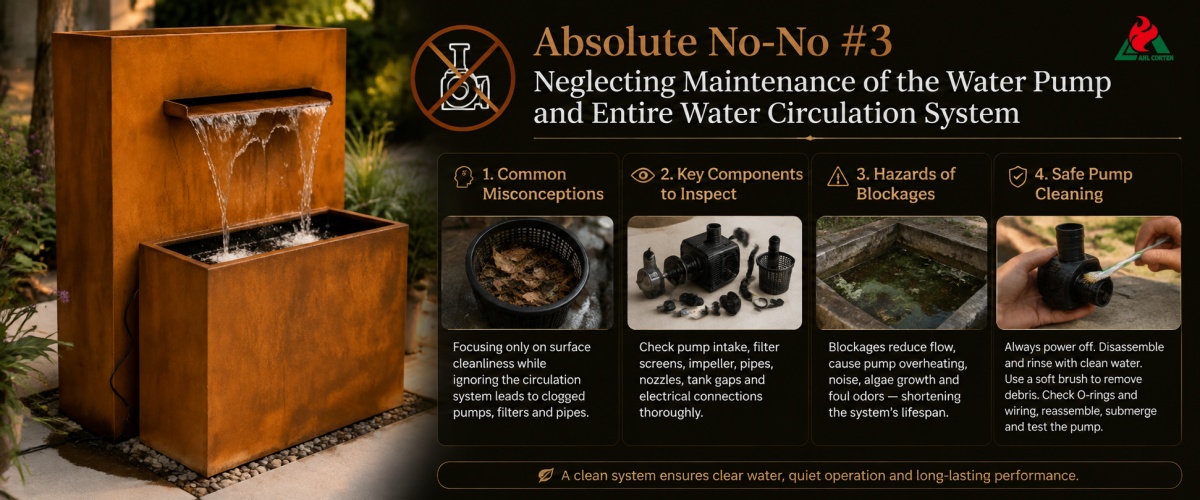
Most users focus solely on the surface cleanliness of the rusted steel water feature, completely neglecting the internal water circulation system. Clogged water pumps, filter screens, and pipes are the primary causes of water feature malfunctions and deteriorating water quality.
2. Key Components Requiring Thorough Inspection
Key maintenance areas include: the water pump’s intake, filter screens, impeller, pipe fittings, outlet nozzles, gaps in the water tank, and the water pump’s electrical connections. Fallen leaves, silt, algae, and debris can easily become entangled and clog these components, triggering a series of equipment problems.
3. Hazards of System Blockages
Pipe blockages can lead to reduced water flow, abnormal noises from the pump, and overheating of the unit. This not only shortens the pump’s service life but also causes stagnant water, algae blooms, and foul-smelling water, creating a vicious cycle.
4. Safety Guidelines for Pump Cleaning
Before cleaning, the power must be turned off and the pump shut down; operating the pump while it is powered on is strictly prohibited. Disassemble the pump and filter screen according to the manufacturer’s instructions. Rinse the housing and filter screen with clean water, and use a soft brush to remove silt and debris from the impeller gaps. After cleaning, inspect the O-rings and wiring to ensure they are intact. After reassembling the pump, ensure it is fully submerged in water before turning on the power for a test run. Observe whether the water flow and operating noise are normal.
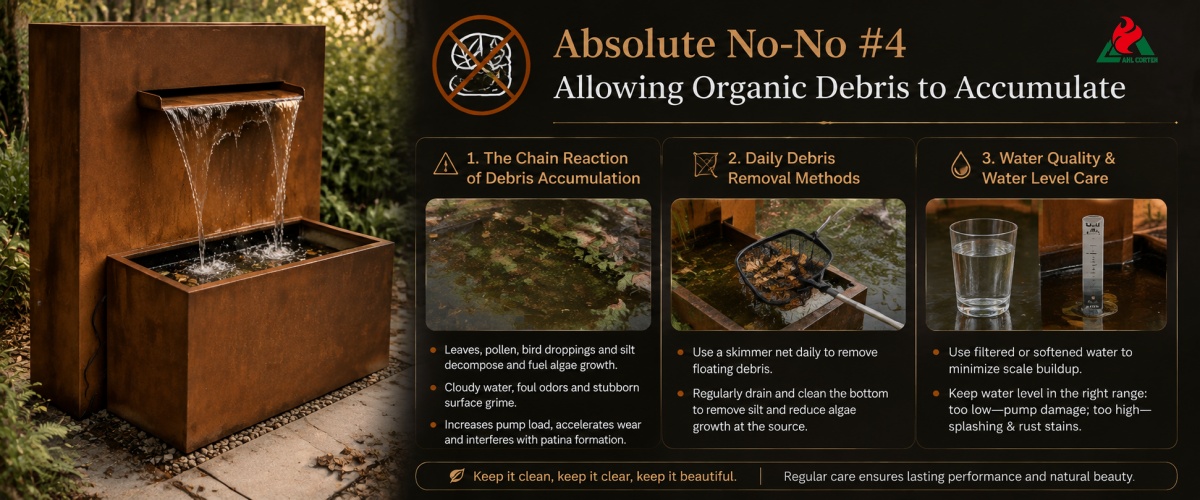
Absolute No-No #4: Allowing Organic Debris Such as Algae, Fallen Leaves, and Silt to Accumulate
1. The Chain Reaction of Debris Accumulation
Outdoor corten water fountains are constantly exposed to the elements, leading to the continuous accumulation of fallen leaves, dead branches, pollen, bird droppings, insect carcasses, and silt at the bottom of the water. As these organic materials decompose, they foster the growth of large amounts of algae, causing the water to become cloudy and produce unpleasant odors. At the same time, debris increases the load on the water pump, accelerates equipment wear and tear, and causes stubborn grime to adhere to the surface of the water feature, interfering with the natural and stable formation of the patina.
2. Daily Debris Removal Methods
In garden environments with heavy leaf fall and strong sunlight, it is recommended to use a skimmer net daily to remove floating debris from the water’s surface. Regularly drain accumulated water from the bottom and clean silt from the reservoir to reduce conditions conducive to algae growth at the source.
3. Key Points for Water Quality and Water Level Maintenance
In areas with hard water, white scale deposits are likely to form. Prioritize using filtered or softened water for top-ups to reduce mineral buildup. Strictly control the water level: If the water level is too low, the pump may run dry, causing equipment damage; if the water level is too high, splashing and rust stains may overflow, affecting the neatness of the surrounding landscape.
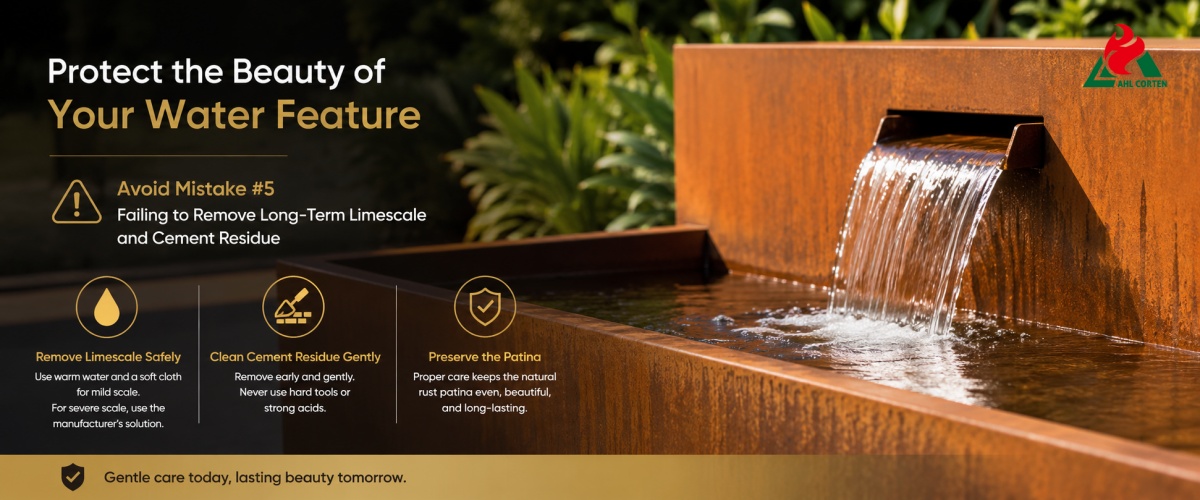
Absolute No-No #5: Failing to Remove Long-Term Limescale and Cement Residue
1. The Hazards of Stubborn Residue
Hard water evaporation forms white limescale along the waterline. Cement slurry and grout residue left behind after water feature construction, if allowed to remain on the surface of weathering steel for an extended period, will obscure the natural rust patina, causing uneven coloring and completely ruining the overall aesthetic appeal of the water feature.
2. Safe Methods for Removing Limescale
Mild Limescale: Lower the water level, then use warm water to soften the deposits. Gently wipe with a microfiber cloth or soft sponge, followed by a thorough rinse with clean water. Severe Limescale: Do not scrape aggressively or soak in strong acids. Refer to the product manual and use the manufacturer’s specified diluted cleaning solution. Strictly control the concentration of the solution and the contact time, and rinse thoroughly with clean water after cleaning.
3. Prohibited Methods for Removing Cement Residue
Cement and mortar stains left over from construction must be gently cleaned as soon as possible. Do not use hard tools to scrape them off, nor use high-concentration hydrochloric acid or industrial cement descaling agents, as these can easily corrode the patina and cause permanent discoloration. For stubborn residue, consult a professional for removal.
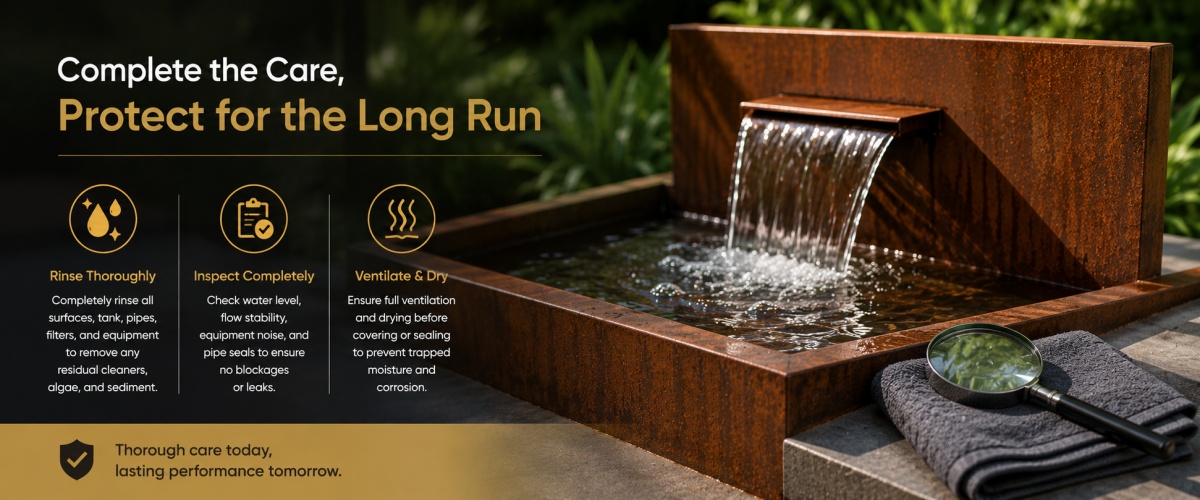
Absolute Prohibition 6: Omitting the Rinsing, Inspection, and Ventilation Steps After Cleaning
1. Residual Hazards Must Not Be Overlooked
If cleaning agents, algae residues, and sediment are not thoroughly rinsed away, they will remain in the water tank, pipes, and crevices. As they circulate with the water, they will continuously erode the steel surfaces and equipment, leading to long-term corrosion, unpleasant odors, and cloudy water.
2. Complete Post-Cleaning Inspection Process
After cleaning, thoroughly rinse all steel surfaces, water tank, pump, filter screens, and piping to completely remove all residues. After refilling the water, check the water level, water flow stability, equipment noise, and pipe seals to ensure there are no blockages or leaks.
3. Ventilation, Drying, and Maintenance
If the water feature will not be used immediately after cleaning, ensure that the surfaces and crevices are fully ventilated and dried. Do not seal or cover the area immediately, nor apply sealant while it is damp, to prevent localized corrosion and uneven discoloration caused by trapped moisture and dampness.
Standard Safe Cleaning Procedure for Steel Water Features (Complete 6-Step Version)
Step 1: Disconnect Power and Shut Off Water Supply. Turn off the water pump and lighting system, disconnect the power supply, and lower or drain any standing water to eliminate electrical safety hazards and prevent equipment damage. Step 2: Remove Debris. Use a skimmer net to remove fallen leaves, insects, and floating debris from the water surface, and clear silt and sediment from the bottom of the water tank. Step 3: Gently Clean the Surface. Wipe the steel surface with clean water, a soft sponge, or a soft brush, removing only dirt and loose rust particles while preserving the established patina. Step 4: Maintain the Circulation System. Disassemble and clean the water pump, filter screens, nozzles, and piping; remove any debris causing blockages; and inspect components for damage. Step 5: Thorough Rinsing with Clean Water. Thoroughly rinse the steel body, water tank, equipment, and piping from all sides to ensure no cleaning residue remains. Step 6: Refill, Start Up, and Re-inspect. Fill with clean water to the standard water level, ensuring the water pump is fully submerged. Start the system to check water flow, noise levels, and seals to confirm normal operation.
Choose Low-Maintenance Corten Water Features to Reduce Maintenance Hassles from the Start
High-quality weathering steel water features are designed to minimize the difficulty of daily cleaning, eliminating the need for frequent, labor-intensive maintenance. By focusing on key details during selection, you can easily ensure long-lasting, worry-free use. Prioritize models with sufficient steel thickness, precision welding, built-in drainage systems, and removable pumps and filters. Water features equipped with dedicated drainage holes, maintenance access points, and winter drainage solutions can significantly reduce cleaning and seasonal maintenance costs. It is also essential to pair the system with a pump that delivers the appropriate flow rate. Excessive flow can cause splashing and erode the steel, while insufficient flow leads to stagnant water and algae growth. Precise system calibration is key to the long-term, stable operation of your water feature.
Why Choose AHL Weathering Steel Water Features?
AHL weathering steel water features emphasize natural texture and stable performance, balancing aesthetic appeal with long-term, low-maintenance care, and are suitable for a wide range of outdoor settings.
Extensive Selection: Our range includes weathering steel water basins, water walls, rain curtains, waterfalls, and landscape water features, with support for custom designs.
Comprehensive Customization Services: Dimensions, water tank capacity, water discharge methods, drainage systems, LED lighting, and pump configurations can all be customized to meet specific needs, making them suitable for various settings such as gardens, commercial landscapes, hotels, and public spaces.
Professional, Low-Maintenance Design: Optimized water circulation and drainage structures ensure patina protection, stable water quality, and year-round maintenance. By addressing common issues such as clogging, scale buildup, and corrosion at the design level, we truly achieve high-aesthetic, low-maintenance outdoor landscape effects.
Frequently Asked Questions (FAQ) About Corten Water Features
Q1: Can I Use a Wire Brush to Clean a Weathered Steel Water Feature?
No. A wire brush will scrape off the protective patina, exposing the raw steel, which can cause rapid localized rusting, uneven surface discoloration, and permanently damage the aesthetic quality of the feature. We recommend using a soft brush, sponge, or microfiber cloth for cleaning.
Q2: Can Bleach Be Used To Remove Algae?
Do not use bleach. Chlorine-based cleaners like bleach will destroy the steel’s protective patina, corrode pump components, contaminate the water, and harm surrounding vegetation and aquatic life. We recommend using specialized algae-removal products designed for water features.
Q3: Can a High-Pressure Water Jet Be Used For Rinsing?
It is not recommended for routine cleaning. High-pressure water jets can wash away unstable patina, forcing silt and rust debris into crevices and inside equipment, leading to subsequent corrosion and clogging issues.
Q4: Do I Need To Wipe Away All Rust During Cleaning?
Absolutely not. A stable, natural rust layer serves as both a protective coating and a scenic highlight. Simply remove loose rust, debris, dirt, and foreign matter, while preserving the mature patina.
Q5: How Should Maintenance Be Performed During the Cold Winter Months?
In environments below freezing, drain all water from the tank, remove any residual moisture from the pipes and nozzles, and disassemble the water pump for storage in a frost-free environment. This prevents water from freezing and expanding, which could crack the tank, pipes, and equipment components.
Summary: Gentle Maintenance to Preserve the Natural Texture of Weathered Steel Water Features
The core of maintaining corten steel water fountain has never been about “removing rust and refurbishing,” but rather about preserving the patina, keeping the water clean, and ensuring system stability.
When cleaning and maintaining these features, strictly adhere to these six guidelines: do not use abrasive or hard tools; do not use strong acids, strong alkalis, or chlorine-containing chemicals; do not neglect the water circulation system; do not allow debris or algae to accumulate; do not leave behind scale or cement residue; and do not skip the final inspection after cleaning.
Adhering to gentle, regular, and targeted scientific maintenance not only preserves the weathering steel’s unique vintage, gradually changing rust tones and natural landscape texture but also ensures the long-term stable operation of the pump system, allowing the water feature to present a vibrant, sophisticated, and enduring outdoor landscape effect year-round.



 Fill In The Inquiry