In modern landscape design, planters are no longer merely containers for plants; they have become key elements that define the atmosphere of a space. However, many landscape designers and property owners are often troubled by various issues related to planters.
Plastic or ordinary ceramic planters have a cheap feel and fail to match the sophisticated elegance of high-end gardens; wooden planters are prone to rot, while ordinary steel is susceptible to rust, corrosion, and structural failure, requiring frequent replacement and incurring high costs; their fixed colors and cold materials fail to create visual contrast with the changing scenery of the four seasons; even more troublesome is that traditional planters require regular painting and preservative treatments, and can quickly become shabby if not properly maintained.
If you’re looking for a material that can withstand extreme weather while developing a unique patina over time, weathering steel planters are undoubtedly the top choice in today’s landscaping industry.
This article will delve into the core advantages of corten steel planters, showing you how this “self-promoting” material addresses all the pain points mentioned above—from exceptional structural durability to a unique self-healing rust patina, and its versatility across various design styles—providing you with a comprehensive guide to selecting and applying custom made planters.
By the end of this article, you’ll be able to quickly determine whether corten steel pots are the ultimate solution for your next garden upgrade.Metal garden planters are never merely static containers; they are “dynamic landscapes” that grow alongside your garden, effortlessly elevating the ambiance of your outdoor space.
Why Do Corten Steel Planters Exude a “High-End” Aesthetic?
In many luxury hotels, modern villas, and urban plazas, you’ll always spot that deep, textured reddish-brown hue. The reason corten steel planters stand out and have become a favorite among designers lies in their unique texture and aesthetic appeal.
Unique Patina: An Art Form that Evolves Over Time
Unlike ordinary painted planters, whose colors remain static or even peel off easily, custom corten planters possess a unique self-repairing protective layer—the patina. This is the key feature that sets them apart from other materials.
The evolution of the corten steel raised planter’s rust color follows a distinct trajectory: fresh from the factory, it displays a raw metallic sheen. Through the natural nourishment of sun and rain, it gradually transitions from a bright yellow to a reddish-orange, eventually settling into a deep chocolate hue. This entire process takes approximately 3–6 months to reach a stable state.
This rust color is not uniform or monotonous; instead, it features natural variations in light and shadow along with a granular texture. This “natural layering” creates a striking visual contrast with the lush greenery of plants, making the planter itself appear like a work of art that has grown directly from the earth.
Unlike static decorative containers, the corten steel raised bed planters are a “living work of art.” They mature over time and grow alongside the garden—this is the very essence of their aesthetic appeal.
Timeless Beauty: The Perfect Fusion of Industry and Nature
Modern outdoor design champions “durability” and “raw, natural beauty,” and the circular rustic steel planter perfectly embodies this philosophy. It completely dispels any sense of cheapness: compared to the flimsy, fragile nature of plastic planters or the worn, aged appearance of wooden ones, the cortensteel (rust-colored) planter showcases a fusion of industrial texture and natural charm, exuding a sense of calm and sophistication. Their premium appeal stems from understated elegance: rather than relying on garish colors to attract attention, they define the tone of the entire landscape through the inherent weight of the material (typically 2–3 mm thick) and the balance between the coolness of metal and the warmth of the rusted finish.
Choosing acorten steel square planter is, at its core, a choice for a high-quality outdoor lifestyle—one that eschews fleeting vibrancy in favor of a mature beauty that deepens with time. This is precisely what contemporary people seek in a premium outdoor space.
Corten steel planters are widely recognized as the ultimate solution for outdoor environments, primarily due to their unique chemical properties, which allow them to withstand a wide range of extreme weather conditions without requiring frequent maintenance.
The principle behind its corrosion resistance is highly scientific: ordinary steel rusts, leading to structural loosening and eventually perforation and damage; in contrast, when corten steel is exposed to the atmosphere, it naturally forms a dense, amorphous oxide layer. This rust layer not only prevents corrosion from penetrating inward but also acts as a “natural coating,” firmly sealing the internal metal substrate and preventing further erosion by moisture and oxygen.
It handles extreme environments with ease: whether it’s high-salt fog by the sea, the bitter cold and freezing conditions of northern winters, or the scorching heat and intense sunlight of summer, corten steel maintains structural stability. It won’t become brittle and crack like plastic, nor will it rot and warp like wood—it remains in pristine condition.
For homeowners, this means fewer replacements, zero maintenance costs, and the complete elimination of “maintenance anxiety.” You can focus solely on pruning plants and tending to your garden without worrying about the planters themselves quietly deteriorating, truly achieving a “set-it-and-forget-it” solution.
Key Advantage 2: Versatile Aesthetics
The rust-colored finish of rusted steel planters belongs to the earth tones in color theory. This natural hue gives it an inherent advantage when paired with various materials, quickly creating a sense of overall unity in the garden without the need for complex decorations.
Its material pairing logic is highly flexible: when paired with wood or stone, the warm rust tone balances the coldness of stone and the monotony of wood, creating a layered sensory contrast; when paired with border plants, the deep reddish-brown background perfectly highlights the vibrancy of green foliage and the brilliance of flowers, making the plants appear more vivid and three-dimensional.
Examples of Suitable Applications in Different Settings
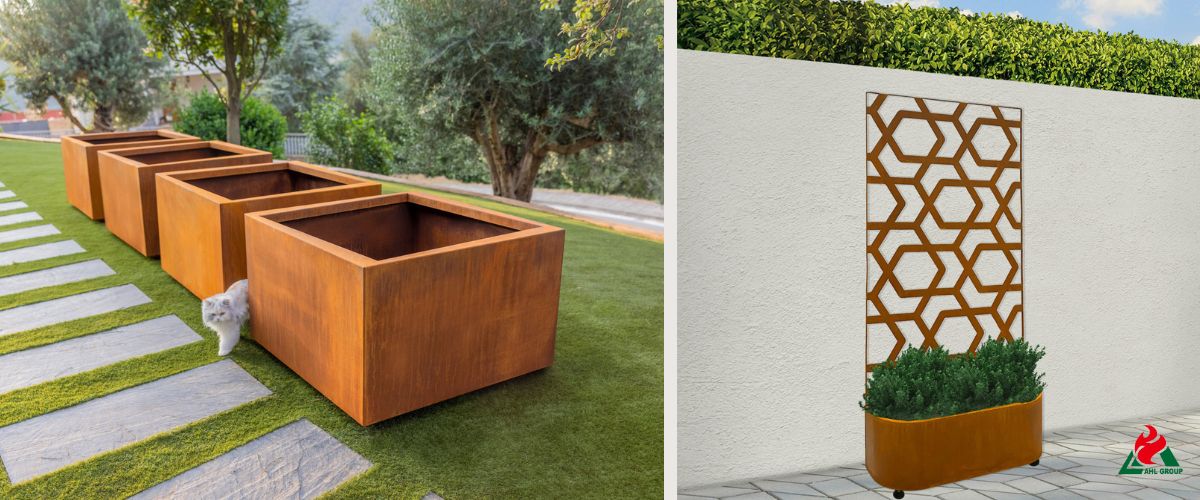
Entrance and Walkways: Arrange corten steel bottomless planters in rows to create a solemn and orderly first impression of the garden through their arrayed texture, showcasing the homeowner’s taste.
Patio Corners: With its steady presence, it serves as a visual anchor for the space, instantly brightening the corner and transforming an otherwise empty area into a focal point with style.
Modern Minimalist Gardens: Infusing clean lines with an industrial texture, these planters prevent minimalist spaces from feeling monotonous. They add a warm, time-honored feel, achieving a look that is “simple yet sophisticated.”
Requiring minimal effort to coordinate, metal planters effortlessly blend into any garden, creating a unified, layered landscape effect. They are the “ultimate versatile tool” in landscape design.
Corten planters are not merely containers for plants; they are also excellent tools for organizing garden spaces. Their exceptional versatility opens up endless possibilities for garden layouts, making it easy to create personalized landscapes.
Easily Define Spatial Zones: By combining trough-style Cotton steel planters, you can effortlessly divide your garden into walkways, relaxation areas, and planting zones without the need for complex fencing, resulting in a more orderly layout.
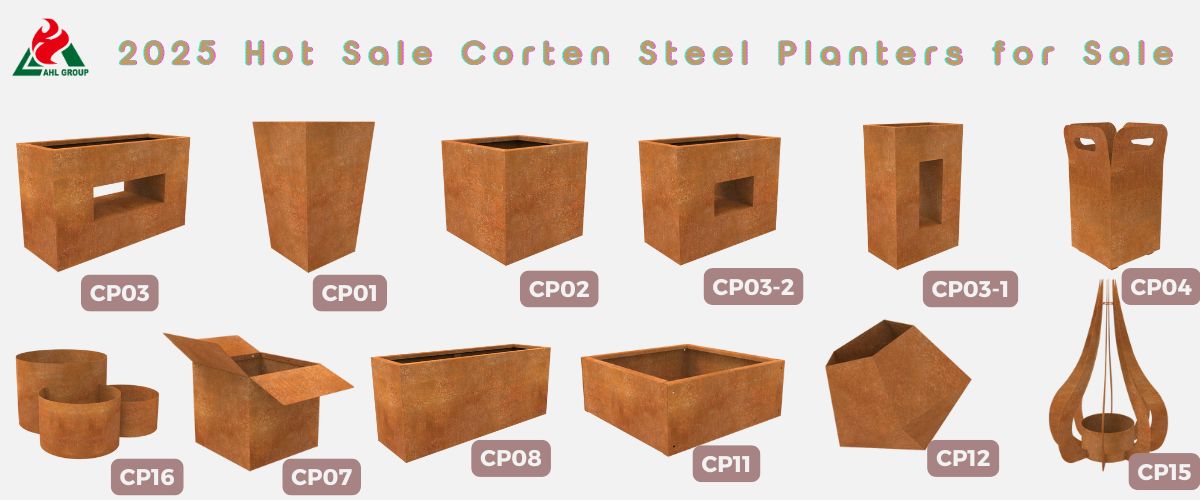
Create Rich Visual Layers: Arrange garden planters of various shapes—such as cubes, rectangles, and cones—at different heights in a staggered pattern. This not only highlights focal plants (such as topiary olive trees or maple trees) but also adds rhythm to flat surfaces, giving the garden a sense of depth.
Extremely High Design Flexibility: Corten steel is easy to cut and weld. Whether your garden features irregular corners or an open terrace, you can customize shapes to perfectly fit your space.
Purchasing weathered steel planters is essentially a “systematic upgrade” for your garden layout. By arranging pots of varying sizes and shapes in a staggered pattern, you can integrate previously scattered garden elements into a cohesive, rhythmic landscape, enhancing the garden’s overall design aesthetic.
Key Advantage 4: Exceptional Plant Compatibility
Corten steel planters not only boast striking visual appeal but also provide an ideal growing environment for all types of plants thanks to their superior physical properties, ensuring healthier and longer-lasting growth.
Suitable for a Wide Range of Plant Types
Ornamental Grasses: Delicate and graceful ornamental grasses, such as Miscanthus and Fountain Grass, paired with deep brown corten steel planters, create a striking modern contrast that is both minimalist and stylish.
Evergreens/Drought-Tolerant Plants: Plants like olive trees and agaves, with their cool-toned foliage, pair perfectly with the warm rust-colored planters. Corten steel effectively retains soil moisture, aligning with the growth patterns of these plants and reducing the frequency of watering.
Colorful Flower Beds: The earthy tones of corten steel act like a natural filter; regardless of the flower colors chosen, the combination appears harmonious and natural, adding depth and sophistication to the flower bed.
Expert Tips
All the planting benefits of corten steel planters are built upon proper drainage and soil preparation. Rusted steel planters available on the market typically come with pre-drilled drainage holes; when paired with well-draining soil, they effectively prevent root rot and ensure healthy plant growth. We not only provide high-quality planters but also offer precise plant pairing recommendations based on your placement and planting preferences, ensuring every landscape looks perfect from the very start.
For most busy homeowners, the biggest appeal of corten steel planters lies in their “peace of mind and convenience”—they stay in great condition without requiring a lot of time and effort to maintain.
Say Goodbye to Tedious Maintenance: Traditional wooden planters require annual painting to prevent rot, while plastic planters fade and crack under the sun. Corten steel planters, however, require no rust-proof paint or protective coatings, saving you a significant amount of maintenance time. Daily Maintenance Is Extremely Simple: Simply use a soft brush to occasionally remove surface dust and check the drainage holes at the bottom for root blockages during seasonal changes—no extra effort required.
Understanding the Rusting Process
Don’t worry about initial rust marks: When newly installed planters exhibit “rust streaks” and mottled patterns, this is a natural part of the rusting process and is completely normal. No need for excessive maintenance: Minor surface scratches will naturally “heal” over time as a new layer of rust forms, eliminating the need for the meticulous care required by ordinary steel. Choosing a corten steel large planter means opting for “passive landscaping”—let time do the work. All you need to do is sit back, relax, and enjoy the serenity of your garden without worrying about planter maintenance.
Key Advantage 6: Inherent “Photogenic Appeal”
Corten steel planters are ubiquitous on social media and in high-end home decor magazines. This is not only due to their durability but also because they possess a striking “photogenic quality” that effortlessly elevates the aesthetic appeal and sophistication of your garden. Vivid Color Contrast: The reddish-brown industrial rust texture creates a striking contrast with vibrant green foliage, producing a visually impactful effect in photos that instantly makes your garden appear “complete and refined.” Clean-lined Aesthetics: With their sharp angles and crisp lines, corten steel planters instantly enhance a space’s architectural appeal, making them particularly suitable for those who prefer minimalist, modern, or industrial styles.
For those looking to quickly elevate their garden’s style, planters are the perfect shortcut. No major renovation is needed—simply place a few thoughtfully arranged corten steel trough planters to transform an ordinary corner into a stunning landscape that will be the envy of the neighborhood.
Not every garden needs corten garden bed planters, but if you fall into one of the following categories, they are definitely the perfect choice for you: Design enthusiasts seeking a “modern natural aesthetic”: Tired of the heaviness of traditional stone and the cheap look of plastic, you hope to create a minimalist yet refined outdoor aesthetic through the interplay of metallic texture and natural patina. Practical people plagued by “maintenance anxiety”: You don’t have time to repaint wooden planters every year, nor do you want to constantly clean up broken ceramic pots. You need a material that’s “set and forget” yet gains character with age. Homeowners who prioritize quality and aim to “get it right the first time”: Fully aware of the recurring costs of rework associated with low-end materials (time, labor, and plant damage), they prefer a one-time investment in exchange for decades of structural stability and aesthetic appeal. Those looking to “upgrade their space” on a budget: Uninterested in large-scale garden renovations, but hoping to quickly establish a sense of order and visual focal points through simple arrangements, thereby elevating the overall ambiance.
Buying Guide: How to Choose a Truly Practical Corten Steel Planter?
To ensure theplanter you choose fits perfectly into your garden and to avoid common pitfalls, we recommend following these three steps to make the right choice:
Step 1: Determine the Placement Setting (Function Determines Form)
Entrance or Walkway: We recommend tall, slender columnar planters arranged in rows to create a sense of ceremony and convey dignity and order. Along Garden Edges or Walls: Choose trough-style corten steel raised planters. They serve as natural barriers, help define spaces, and provide privacy. In Open Central Areas of the Garden: Select large-diameter round or bowl-shaped corten steel planters to act as visual focal points. Plant topiary trees in them to create the garden’s centerpiece.
Step 2: Match Plant Characteristics (Pay Attention to Structural Details)
Drought-tolerant plants (such as succulents and olive trees): Ensure the planters have sufficient drainage holes and ventilation feet to prevent waterlogging and root rot, meeting the growth needs of these plants.
Plants with high water requirements: Corten steel conducts heat quickly. In areas exposed to intense summer sunlight, it is recommended to choose Corten steel planters with a thickness of 3 mm or more, or to add an insulating liner to the inner walls of the planters to prevent the roots from being “scorched” .
Step 3: Evaluate Core Parameters (Focus on Key Metrics)
Wall Thickness: The gold standard for household planters is 2–3 mm. Too thin a wall may warp, shortening the product’s lifespan; too thick makes the planter overly heavy, increasing the effort required for moving and placement. There is no need to excessively prioritize thickness. Pre-Rusting Status: Consult the manufacturer to confirm whether the planter is shipped in its “natural finish” or has undergone “pre-rusting treatment.” If you want to see the ideal rust color immediately, we recommend choosing a product that has undergone a rust-inducing treatment; if you want to experience the natural evolution of the rust color, you can choose the natural finish option. Drainage System: Check whether the planter has pre-drilled drainage holes and if it comes with a matching drip tray. If you plan to place it on light-colored stone flooring, a drip tray is essential to prevent initial rust water from staining the floor.
A: This is the most common concern. During the first 3–6 months after installation (the rusting period), rainwater may carry loose rust particles that drip down and potentially stain the floor. Solution: If placed on light-colored stone or wooden floors, be sure to use the matching drip tray or place a concealed stand beneath the planter. Once the rust layer has fully stabilized and become dense, this phenomenon will significantly decrease.
Q2: Do Corten Steel Planters Need a Protective Coating?
A: We do not recommend it. A protective coating blocks oxygen, hindering the natural formation of the patina and disrupting corten steel’s self-healing properties. If you are particularly concerned about rust stains during the initial period, you may use a specialized sealer; however, this typically alters the metal’s natural luster, so we advise choosing such products with caution.
Q3: How Can I Improve Drainage In Corten Steel Planters?
A: All our corten steel planters come with pre-drilled drainage holes. We recommend placing a 5–10 cm layer of expanded clay or gravel at the bottom of the planter to serve as a drainage layer. This prevents soil and silt from clogging the drainage holes, ensuring good airflow to the roots and smooth drainage.
Ready to Choose a Corten Steel Planter?
The true value of rusted steel planters lies in breaking the myth that “outdoor furniture is disposable.” They are more weather-resistant, more stylish, and blend more seamlessly with nature. Combined with proper drainage and thoughtful plant selection, they can provide you with decades of high-end landscaping enjoyment—both hassle-free and stunning. Contact us now!
If you’re interested but unsure which size or style suits your space, please contact us via the following methods:
1. One-on-One Customization: Send us photos of your installation location, size requirements, or a list of plants you plan to grow. Our landscape consultants will provide you with “corten steel planter recommendations + spatial layout suggestions” tailored precisely to your needs. 2. One-Stop Service: If you’re looking to create a complete garden landscape, we offer a one-stop service covering everything from layout design and product customization to logistics, delivery, and on-site installation—ensuring your dream garden is brought to life perfectly, all in one go.

.jpg)
 Fill In The Inquiry