Which Is Better: Corten Steel Fire Pit vs Cast Iron Fire Pit?
Date:2026.04.29
Share to:
A fire pit is undoubtedly the heart and soul of any garden design. It dispels the evening chill, brings friends and family together in laughter, and infuses outdoor spaces with warmth and ambiance.
However, when designing a garden, many people face a dilemma: should they choose a corten steel fire pit or a cast iron fire pit? Which one can truly withstand wind, rain, snow, and frost without rusting or breaking? Do cast iron fire pits really become brittle and crack under high temperatures? Which one balances aesthetics and practicality, complementing your garden’s style while lasting for years?
This article will thoroughly analyze the differences between these two fire pits across five key dimensions—weather resistance, thermal performance, maintenance costs, safety, and aesthetics—to help you avoid the pitfalls of “uncontrollable rust” and “frequent replacements,” and select the ideal piece that will accompany your garden for decades.
Say goodbye to the hassle of replacing your fire pit every three years. This guide will help you choose the perfect fire pit based on your lifestyle—whether you’re looking for low-maintenance convenience or the warmth of a classic, vintage design.
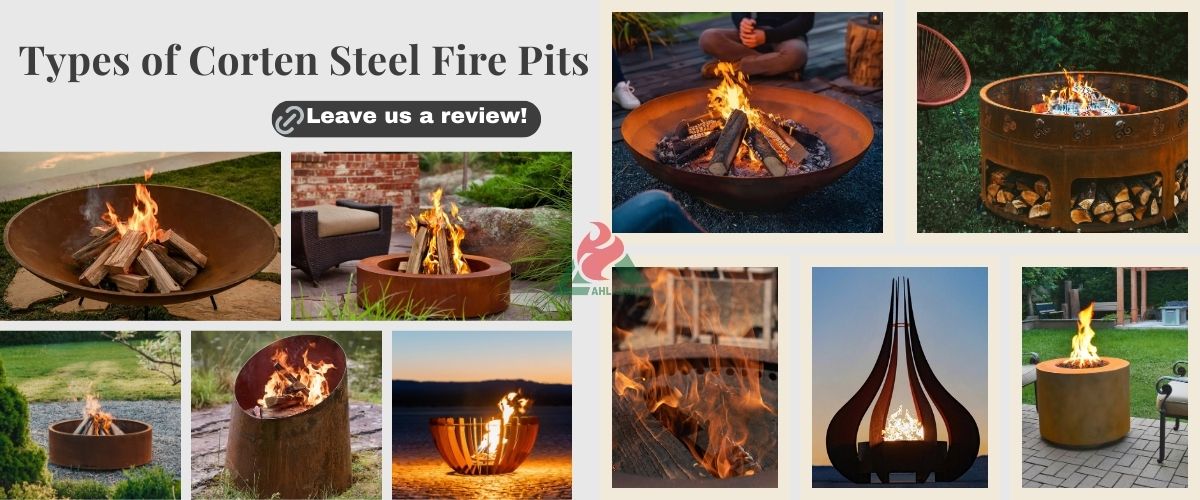
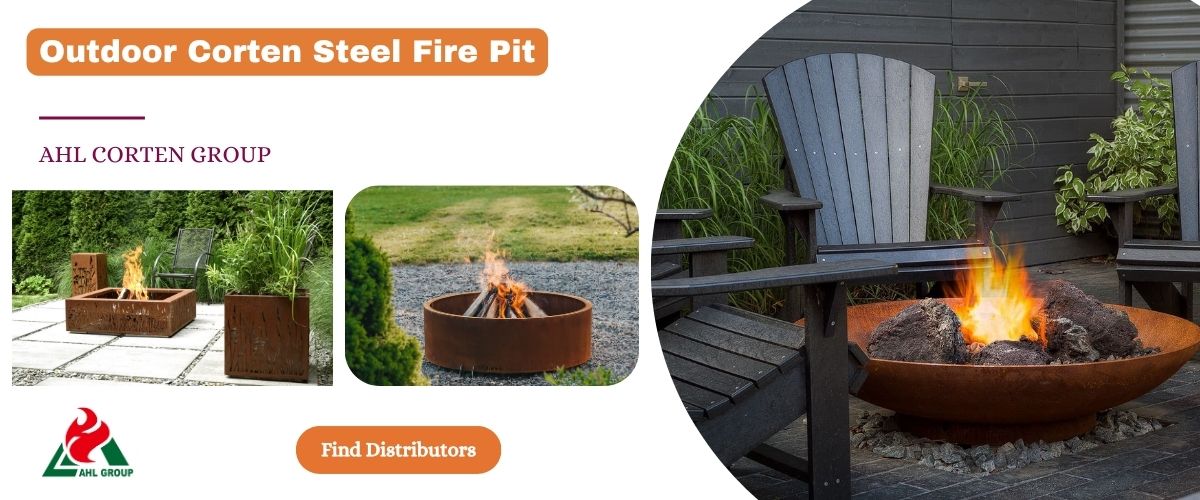
The Advantages of Corten Fire Pits: The Top Choice for Modern Landscape Design
In upscale gardens and social spaces, rusted steel fire pits are seen far more frequently than those made from traditional materials, making them the new favorite in modern landscape design—and this is by no means a coincidence.
Vibrant Aesthetics: A Texture that Matures Over Time
The most captivating aspect of backyard fire pits lies in their unique patina—not a standard coat of paint, but a reddish-brown protective layer that forms naturally through exposure to sun and rain.
Its color constantly evolves: starting from a bright orange, it gradually transitions to a deep chocolate brown. Every rust mark is unique, as if bearing the imprint of time.
This naturally formed texture transforms metal fire pits from mere heating tools into works of art in the garden, gaining more charm the longer they are used.
Exceptional Weather Resistance: A “Long-Lasting Choice” for Worry-Free Outdoor Use
Corten steel is one of the few metals that is truly “weather-resistant.” It naturally forms a dense oxide layer in the air, which firmly seals the underlying metal and prevents corrosion from penetrating inward.
You can leave your patio fire pit outdoors year-round without a dust cover or the need for special storage. Even when exposed to wind and rain, it will retain its structural integrity.
This “low-maintenance” characteristic perfectly aligns with modern people’s pursuit of high-quality, low-maintenance outdoor living.
Versatile Style: Seamlessly Blends into Any Garden
Corten steel’s rust-colored hue belongs to the warm earth tones palette, featuring a naturally soft texture that pairs effortlessly with any setting. Whether paired with rugged stone, natural wood, or lush flower beds, it achieves a high degree of visual harmony—unlike ordinary black metal, which can appear cold and jarring.
For homeowners who seek a product that “gains character with use” and wish for their fire pit to become the visual focal point of their garden, the propane fire pit is undoubtedly the best choice.
The Advantages of Cast Iron Fire Pits: A Timeless Classic
Despite the constant emergence of new materials, cast iron fire pits continue to hold a significant position in the market. Their inherent “heavy, substantial feel” evokes a sense of nostalgia that many find irresistible.
Unparalleled Heat Retention: An Immersive Warmth Experience
Cast iron boasts an extremely high thermal capacity, which is its most prominent advantage. Once the fire is lit, the cast iron walls quickly absorb heat and radiate it evenly into the surrounding area.
Even after the flames die down, the heavy cast iron material retains heat for a long time, continuously providing warmth to the garden and creating a “solid yet soothing” atmosphere.
Classic Aesthetics: A Vessel of Nostalgic Charm
For English estates, traditional farmhouses, or rustic-style gardens, the rugged texture and deep charcoal-gray hue of cast-iron fire pits offer a natural affinity.
They embody a steady, reliable traditional aesthetic, instantly evoking memories of old-fashioned bonfire gatherings and infusing the garden with a nostalgic, warm ambiance.
Sturdy and Reliable: Visible Peace of Mind
Many people are well-acquainted with how to maintain a cast-iron fire pit—simply applying cooking oil or rust inhibitor regularly keeps it in pristine condition.
Moreover, cast-iron fire pits are substantial and have a low center of gravity, making them extremely stable when placed on the ground. There’s no need to worry about them being blown over by strong winds or knocked out of place, providing a strong sense of physical security.
If you prefer traditional heating efficiency and your garden style leans toward classic, substantial aesthetics, a cast-iron fire pit will provide you with the most stable and familiar winter warmth.
Key Comparison 1: Weather Resistance and Lifespan — Corten Steel Fire Pit vs. Cast Iron Fire Pit
Laboratory data doesn’t tell the whole story; real-world outdoor conditions—such as rainy seasons, snowfall, and morning dew—are the ultimate test of a fire pit’s material quality. The difference in weather resistance between these two types of fire pits directly determines their lifespan.
Corten Fire Pit: “Protective Rust,” Long-Lasting Durability
Corten steel operates on the principle of “protective rusting”: under the erosion of wind, rain, and snow, it forms a dense and stable oxide layer that effectively blocks moisture penetration, protecting the internal metal from corrosion. Even when left outdoors year-round without a dust cover, a corten steel fire pit maintains its structural integrity, with a lifespan of 10–20 years, and will not develop rust perforations.
Cast Iron Fire Pits: “Continuous Oxidation,” Requiring Frequent Maintenance
Rusting in cast iron, however, is a process of “continuous oxidation”: the surface rust layer constantly flakes off, exposing new metal layers. If not cleaned and maintained promptly, moisture will continue to corrode the interior.
Without regular cleaning and oiling, and when exposed to humid environments for extended periods, the structure of a cast iron fire pit will gradually thin out and may even develop rust perforations, typically requiring replacement every 3–5 years.
Regional Recommendations
Coastal/Humid Areas: Prioritize fire pit tables. Salt fog is extremely corrosive to cast iron, whereas corten steel better withstands complex atmospheric conditions and is less prone to rust. Dry/Indoor Landscaping Areas: Cast iron fire pits perform well. As long as the environment is dry and controlled, and basic maintenance is performed, their lifespan can be nearly on par with metal fire pits. In summary, if you want a fire pit that’s as permanently rooted in your yard as a tree—one you don’t have to rush to cover before it rains—a outdoor fire pit is the truly hassle-free choice.
Key Comparison 2: Thermal Shock vs. Usage Scenarios—Which Can Better Withstand the Test of Fire?
The core function of a fire pit is “burning,” and extreme temperature fluctuations pose a significant challenge to a metal’s physical properties. Your lighting habits will directly determine which fire pit is best suited for you.
Corten Steel Fire Pits: Exceptional Toughness, Unafraid of Sudden Temperature Changes
Corten steel is a low-alloy, high-strength steel with excellent toughness and ductility, allowing it to easily withstand extreme temperature fluctuations. Whether you suddenly light a large fire in freezing weather or accidentally splash cold water on it after the flames have died down, a weathered steel fire pitwill not develop micro-cracks or deform, offering maximum stability.
Cast Iron Fire Pit: Brittle by Nature, Requires Protection from Thermal Shock
Cast iron is inherently brittle and highly sensitive to thermal shock. This is an unavoidable inherent weakness of the material. If you suddenly light a large fire in the dead of winter, or pour cold water on the fire pit before it has cooled, a cast iron fire pit is likely to develop hairline cracks, and in severe cases, may even break completely.
Choose Based on Usage Habits
Frequent large fires and a desire for the intense experience of “flames engulfing the wood”: Choose the outdoor metal fire pit. It offers superior physical stability and a higher margin for error, making it ideal for spontaneous and carefree fire-starting. For occasional use and a preference for a gentle campfire atmosphere: choose a cast iron fire pit. Its outstanding heat retention provides longer-lasting, softer warmth.
Key Comparison 3: Maintenance and Cleaning — The “Low-Maintenance Advantage” of Corten Fire Pits
Buying a fire pit is just the beginning; long-term maintenance is the true test of patience. The maintenance requirements for large metal fire pit bowls and cast iron fire pits are worlds apart.
Corten Steel Fire Pits: No Effort Required, Just Enjoy
Corten steel fire pits come with a natural “corrosion-resistant layer,” eliminating the need for complex maintenance like rust removal or repainting—truly “lazy-friendly.”
You only need to do two things: First, to ensure an even rust patina, periodically spray the surface with clean water. Second, after each use, promptly remove accumulated ash to prevent damp dust from clogging drainage and ventilation holes, which could affect efficiency during the next fire.
The time required for maintenance is minimal; you can simply focus on appreciating the natural evolution of the rust patina without worrying about structural upkeep.
Cast Iron Fire Pits: A Long-Term “Battle Against Rust” Requiring Ongoing Effort
The “enemy” of cast iron fire pits is moisture. To maintain their glossy black finish, active intervention and continuous maintenance are essential. You’ll need to regularly clean rust from the surface and then apply heat-resistant vegetable oil or specialized anti-rust paint. If left unused for extended periods, it must be covered with a high-quality waterproof cover or even moved indoors to a dry location for storage.
Its maintenance costs are moderately high, requiring you to spend time on upkeep regularly; otherwise, it will quickly become mottled and worn, potentially leading to structural safety hazards.
Before making a choice, ask yourself: Do you want to relax by the campfire with a beer on the weekend, or do you want to spend your time wearing gloves to remove rust and apply paint? The answer is the fire pit you should choose.
Key Comparison 4: Safety and Stability—Safety Is the Prerequisite for Enjoyment
Fire pits are high-temperature devices, and their stability and placement requirements directly impact the safety of your family and garden. Both models have their own advantages; the key is finding the one that best suits your garden setting.
Corten Fire Pit: Flexible Design, with Emphasis on Base Structure
Thanks to its excellent toughness, the metal fire pit offers more flexible and diverse support designs, such as cross-base and conical bases, which can adapt to different garden styles.
However, it is important to note that for the same size, the rusted steel fire pit is lighter than the cast iron fire pit. Therefore, the connection strength and load-bearing balance of the base are crucial; be sure to choose a model with a stable structure.
Cast Iron Fire Pits: Heavy and Sturdy, Suitable for Various Surfaces
Cast iron fire pits typically feature a tripod or ring-shaped base. They are substantial in weight with a low center of gravity, making them extremely stable on any solid, flat surface and resistant to being knocked over or displaced. Whether placed on a courtyard stone path, gravel, or a patio floor, they remain firmly rooted, providing a strong sense of security.
Key Comparison 5: Aesthetics and Photogenic Appeal—Who Is the Garden’s “Visual Star”?
In this era where “appearance is everything,” fire pits are no longer merely heating tools; they have become the garden’s “face,” directly influencing the visual impact of garden photos.
Corten Fire Pits: Vibrant, Story-Rich, and Naturally Atmospheric
The charm of the rusted steel fire pit lies in its “uniqueness.” Over time, its color continuously evolves, creating a natural, gradient texture. These reddish-brown rust marks create a striking visual contrast with the garden’s greenery and stone elements, blending industrial aesthetics with natural charm. It’s the perfect match for modern minimalist and industrial-style gardens, making for exceptionally photogenic shots. If you seek the “aesthetics of natural evolution” and want a fire pit that becomes a story-rich focal point in your garden, the corten steel fire pit will certainly not disappoint you.
Cast Iron Fire Pit: Vintage and Steady, Exuding Nostalgia
Cast iron fire pits exude a calm, timeless traditional beauty. Their substantial texture and deep charcoal-gray hue instantly transport your garden to the classic atmosphere of an English manor or countryside. They are neither flashy nor jarring; when paired with solid wood furniture and carved decorations, they create a harmonious visual unity, evoking nostalgic memories of traditional bonfire gatherings.
Matching Your Garden Style
Minimalist Modern Gardens: Choose a corten steel fire pit. Its clean lines and evolving rust tones infuse simple spaces with depth and the warmth of time. Vintage Country and English Manor Gardens: Choose a cast iron fire pit. Its substantial texture and vintage hues blend seamlessly into the garden’s classic ambiance, highlighting a sense of calm sophistication.
Buying Guide: Key Specifications for Corten Steel and Cast Iron Fire Pits
Before placing your order, check the following specifications to ensure the fire pit you purchase truly delivers its benefits and helps you avoid common pitfalls.
Size and Capacity: Suitable for Your Gathering Needs
Small gatherings (3–5 people): We recommend a fire pit with a diameter of 60–80 cm. Its moderate size ensures effective heating without taking up too much space. Large Gatherings: We recommend fire pits with a diameter of 100 cm or larger. These can hold more firewood and accommodate a larger group sitting around the fire for warmth and conversation.
Wall Thickness: A Key Indicator of Durability
Whether you choose a rusted steel fire pit or a cast iron fire pit, high-quality products should have a wall thickness between 3–5 mm. If the walls are too thin, the fire pit is prone to warping and rapid oxidation, significantly shortening its lifespan; if the walls are too thick, it increases weight and cost, so there is no need to overdo it.
Ventilation and Smoke Exhaust: Impacting User Experience
Be sure to choose a fire pit with bottom air inlets. Good ventilation allows the wood to burn more completely, reduces smoke, and enhances the user experience.
Accessories: Prioritize Models with Safety Features
The practicality of accessories is crucial. Prioritize sets that include a spark guard (to prevent sparks from flying), a grill rack (to meet outdoor cooking needs), and a heat-resistant dust cover (to protect the fire pit during long-term storage).
Unsure if the size fits your yard? Send us a panoramic photo of your yard, and our landscape designers will provide a free “placement proportion assessment” to help you choose the perfect size.
Q1: Will the Corten Steel Fire Pit Rust and Develop Holes Quickly?
A: Absolutely not. As long as the wall thickness is 3mm or greater, its self-protective rust layer ensures it can be used outdoors for over 15 years. The corrosion rate is extremely slow and controllable, so rusting through to create holes will not occur.
Q2: Are Cast Iron Fire Pits Prone to Cracking?
A: High-quality cast iron fire pits are very stable under normal use. However, avoid suddenly pouring water on them to cool them down in extremely cold weather, as this sudden “thermal shock” is the main cause of cracking in cast iron fire pits.
Q3: Which Is Better Suited for Snowy or Coastal Regions?
A: We recommend the corten steel fire pit. The alloy composition effectively resists salt spray corrosion and damage from extreme cold, offering greater structural stability and making it better suited for challenging outdoor environments.
Q4: Which Fire Pit Is Easier to Clean?
A: There is little difference in cleaning difficulty between the two; it mainly depends on whether the fire pit has a bottom ash outlet. However, the corten steel fire pit requires no painting or rust removal, so it looks neater overall and is easier to maintain.
Q5: Will the Fire Pit Stain the Ground?
A: Yes. During the initial rusting phase, the Corten steel fire pit may drip rust water, which can stain light-colored tiles. Cast iron fire pits may also leave rust stains if not properly maintained. We recommend placing a matching base under the fire pit or setting it on gravel to prevent staining the ground.
Are You Ready to Choose a Fire Pit That Suits You?
When it comes to rusted steel fire pits versus cast iron fire pits, there is no absolute “better”—only “more suitable.” Metal fire pits are a modern choice—low-maintenance, visually appealing, and highly durable—ideal for homeowners who prioritize convenience and love modern aesthetics. Cast iron fire pits are a traditional choice—classically warm, with outstanding heat retention and a built-in vintage charm—perfect for homeowners who prefer a traditional atmosphere and are willing to invest time in maintenance. The core decision-making process is simple: based on your garden style, willingness to maintain, and usage habits, you can select the ideal fire pit to accompany your garden for a decade or even longer.
If you’re interested but still unsure which fire pit suits your garden, please contact us via the following methods: Send us photos of your garden to receive a one-on-one professional consultation. Our landscape designers will help you find the most suitable fire pit style and size.

.jpg)
 Fill In The Inquiry