Garden edging is the unsung hero of creating refined landscapes—it defines spatial boundaries, enhances overall aesthetics, and safeguards plant health. But with the myriad edging materials available, how do you choose the right type for your garden?
This article outlines practical tips for selecting garden edging materials, covering the pros and cons of popular options, key considerations, and professional recommendations. Ensure your garden edging combines functionality with visual appeal while meeting long-term needs.
Whether renovating a residential garden or planning a commercial landscape project, the right edging material can elevate your space. Let's unlock professional selection knowledge together to find the most suitable edging solution for your garden.
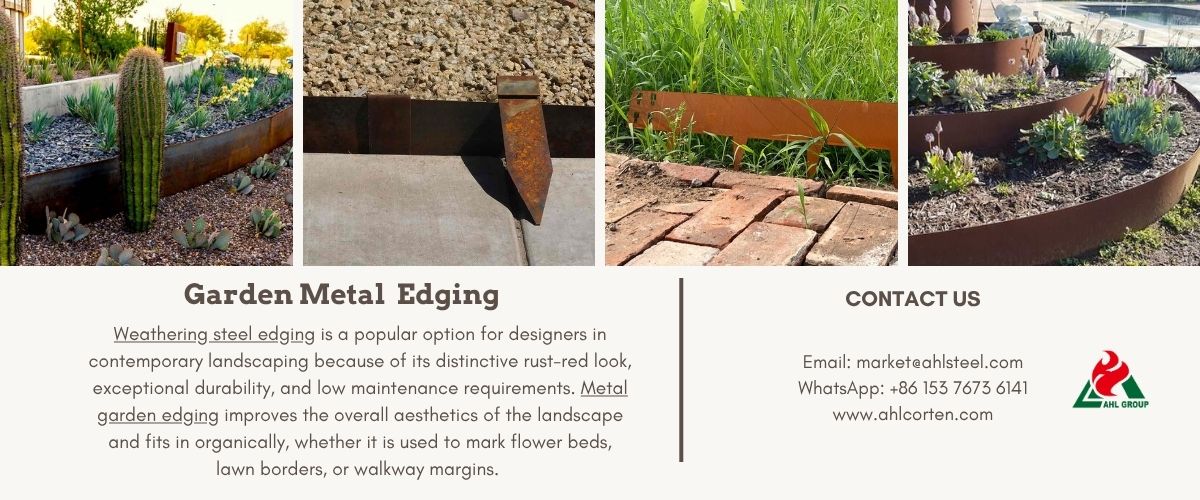
High-quality metal garden edging clearly delineates boundaries between plant zones, lawns, driveways, and walkways, lending the entire landscape a neat, orderly, and refined appearance. Border designs that complement your garden's style—whether modern, rustic, formal, or other—enhance overall harmony and highlight thoughtful design elements.
2. Protecting Plants for Healthy Growth
Border materials prevent plants from spreading uncontrollably into unintended areas while blocking weed invasion. This reduces competition for nutrients between plants and weeds. Defined borders create a controlled growing environment for plants, ensuring their long-term health and allowing flowers and greenery to thrive within their designated space.
3. Stabilizing Soil and Preventing Loss
Durable retaining wall materials effectively secure soil and mulch (such as wood chips or gravel). Even during heavy rain or strong winds, they prevent soil erosion and mulch loss, maintaining garden tidiness. Well-designed edging also helps retain moisture, improving soil moisture conditions and indirectly promoting soil health and plant vitality.
4. Reducing Maintenance, Saving Time and Effort
Carefully selected metal lawn edging minimizes manual weeding frequency and reduces reliance on chemical herbicides. Low-maintenance edging saves long-term upkeep time and effort, making garden care easier and more efficient.
Popular Garden Edging Materials: Pros, Cons, and Applications
1. Wooden Garden Edging
Advantages: Offers unmatched rustic charm, seamlessly blends with natural landscapes, provides sturdy structure, and complements flowering plants and shrubs.
Disadvantages: Requires regular maintenance, needs preservative treatment, may require replacement over time, and is susceptible to rot in damp conditions.
Suitable for: Rustic gardens, cottage-style landscapes, and flower beds.
2. Stone Garden Edging
Advantages: Exceptionally durable, virtually maintenance-free, adds texture and dimension to gardens, effectively prevents lawn encroachment, enhances classic aesthetic appeal.
Disadvantages: Relatively high cost, heavy weight, slightly more challenging to install.
Advantages: Aluminum metal edging offers excellent rust resistance and low maintenance. Its clean, flowing lines perfectly complement modern garden designs.
Disadvantages: Some metal edging features sharp edges, posing safety risks in gardens frequented by children; steel edging requires proper installation to ensure stability.
Suitable Scenarios: Modern minimalist gardens, residential and commercial landscaping projects.
4. Plastic Garden Edging
Advantages: Affordable pricing, high cost-effectiveness, lightweight yet resilient material, flexible adaptation to curved designs, diverse color options, and easy installation.
Disadvantages: Texture is slightly inferior to wood, stone, or metal; may fade when exposed to the elements over time.
Suitable Scenarios: Flower beds, pathways, driveway borders, artificial turf edging, municipal parks, commercial complexes, and other commercial landscaping projects.
5. Steel Garden Edging
Advantages: Exceptionally high strength, clean and flowing lines, flexible for creating straight or curved designs, excellent dimensional stability, capable of withstanding heavy loads; weathering steel develops a distinctive patina over time, offering rich texture.
Disadvantages: Higher cost than most other materials, requires proper installation to ensure long-term stability.
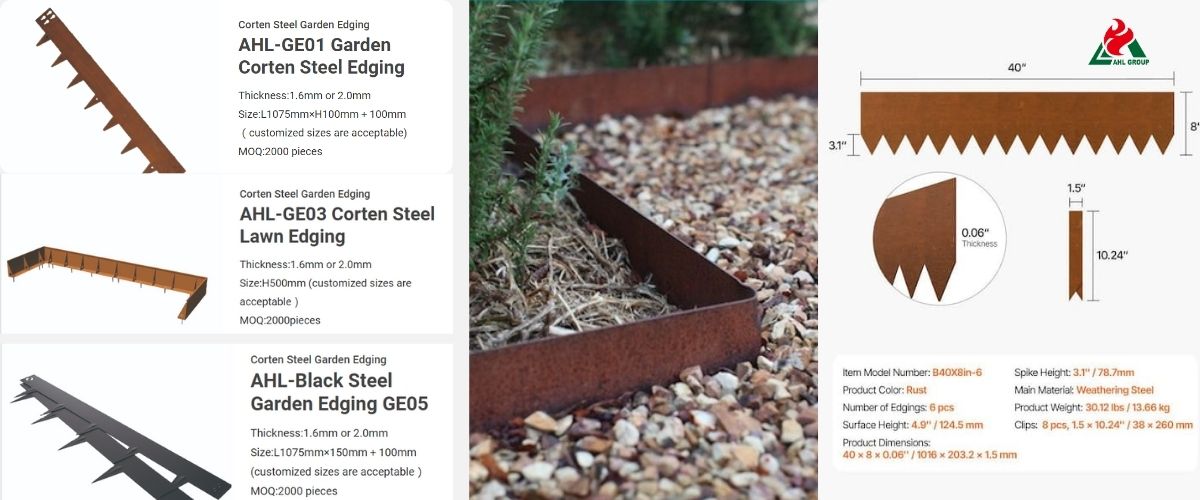
Suitable Scenarios: Modern high-end gardens, high-traffic commercial landscape projects, and settings requiring both decorative and functional elements (e.g., AHL corten steel garden edging products).
Core Practical Tips for Selecting Garden Edging Materials
1. Match Garden Style for Harmonious Aesthetics
Formal/Structured Gardens: Prioritize stone or brick edging for a refined, orderly visual effect.
Rustic Gardens: Opt for wood or weathered steel edging to create a natural, relaxed ambiance.
Modern Gardens: Recommend metal (aluminum/steel) or clean-lined plastic edging to complement minimalist, contemporary design aesthetics.
2. Balancing the Budget and Long-Term Value
Weigh upfront costs (material + installation) against long-term value (maintenance expenses, durability) to avoid prioritizing initial price over future investments. For high-traffic or long-term landscape projects, invest in durable edging materials like weathering steel to minimize future replacement hassles and costs.
3. Prioritize Durability Based on Climate
Assess edging materials' weather resistance according to local climate conditions, focusing on freeze-thaw tolerance, moisture resistance, and wind resistance. In humid, rainy regions, avoid wooden edging (prone to rot). Opt for rust-proof metal, weather-resistant plastic, or stone instead.
4. Matching Plant Requirements and Functional Needs
Areas with tall plants or vegetables (requiring frequent watering): Opt for stone or concrete garden edging to effectively prevent soil erosion and runoff. Weed-prone zones: Prioritize sturdy edging materials like metal or stone to create an effective barrier. Sections requiring curved borders: Select flexible plastic or steel garden edging that easily conforms to curved shapes.
5. Prioritizing Safety in Family Environments
Gardens with children or pets: Avoid flexi-border garden edging with sharp edges; opt for rounded corners and smooth surfaces. Regardless of material, ensure secure installation to prevent loosening, protrusions, or tripping hazards.
6. Assess Installation Difficulty and Select Suitable Methods
Suitable for DIY Installation: Plastic garden edging is lightweight. Installation involves simply digging a trench and securing the stakes—a task even beginners can manage.
Professional Installation Recommended:Stone (heavy) or large steel garden edging projects require advanced installation techniques. Hiring professionals ensures quality and stability.
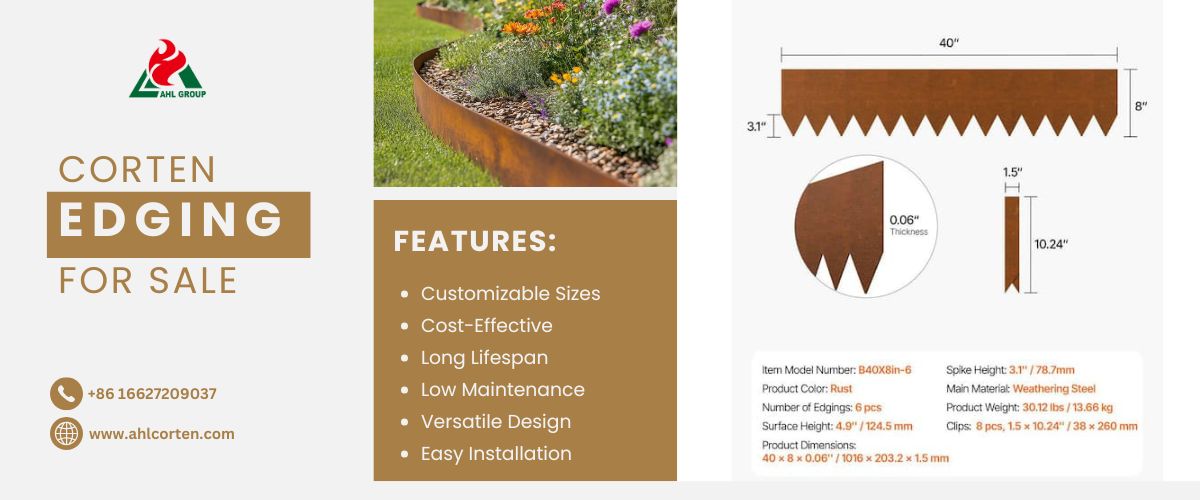
Considering all the selection criteria, weathering steel edging is highly recommended. It combines high strength, weather resistance, and unique aesthetic appeal, complementing modern, rustic, and diverse garden styles. It adapts to various climates and functional needs while offering low long-term maintenance costs. Whether for residential gardens or commercial landscaping projects, it serves as an excellent choice blending practicality and decoration.
Professional Installation Techniques for Weathering Steel Edging
1. Core Steps for Professional Edging Installation
Layout Planning: Use a garden hose or string to precisely outline the installation path for the weathering steel edging. Confirm the fluidity and fit of the design with the landscape plan, then mark the route.
Trench Excavation: Dig a trench 4-6 inches (approx. 10-15 cm) deep, with a width matching the thickness of the metal garden bed edging. Ensure the bottom is level and compacted to guarantee stability after installation and prevent shifting or deformation over time.
Laying the Edging: Carefully place the rusted steel edging into the trench. Adjust for levelness and vertical alignment to ensure it follows the planned route. Adjacent sections should connect tightly with no visible gaps.
Securing and Reinforcing: Use corrosion-resistant metal stakes to symmetrically secure the edging every 4-5 feet (approx. 1.2-1.5 meters) on both sides. This ensures durability against loads and environmental impacts.
Backfilling and Compaction: Backfill the trench in layers using screened fine soil or graded sand and gravel. Compact the fill approximately every 10 cm (4 inches) to ensure tight soil-to-edge contact, further enhancing overall stability.
FAQ: Key Questions on Selecting Garden Edging Materials
Q1: What Is the Most Durable Garden Edging Material?
A1: Stone and steel are the most durable garden edging materials, with corten edging standing out particularly. It not only possesses exceptional strength to withstand long-term loads and natural erosion but also develops a unique patina over time. This natural rust layer seamlessly integrates into various landscapes without additional decoration, truly balancing practicality and aesthetics.
Q2: Which Garden Edging Material Is Best For Beginner DIY Installation?
A2: For beginner DIY installation, we highly recommend lightweight weathering steel garden edging. Its texture combines flexibility with lightness. Paired with specialized mounting accessories, installation requires no complex tools and can be completed following standard steps. Additionally, weathering steel has low maintenance costs, making it easy for beginners to care for.
Q3: How Should I Choose Edging Materials for a Modern-Style Garden?
A3: For modern gardens, prioritize metal or plastic edging with clean lines. Weathering steel edging offers an excellent balance of value and texture. Its sleek lines align with minimalist aesthetics, while the unique weathered rust patina adds sophisticated texture. Durable and weather-resistant, it meets the long-term needs of contemporary gardens.
Q4: Are Wooden Garden Edging Materials Suitable For Humid Climates?
A4: Wooden garden edging is not recommended in humid climates, as wood readily absorbs moisture and may rot. Weathering steel edging is a preferred alternative due to its excellent moisture resistance and rust prevention, effectively withstanding humid conditions. Other suitable options include stone, rust-proof metal, or moisture-resistant plastic edging materials.
Q5: What Is the Most Cost-Effective Garden Edging Material?
A5: For short-term cost efficiency, plastic garden edging is the preferred choice. For long-term value and aesthetic appeal, weathering steel edging is recommended. Though its initial cost is slightly higher than plastic, its superior durability and low maintenance requirements yield better overall value over time, making it suitable for most garden settings.
Ready to Choose Your Perfect Outdoor Garden Edging?
Selecting garden edging requires balancing style compatibility, durability, budget, maintenance needs, and functional purpose—not just one factor. Weathering steel edging stands out as a top choice for residential and commercial landscapes due to its versatility, longevity, and low upkeep. Popular materials like wood, stone, metal, plastic, and steel each have their pros and cons. The key is selecting the right type based on your garden's style, usage scenarios, and climate conditions. Weathering steel edging, with its broad style compatibility, weather resistance, durability, and blend of practicality and decorative appeal, suits most settings and represents a more reliable choice. Browse our weathering steel garden edging to find a durable and aesthetically pleasing solution for your garden. Contact our horticultural experts today for personalized one-on-one selection advice, ensuring your garden edging installation is hassle-free and delivers outstanding results.

.jpg)
 Fill In The Inquiry