Do Corten Steel Lights Stain Your Concrete or Pavers?
Date:2026.01.22
Share to:
Corten steel lights, with their rustic weathered texture and exceptional durability, have become a popular choice in contemporary landscape design. From garden décor to commercial estate illumination, these outdoor fixtures consistently enhance outdoor spaces with their warm earth tones, imparting a distinctive natural charm.
Yet a persistent concern lingers for property owners and designers: will weathering steel fixtures stain concrete or paving stones? This article tackles this core question head-on, dissecting the truth, causes, and risk cycles of staining from weathering steel fixtures. It also shares proven prevention, management, and removal solutions, enabling you to enjoy the aesthetic value of rusted steel lights while effortlessly safeguarding the cleanliness of concrete and paving stones.
Whether planning residential garden lighting upgrades or advancing commercial landscape projects, mastering the compatibility techniques between weathering steel fixtures and hardscape materials is paramount. Let us now unlock professional insights to safeguard your outdoor projects.
Corten Steel Lighting: Core Characteristics and Landscape Value
Why Is Corten Steel the Ideal Material for Outdoor Lighting?
Corten steel lights stand out in landscape design primarily due to their unique material properties, making them exceptionally suited to complex outdoor environments:
Weathering Self-Protection: When exposed to the natural elements, weathering steel naturally forms a stable protective rust layer (patina). This eliminates the need for additional paint or frequent maintenance, fundamentally reducing upkeep costs for outdoor applications.
Exceptional Durability: High-quality luminaires can last over 50 years, resisting weathering and structural degradation. This makes them a long-term investment for outdoor lighting, particularly suited to fixtures like Corten steel bollard lights that endure prolonged exposure.
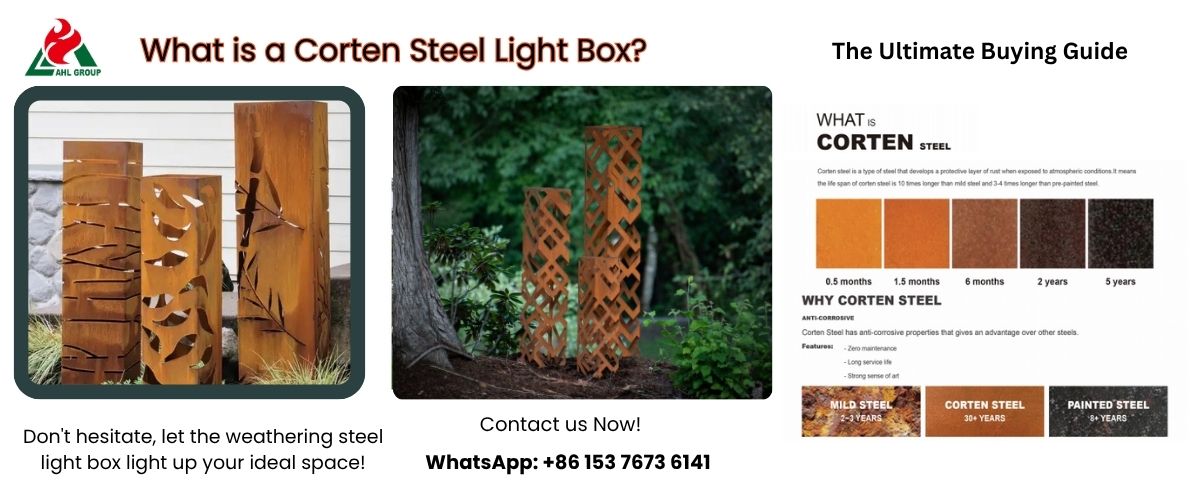
Unique Aesthetic: Evolving from an initial bright orange hue through a mature reddish-brown phase to a stable deep copper-brown patina, Corten steel fixtures impart a “weathered” character to landscapes over time. This natural transformation complements diverse styles including contemporary, rustic, and industrial settings.
Self-Repairing Properties: Should minor surface scratches occur, the rust patina will naturally regenerate, repairing damage and maintaining overall aesthetics without manual intervention.
Interplay Between Corten Steel Fixtures and Hardscape Materials
The interaction between Corten steel lights and hardscape elements like concrete and paving stones centres on rust layer erosion during formation: During the rust layer's development phase, weathering steel luminaires may produce minor rust runoff, which could potentially stain surrounding concrete or paving stones. Unlike ordinary carbon steel, however, the rust layer of Corten steel gradually stabilises over time, significantly reducing contamination risks. With proper management, such risks can be entirely mitigated.
Do Corten Steel Lights Genuinely Contaminate Concrete or Paving Stones?
The ‘Bleeding’ Phenomenon: The Root Cause of Corten Light Pollution
Contamination of concrete and paving stones by rusted steel lights fundamentally stems from the ‘bleeding’ phenomenon. During the initial weathering phase, active iron particles on the luminaire's surface are washed away by rainwater or irrigation, forming rust runoff.
This runoff contains substantial iron oxide (rust), which readily adheres to the porous surfaces of hardscaping materials like concrete and paving stones. If not promptly addressed, this deposits unsightly brownish-red stains, compromising the visual integrity of the hardscape.
Particularly on light-coloured concrete or natural stone paving, rust staining from Corten steel lights becomes markedly more pronounced. This represents a core concern for many property owners.
Three Stages of Rust Layer Development: Temporal Patterns of Pollution Risk
The corrosion risk posed by light is not constant but dynamically shifts with the progression of rust layer development, necessitating distinct control priorities at each stage:
Reactive Phase (0–6 months): Highest pollution risk. Newly installed corten steel driveway lights transition from metallic grey to bright orange. As the rust layer remains undeveloped, active iron particles are lost in significant quantities, readily contaminating surrounding concrete and paving stones when washed by rain.
Maturation Phase (6–24 months): Pollution risk diminishes. The rust layer deepens to reddish-brown, its structure becomes denser, and the loss of active iron particles decreases. Both the intensity and extent of runoff pollution are significantly reduced.
Stable Phase (2+ years): Extremely low pollution risk. The rust layer is fully stabilised, appearing deep brown or copper-red. Loss of active iron particles is negligible, causing virtually no new contamination to concrete or paving stones.
Three Key Factors Exacerbating Pollution Risk
Not all installations cause severe hard landscaping contamination. The following three factors significantly amplify pollution risk and warrant particular attention:
Microclimate conditions: Coastal areas (air rich in salt) accelerate the weathering process of rust layers but simultaneously delay their stabilisation, prolonging pollution risks. Arid regions slow rust layer development, necessitating artificial water spraying to promote weathering; otherwise, pollution risks persist longer.
Porosity of Hardscaping: Porous concrete and natural stone paving stones absorb runoff more readily than non-porous materials like porcelain tiles, making post-contamination cleaning more challenging. Installing Corten steel bollard lights directly onto such porous hardscaping doubles the contamination risk.
Installation location: Direct placement on concrete or paving surfaces, or positioning too close to hardscapes (without buffer space), allows rust runoff to directly wash over hardscapes, significantly increasing contamination probability. This is particularly pronounced on light-coloured hardscapes, where the visual impact is more pronounced post-contamination.
Core Tactics to Avoid Corten Steel Light Contamination
Pre-Installation Prevention: Mitigating Contamination Risk At Source (Optimal Approach)
Preventing Corten steel light contamination hinges on pre-installation planning. Scientific design can eliminate risks at source through three key measures:
Integrated drainage systems: When installing Corten steel light boxes, prioritise products featuring built-in ‘water collection-drainage’ systems. Mount fixtures on slightly recessed bases to channel rust runoff toward underground drainage layers rather than directly onto concrete or paving stones.
Buffer Zones: A professional technique commonly employed by landscape designers involves creating buffer strips to isolate runoff from hardscapes:
Stone Barriers: Establish a 10cm-wide perimeter using dark decorative stones (e.g., Mexican black pebbles, basalt gravel). These materials absorb rust runoff, while their dark hue conceals minor staining and blends naturally with the rust patina.
Vegetationbuffer: Install outdoor Corten steel lights within lawns or groundcover areas. Soil naturally absorbs iron oxide from rust, which serves as a beneficial micronutrient for certain plants, creating an ecological buffer.
Chemical Stabilisation Treatment (Accelerated Weathering): To bypass the highest contamination risk during the initial phase, chemically stabilise the steel prior to installation. Spray the surface with a solution of hydrogen peroxide, white vinegar and salt to rapidly form a stable rust layer within hours (instead of months through natural weathering). Thoroughly rinse afterwards and apply a rust sealer to lock in the active iron particles, eliminating contamination at its source.
Post-Installation Protection: Targeted Reduction of Residual Risks
For installed lights, the following two measures can further mitigate contamination risks:
Transparent Coating Sealing: For corten steel lighting installed in high-risk areas like light-colored concrete surfaces or commercial entrances, apply a high-performance transparent coating (such as Gclear or specialized metal wax) to the fixture surface. This method completely halts the weathering process, eliminating rust runoff entirely. However, it may slightly alter the fixture's texture and add a subtle sheen.
Temporary Barrier Protection: During the reaction period (0-6 months), place waterproof mats or protective barriers beneath the fixtures to catch runoff rust. Regularly clean these barriers to prevent rust contact with concrete or pavers.
How to Remove Rust Stains from Corten Steel Lights?
Step-by-Step Removal: A Graded Approach from Mild to Professional Stain Treatment
If concrete or paving stones have been stained by rust from metal lights, follow this tiered approach, prioritizing gentle methods to avoid damaging hardscapes:
Mechanical Cleaning (Basic Level): Use a stiff nylon brush (never steel brushes) dipped in clean water to gently scrub the stained surface. This method is suitable for minor surface rust and won't damage the surface structure of concrete or paving stones.
Neutral Cleaner Treatment (Intermediate Level): For stains resistant to mechanical cleaning, apply a pH-neutral stone cleaner (such as stone soap) to the affected area. Let it sit for 5-10 minutes, then scrub with a nylon brush and rinse thoroughly with clean water. This method breaks down mild rust without corroding the hardscape material.
Cleaning Taboos: Avoid These Mistakes at All Costs
When cleaning rust stains caused by Corten steel lights, strictly avoid the following two practices, as they severely damage concrete or paving stones:
Never use abrasive tools like wire brushes or sandpaper: These tools scratch hardscape surfaces, compromising the structural integrity of concrete or stone while potentially making them more prone to rust absorption later.
Never use strong corrosive chemicals without testing: Bleach, strong alkaline cleaners, and similar agents directly corrode concrete and dissolve minerals in natural stone, causing discoloration and cracking. Even specialized rust removers must be tested before use.
Extend Corten Steel Lights Lifespan and Keep Hardscapes Clean
Key Maintenance Points
Though weathering steel light boxes are touted as “low-maintenance,” routine light upkeep accelerates rust layer stabilization, reduces pollution risks, and extends fixture lifespan:
Annual inspections: Conduct a comprehensive annual check of outdoor corten steel lights, focusing on structural looseness and abnormal rust layer detachment—especially after extreme weather (heavy rain, typhoons, severe cold). Promptly repair damaged areas.
Avoid High-Pressure Washing: Never use high-pressure water jets directly on Corten steel lights. High-pressure water can disrupt unstable rust layers, causing active iron particles to shed excessively and increasing contamination of surrounding hardscapes.
Hardscape Maintenance Techniques Around Lights
Regular maintenance of surrounding concrete and paving stones reduces rust adhesion and simplifies cleaning:
Regular cleaning during the reaction period: For the first 24 months after installation (especially the first 6 months), rinse the surrounding hardscapes with clean water 1-2 times monthly to promptly remove residual rust particles and prevent them from penetrating pores.
Apply Penetrating Sealant: Coating concrete or paving stones with a penetrating sealant reduces surface porosity, minimizes rust runoff absorption, and enhances stain resistance, making future cleaning easier.
Want to Wholesale Corten Path Lights? Contact Us for the Lowest Price!
FAQ: Key Questions About Corten Steel Light Pollution
Q1: Are Stains Caused By Corten Lights Permanent?
A1: No, they are not permanent. Rust stains on concrete or paving stones can be effectively removed using scientific cleaning methods (such as neutral cleaners, specialized rust removers, or steam cleaning). The risk of staining is highest during the first two years after installation. Once the rust patina stabilizes, no new staining occurs.
Q2: Can Staining Be Completely Avoided When Installing Lights On Light-Colored Concrete?
A2: Yes. This can be achieved through three approaches: First, select pre-weathered corten steel driveway lights to bypass the high-staining period. Second, establish a buffer zone around the lights using dark-colored stone or vegetation to block rust runoff. Third, apply a transparent sealer to the lights to completely prevent rust migration.
Q3: What Is The Safest Method To Remove Rust Stains From Corten Lights On Paving Stones?
A3: The safest approach combines “mechanical cleaning with a neutral cleaner.” First, scrub with a nylon brush dipped in clean water. For stubborn stains, treat with a pH-neutral stone cleaner. This method preserves the paving stones' structure and color, making it suitable for most scenarios.
Q4: Does Installing Rusted Steel Lights In Coastal Areas Increase Pollution Risk?
A4: Yes. Coastal salt-laden air accelerates Corten steel lights' weathering but also delays rust layer stabilization, prolonging the high-risk pollution period. We recommend chemical stabilization treatment (accelerating rust layer formation) or applying a transparent sealer to the fixtures, combined with buffer zones for dual pollution prevention.
Q5: Must Corten Steel Lights Be Sealed To Prevent Staining?
A5: Not necessarily. Sealing is an optional solution suitable for high-risk scenarios like light-colored hardscapes or commercial entrances. It completely prevents staining but halts the fixture's natural weathering process, altering its original texture. If minor short-term staining is acceptable, unsealed prevention can be achieved through buffer zones and regular cleaning.
Ready to Customize Your Exclusive Outdoor Corten Steel Lights?
Investing in premium rusted steel lights while following professional installation and maintenance guidelines allows you to enjoy their unique aesthetic appeal while preserving the cleanliness and beauty of concrete, paving stones, and other hardscapes. This approach ensures both landscape impact and practical value. Explore our premium weathering steel lighting collection—all products undergo professional rustproofing and suit diverse outdoor settings while minimizing staining risks. Contact us today for a free quote on Corten Steel Lights.

.jpg)
 Fill In The Inquiry