In the realm of garden design for 2026, weathering steel planters have emerged as a revolutionary core element—seamlessly blending timeless rustic charm, unmatched durability, and versatile styling. Whether in outdoor courtyards or indoor spaces, they effortlessly elevate the ambiance. But how can you harness this trend to craft a distinctive, textured garden?
This article comprehensively breaks down the core knowledge of 2026 metal garden planters: why they're the trend of the year, their key advantages, essential selection criteria (size, shape, thickness), popular pairing schemes for 2026, maintenance tips, and how to creatively integrate them into garden design.
Whether you pursue modern minimalism, rustic vintage charm, or aim to create dynamic focal points, 2026's Corten steel pots offer limitless possibilities. Let's unlock professional techniques together to make your garden stand out this year.
Why Are Corten Steel Planters Leading the 2026 Garden Design Trend?
1. Exceptional Weather Resistance and Durability
Corten steel planters develop a protective patina (copper-like rust finish) over time, effectively shielding against external corrosion and withstanding harsh weather—whether scorching sun, torrential rain, or freeze-thaw cycles—while maintaining structural integrity. They boast outstanding impact resistance, resisting wear and deformation during daily use, making them ideal for high-traffic settings like parks, patios, and commercial spaces.
2. Ultra-Low Maintenance, Extended Lifespan
Unlike wooden, plastic, or standard metal planters, Corten steel planters require no periodic painting, sealing, or specialized upkeep. Over the long term, this significantly reduces time and monetary costs. The protective rust patina substantially extends service life, allowing decades of normal use. This makes them a highly cost-effective, long-term investment for your 2026 garden design.
3. Timeless Aesthetics with Versatile Style Compatibility
Rusted steel planters evolve from an initial silver-gray hue to a rich, coppery patina with warm, deep tones, effortlessly complementing diverse plants and garden styles. Their sleek, minimalist lines seamlessly integrate into 2026's leading garden aesthetics—modern, rustic, minimalist, industrial—elevating the overall landscape's sophistication.
4. Versatile Functionality for Indoor/Outdoor Use
Rusted steel planters seamlessly adapt to both indoor and outdoor settings. They can serve as standalone decorative pieces, space dividers, focal points, or complementary elements alongside other landscape features. Suitable for flowerbed planting, shrub cultivation, small tree potting, succulent gardens, and herb cultivation, they cater to diverse horticultural needs.
5. Low Investment, High Return: Elevating Space Value
While the initial purchase cost of garden planters may exceed some conventional materials, their zero maintenance requirements and extended lifespan deliver unmatched long-term value. They effectively enhance courtyard aesthetics and sophistication, boosting a home's curb appeal and property value—making them the ideal choice for homeowners upgrading outdoor spaces in 2026.
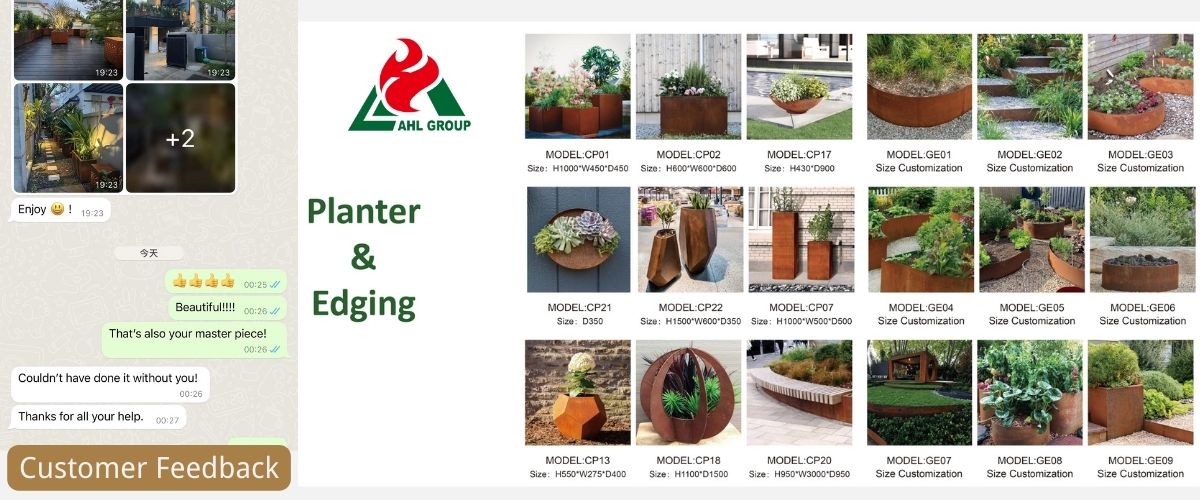
Clean, sharp lines exude modernity, ideal for small plants and succulents. Perfect for minimalist gardens and corner accents, these are a top choice for residential gardens in 2026.
Ideal for flowerbed planting, path edging, hedge cultivation, and as space dividers. Effectively optimize garden layouts for medium to large courtyards and commercial landscapes.
Featuring soft, rounded forms that soften the sharp lines of hardscapes, these planters are perfect for trees and large shrubs. They create dynamic, flowing landscape layouts and complement diverse garden styles.
Unique shapes with high visual recognition add creativity to gardens. Ideal for modern and artistic garden designs, these are our top picks for personalized landscapes in 2026.
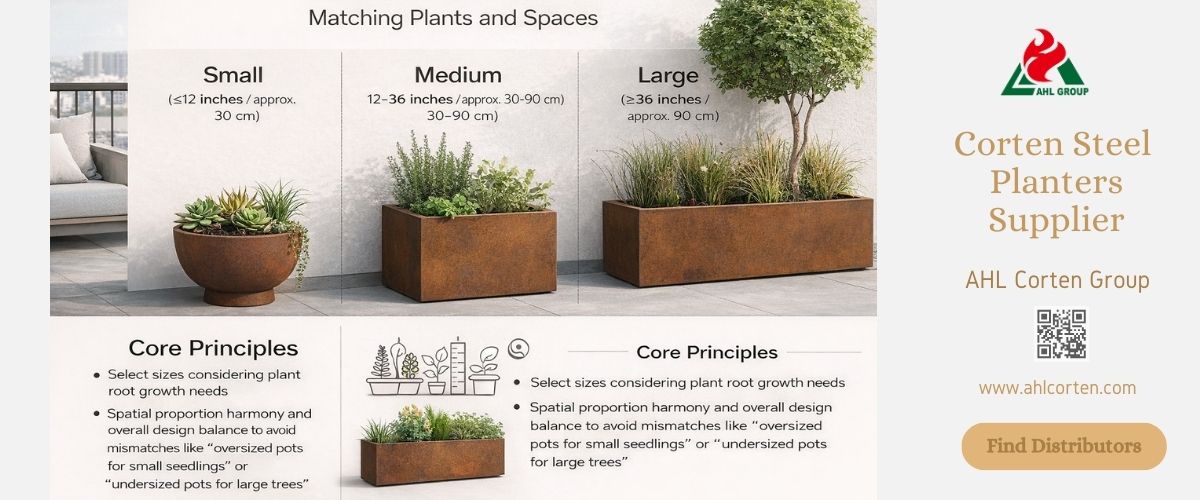
Size Selection: Matching Plants and Spaces (2026 Technique)
Small (≤12 inches/approx. 30 cm)
Ideal for succulents and miniature ornamental plants. Fits balconies, windowsills, tabletops, and other compact spaces. Flexible combinations create exquisite miniature horticultural displays.
Medium (12-36 inches / approx. 30-90 cm)
Suitable for herbs, shrubs, and medium-sized flowers. Ideal for indoor living rooms, patios, or garden corners. Can stand alone or be grouped to create layered visual interest.
Large (≥36 inches / approx. 90 cm)
Ideal for small trees and large shrubs. Serve as garden focal points or boundary screens (e.g., 90×30×80 cm dimensions), suited for spacious courtyards and commercial projects.
Core Principles
Select sizes considering plant root growth needs, spatial proportion harmony, and overall design balance to avoid mismatches like “oversized pots for small seedlings” or “undersized pots for large trees.”
Steel Plate Thickness: Balancing Durability and Budget
1.6mm (16-20 gauge): Suitable for residential gardens and small planters. Cost-effective with sufficient strength for everyday home gardening needs.
3mm and above: Ideal for large planters, commercial projects, and high-load planting scenarios (e.g., heavy soil weight). Offers superior durability, resistance to bending/deformation, and extended lifespan.
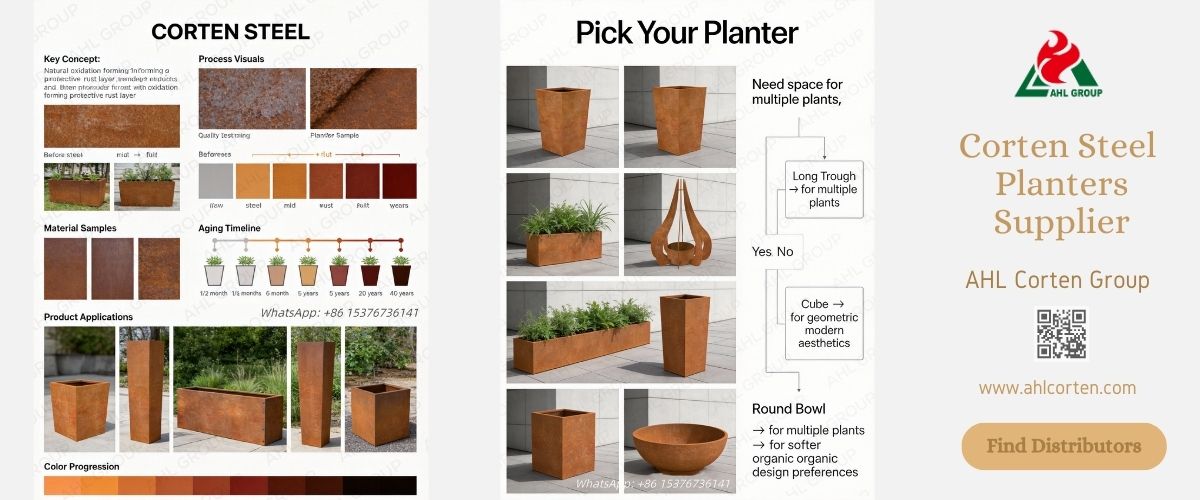
Factory-finished with rust patina, eliminating initial rust seepage concerns. Unbox to reveal classic copper-rust texture—the top choice for most 2026 homeowners.
Naturally Weathered Rusted Steel Garden Beds
Ideal for gardening enthusiasts who enjoy witnessing material transformation. After installation, a rust layer forms naturally over time, with each piece developing a unique weathering effect that exudes personalized charm.
5 Core Factors for SelectingPlanters (2026 Checklist)
1. Steel Quality: Prioritize authentic weathering steel meeting ASTM A606/A588 standards to ensure corrosion resistance and durability. 2. Drainage & Base: Must feature built-in drainage holes and an elevated base to prevent waterlogging, root rot, and rusting at the bottom. 3. Liner Design: Opt for planters with plastic/metal liners to extend lifespan and facilitate repotting. 4. Customization: Prioritize brands offering size and shape customization to fit unique spaces and project requirements. 5. Brand Reputation: Select certified brands ensuring quality assurance against premature corrosion and defects.
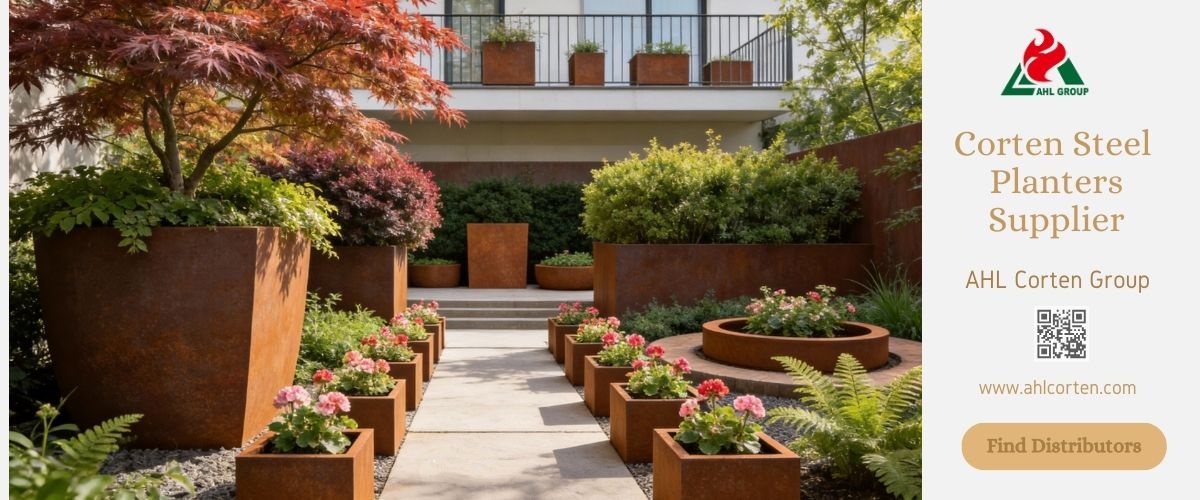
Select large corten steel planters to house small trees (e.g., Japanese maple) or vibrant shrubs as central garden features, instantly capturing attention. Layer weathering steel planters of varying heights and shapes, contrasting lush foliage with the patina's coppery texture to create rich visual depth.
2. Transforming Small Spaces (Balconies, Terraces)
In compact areas like balconies or terraces, place small/medium planters along pathways, entrances, or beside water features to instantly add visual interest and spatial depth.
Use rectangular weathering steel planters as spatial dividers to define functional zones; employ circular planters to soften the sharp lines of hardscapes like paved areas or wooden screens, lending small spaces a warmer, more dynamic feel.
2026 Core Styling Techniques (Exclusive for Corten Planters)
1. Visual Rhythm Repetition
Arrange a series of identical small rectangular planters along paths or walls to create a neat, orderly visual rhythm, lending the garden layout a sense of fluidity and structure.
2. Corner Feature Creation
Maximize unused garden corners by stacking multiple weathering steel planters of varying sizes or placing a single uniquely shaped piece. Pair with layered plantings to create a focal point.
3. Color and Texture Contrast Method
Pair the rusty metal texture of corten steel planters with vibrant flowers (like geraniums) and lush-leaved ferns to create striking visual impact, infusing the landscape with vitality.
Recommended Plants: Succulents, herbs, Boston ferns, geraniums, azaleas, camellias, and small trees (Japanese maples, blueberry shrubs) all pair perfectly with weathering steel planters.
2. Soil Selection Tips
Use well-draining potting soil; lay a layer of gravel at the bottom of the planter to enhance drainage; match soil properties to plant needs (e.g., azaleas thrive in acidic soil).
3. Group Planting Strategy
Plant species with similar watering schedules and fertilization needs within the same metal garden planter. This simplifies maintenance, ensures healthy growth, and enhances landscape cohesion.
Beyond Planters: Diverse Applications of Corten in 2026 Garden Design
1. Corten Steel Planters + Edging: Creating a Unified Landscape
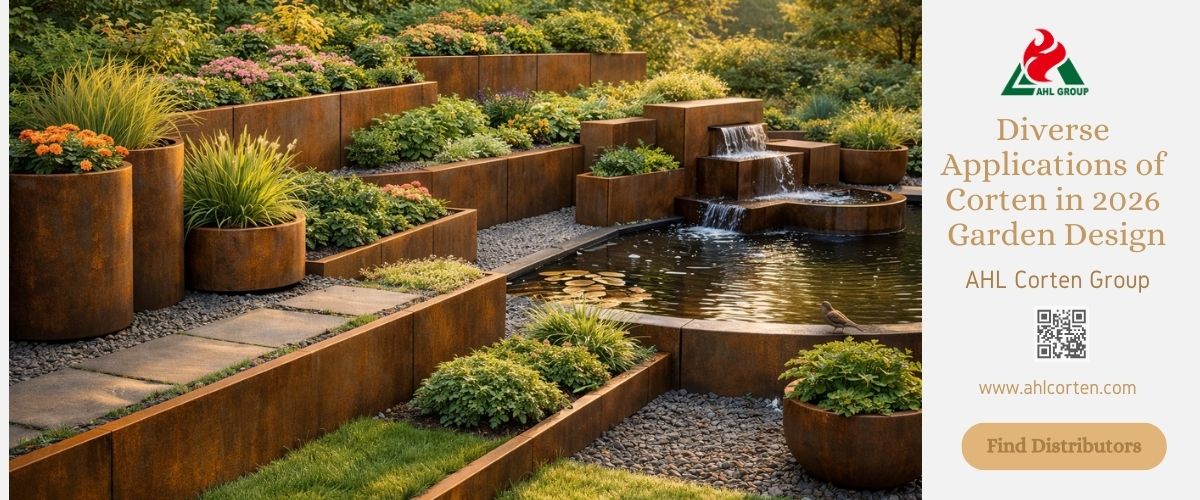
Pairing Corten metal planters with weathering steel lawn edging clearly delineates flower beds, pathways, and lawn areas. This creates a cohesive rustic-modern landscape, enhancing the garden's overall harmony.
Construct modular retaining walls from weathering steel (for easy installation) and pair them with planters of the same material. Use these for creating flower beds, defining boundaries, or leveling slopes. This approach fulfills functional needs while adding texture to the landscape.
3. Steel Water Features + Planters: Cultivating Serenity
Integrate weathering steel planters with corten steel water features (fountains, ponds) to create a visually unified landscape ensemble. The gentle sound of flowing water adds tranquility to the garden while attracting wildlife such as birds and insects.
2026 Corten Steel Planter Care & Maintenance Guide
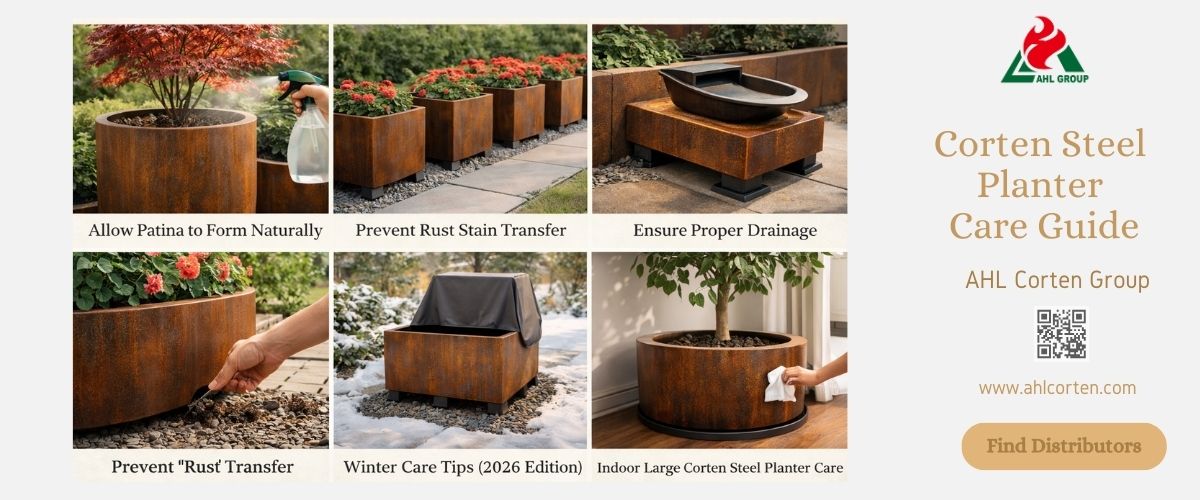
1. Allow Patina to Form Naturally
Place planters in well-ventilated outdoor areas. Avoid painting or sealing (which hinders natural weathering). To accelerate patina formation, periodically spray with a mild salt solution. Pre-weathered planters require no such treatment—unbox and enjoy their classic texture immediately.
2. Prevent Rust Stain Transfer
Elevate planters using stands or spacers to avoid direct contact with easily stained surfaces like wood or concrete. Prioritize placement on gravel or soil. Use drip trays or liners on delicate surfaces (indoor floors, patio pavers) to prevent rust staining.
3. Ensure Proper Drainage
Regularly inspect drainage holes to prevent clogging by soil or debris. Use well-draining soil mix; avoid pure compost (prone to waterlogging). Prevent prolonged water accumulation in the planter. Maintain a “wet-dry cycle” to promote the formation and stability of the protective rust layer.
4. Winter Care Tips (2026 Edition)
Elevate outdoor garden planters in winter to avoid immersion in snow or ice. Regularly inspect the bottom for water accumulation and promptly drain to prevent freeze-thaw damage. In regions with heavy winter rainfall, cover planters as needed to slow runoff and protect surrounding ground surfaces.
5. Indoor Large Corten Steel Planter Care
When used indoors, always install a waterproof liner to prevent rust seepage and water damage to floors. Promptly wipe any rust runoff from the planter surface to avoid staining floors; do not allow water to remain pooled on the exterior for extended periods to minimize rusting risks.
Want to Get Your Own Rusted Steel Planter? Click to Customize!
2026 Rusty Metal Planters FAQ (Expert Answers)
Q1: What Is the Lifespan of Corten Steel Planters?
A1: They can last decades with normal use. Thanks to their protective rust layer, planters with a thickness of 3mm or more have an extended lifespan, making them ideal for commercial spaces or high-traffic settings.
Q2: Are Rusted Steel Planters Safe For Plants?
A2: Yes. The stable rust layer formed on the surface does not leach harmful substances into the soil. With proper drainage and suitable soil, plants can thrive healthily.
Q3: Can Rectangle Planters Be Used Indoors?
A3: Yes. However, they must be equipped with a waterproof liner to prevent rust seepage and moisture damage to floors, while adding a modern industrial aesthetic to indoor spaces.
Q4: How Can I Prevent Corten Planters From Staining My Patio Floor?
A4: Elevate the planter using stands, use a drip tray, or place it directly on gravel or soil. Opting for pre-weathered planters can minimize initial rust seepage concerns.
Q5: What Is The Optimal Steel Thickness For Metal Planters In Residential Gardens?
A5: Opt for 1.6mm thickness for small/medium planters—affordable and suitable for daily use. For larger planters or long-term durability, choose 3mm or thicker steel.
Q6: Do Steel Planters Require Drainage Holes?
A6: Absolutely. Drainage holes are essential for plant health, preventing root rot from waterlogging. Always verify that planters have built-in drainage holes before purchase.
Ready to Customize Your Very Own OutdoorPlanter?
Weathering steel planters are a must-have for 2026 garden design, combining aesthetic appeal, durability, and low-maintenance features to effortlessly elevate your landscape's sophistication.
When selecting, consider plant requirements, space dimensions, and budget to choose the appropriate size, shape, and thickness. Following the 2026 expert recommendations ensures optimal results. Thoughtful design combinations (creating focal points, rhythmic repetition, plant compatibility) paired with minimal maintenance fully unlock the landscape value of rusted steel garden beds.
Explore our 2026 premium weathering steel planter collection (full size and shape coverage, including pre-weathered options) to suit diverse landscape needs.

 Fill In The Inquiry