Many property owners, designers, and contractors have the same question when selecting weathering steel cladding: Will prolonged exposure to the elements accelerate the aging, rusting, and deterioration of weathering steel walls?
This concern is entirely understandable. Ordinary steel rusts very easily when exposed to water, causing layers to peel off and eventually leading to corrosion and damage. It’s only natural to assume that weathering steel would suffer the same fate.
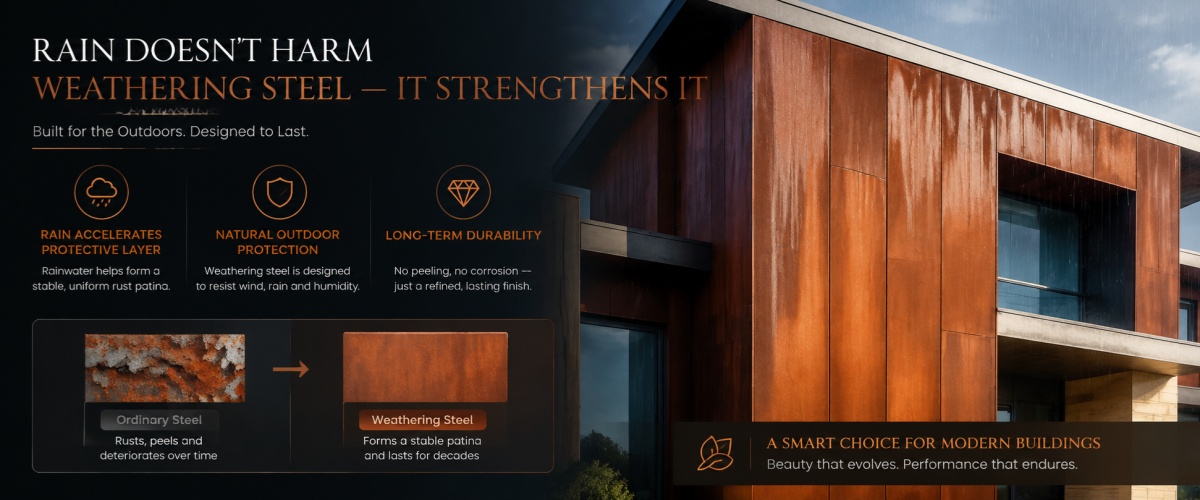
But this is not the case. Weathering steel is not ordinary carbon steel; it is a type of steel specifically designed to withstand outdoor weather conditions. Moderate rainfall not only fails to damage corten steel sidings but is, in fact, a key factor in the formation of their protective layer.
This article will explain the relationship between rain and corten metal cladding in both layman’s terms and technical detail, while also sharing tips for use and maintenance during rainy weather to help you maximize the outdoor durability of your weathering steel walls.
Weathering steel walls are exterior wall and facade cladding panels manufactured from weathering steel (also known as patina steel). They are widely used in courtyard landscaping, building facades, outdoor curtain walls, and similar applications.
Unlike ordinary decorative panels, they are landscape-grade, long-lasting outdoor building materials that offer the core advantages of long-term outdoor use, low maintenance, and a high-quality aesthetic.
The most essential characteristic of weathering steel is that, in the natural outdoor environment with alternating dry and wet cycles, it gradually forms a dense, stable oxide rust layer with extremely strong adhesion—known in technical terms as the “patina (passivation layer).” This rust layer is entirely different from the surface rust found on ordinary steel. The rust layer on ordinary steel is loose and porous, prone to flaking off, and continues to accelerate internal corrosion.
In contrast, the passivated rust layer on weathering steel adheres firmly to the steel substrate, effectively blocking the penetration of air, rainwater, and moisture. This slows the rate of steel corrosion at its source, providing self-protection.
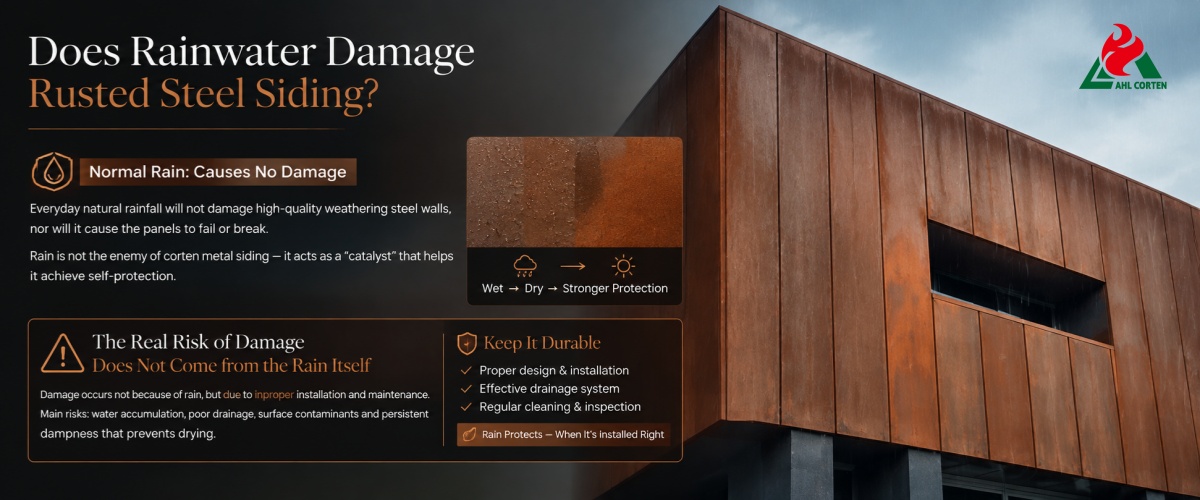
It can be stated unequivocally: everyday natural rainfall will not damage high-quality weathering steel walls, nor will it cause the panels to fail or break. On the contrary, the formation of weathering steel’s protective rust layer relies on the natural cycle of wet and dry conditions. The cycle of being wet by moderate rainfall and then air-drying naturally is essential for the rust layer to stabilize, thicken, and harden. Simply put, rain is not the enemy of corten metal siding; rather, it acts as a “catalyst” that helps it achieve self-protection.
The Real Risk of Damage Does Not Come from the Rain Itself
When rusted steel siding exhibits corrosion or localized damage during rainy weather, the problem never stems from being “exposed to rain” itself, but rather from improper installation and maintenance practices. The main risks fall into four categories: prolonged water accumulation, poor drainage, buildup of surface contaminants, and persistent dampness that prevents drying.
If water accumulates at the base of the panels for extended periods, or if wet dust, salt, or contaminants build up on the surface, the stability of the rust layer will be compromised, leading to localized corrosion and shortening the service life. Therefore, the rain resistance of residential Corten steel cladding depends primarily on the design, installation, and drainage system—not on rainfall itself.
3 Key Reasons Why Corten Metal Cladding Remains Durable Even in Rainy Weather
1. Self-Healing Protective Rust Layer Mechanism
The oxidation process of weathering steel is controlled and benign. After initial mild oxidation, a dense protective film quickly forms on the surface, firmly enveloping the steel substrate. This film continuously blocks the penetration of oxygen and moisture, preventing further corrosion of the steel beneath. While rusting in ordinary steel represents destructive wear and tear, rusting in weathering steel serves as a unique, long-lasting protective mechanism.
2. Native Outdoor Rain-Resistant Design
From the very beginning of its development, weathering steel was engineered for harsh outdoor environments. Its core applications include bridges, outdoor landscapes, and building facades—all of which are constantly exposed to wind, rain, and temperature fluctuations. Corten metal siding is inherently suited to outdoor conditions such as rain, humidity, and temperature fluctuations, maintaining stable performance without the need for deliberate rain protection or shelter.
3. Stable Structural and Mechanical Properties
Weathering steel wall panels suitable for residential and landscape projects typically have a thickness of 2 mm–3 mm. This thickness strikes a perfect balance between structural strength, ease of installation, and cost-effectiveness. High-quality residential corten steel cladding will not warp, crack, or weaken structurally due to years of exposure to rain. On the contrary, as it ages outdoors, the rust layer becomes increasingly stable, enhancing both its texture and durability—making it more durable the longer it is used.
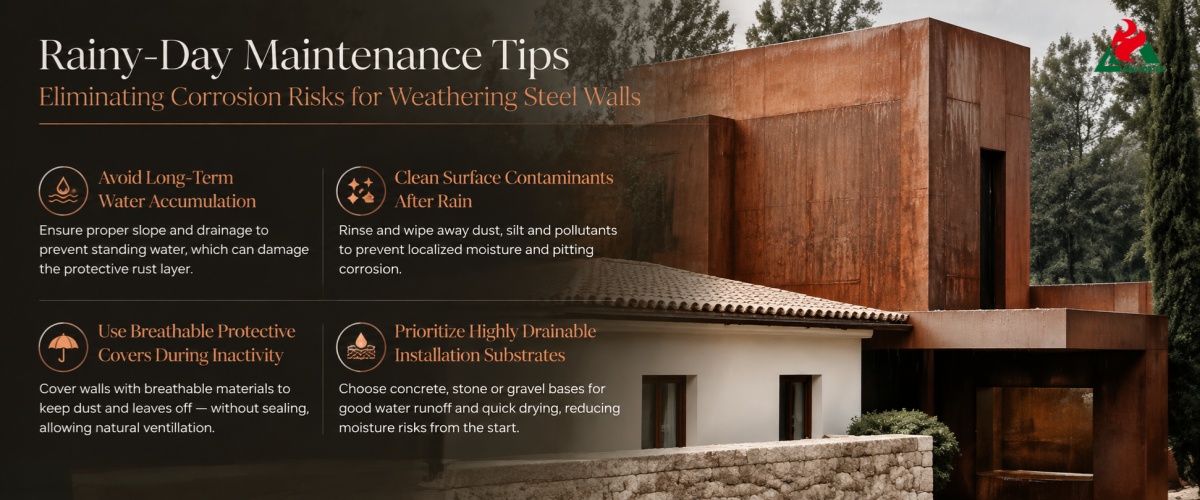
Rainy-Day Maintenance Tips: Eliminating Corrosion Risks for Weathering Steel Walls
1. Completely Avoid Long-Term Water Accumulation
Standing water is the greatest hidden threat to weathering steel siding. If water accumulates for extended periods at the bottom of the panels, in joints, or at corners and cannot drain away, it will continuously saturate the panels and damage the protective rust layer. Especially in regions with heavy rainfall, proper slope, drainage channels, and drainage gaps must be incorporated during installation to ensure rainwater drains immediately upon contact with the surface, preventing stagnation and saturation.
2. Promptly Clean Surface Contaminants After Rain
Pure rainwater does not damage weathering steel, but dust, silt, salt, and industrial pollutants carried by rainwater can accumulate on the panel surface. If these contaminants remain attached for extended periods, they can cause localized, persistent moisture, leading to pitting corrosion. Simply rinsing and wiping away surface contaminants after rain can significantly reduce maintenance costs and keep the panels in stable condition.
3. Use Breathable Protective Covers During Periods of Inactivity
If a building or site is left vacant for an extended period, use breathable protective covers to cover the weathering steel walls to prevent the accumulation of large amounts of dust and fallen leaves.
Important Note: Completely sealed covering is strictly prohibited. Sealing traps internal moisture, creating a damp, stuffy environment that hinders the natural aging of the rust layer and induces corrosion. Breathable protection balances dust prevention with ventilation, aligning with the natural properties of weathering steel.
When installing weathering steel siding, prioritize substrates with good water-repellent properties, such as concrete, stone, or gravel. These substrates are resistant to water accumulation and offer excellent breathability, allowing the underside of the panels to dry quickly. This reduces moisture-related risks from the installation stage and significantly lowers future maintenance demands.
The Unique Advantages of Corten Steel Siding in Rainy and Humid Regions
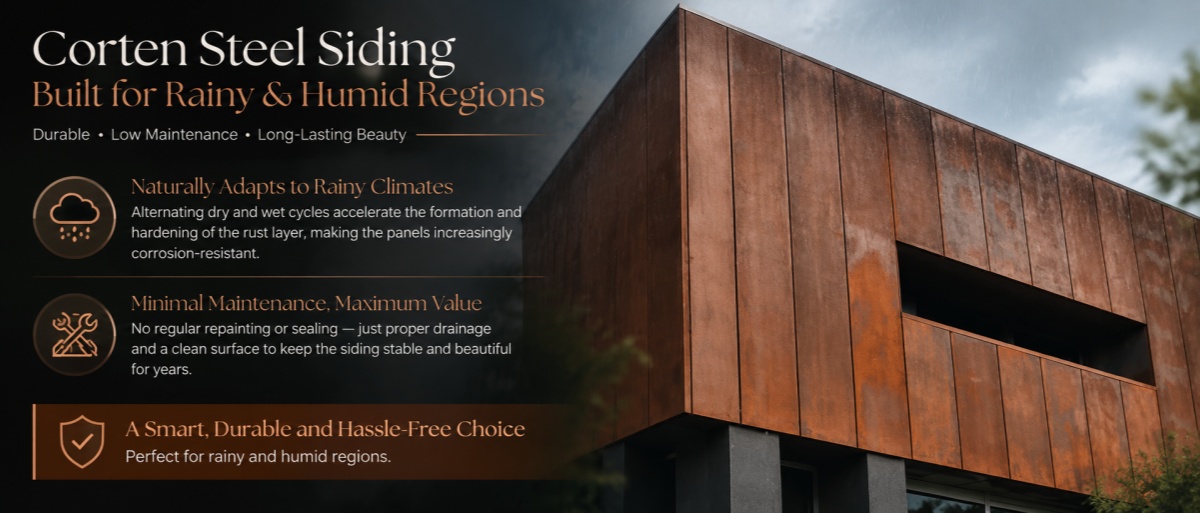
In regions with distinct rainy seasons and high humidity, the advantages of corten metal cladding are maximized, making it the preferred exterior cladding material far surpassing ordinary steel and painted panels.
First, it is well-suited to environments with alternating dry and wet cycles. The distinct alternation between sunny and rainy conditions continuously aids in the curing and formation of the rust layer, making the panels increasingly corrosion-resistant—a perfect match for the rainy climate of southern regions.
Second, rusted steel cladding requires minimal maintenance. Ordinary metal panels require regular repainting and rust-proofing, resulting in high maintenance costs. In contrast, weathering steel walls do not require frequent painting or sealing; they only need to ensure proper drainage and a clean surface to remain stable and functional over the long term.
In the long run, choosing corten metal panels in rainy regions is a low-investment, high-return, hassle-free, and durable exterior cladding solution.
Advanced Maintenance: Enhancing the Rain Resistance of Corten Steel Siding
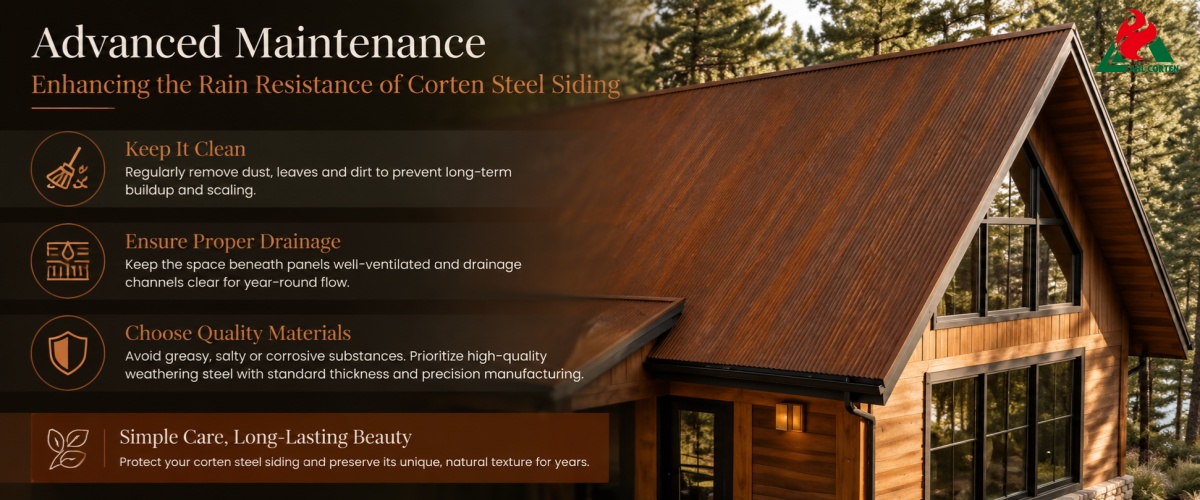
To ensure your weathering steel claddings remain durable in rainy weather and year-round outdoor environments, simply follow a few simple daily maintenance steps—no complicated procedures required. Regularly clean the surface of dust, fallen leaves, and dirt to prevent the long-term buildup of debris and scaling; keep the area beneath the panels well-ventilated and ensure drainage channels remain unobstructed year-round to prevent localized water accumulation. At the same time, prevent grease, salt, and corrosive substances from adhering to the panel surface over extended periods. When purchasing, prioritize high-quality products that meet thickness standards and are manufactured with precision; the better the base material, the stronger the long-term resistance to rain. Simple daily maintenance can effectively extend the service life of the panels and preserve the unique, natural, vintage texture of weathering steel.
Does Corten Steel Siding Require Additional Rain Protection?
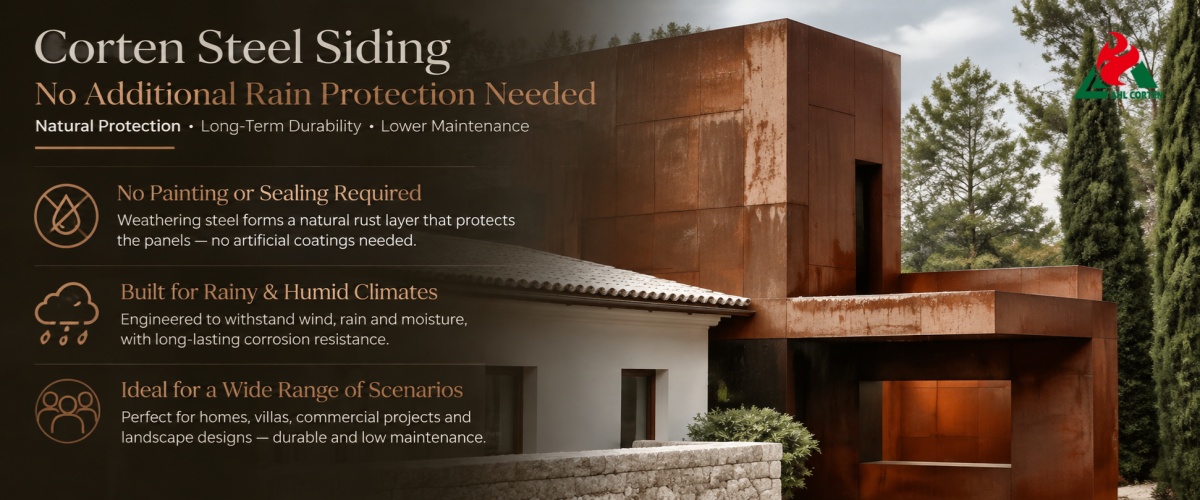
The answer is: No, there is no need for deliberate waterproofing, painting, or sealing. The core value of weathering steel lies in the protective layer formed through its natural oxidation process, which provides long-term corrosion resistance—not in relying on artificial coatings. Additional painting or sealing completely blocks the natural cycle of drying and wetting, hindering the formation of the rust layer and undermining the panels’ natural protective properties. Only in situations where the area remains unoccupied for extended periods should a breathable protective cover be used to keep out dust and moisture. Overall, thanks to its inherent rain resistance, weathering steel walls significantly reduce the time and financial costs associated with long-term maintenance.
For Which Scenarios and Groups Is Corten Steel Suitable?
Corten steel sidings are particularly well-suited for building and landscape renovations in rainy and humid regions, and they cater to a wide range of scenarios and groups.
Homeowners living in rainy, humid cities who want outdoor facades that remain stable year-round and are resistant to corrosion; courtyard, villa, and commercial projects seeking low maintenance and freedom from frequent renovations.
Designers and homeowners who prefer an industrial style and natural, vintage textures and wish to enhance the space’s distinctive character; exterior wall and landscape curtain wall projects requiring year-round outdoor installation without frequent relocation or maintenance.
If you’re looking for an outdoor wall material that “withstands the rain with confidence and looks better with age,” weathering steel walls are an excellent choice.
High-Quality Corten Steel Sidingis a Worthwhile Long-Term Investment
Many people focus on the initial cost of weathering steel walls but overlook their long-term value. High-quality weathering steel walls represent an extremely cost-effective long-term investment in building materials. In terms of performance, high-quality panels feature uniform thickness, precise craftsmanship, and structural stability. Their resistance to rain, weathering, and corrosion far exceeds that of low-end products, ensuring zero risks during long-term outdoor use. In terms of cost, they require no frequent repainting, repairs, or replacements, resulting in extremely low maintenance costs and a more manageable total cost of ownership over their entire lifecycle. Aesthetically, weathering steel’s unique natural rust-colored texture offers a premium look and high visual distinctiveness, significantly enhancing the overall style of building facades and courtyard spaces while combining practicality with decorative appeal.
Frequently Asked Questions (FAQ) About Corten Steel Siding
1. Will Corten Siding Be Damaged or Crack When Exposed to Rain?
No. Weathering steel is specifically designed for outdoor environments exposed to wind and rain; normal rainfall will not cause the panels to fail or break. As long as standard drainage and proper installation are ensured, it can reliably withstand rainy conditions over the long term.
2. Can Rusted Steel Siding Be Left Exposed to the Elements Year-Round?
Yes. High-quality weathering steel siding is suitable for year-round outdoor use. As long as prolonged water accumulation and heavy buildup of pollutants are avoided, no special covering is required, and it will maintain stable performance throughout the year.
3. Will Prolonged Exposure to Rain Cause Corten Sidingto Rust Through?
Under proper use and normal maintenance, they will not rust through. Weathering steel forms a stable protective rust layer that prevents deep corrosion. Enhanced protection and cleaning are only required in harsh environments with prolonged water accumulation, high salt content, or heavy pollution.
4. Is Special Maintenance Required After Rain?
No special treatment is required. Simply ensure proper drainage and that no significant accumulation of debris occurs on the panel surface. If there is a significant amount of dust or contaminants on the surface, a simple rinse is sufficient to maintain the panels in optimal condition.
5. Is It Necessary to Apply Paint or a Waterproof Sealant to Protect Against Rain?
Absolutely not. Applying paint or sealant coats the panel surface, preventing the formation of the protective rust layer. This reduces rain resistance and corrosion resistance, making it counterproductive.
Are You Ready to Choose the Right Corten Cladding Panels for Your Outdoor Space?
To summarize, it’s clear that rainwater does not damage weathering steel sidings; rather, it is a crucial natural factor in the formation of a stable protective layer. What truly affects the lifespan of the panels is not exposure to rain, but rather human-induced design and maintenance issues such as standing water, pollution, and poor drainage. Thanks to their self-protective rust layer, inherent outdoor weather resistance, and stable structural strength, weathering steel walls are the ideal exterior building material for rainy and humid regions. They also offer core advantages such as low maintenance, high durability, and an attractive appearance, making them suitable for a wide range of residential, commercial, and landscape outdoor applications. If you are looking for a high-end outdoor wall material that can be used outdoors year-round, withstands rain without worry, and is hassle-free and durable, high-quality weathering steel siding is an excellent choice that balances practicality, aesthetics, and long-term value.



 Fill In The Inquiry