How to Pick the Perfect Corten Water Fountain for Modern Gardens?
Date:2026.07.31
Share to:
In recent years, corten water fountains have quickly become a mainstream choice for garden landscaping. Whether in private courtyards, patio spaces, or the landscape designs of boutique hotels and commercial complexes, they are a common sight.
Unlike ordinary stone or fiberglass water features, outdoor Corten fountains—with their unique vintage rust-colored texture, bold yet minimalist lines, and the soothing sound of flowing water—perfectly complement modern minimalist, natural luxury, and industrial-style garden aesthetics.
However, most homeowners face the same challenges when shopping: there are too many styles to choose from, they’re unsure about the right size, and they worry about complicated installation and troublesome maintenance.
Many users want more than just a decorative water feature; they seek a mature landscape element that complements their garden, is low-maintenance, durable, and retains its appeal over time.
This article will provide a comprehensive guide to selecting the perfect corten steel water feature for modern gardens, covering material properties, key selection criteria, spatial compatibility, installation details, and investment value.
1. The Unique Landscape Advantages of Corten Steel
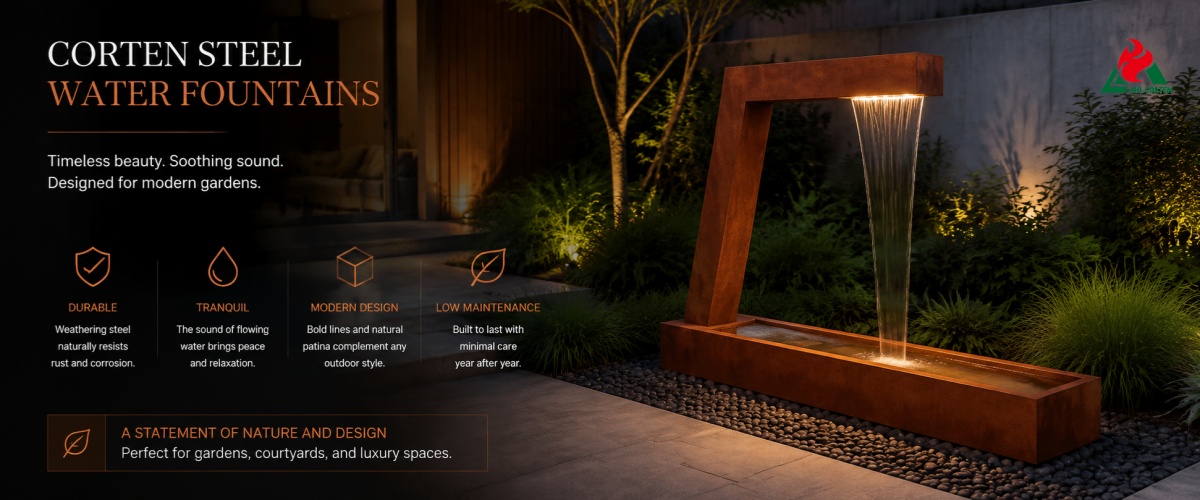
Weathering steel, also known as corten steel, is a special type of steel developed specifically for harsh outdoor environments. Its most notable feature is that it requires no manual painting or anti-corrosion treatment. When exposed to wind, rain, sunlight, and humidity over the long term, the steel’s surface naturally forms a dense, stable reddish-brown rust layer. This oxide film firmly protects the underlying steel, preventing further corrosion and achieving the effect of “rust preventing rust.” Compared to materials used in ordinary water features, the greatest advantage of weathering steel water features is that they become more visually appealing with use, remain stable over time, and require virtually no maintenance, making them ideal for long-term outdoor use near water.
2. Complete Structural Composition of Corten Water Fountains
A high-quality weathering steel water feature is not merely a sculpted steel plate but a mature landscape installation that integrates structure, water circulation, and drainage systems. It primarily consists of four core components: 1. Weathering Steel Shell: Determines the overall shape, structural strength, and vintage aesthetic; it serves as the core of the water feature’s appearance and load-bearing capacity; 2. Water Reservoir/Basin: Responsible for storing and stabilizing water, ensuring a steady water circulation; 3. Circulation Pump: Installed out of sight, it serves as the power core that drives continuous water flow; 4. Overflow and Drainage Structure: Ensures water level balance, prevents water from overflowing, and determines long-term operational stability.
3. The Dual Value of Corten Steel Water Features
While ordinary water features serve only a decorative purpose, corten steel waterfall features combine both practical and artistic value. On a daily basis, the flowing water helps reduce noise and humidify the air in the courtyard, enhancing the comfort of the space. When not in use, the feature itself serves as a high-quality metal landscape sculpture that can be admired year-round and displayed throughout the year.
4 Key Considerations for Selecting Corten Water Features
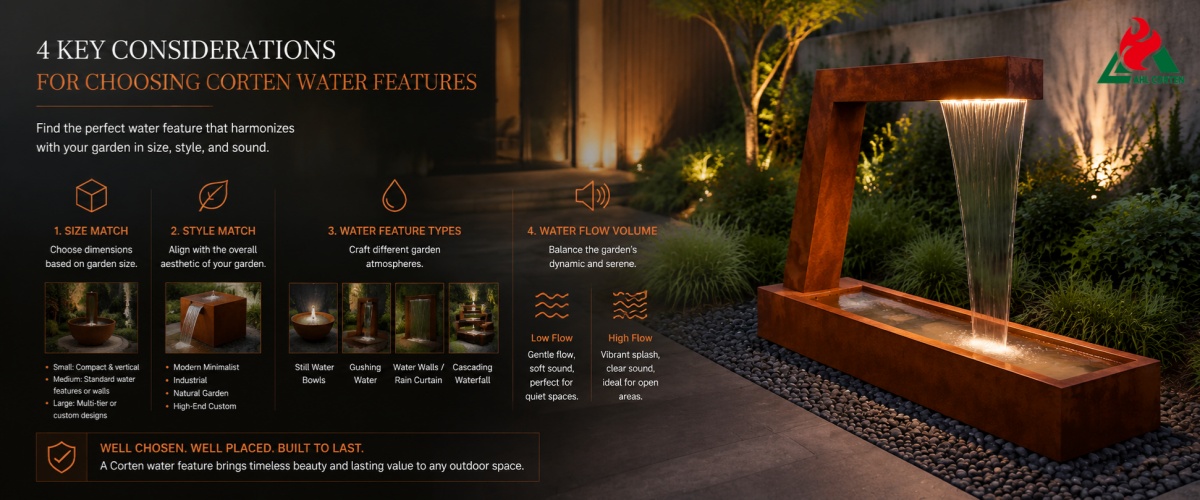
When selecting a rusted steel water feature, bigger isn’t necessarily better, nor is a more complex design automatically more sophisticated. The truly perfect choice is one where the size, style, water pattern, and sound of the water flow harmonize perfectly with your garden.
1. Size Match: Choose Dimensions Based on Garden Size
Size is the primary factor determining the overall harmony of your garden; an imbalance in size will directly detract from the garden’s overall aesthetic.
Small Gardens/Patios: Prioritize compact, vertical, or bowl-shaped water features. These take up minimal space while serving as strong visual focal points, preventing small areas from feeling cramped or crowded.
Medium-Sized Gardens: Opt for standard-sized water features or weathering steel water walls. Their balanced proportions allow them to serve as visual focal points without overwhelming the overall landscape layers.
Large Gardens/Commercial Spaces: Consider multi-tiered cascades or large-scale custom water features. Use grand-scale designs to create landscape landmarks and enrich spatial depth.
2. Style Match: Aligning with the Overall Aesthetic of Modern Gardens
Weathered steel water features come in a variety of styles, precisely matching different garden design aesthetics to avoid a disjointed look.
Modern Minimalist Style: Clean, crisp geometric lines and square shapes complement modern architecture and hardscaped gardens.
Industrial Style: Retains the raw, rugged texture of steel, highlighting the metal’s bold, rugged texture for a distinctive and highly recognizable look.
Natural Garden Style: Curved, biomimetic shapes that mimic the forms of natural rocks and flowing water, blending effortlessly into greenery to create a soft, soothing atmosphere.
High-End Custom Landscaping: Dimensions and shapes can be customized according to the garden’s overall design language to create a unique artistic landscape.
3. Water Feature Types: Crafting Different Garden Atmospheres
Different water flow patterns can completely transform a garden’s visual and auditory atmosphere, making the right choice essential.
Still Water Bowls: With a calm and gentle water surface, these feature a serene and understated aesthetic, ideal for creating quiet, relaxing garden corners that offer a deeply soothing experience.
Gushing Water Features: Dynamic, flowing water with rich layers creates a strong visual impact, making them perfect as the central focal point of a garden.
Water Walls/Rain Curtain Features: The vertical lines of flowing water exude sophistication; they can serve as spatial dividers or entryway features, offering a minimalist yet grand appearance.
Cascading Waterfall: Simulates the natural drop of a stream, offering a stronger sense of ecology; ideal for large gardens and natural-style landscapes.
4. Water Flow Volume: Balancing the Garden’s Dynamic and Serene Atmospheres
The volume of water flow directly determines both the spray effect and the sound of flowing water—a crucial detail that is often overlooked but significantly impacts the overall experience.
Low Flow: Gentle water flow, delicate splashes, and extremely low noise—ideal for areas near windows, relaxation zones, and tranquil private gardens.
High Flow: Full, vibrant splashes, a clear, resonant sound, and a more immersive atmosphere—suitable for open courtyards and commercial public spaces.
Before purchasing, clarify your needs: Are you seeking a quiet, soothing retreat or a lively, dynamic courtyard? Choose the appropriate flow rate based on this preference.
Customized Water Feature Selection Guides for Different Spaces
1. Small Courtyards and Patios
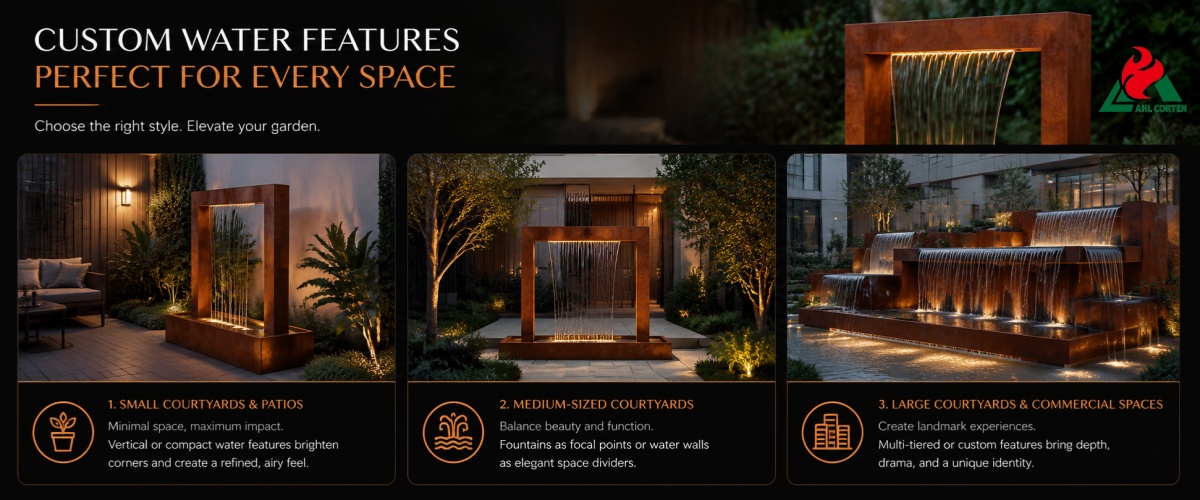
Core Principles: Minimal space requirements, high visual impact; avoid a cluttered or cramped appearance. Recommended Styles: Vertical water features, small freestanding water features, and bowl-shaped still water features. These designs enhance the aesthetic appeal through vertical forms without occupying floor space for activities. They can instantly brighten up corners of patios and small courtyards, making small spaces feel more refined and airy.
2. Medium-Sized Courtyards
Core Principle: Balance aesthetics with functionality, serving both as a focal point and a spatial divider. Recommended Styles: Standard-sized fountain features, minimalist weathering steel water walls. These can be placed at the center of the courtyard as the main focal point, or the water wall can serve as a soft spatial divider, replacing rigid walls to create a more harmonious and sophisticated layered effect in the courtyard.
3. Large Courtyards and Commercial Landscape Spaces
Core Principle: Create landmark-level landscapes and enrich visual layers. Recommended Styles: Multi-tiered cascading water structures, large-scale monolithic water features, and custom-designed water features. Large spaces offer greater visual capacity; multi-tiered water flows enhance the landscape’s three-dimensionality, while custom designs can align with the overall project style to create a distinctive landscape landmark.
Key Details for Water Feature Installation and Drainage
Selecting the right design is only the first step; proper installation and drainage design determine the water feature’s stability and maintenance requirements for the next decade.
1. Ground Installation Requirements
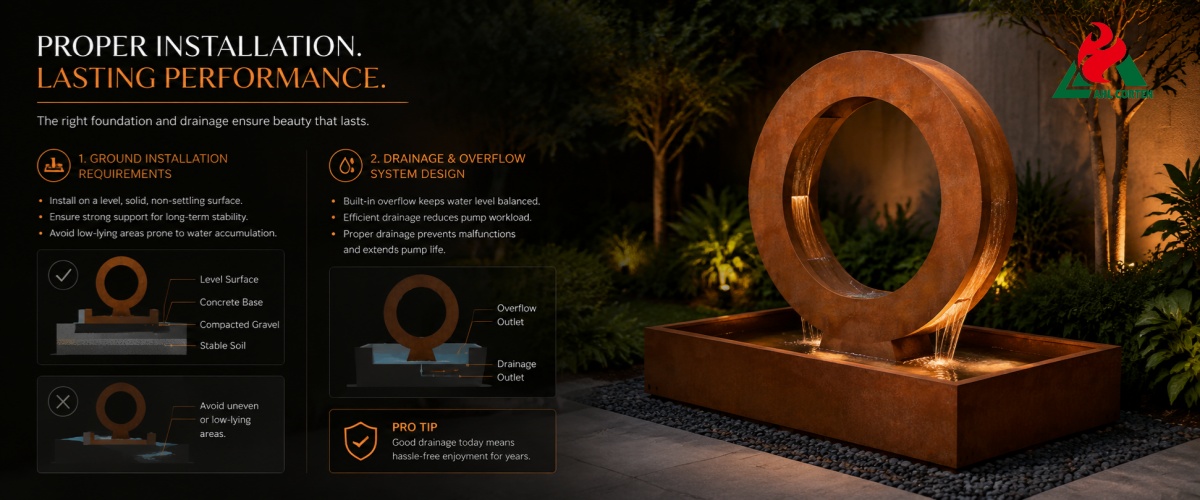
A level, solid, and non-settling hard surface must be selected. Custom corten water features have significant self-weight; an uneven surface can cause the structure to tilt under load, leading to water seepage and deformation over time. Strictly avoid low-lying areas prone to water accumulation, as prolonged standing water will corrode the base, damage surrounding paving, and shorten the equipment’s service life.
2. Drainage and Overflow System Design
High-quality corten water bowls come equipped with scientifically designed overflow and drainage structures that automatically balance water levels. A well-designed drainage system prevents abnormal water level fluctuations, reduces the operational load on the pump, effectively lowers the probability of malfunctions, and significantly extends the pump’s service life. Most cases of pump failure and water accumulation leading to contamination in water features stem from inadequate initial drainage design or improper installation.
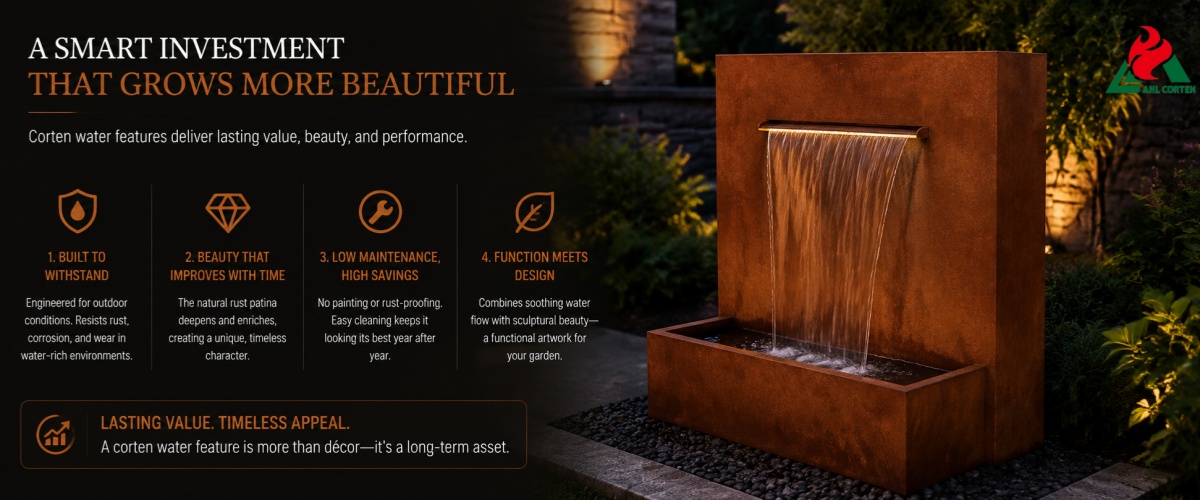
Why Corten Water Feature a Worthwhile Long-Term Investment?
1. Superior Outdoor Weather Resistance for Greater Stability in Water-Adjacent Environments
Ordinary metal water features are highly prone to rust, corrosion, peeling, and damage when exposed to water over time, whereas weathering steel is specifically designed for outdoor environments exposed to wind, rain, humidity, and water. Even under prolonged exposure to water flow, sunlight, and rain, the structure remains stable, without issues such as rust perforation or structural loosening.
2. Aesthetic Value That Appreciates Over Time: The Longer It’s Used, the More Sophisticated It Becomes
Ordinary water features age, fade, and yellow over time, but weathering steel water features do the exact opposite. As time passes, the surface rust patina becomes increasingly uniform and rich, with deeper layers of texture, forming a natural, vintage appearance that cannot be replicated by artificial painting—the landscape’s aesthetic quality improves year after year.
3. Ultra-Low Maintenance Costs: Long-Term Peace of Mind and Savings
No need for regular painting, rust prevention, or refurbishment—and no frequent maintenance or repairs. Simple daily cleaning is all that’s needed for stable operation, significantly reducing long-term maintenance time and renovation costs, making it far more cost-effective than ordinary water features over the long term.
4. Combining Functionality and Aesthetics
It offers complete water storage, circulation, and flowing water features while also serving as a standalone artistic landscape element for your garden. It is not a one-time decorative piece, but rather a garden landscape asset that appreciates in value year after year and is built to last.
Advanced Buying Guide: Key Details That Are Easily Overlooked
To find a steel water feature that’s the perfect fit for your garden, you need to pay attention to four key technical details in addition to style and size. 1. Customization: For irregularly shaped yards or corner spaces, choose products that support custom sizing to ensure a precise fit—no compromises, no awkwardness; 2. Comprehensive Drainage System: Prioritize designs that come with both built-in overflow and drainage systems to prevent water accumulation and overflow issues at the source; 3. Regional Climate Adaptability: In areas with extreme temperature fluctuations, winter frost, or high rainfall and humidity, prioritize thick-plate, precision-crafted models, which offer superior resistance to freezing, moisture, and deformation; 4. Ease of Installation and Handling: For large-scale water features, opt for modular designs that facilitate transportation and professional installation, reducing on-site installation challenges.
Frequently Asked Questions (Purchasing and Usage Guidance): Corten Water Features
Q1: Will Rusted Steel Water Features Rust and Stain the Ground?
In the early stages, the rust layer on new water features may not be fully stabilized, potentially causing slight rust seepage, which is more noticeable on light-colored surfaces. This can be mitigated by installing a base and performing regular cleaning during the initial period. Once the rust layer has fully stabilized, rust seepage and staining will rarely occur.
Q2: Is a Base Required For Installing a Corten Water Feature?
We recommend installing a base, especially when placing the feature on light-colored stone or concrete surfaces. The base prevents rust seepage, facilitates drainage and ventilation, and simplifies daily cleaning and maintenance, offering excellent value for money.
Q3: Can Steel Water Features Be Left Outdoors Year-Round?
Absolutely. Weathering steel is inherently suited for all outdoor weather conditions. As long as it is installed on a level surface with proper drainage, it can remain outdoors year-round without the need for seasonal storage.
Q4: Will Long-Term Use of the Water Feature Damage the Surrounding Pavement?
Provided it is installed properly and drainage is unobstructed, it will not damage the surface. Ground subsidence, mold caused by standing water, and damage to paving are mostly caused by uneven ground or poor drainage—not by the material itself.
Q5: Which Drainage Method Is the Most Stable and Effective?
Prioritize the combined solution of “built-in overflow drainage + installation with a slight slope.” This dual approach ensures stable water levels and prevents issues such as standing water, overflow, and pump overload, making it suitable for the vast majority of garden settings.
Conclusion: Choosing the Right Water Feature to Elevate the Aesthetics of Your Modern Garden
The reason rusted steel water features have become the top choice for modern garden landscaping lies in their ability to balance aesthetics, practicality, and long-term stability. They eliminate the high-maintenance hassles of ordinary water features and avoid the aesthetic fatigue associated with fixed designs. Over time, they develop a unique, natural patina, making your garden landscape more refined with use. When selecting the perfect metal water feature, there’s no need to blindly pursue large sizes or complex designs. Simply consider your garden’s space, design style, and desired ambiance to choose the appropriate size, water flow pattern, and installation plan. By selecting the right product, ensuring proper installation, and establishing a solid drainage system, you can enjoy a garden water feature that operates reliably year-round, continues to enhance its aesthetic appeal, and requires minimal maintenance—infusing your modern garden with the soothing sound of flowing water and a sophisticated ambiance.


 Fill In The Inquiry