Many backyard barbecue enthusiasts have one key concern when shopping for a corten steel grill: Since outdoor equipment is constantly exposed to wind and rain, will getting wet cause rust and corrosion, ultimately damaging the entire grill?
This concern is entirely reasonable. In the public’s mind, the combination of metal, outdoor use, and rain equals continuous rusting, thinning, perforation, and eventual total failure. This is indeed the case with ordinary steel grills—prolonged exposure to rain causes them to rust continuously until they become unusable.
However, weathering steel is not ordinary steel; its resistance to outdoor rain is entirely different. This article will provide expert answers to this key question, break down the principles behind weathering steel’s rain resistance, and share practical maintenance tips to help you completely overcome your anxiety about using the grill in the rain.
Corten steel is a specially formulated alloy steel containing elements such as copper, chromium, and nickel, developed specifically for all-weather outdoor environments. It differs from ordinary carbon steel, and its greatest advantage lies in its ability to withstand natural conditions such as wind, rain, sunlight, and temperature fluctuations. For this reason, weathering steel is also known as “patina steel.” It is widely used in long-term outdoor applications such as building facades, outdoor sculptures, and garden water features, and is recognized as a high-performance outdoor material.
2. Key Differences from Ordinary Steel Grills
When ordinary steel is exposed to rain, it develops loose, flaking rust. This rust layer fails to block moisture and oxygen, allowing corrosion to continue inward until it eventually penetrates the steel and compromises the structure. The oxidation process of weathering steel is exactly the opposite. Upon contact with rain and air, it gradually forms a dense, stable protective oxide layer, known in technical terms as a “patina.”
This protective layer adheres firmly to the steel’s surface, blocking further penetration of rain and oxygen and preventing internal metal corrosion at its source.
3. The Dual Value of an Outdoor Corten BBQ Grill
An outdoor corten grill is more than just a cooking tool. It requires no painting or additional rust-proofing and can be left outdoors year-round. As it is exposed to wind and rain, the grill’s surface develops a natural, vintage rust-red patina that combines practicality with decorative appeal, making it comparable to a work of garden art.
Key Question: Can Rain Damage a Corten Steel BBQ Grill?
1. Normal Rain: Harmless and Beneficial
The conclusion is clear: Normal rainfall will not damage a corten grill. For weathering steel, a moderate amount of rain and exposure to air are essential for forming a protective rust layer. Without the moderate nourishment provided by rain, a stable protective layer cannot form naturally. Daily exposure to wind and rain is precisely the key process that cures the protective properties of the weathering steel grill and extends its service life.
2. What Truly Damages the Grill Is Not Rain, but Unusual Conditions
Weathering steel is not vulnerable to rain itself, but rather to improper usage scenarios such as standing water and accumulated dirt—which are the primary causes of abnormal corrosion in the vast majority of grills. This primarily includes three situations: First, prolonged standing water. Water that accumulates in areas such as the grill base or the grooves of the baking tray and cannot drain away disrupts the steel’s normal “oxidation–drying–re-oxidation” cycle, causing uneven rusting and accelerating ageing.
Second, structural drainage defects. A fully enclosed grill base without drainage holes or a drainage slope will lead to long-term rainwater accumulation, which continuously erodes the grill’s structure.
Third, accumulation of wet ash. Charcoal ash left over from grilling becomes corrosive when it comes into contact with water. If the material remains adhered to the bbq grill’s surface for an extended period, it can cause localized abnormal rusting, affecting both appearance and service life.
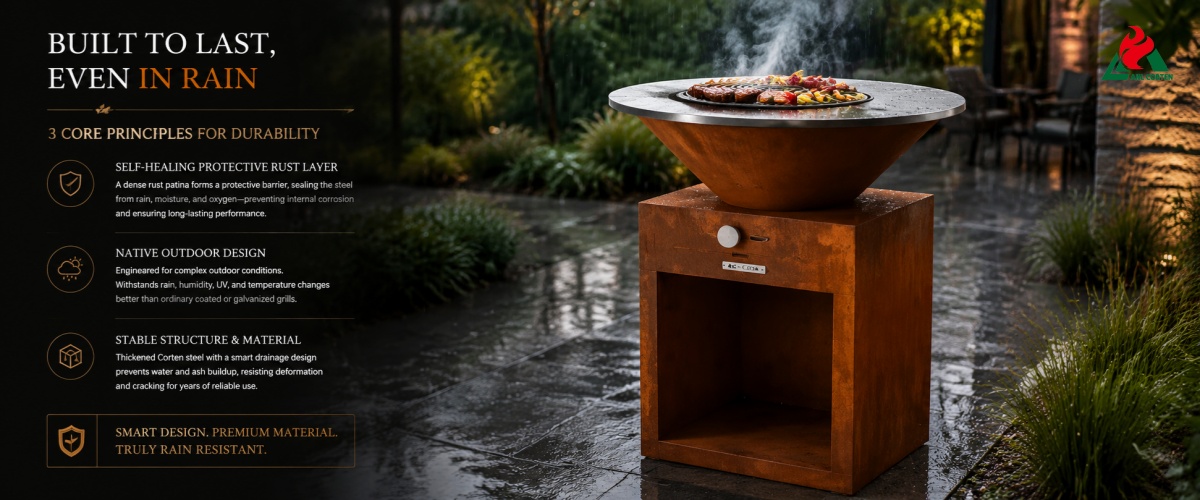
The core of weathering steel’s rust resistance lies in “active protection” rather than “passive rust resistance.” Once a stable, dense rust layer forms, it firmly seals the steel substrate. The corten steel outdoor grill blocks the intrusion of rainwater, moisture, and oxygen from the outside, eliminating the problem of layer-by-layer internal corrosion and perforation common in ordinary steel. This enables self-maintenance, making the grill more stable the more it is used.
2. Native Outdoor Design
From the very beginning of its development, weathering steel was designed specifically for complex outdoor environments—it is not merely a temporary outdoor alternative to ordinary steel. It can reliably withstand extreme weather conditions such as seasonal temperature fluctuations, damp and rainy conditions, and intense sunlight, offering far superior environmental adaptability compared to ordinary powder-coated or galvanized steel grills.
3. Stable Structural and Physical Properties
High-quality weathering steel barbecue grills utilize thickened steel plates and scientifically engineered structural designs. The ample plate thickness enables them to withstand long-term exposure to wind and rain, making them resistant to deformation and cracking. Combined with a reasonable drainage slope and base structure, these grills eliminate the risk of water and dust accumulation from the design stage, ensuring long-term stability.
Precautions for Using and Maintaining CortenBBQ Grills in Rainy Weather
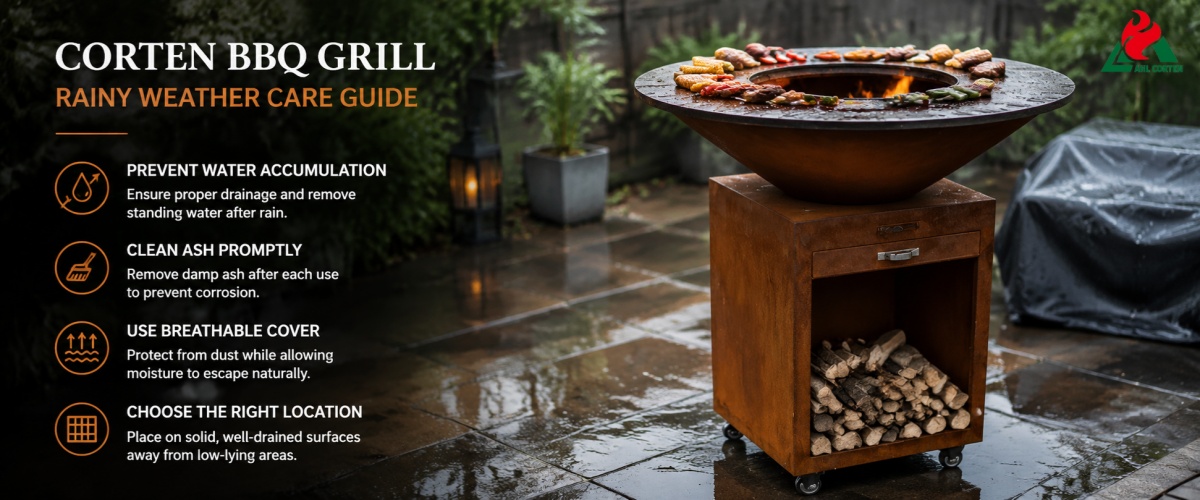
1. Prevent Prolonged Water Accumulation in the Grill Body
After each rainfall, briefly inspect the grill’s grooves and hard-to-reach corners at the bottom, and promptly remove any residual water to avoid prolonged soaking. When purchasing, prioritize models with built-in drainage holes and a natural drainage slope to ensure rapid drainage of rainwater through the grill’s design.
2. Promptly Remove Damp Charcoal Ash
Damp charcoal ash is highly sticky and corrosive; if left to accumulate over time, it can cause uneven localized rusting and disrupt the uniform texture of the grill body. Make it a habit to clean out the ash after every use. Pay special attention to removing residual damp ash after rain—this simple step can prevent most localized corrosion issues without complicated procedures.
3. Choose a Breathable Protective Cover
When the rusted steel bbq grill is not in use for extended periods, during seasonal storage, or when you’re away from home, use a protective cover to shield the grill body and reduce the buildup of dust and debris. Avoid this common mistake: Do not use fully sealed, waterproof covers. A completely sealed cover traps internal moisture, creating a damp, stuffy environment that accelerates abnormal rusting. A breathable protective cover keeps out dust while allowing moisture to evaporate naturally.
4. Choose an Appropriate Placement Location
Whenever possible, place your corten steel outdoor BBQ grill on concrete, stone, or gravel surfaces. These surfaces drain quickly, provide good ventilation, and are less prone to water accumulation and moisture buildup. Avoid low-lying areas, lawns, bare soil, and other damp or water-prone areas to minimize the risk of the grill becoming damp from the environment.
Rainy and Humid Regions: Corten Steel Grills are the Best Choice
In the rainy southern regions and humid coastal areas, a grill’s resistance to rain and humidity is a key consideration when making a purchase, and weathering steel grills are perfectly suited for these climates. The protective rust layer on weathering steel requires moderate moisture and rain to form; a rainy environment not only does not damage the grill but helps it develop a more uniform and stable protective layer. Compared to ordinary outdoor grills, maintenance costs are extremely low. Ordinary steel grills require frequent repainting to prevent rust and touch-ups to the coating; once the coating is damaged, corrosion sets in rapidly. Weathering steel requires no protective coating whatsoever; it relies on its inherent material properties to withstand humid and rainy environments, ensuring structural stability and longevity without the need for replacement. In regions with long rainy seasons, a corten bbq grill is a worry-free, durable, and cost-effective long-term investment that eliminates the need for frequent storage or replacement of equipment.
Practical Tips for Extending the Lifespan of a Corten Steel Outdoor Grill
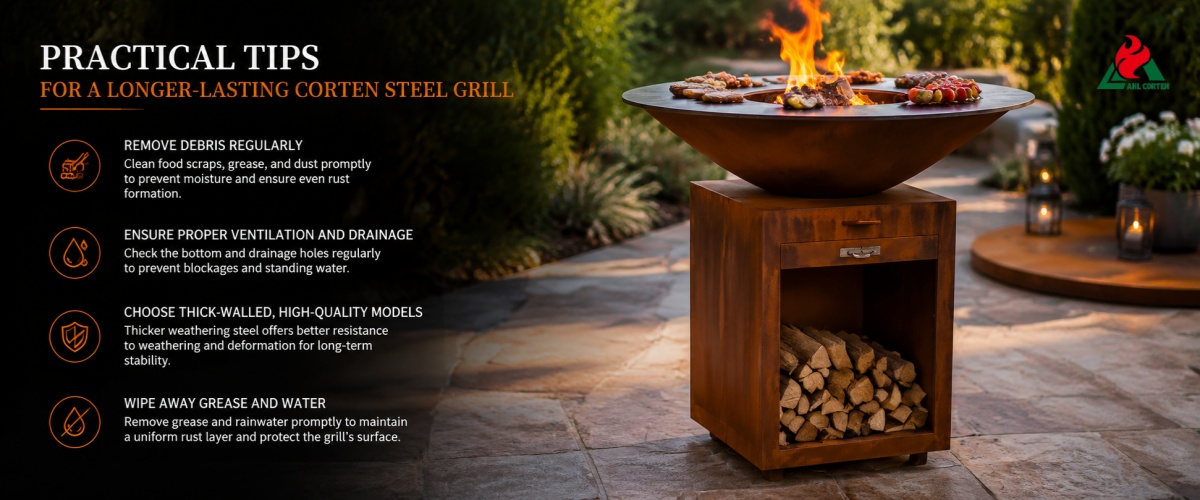
Weathered steel possesses excellent inherent properties, and with simple daily maintenance, you can significantly enhance the grill’s appearance and lifespan, ensuring it “becomes more durable and more attractive the more you use it.” First, regularly remove debris. Promptly clean up food scraps, grease, and accumulated dust to prevent impurities from absorbing moisture and adhering to the grill’s surface, which can interfere with the formation of the rust layer.
Second, ensure proper ventilation and drainage. Regularly inspect the bottom of the grill and the drainage holes to prevent blockages and standing water, maintaining a steady cycle of moisture and dryness.
Third, opt for thick-walled, high-quality models. Weathering steel grills made from thick-walled sheets offer greater resistance to weathering and deformation, ensuring better stability during long-term outdoor use.
Fourth, avoid allowing grease and standing water to remain for extended periods. When barbecue grease mixes with rainwater and remains on the surface for a long time, it can disrupt the uniformity of the rust layer; a simple wipe-down every so often is sufficient to prevent this issue.
Is Additional Rain Protection Necessary? An Authoritative Answer
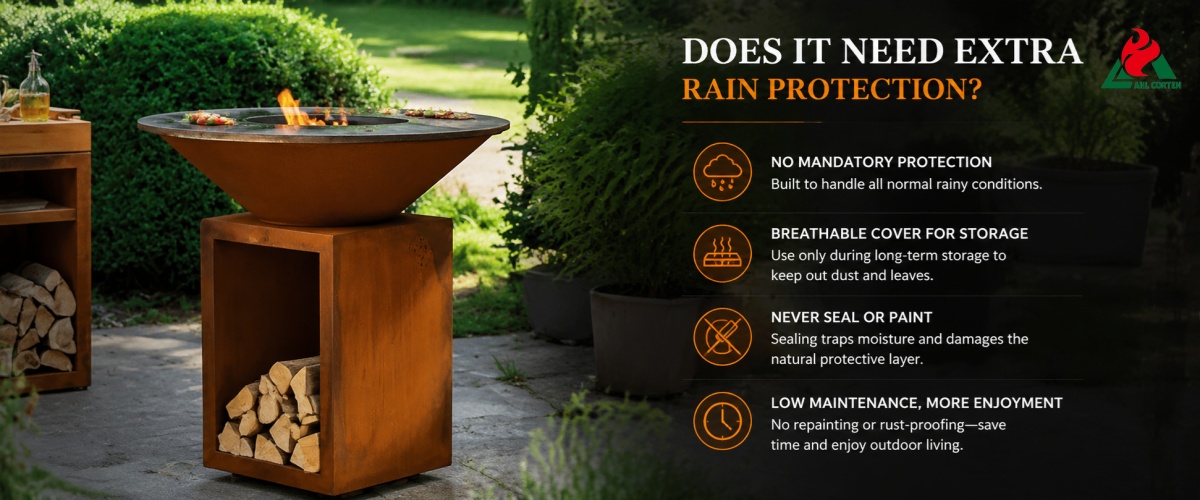
Many users wonder: Do rusted steel bbq grills require additional rain or rust protection? The answer is: No mandatory protection is needed—moderate supplementary care is sufficient. There is absolutely no need to intervene when the grill is exposed to rain outdoors on a daily basis; the material’s inherent weathering properties are sufficient to handle all types of normal rainy conditions. Only during long-term storage is it recommended to use a breathable protective cover to shield the grill from dust and fallen leaves while ensuring moisture can circulate. Under no circumstances should you paint, seal, or apply any sealing treatments. Additional sealing coatings will trap internal moisture, hinder natural oxidation, and ultimately undermine the grill’s protective mechanism—resulting in more harm than good. Compared to the frequent maintenance, repainting, and rust-proofing required for ordinary grills, the minimal maintenance required for weathering steel grills perfectly suits modern outdoor leisure lifestyles, saving both time and hassle.
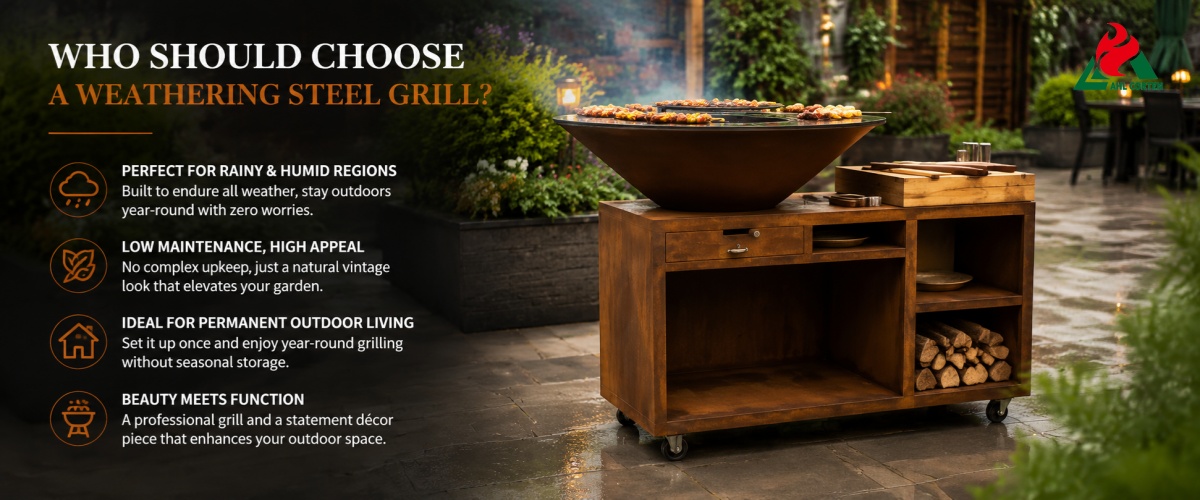
Given the weathering steel grill’s rain resistance, low maintenance, and attractive appearance, this type of grill is particularly well-suited for four categories of users: First, residents in rainy and humid regions. There’s no need to frequently store or cover the grill during rainy weather; it can be left outdoors year-round, regardless of weather changes. Second, users are seeking low-maintenance, visually appealing equipment. With no complex upkeep required and a natural vintage aesthetic, these grills combine practicality with garden appeal. Third, families looking for a permanent outdoor grill. There’s no need to move or store it seasonally—set it up once and use it year-round. Fourth, users who value both garden aesthetics and practicality. These grills serve not only as professional grilling equipment but also as garden décor, enhancing the ambiance of your outdoor space.
Why Is a High-Quality Corten Steel Grill Worth the Investment?
From a long-term perspective, the overall value of a high-quality weathering steel grill far exceeds that of ordinary steel or coated grills. It offers more stable resistance to rain and weathering. With an optimal alloy composition and proven manufacturing processes, it develops a uniform, dense rust layer that is resistant to localized corrosion and structural deformation. At the same time, they significantly reduce long-term costs. With no need for frequent maintenance, repainting, or equipment replacement, the initial purchase cost may be slightly higher, but the long-term value far exceeds that of ordinary grills. Its aesthetic appeal continues to improve over time. The unique rust-red patina deepens with use, developing a more sophisticated texture—a highlight of garden decor that ordinary grills simply cannot replicate. It’s not just a grilling tool; it’s a long-term asset that enhances the quality of your outdoor living, perfectly suited for years of garden leisure and gatherings.
Frequently Asked Questions (FAQ) About the Corten Steel BBQ Grill
1. Will Ordinary Rain Damage a Rusted Steel Barbecue Grill?
No. Normal rainfall is essential for weathering steel to form a protective rust layer that will not cause structural damage. Only abnormal conditions, such as prolonged standing water or accumulated damp ash, can lead to localized issues.
2. Can a Rusted Steel BBQ Grill Be Left Outdoors Year-Round?
Yes. This is a core design advantage of weathering steel, which is specifically engineered for long-term outdoor exposure. It requires no seasonal moving or storage and is resistant to wind, rain, and sunlight.
3. Will Exposure to Rain Cause the Grill to Rust Through, Perforate, or Become Unusable?
No. The rust layer on weathering steel acts as a protective barrier rather than causing destructive corrosion. Once formed, it prevents deep oxidation, so the grill will not suffer from perforation or through-corrosion issues typical of ordinary steel.
4. Does the Grill Require Special Maintenance After Rain?
No special treatment is needed. Simply check to ensure any standing water has been drained and wipe away any damp ash—there are no complicated professional maintenance steps.
5. Does a Corten Grill Need to Be Painted or Sealed to Prevent Rust?
Absolutely not. The natural rust layer provides sufficient long-term rust protection. Applying additional paint or sealant could block moisture evaporation and may damage the grill.
Summary: Are You Ready to Choose the Perfect Outdoor Corten Grill for You?
To summarize, it’s clear that rain will not damage a weathering steel BBQ grill. On the contrary, moderate exposure to wind and rain is key to strengthening the grill’s protective properties and developing its unique patina. Unlike ordinary grills, which are susceptible to rain, moisture, and damage, weathering steel grills—with their self-healing protective layer, inherent suitability for outdoor use, and minimal maintenance requirements—are the top choice for outdoor grilling in rainy and humid regions. Corten BBQ grills combine weather resistance, durability, low maintenance, attractive design, and excellent value. The more you use them, the sturdier and more textured they become—serving not only as practical cooking equipment but also as an elegant garden feature. Want an outdoor grilling experience that withstands wind and rain and can be enjoyed year-round? Choose a high-quality weathering steel BBQ grill to say goodbye to the hassles of frequent maintenance and equipment replacement, and unlock a long-lasting, high-quality outdoor lifestyle. Get a Quote



.jpg)

 Fill In The Inquiry