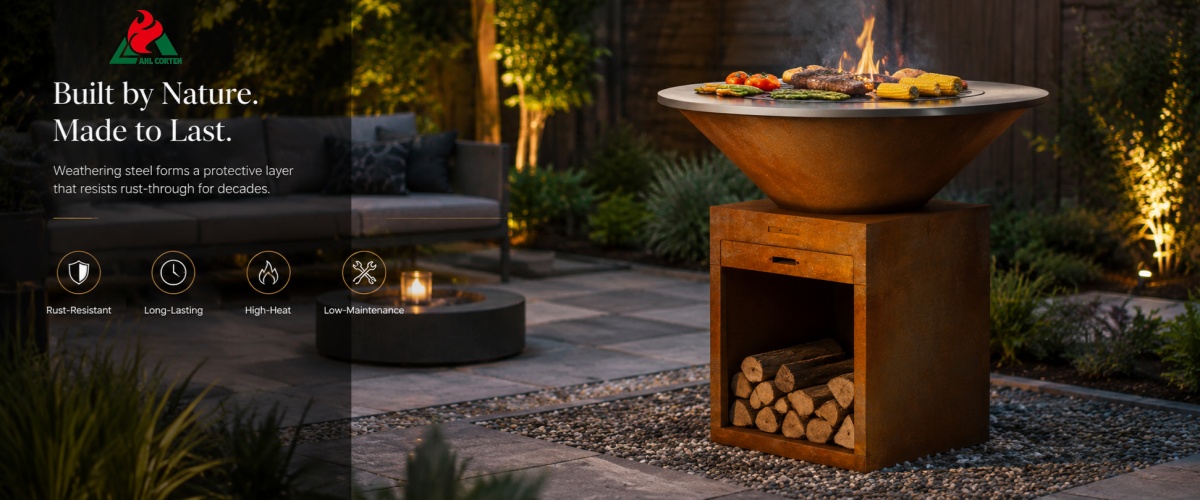
Among high-end outdoor grilling equipment, corten steel BBQ grills have become a popular choice for backyards and camping trips thanks to their rustic, industrial-style rusted appearance. With a naturally weathered texture that sets them apart from the coldness of stainless steel and the heaviness of cast iron, they create a rich atmosphere and have become a viral hit on social media.
However, the vast majority of consumers have one major concern when making a purchase: since weathering steel rusts naturally, will it eventually rust through, become damaged, leak, and ultimately become completely unusable after prolonged exposure to the elements?
No one wants to spend a fortune on high-end barbecue equipment only to find it rusting, breaking down, becoming structurally unstable, and unsafe to use within just a few years. What people truly need is not just a visually striking grill, but professional outdoor cooking equipment that can withstand harsh outdoor conditions, boasts an exceptionally long lifespan, and remains stable and durable.
Today, we’ll address this core concern by breaking down the facts using simple scientific principles. We’ll clarify the risks of rust, highlight key points to avoid pitfalls when purchasing, and provide a comprehensive maintenance guide—all to help you buy a weathering steel grill with confidence.
Core Truth: Do Corten Steel BBQ Grills Really Rust Through?
The Clear Answer: They Almost Never Rust Through Under Normal Use
This conclusion challenges most people’s preconceived notions: high-quality weathering steel barbecue grills almost never rust through naturally under typical weather conditions and when used correctly.
The core properties of weathering steel are unique; its rusting is not a defect but a key self-protective mechanism—a distinct advantage that sets it apart from ordinary carbon steel and stainless steel.
Scientific Principle: A Natural Protection Mechanism That Uses Rust to Prevent Rust
When ordinary steel rusts, the surface rust layer becomes loose and prone to flaking, allowing corrosion to continue inward, eventually causing the steel plate to rust through and become unusable.
Weathering steel, however, contains special trace elements such as copper, chromium, and nickel. Upon contact with air and moisture, its surface slowly oxidizes to form a dense, hard, and extremely adhesive layer of stable rust (passivation film).
This rust layer acts as a natural protective armor for the steel, firmly sealing the internal metal structure. It isolates the steel from air, moisture, and corrosive substances, preventing further oxidation and corrosion of the internal steel, thereby eliminating the risk of extensive, penetrating rust at its source. Simply put, weathering steel relies on controlled surface rusting to ensure the interior never rusts through.
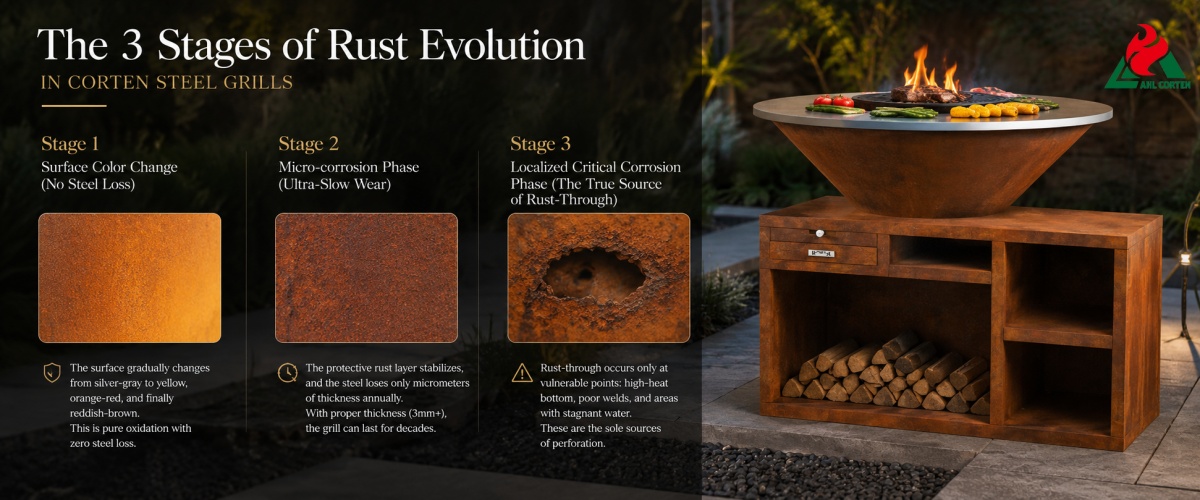
The 3 Stages of Rust Evolution in Corten Steel BBQ Grills
To completely avoid the risk of rust perforation, you must first distinguish between the normal color change of weathering steel and dangerous corrosion. Its outdoor aging process is divided into three stages, with only the final stage posing a risk of rust perforation.
Stage 1: Surface Color Change (No Steel Loss)
When a brand-new rusted steel barbecue grill is left outdoors for weeks or even months, its surface will gradually change from its original silver-gray color to a bright yellow, then orange-red, and finally settle into a vintage reddish-brown hue.
This process is purely surface oxidation; there is zero loss of steel thickness. It merely creates a signature vintage appearance and represents the peak of weathering steel’s aesthetic appeal.
Stage 2: Micro-corrosion Phase (Ultra-Slow Wear)
All outdoor metals experience minimal wear, and weathering steel is no exception. As the protective rust layer stabilizes, the steel loses only micrometers of thickness annually.
As long as the plate thickness in the grill’s core heating zone meets the standard (3mm or more), this extremely slight wear is negligible and sufficient to ensure the equipment remains functional for decades.
Stage 3: Localized Critical Corrosion Phase (The True Source of Rust-Through)
Corten steel BBQ grills rarely experience large-scale rust-through. All penetrating damage results from targeted corrosion at localized weak points, similar to a cavity that worsens only at the site of the initial break.
High-risk vulnerable areas are concentrated in three locations: the bottom of the firebox subjected to repeated high-temperature baking, substandard welded seams, and dead corners with stagnant water due to poor drainage. These areas will be the first to show peeling, thinning, and perforation, and they are the sole source of rust-through issues.
5 Key Risks That Cause Barbecue Grills to Rust Through
Weathering steel BBQ grill is inherently sturdy and durable. The vast majority of rust-through and damage issues are not caused by material degradation, but rather by human-induced hazards resulting from improper use, material selection, or manufacturing processes. The following five risks are the key factors that shorten the lifespan of a barbecue grill.
1. Prolonged Water Accumulation and Poor Drainage (The Most Serious Hazard)
The core condition for weathering steel to form a protective rust layer is the cycle of wet and dry: it requires moderate moisture to complete oxidation, and it also needs a dry environment for the rust layer to solidify and harden.
If the drainage holes at the bottom of the grill are blocked or the structural design lacks drainage channels, water from rain or condensation will stagnate for long periods. The steel will remain in a constantly damp and corrosive state, preventing the formation of a dense protective layer and accelerating the thinning and rusting of the steel plates.
2. Insufficient Sheet Thickness in Critical Areas
Low-cost, substandard corten steel barbecue grills on the market commonly use thin steel sheets less than 2mm thick to cut costs. Critical heating zones such as the firebox and charcoal bed are subjected to high temperatures of several hundred degrees for extended periods. The combination of high temperatures and oxidation accelerates material degradation. Thin sheets have extremely low margins for corrosion and heat resistance, making them highly prone to burning through or rusting through after just a few years of use.
3. Welded Joints and Areas of Stress Concentration
Outdoor barbecue grills are not cast as a single piece and contain numerous welded seams. If specialized weathering steel electrodes are not used during production, the material composition at the seams becomes imbalanced, leading to a significant decline in corrosion resistance. Additionally, thermal expansion and contraction of the steel concentrate stress at seams and bends, creating micro-cracks that serve as entry points for corrosive agents, causing rust and damage in these areas first.
4. Rapid Temperature Shocks Destroy the Protective Layer
Many users have the habit of pouring cold water directly into the hot BBQ grill chamber to extinguish the fire after barbecuing. This practice is devastating to weathering steel.
Extreme thermal expansion and contraction cause the established, dense protective rust layer to peel off over large areas, exposing the fresh metal substrate. This forces the metal to undergo intense oxidation once again, significantly accelerating aging and corrosion.
5. Improper Cleaning and Maintenance Create a Corrosive Environment
Charcoal ash, sauces, and food residue left behind after barbecuing are salty, acidic, and highly absorbent. If not cleaned promptly after each use, they will adhere to the grill walls, creating a highly corrosive microenvironment.
Additionally, covering the grill with an airtight plastic cover before it is completely dry traps moisture inside, creating a steamy environment that continuously corrodes the steel.
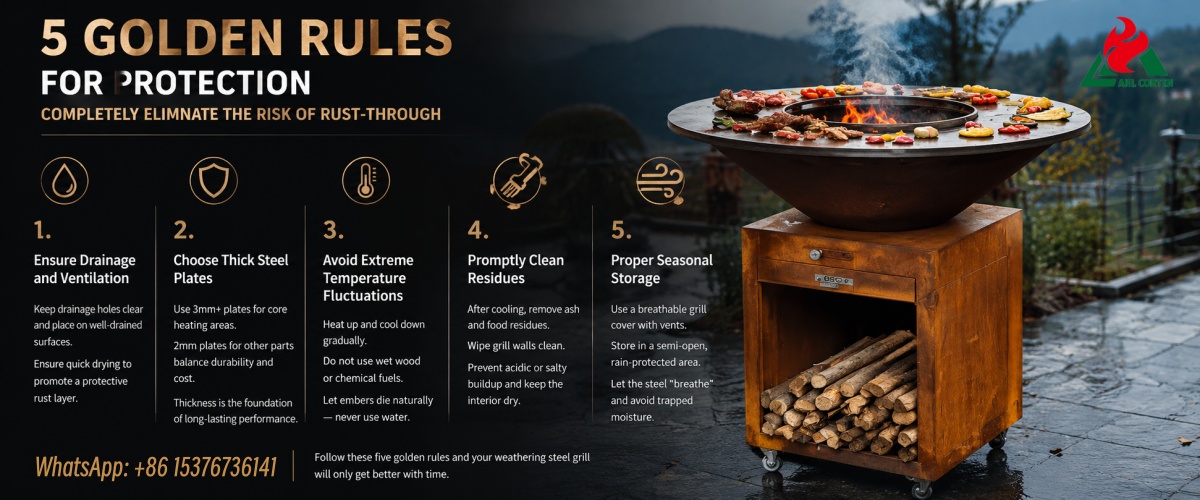
5 Golden Rules for Protection: Completely Eliminate the Risk of Rust-Through
Once you understand the risks of corrosion, simply following these simple daily maintenance guidelines can double the lifespan of your weathering steel grill, making it more durable the more you use it.
1. Ensure Drainage and Ventilation to Maintain a Normal Dry-Wet Cycle
After heavy rain or before each use, check whether the bottom drainage holes are blocked by charcoal ash or debris. Routinely place the grill on a surface with good drainage and avoid leaving it on damp, muddy ground for extended periods. Always ensure the grill body can dry quickly to provide optimal conditions for the formation of a protective rust layer.
2. Choose Thick Steel Plates to Strengthen the Structural Foundation
When purchasing or customizing a grill, prioritize products with 3mm or thicker steel plates for core heating areas such as the firebox and charcoal bed. For non-heating sides and the base, 2mm plates can be used to balance durability and cost-effectiveness. Adequate plate thickness is the most reliable foundation for resisting high-temperature corrosion and natural aging.
3. Avoid Extreme Temperature Fluctuations: Heat Up and Cool Down Gradually
When barbecuing, avoid sudden surges of heat from open flames and allow the oven temperature to rise slowly. Do not use wet wood or fuels containing chemical additives.
After barbecuing, never pour water to extinguish the fire. Instead, close the lid tightly and shut the air vents to allow the embers to extinguish naturally and the oven to cool down slowly, thereby protecting the integrity of the protective rust layer.
4. Promptly Clean Residues to Eliminate Sources of Corrosion
Once the metal BBQ grill has completely cooled, promptly use specialized tools to remove charcoal ash and food residues, and wipe away stains from the grill walls. Prevent acidic or salty residues from adhering over time, cut off corrosive agents at the source, and keep the interior of the grill dry and clean.
5. Proper Seasonal Storage: Allow the Steel to “Breathe”
During winter or extended periods of inactivity, take protective measures, but avoid sealing therusted steel BBQ grill with airtight plastic wrap. Prioritize using a specialized outdoor dust cover with ventilation holes, or store the grill in a semi-open, rain-protected area to prevent internal condensation and water accumulation, thereby avoiding rust caused by trapped moisture.
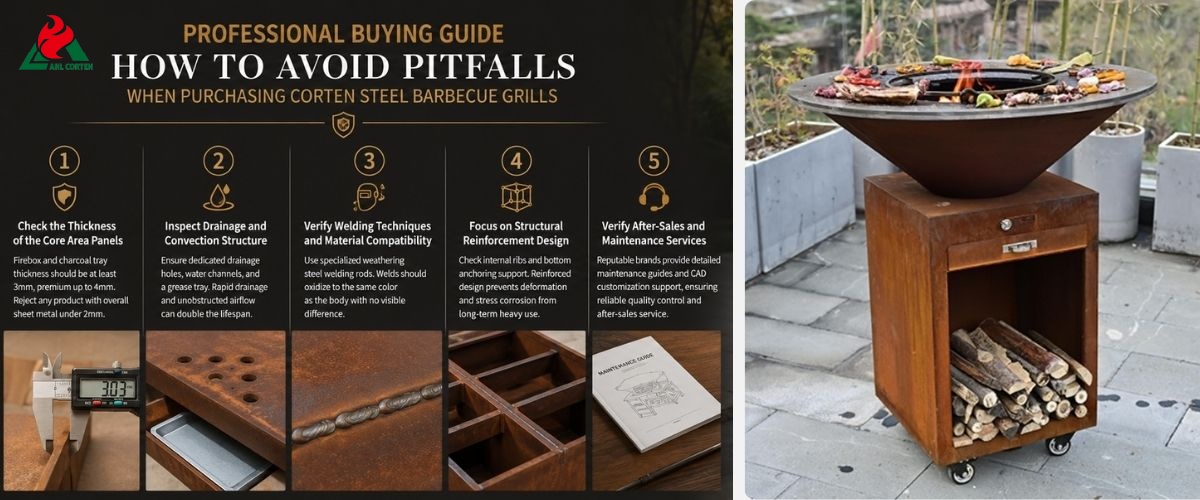
Professional Buying Guide: How to Avoid Pitfalls When Purchasing Corten Steel Barbecue Grills
Weathering steel barbecue grills on the market vary widely in price and quality, and it’s impossible to distinguish between good and bad products based on appearance alone. When shopping, use the following five key criteria to easily avoid misleading claims and substandard products.
Check the Thickness of the Core Area Panels
Don’t just look at the external dimensions; focus on confirming the thickness of the firebox and charcoal tray. High-quality products feature a core heating zone thickness of at least 3mm, with premium models reaching up to 4mm; non-heating areas may be slightly thinner. Discard any product where the overall sheet metal thickness is below 2mm.
Inspect the Bottom Drainage and Convection Structure
High-quality grills are equipped with dedicated drainage holes and water channels, paired with a grease tray that separates wet and dry areas. A structure that ensures rapid drainage and unobstructed airflow can effectively double the equipment’s lifespan—this is a crucial yet often overlooked feature.
Verify Welding Techniques and Material Compatibility
Ask the seller if they use specialized weathering steel welding rods. Seams made with ordinary welding rods have significantly lower corrosion resistance than the main body material, leading to issues such as rusting and cracking at the joints first. With high-quality welding, the oxidized welds will match the color of the entire unit perfectly, with no noticeable color difference.
Pay Attention to Structural Reinforcement Design for Large Equipment
When selecting a large, integrated outdoor barbecue grill with storage platforms and an operating console, focus on inspecting the internal reinforcing ribs and the bottom anchoring support structure. Weathering steel is relatively heavy, and a reinforced design prevents structural deformation and stress corrosion caused by long-term weight bearing.
Verify the Brand’s After-Sales and Maintenance Services
Reputable brands provide detailed guides on the initial oxidation and long-term maintenance of weathering steel, along with support for CAD customization services. Brands willing to share professional technical guidance offer more reliable product quality control and after-sales support.
FAQ: Answers to All Your Concerns about BBQ Grills
1. Will the Steel Burn Through During the First Use At High Temperatures?
Absolutely not. Weathering steel has a melting point exceeding 1,500°C, while conventional charcoal grilling temperatures range only from 200–400°C. The initial heating not only prevents burning through but also accelerates surface oxidation, helping the protective rust layer form quickly and stabilize.
2. Will the Rust Layer Peel Off, Causing Leaks or Contaminating Food?
This issue does not occur with qualified products. A properly formed protective rust layer is dense and sturdy, and will not flake off or leak. Furthermore, food-contact areas on high-end weathering steel grills—such as the grill grates and griddle plates—are made of food-grade stainless steel or cast iron. The rust layer is confined to the outer shell structure and will not come into contact with or contaminate food.
3. Will Prolonged Rainy or Humid Weather Accelerate Rusting?
There is no need to worry about short-term rain and humidity. As long as drainage is unobstructed and the steel can dry naturally after rain, the steel will self-repair its protective layer. Only prolonged water accumulation and persistently damp, non-drying environments will accelerate corrosion and wear.
4. Is It Necessary to Apply Anti-Rust Paint for Protection?
Never apply traditional anti-rust paint. Paint will completely seal the steel, disrupting the weathering steel’s self-oxidation protection mechanism. This not only eliminates the vintage appearance but also leads to internal corrosion and premature aging. If maintenance is required, use a specialized weathering steel hardener or lightly rub the surface with linseed oil.
5. Is There a Significant Difference In Service Life Between 2mm And 3mm Sheets?
The difference is enormous; it directly determines whether the product is a “disposable item” or “heirloom-quality equipment.” 2mm thin sheets have limited margin for high-temperature resistance and corrosion resistance, leading to wear and aging within a few years; 3mm and thicker sheets provide sufficient structural redundancy and can be used stably outdoors for decades.
Get a Quote Now: Get Your Hands on a Durable, Stylish, High-End Weathering Steel BBQ Grill
After reading this article, I’m sure you now understand: Weathering steel BBQ grills will never rust through under normal use! The natural surface rust that many people worry about is a unique self-protective mechanism—and the source of that premium, vintage industrial aesthetic—that in no way affects safety or the product’s lifespan. The vast majority of corten steel grills on the market that rust through, break, or have a short lifespan suffer from issues such as thin, substandard sheet metal, poor welding techniques, improper drainage structures, and inadequate maintenance. By choosing genuine, high-quality equipment, you can easily avoid all rust-related risks and ensure a decade of reliable durability.
Our entire line of rusted steel grills features 3mm+ thickened core plates, professional weathering steel welding techniques, and scientifically designed drainage and ventilation structures. This eliminates the risk of rust-through at the source, combining vintage aesthetics with rugged quality. Requiring no complicated maintenance and developing a richer patina over time, these grills are the premium choice for backyard barbecues and outdoor camping.
Still struggling to choose the right model or compare prices and quality? Don’t fall into common pitfalls! Contact us now for a quote to receive a customized product plan, an accurate price estimate, and a complete set of free maintenance guidelines. Get your hands on a high-quality weathering steel barbecue grill that will last for decades and stands out for its exceptional style!


.jpg)

 Fill In The Inquiry