Why Did My Corten Planter Rust Through in a Few Years?
Date:2026.11.03
Share to:
Corten steel plantershave become a popular landscaping product for gardens and commercial landscape projects thanks to their unique vintage rust-colored texture. Many designers, contractors, and distributors have encountered a tricky problem: weathering steel planters that have been in use for only a few years develop holes in the side walls, crumbling edges, and water leakage from the bottom. Many people mistakenly believe that rust-through is a sign of poor quality in the weathering steel itself. In reality, however, weathering steel is merely resistant to atmospheric corrosion; it is not rust-proof. Its protective rust layer has strict requirements regarding the usage environment, drainage structure, and material specifications. This article is intended for landscape contractors, retailers, and buyers to help you identify the root causes of premature rust-through, learn how to avoid similar issues, and develop durable procurement and construction plans.
Weathering steel relies on its alloy composition to gradually form a dense, firmly adherent layer of rust in outdoor atmospheric environments characterized by alternating wet and dry conditions. This rust layer blocks the continuous penetration of moisture and oxygen, significantly reducing the rate of subsequent corrosion. This process has one essential prerequisite: the steel surface must be able to dry out periodically. Only when the cycle of wet and dry conditions occurs consistently can the protective layer form properly.
2. What Types of Rust are Warning Signs
A uniform, matte, brownish-red surface is the natural weathering effect we desire and is considered normal. However, the following conditions indicate abnormal, deep corrosion and require caution: - Localized deep pitting corrosion or perforations in the steel plate causing water leakage - Large-scale flaking of the rust layer or powdery, crumbly base material - Corrosion concentrated only on the bottom, welds, or inner surfaces in contact with soil, while the outer surface appears intact Do not rely solely on the surface color to judge the condition of weathering steel. Even if the outer surface appears attractive, the inner surface—which remains damp over the long term—will continue to corrode.
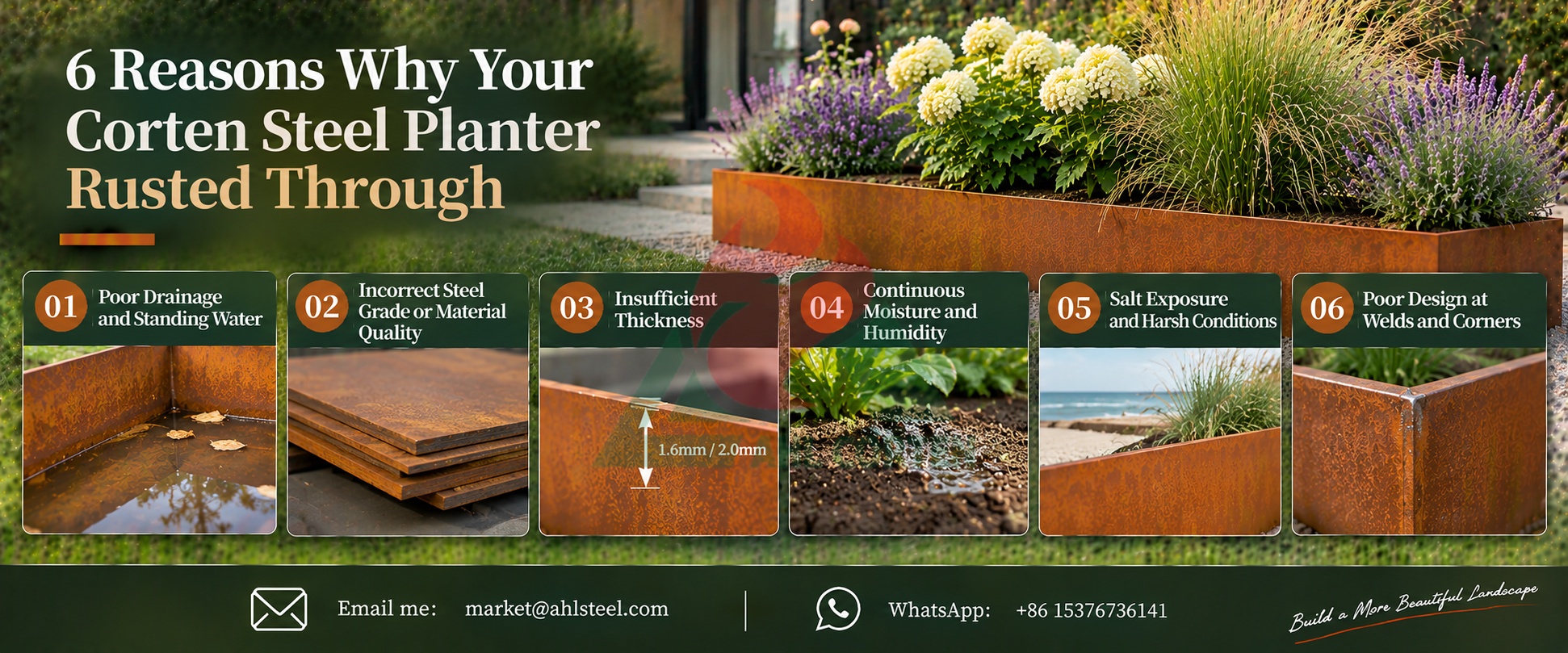
6 Reasons Why Your Corten Steel Planter Rusted Through
1. Poor Drainage and Standing Water
Simply having drainage holes does not guarantee proper drainage. Clogged drainage holes, a sunken bottom in the planter, or drainage outlets that are flush with the ground and blocked can all cause water to pool at the bottom of the corten steel round planter for extended periods. The protective rust layer on weathering steel cannot form stably in an environment of constant water exposure, and corrosion will continue to progress inward. Many planters look fine on the outside, but the bottom is the first to rust through due to prolonged water accumulation.
2. Incorrect Steel Grade or Material Quality
Ordinary carbon steel can also develop a reddish-brown rusted surface similar to weathering steel, making it difficult to distinguish with the naked eye. If a supplier passes off ordinary carbon steel as weathering steel, even if the appearance is similar, the corrosion rate will be much faster, and the custom corten planter will fail in just a few years. When purchasing, do not rely solely on the surface rust color; be sure to request material certification documents. Appearance alone is insufficient to confirm whether the product is genuine weathering steel.
3. Insufficient Steel Thickness for the Application
The thickness of the steel plate represents the safety margin against corrosion loss. Under the same corrosion conditions, thinner plates are more prone to being corroded through. However, there is a key misconception here: simply increasing the plate thickness does not directly solve problems caused by harsh conditions such as standing water or salt fog. Even thick plates will still experience localized pitting corrosion in persistently damp environments containing chloride ions. Thickness must be designed to match the specific usage environment and cannot be treated as a one-size-fits-all solution.
4. Continuous Exposure to Moisture and Humidity
While the exterior of a metal planter box can air-dry after being exposed to rain, the interior remains in constant contact with moist soil and growing media. This creates two completely different corrosion environments—one on the exterior and one on the interior. The exterior undergoes a normal wet-dry cycle, allowing a stable rust layer to form; however, the interior remains constantly damp, never having the chance to dry, so a protective layer cannot form. This is the core reason why the interior of many metal planter boxes deteriorates first.
5. Salt Exposure and Harsh Environmental Conditions
Coastal salt fog, runoff from road de-icing salt, and chlorinated pool drainage can all damage the passivation layer of weathering steel. Chloride ions can penetrate the rust layer, triggering rapid pitting corrosion. At this point, the weathering steel’s corrosion resistance drops significantly, and the corrosion rate approaches that of ordinary carbon steel. For coastal projects and street-side planters, the salt fog exposure level must be assessed on a case-by-case basis; weathering steel cannot be assumed to be universally suitable.
6. Poor Design at Welds, Corners, and Bottom Sections
Overlapping joints, dead corners, and weld grooves are highly prone to accumulating muddy water, fallen leaves, and debris. These areas, which trap dirt and water, create localized humid microenvironments, causing corrosion to concentrate primarily at welds, bottom corners, and similar locations. This does not necessarily indicate a defect in the welding process; rather, it stems from structural designs that fail to avoid gaps where water can accumulate. This is a typical corrosion issue caused by water-trapped dead corners in landscape steel structures.
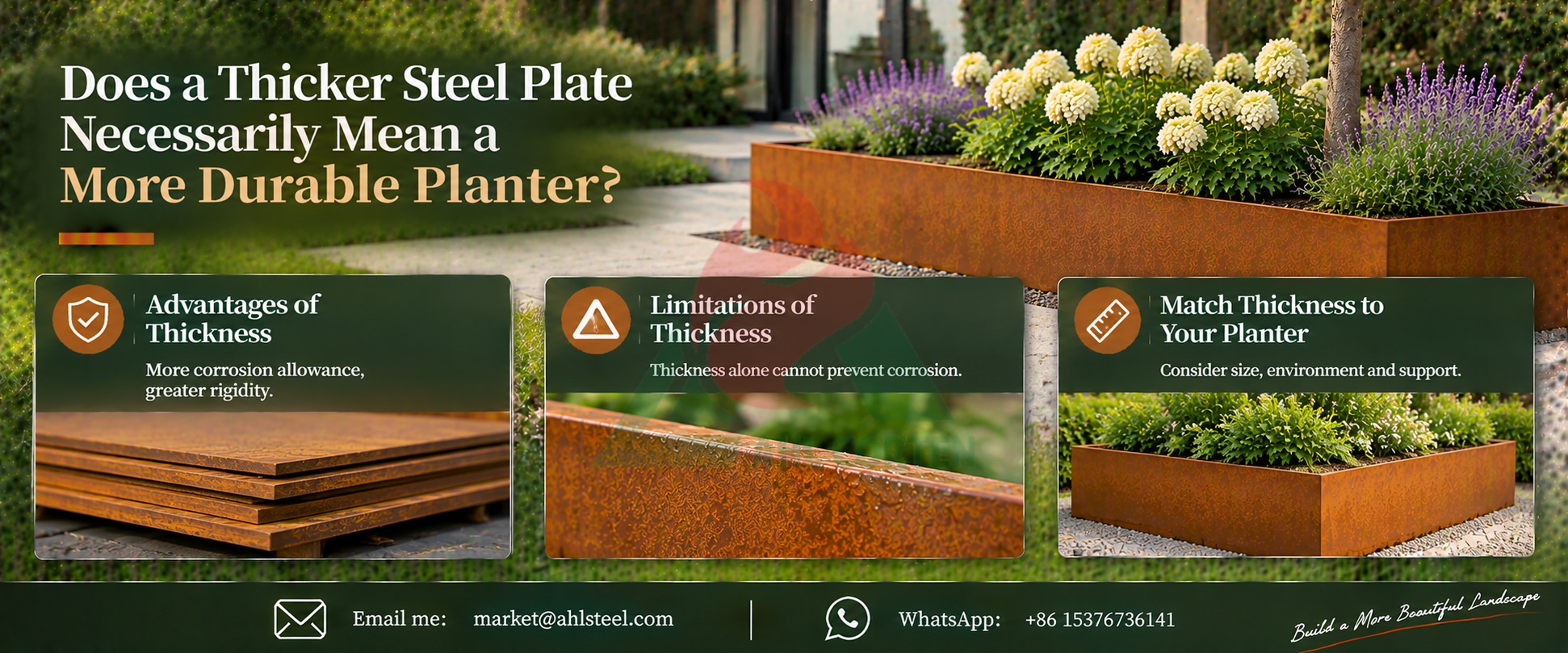
Does a Thicker Steel Plate Necessarily Mean a More Durable Planter?
1. Advantages of Thickness
Under reasonable environmental conditions and with proper drainage, thicker weathering steel plates offer two major advantages: First, they provide a larger corrosion allowance, delaying perforation at the same corrosion rate; Second, they offer greater rigidity, making them less prone to bulging or deformation when filled with soil.
2. Limitations of Thickness
Thickness alone cannot eliminate corrosion triggers such as standing water, salt fog, or enclosed, damp environments. If the drainage design is flawed, even 5mm or 6mm-thick steel plates will eventually be perforated by localized pitting corrosion. Increasing plate thickness is only a supplementary measure; it is not a substitute for proper drainage, ventilation, or protective liners.
3. Guidelines for Matching Thickness to Different Planters
For small decorative planters and low-profile flower troughs in dry, inland courtyards, thinner specifications may be selected; For large commercial planting boxes, elevated flower beds, and street-side projects, in addition to thicker panels, internal reinforcement, elevated bases, and protective liners are also required. Selection should be based on a comprehensive evaluation of the corn planter’s span, soil depth, on-site environment, and bottom support method—rather than simply choosing a thickness based on dimensions alone.
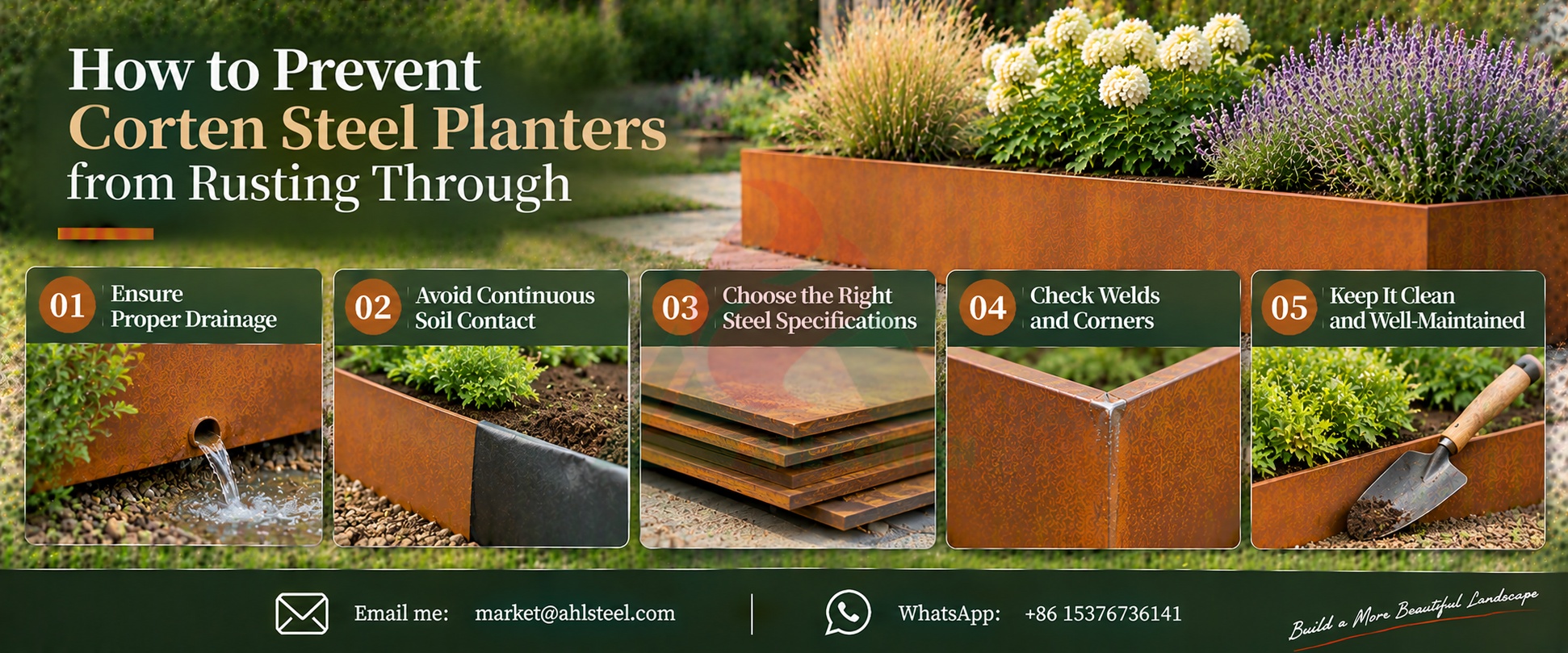
How to Prevent Corten Steel Planters from Rusting Through
1. Ensure Proper Drainage
The location, number, and diameter of the drainage holes must be appropriate for the metal raised planter’s size and the amount of water used for irrigation. The bottom of the planter must be raised off the ground; it should not rest directly on the ground to prevent the drainage holes from becoming blocked. Leave space for access to facilitate future removal of silt and fallen leaves, thereby preventing the drainage holes from becoming clogged. The primary goal is not simply to mark a few holes on the blueprint, but to ensure water drains away smoothly so the steel plate is not left submerged in water for extended periods.
2. Avoid Continuous Contact with Soil and Moisture Where Possible
Elevate the bottom of the corten planter box to isolate it from damp ground; On the side facing the soil, use a suitable barrier liner or specialized protective coating to prevent prolonged direct contact between the steel plate and soil or organic acids; The liner structure must not create new pockets where water can pool; drainage must remain unobstructed.
3. Choosing Suitable Steel Specifications
Before placing an order, confirm the steel grade and applicable standards, and request a material traceability certificate. Distinguish between products made of bare weathering steel, those with a protective coating on the inside, and those with a built-in, independent planting liner—durability varies significantly among these options. For coastal or high-salinity projects, assess in advance whether an upgraded protection solution is necessary.
4. Inspect Welds, Corners, and Bottom Panels
During acceptance inspection, pay close attention to bottom seams, folded corners, and lap joints, as these areas are highly prone to corrosion. If pitting has already occurred, do not simply apply a surface coat of paint as a repair; localized corrosion often spreads to the surrounding base material, so assess the remaining steel plate thickness before deciding on a repair plan.
5. Keep the Planter Clean and Maintain Drainage
Regularly clear debris from drainage outlets and check the bottom for accumulated muddy water. Adjust the automatic irrigation system to avoid continuous, round-the-clock saturation of the growing medium. Maintenance cannot restore steel that has already been corroded away, but it can prevent conditions that accelerate corrosion from persisting.
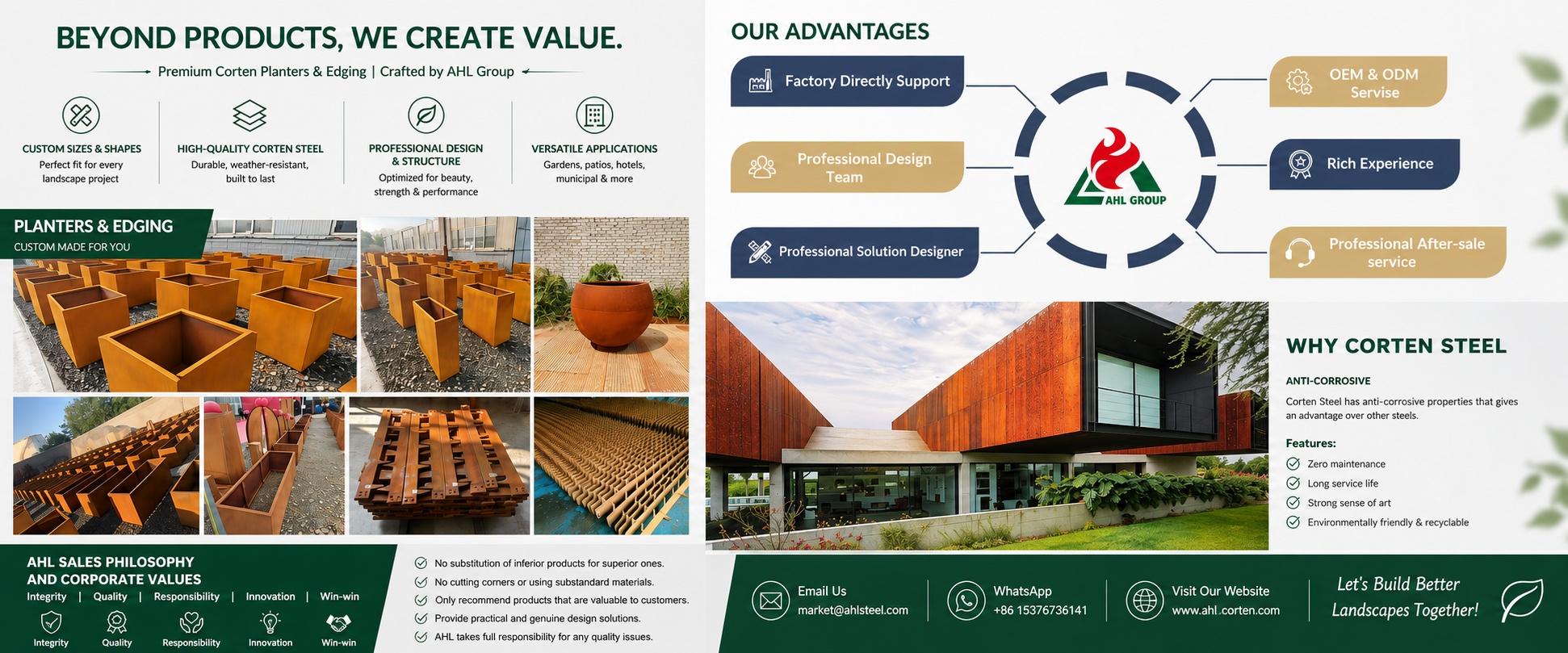
AHL rusted steel planters are available in a range of thicknesses from 1.5 to 6 mm, making them suitable for various settings such as residential yards, commercial districts, and public landscapes. - Custom sizes and shapes are available; rectangular, square, and curved planters can all be customized; - Can be configured with internal reinforcing ribs, reinforced bases, and optimized drainage structures to prevent water from pooling in hard-to-reach areas; - Protective liners and customized corrosion-resistant solutions for special environments are available, making them suitable for high-humidity and coastal projects; - Supporting drawings, material certificates, and factory inspection reports are provided to distributors, contractors, and landscaping companies. Before purchasing, submit your project drawings, fill depth, site conditions, and order quantity to receive a project-specific solution and quote. Confirm material, thickness, drainage, and reinforcement details in writing to avoid usage risks associated with verbal commitments.
1. How Long Do Rusted Steel Planter Boxes Typically Last?
There is no fixed lifespan. Service life is determined by a combination of material, plate thickness, dry and wet conditions, salt content, and drainage design. Be sure to seek specific advice based on the conditions at your project site, and do not blindly trust claims of a fixed lifespan.
2. Is It Possible for Rusted Steel Planters to Rust Through?
Yes. If standing water persists, chloride ion contamination occurs, or the steel is buried in damp soil for extended periods, a stable rust layer cannot form, and the weathering steel will continue to corrode until it rusts through.
3. Is Corten Steel More Prone to Rusting Through In Rainy And Humid Regions?
The key factor is not the amount of rainfall, but whether the steel plate can dry thoroughly. In areas with heavy rainfall but good ventilation and smooth drainage, the steel plate can undergo normal cycles of wet and dry conditions; persistent, stagnant moisture that does not dry out is the primary cause of accelerated corrosion.
4. Why Does Corrosion and Damage Always Start at the Bottom First?
The bottom of the planter is most prone to water accumulation and sediment buildup. Blocked drainage outlets, direct contact with damp ground, and numerous seams create a persistent localized damp environment, making this area the first to corrode.
5. Does Using Thicker Steel Plates Make Them More Durable?
Thicker plates provide a greater corrosion allowance, but they cannot eliminate corrosion triggers such as standing water and salt fog. Design flaws cannot be resolved solely by increasing plate thickness.
6. Do Corten Steel Planters Need to Have Drainage Holes?
Soil-filled planters must have an effective drainage system, unless they are specifically designed as water-retaining tanks. The key to drainage is ensuring water can flow out of the planter smoothly, not merely having holes for the sake of it.
7. Can a Planter That Has Already Rusted Through Be Repaired?
Repair is possible, but you must first identify the root cause of corrosion and measure the remaining steel plate thickness around the affected area. Simply applying a coat of paint to the surface is merely a cosmetic fix; it does not address fundamental issues such as standing water or water trapped in gaps, and the planter will likely fail again soon.
Are You Ready to Choose the Right Corten Steel Planter for Your Needs?
Premature rust-through in Corten steel planters is rarely due to a defect in the material itself; it is mostly caused by mismatches in model selection, drainage, structural design, and site conditions. Before replacing them with new units, be sure to review the details regarding water accumulation, salt content, material, plate thickness, and welds to avoid repeating the same mistakes. If you have a project in mind, please send us the dimensions, soil depth, site conditions, and quantity required to request a product catalog, material certificates, fabrication drawings, and a project quote. Together, we’ll develop a weathering steel planter solution that’s tailored to your site’s environment and balances aesthetic appeal with long-term durability.
Need a Factory Quote for Corten Steel Planter?
Send your drawings, size list, quantity, and destination country. Corten Factory can support custom weathering steel fabrication, export packing, and project quotation.


 Fill In The Inquiry