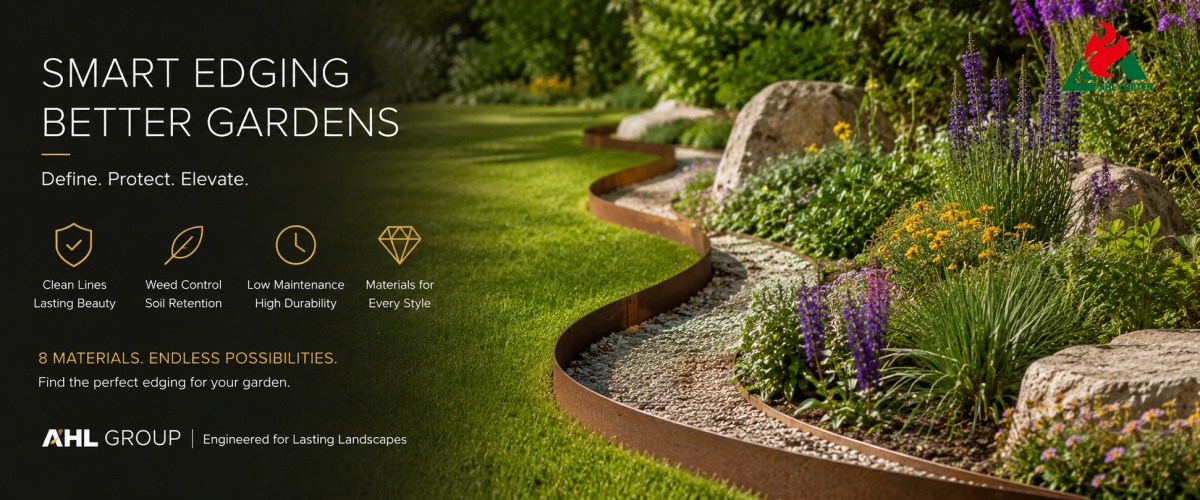
Many gardens look cluttered and outdated, and the core issue lies not in the arrangement of plants, but in the lack of proper garden edging. Edging serves as the detailed framework of a garden’s landscape and is the key distinction between amateur landscaping and professional garden design. High-quality garden edging clearly delineates lawns, flower beds, gravel paths, and paved areas. It gives the entire garden clean, crisp lines and creates a unified, sophisticated visual hierarchy.
Conversely, the absence of edging or the use of the wrong materials can lead to problems such as weeds spreading across the lawn, soil erosion, and gravel spilling out. Not only does this make daily maintenance troublesome, but it also significantly diminishes the overall quality of the garden. There is a wide variety of garden edging materials available on the market, and their aesthetics, durability, cost, and maintenance requirements vary greatly depending on the material. This article will provide a comprehensive analysis of the eight most popular edging materials to help you find the perfect match for your garden.
The most basic function of edging is to clearly define the boundaries between the lawn and flower beds, as well as between planting areas and recreational zones. Neat lines create a more orderly garden layout and instantly enhance the overall sense of refinement.
2. Preventing Soil Erosion and Securing Paving Materials
Rainwater runoff and daily foot traffic can easily wash away soil from flower beds and dislodge paving materials such as wood chips and gravel. Rigid edging creates a physical barrier that effectively secures these materials, preventing the garden from becoming messy and disorganized over time.
Lawn grass roots and weed rhizomes have an extremely strong ability to spread laterally, easily encroaching on planting space in flower beds. A properly installed edging system blocks root spread, reducing the frequency of weeding and trimming, and saving time and effort in the long run.
4. Preserving Aesthetic Appeal and Enhancing Property Value
A neat and durable edging system helps maintain the aesthetic appeal of the yard over the long term. For both residential renovations and commercial landscaping projects, high-quality edging effectively elevates the overall landscape quality and property value.
Pros, Cons, and Suitable Applications of 8 Popular Garden Edging Materials
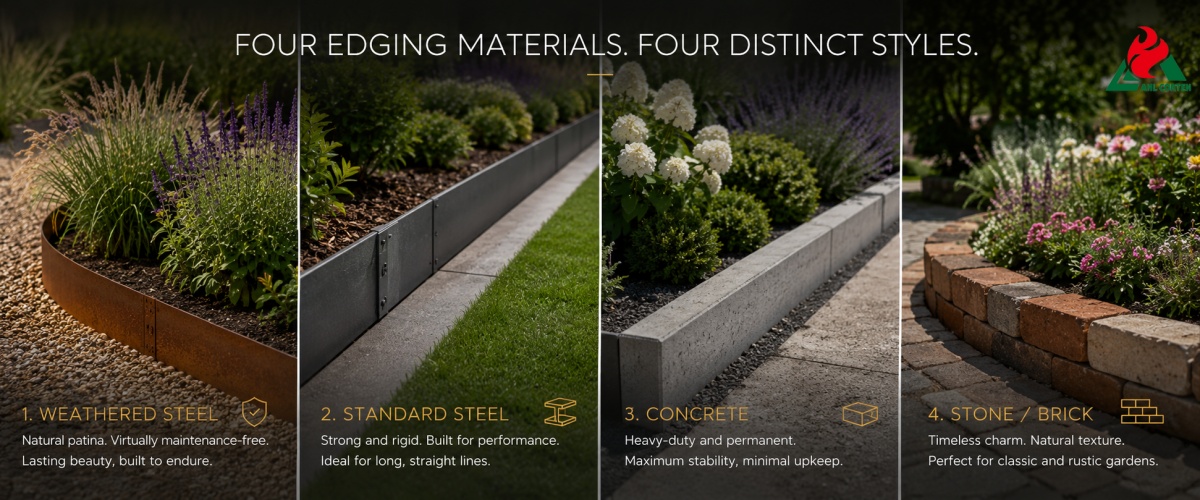
1. Weathered Steel Edging: The Top Choice for Modern, High-End Gardens
Corten steel edging has become a trending material in high-end gardens and modern landscapes in recent years, and it is also the preferred choice among professional landscape designers. It combines minimalist lines, natural texture, and an exceptionally long service life. Key Advantages: It possesses self-healing and corrosion-resistant properties; exposure to the elements forms a dense rust layer that prevents deep corrosion. No painting or rust prevention is required, making it virtually maintenance-free. Its clean, bold lines can be bent into curves or formed into straight borders, offering exceptional versatility. Suitable Applications: Modern minimalist gardens, private villa gardens, commercial landscapes, irregularly shaped flower beds, raised planters, and open, windy areas.
2. Standard Steel Edging: Engineering-Grade Stable, Rigid Edging
Standard carbon steel edging offers high rigidity, structural stability, and excellent load-bearing capacity, making it a commonly used rigid edging material for municipal projects and commercial landscapes. Key Advantages: High hardness, resistance to deformation, crush resistance, and impact resistance; maintains a level boundary over the long term; suitable for large, well-organized gardens. Drawbacks: Standard steel is prone to rust and corrosion, requiring regular painting for corrosion protection; maintenance costs are higher than those of weathering steel. Suitable Applications: Commercial landscaping, public green spaces, driveway boundaries, and well-organized, straight-line landscape divisions.
Concrete edging offers excellent structural integrity and exceptional stability. As a permanent landscape boundary, it provides outstanding resistance to erosion and deformation. Key Advantages: Solid structure, high load-bearing capacity, resistant to rain erosion and minor foundation settlement, and extremely long service life. Disadvantages: Rigorous and monotonous shapes; cannot be formed into curves; construction is cumbersome and labor-intensive; difficult to modify later. Suitable Applications: Traditional formal gardens, municipal public landscapes, hardscape boundaries, and areas requiring retaining walls for elevation differences.
4. Stone/Brick Edging: The Top Choice for a Classic, Vintage, and Natural Aesthetic
Edging with natural stone, red brick, or paving bricks is a classic combination for traditional courtyards and rustic-style gardens, offering a rich, natural texture. Key Advantages: Retro and sophisticated aesthetics; high compatibility with courtyard paving and greenery; consistent texture; and exceptional durability. Drawbacks: High material costs; high labor costs for installation; gaps that easily trap weeds and accumulate soil; and tedious cleaning and maintenance. Suitable Settings: Rustic, vintage, and traditional Chinese-style courtyards, as well as landscape projects seeking a natural, substantial texture.
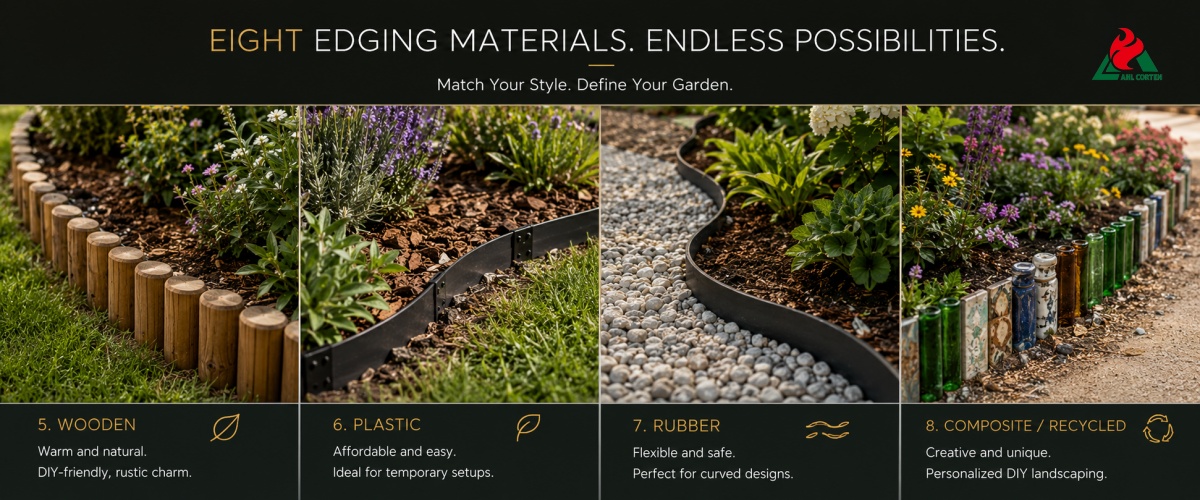
5. Wooden Edging: A Gentle, Natural Boundary for Courtyard Soft Furnishings
Pressure-treated wood and solid wood edging have a soft texture that can soften the cold feel of hard landscaping, creating a warm and natural courtyard atmosphere. Key Advantages: Versatile styling, warm texture, easily cut and shaped, moderate value for money, and DIY-friendly. Disadvantages: Poor outdoor weather resistance; prolonged exposure to moisture can lead to rot, mold, and warping; requires regular maintenance with preservative paint. Suitable Scenarios: Small family courtyards, rustic-style gardens, temporary landscaping, and natural-style plant zoning.
6. Plastic Edging: A Low-Cost Temporary Landscaping Solution
Plastic edging is an entry-level, affordable material that is lightweight and easy to install, making it the go-to choice for users on a tight budget. Key Advantages: Inexpensive, lightweight, and easy to install; suitable for DIY projects; can accommodate simple curved shapes. Drawbacks: Low flexibility and prone to aging; prone to fading, brittleness, and warping when exposed to direct sunlight; short service life; cheap-looking texture. Suitable Scenarios: Short-term yard renovations, temporary landscaping, simple gardens in small homes, and low-budget landscaping projects.
7. Rubber Edging: Flexible and Safe Edging Designed for Curved Shapes
Rubber edging offers excellent flexibility, making it the ideal material for irregularly shaped and curved garden borders. It is highly safe and free of sharp edges. Key Advantages: Can be bent freely to perfectly conform to various curves and irregularly shaped flower beds; easy to install; provides impact protection. Drawbacks: Ordinary aesthetic appeal; primarily functional; lacks high-end design appeal; not suitable for refined garden landscaping. Suitable Scenarios: Curved flower beds, irregularly shaped tree pits, children’s play areas, and landscape zones prioritizing safety.
Composite edging combines aesthetics with practicality, striking a balance between weather resistance and visual appeal. Creative edging made from recycled bottles, cans, tiles, wood, and other materials emphasizes a personalized DIY style. Key Advantages: Composite materials are low-maintenance and visually appealing; creative materials are extremely low-cost and one-of-a-kind. Weaknesses: Creative materials lack uniformity, making them unsuitable for commercial or high-end landscaping projects, and they lack a cohesive overall look. Suitable Scenarios: Personalized private gardens, DIY yard renovations, and niche creative landscaping.
Corten Steel Edging: The Best Value for High-End Gardens
1. Self-Healing Corrosion Resistance That Withstands Harsh Outdoor Environments
Genuine SPA-H industrial-grade weathering steel naturally forms a dense, rust-colored protective layer after undergoing cycles of wet and dry conditions outdoors. This layer seals the interior of the steel, preventing deep corrosion. Unlike ordinary steel, which rusts throughout and can develop holes and damage, weathering steel becomes more stable over time and withstands intense sunlight, heavy rain, frost, and coastal salt fog.
2. A Timeless Aesthetic That Creates an Exquisite Atmosphere in Your Garden
The rust patina of corten steel naturally evolves over time, gradually deepening from an initial orange-red to a rich chocolate brown. Its rich, layered metallic texture harmonizes perfectly with greenery, gravel, and stone. The bold, angular lines of the metal, paired with soft plant landscapes, create a highly design-driven, modern garden atmosphere—with a texture far superior to plastic or wooden edging.
3. AHL Weathering Steel’s Upgraded Advantages: Overcoming Common Industry Issues
Ordinary, low-quality sheet metal edging on the market is prone to issues such as uneven thickness, rust-through within 1–2 years, deformation under high temperatures, and bending caused by lawnmower traffic. AHL industrial-grade weathering steel is precision-machined using CNC technology, ensuring uniform and stable thickness and eliminating wavy deformation. The factory’s pre-stabilized color process locks in the rust layer in advance, preventing rust runoff from staining the underlying surfaces during the initial stages. With a full range of sizes available, the 1.6mm thin variant can be hand-bent to create smooth curves, while the 3–6mm thickened variants can withstand heavy loads and strong winds, making them suitable for all scenarios.
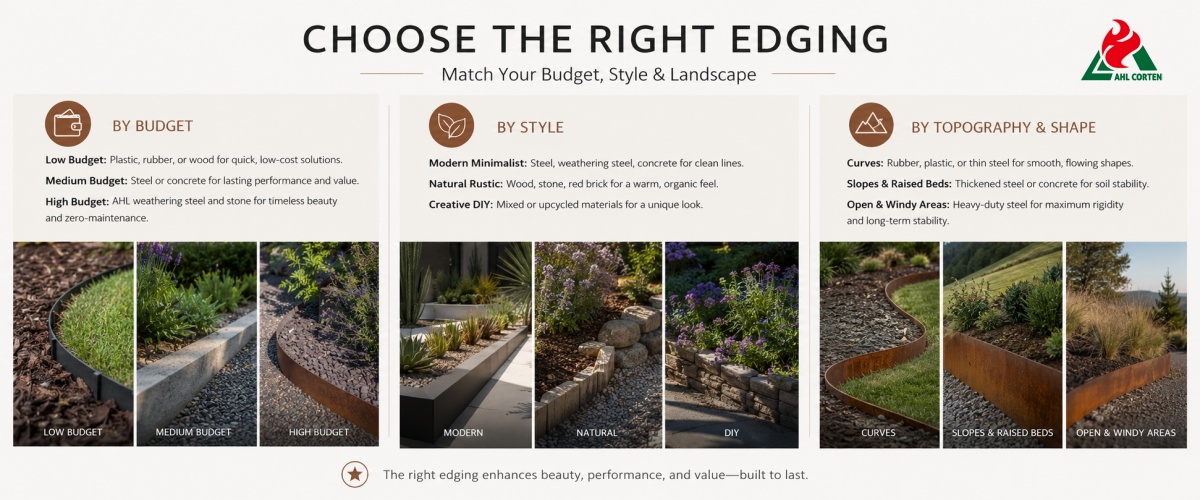
Precision Selection Guide for Garden Edging Materials
1. Select by Budget
Low Budget / Temporary Renovations: Prioritize plastic, rubber, or wooden edging for low-cost, quick boundary demarcation that meets basic landscaping needs.
Medium Budget / Permanent Residential Gardens: Standard steel or concrete edging offers high stability and value for money, suitable for daily garden use.
High Budget / High-End Commercial Landscaping: AHL weathering steel and stone edging combines aesthetic appeal with durability, offering long-term zero-maintenance and preserving the landscape’s value.
2. Selecting by Garden Style
Modern Minimalist Style: Prioritize weathering steel, steel, and concrete edging. Their clean, crisp lines align with a minimalist and sophisticated design aesthetic.
Natural Rustic Style: Wood, stone, and red brick edging—with a warm, vintage texture—complements the natural, relaxed atmosphere of the garden.
Creative DIY Style: Mixed materials and upcycled edging—highly personalized—to create a unique, niche garden landscape.
3. Selecting Edging Based on Topography and Shape
Curved Flower Beds and Circular Tree Pits: Rubber, plastic, or thin weathering steel edging—highly flexible, capable of creating smooth, flowing irregular lines.
Slopes and Raised Flower Beds: Thickened weathering steel or concrete edging—highly stable, effectively preventing soil erosion and withstanding lateral soil pressure.
Open, Windy Areas: Heavy-duty, thickened weather-resistant steel edging provides ample rigidity, resisting wind and deformation to remain level and stable over the long term.
High-Quality Edging: A Long-Term, High-Value Investment for Your Garden
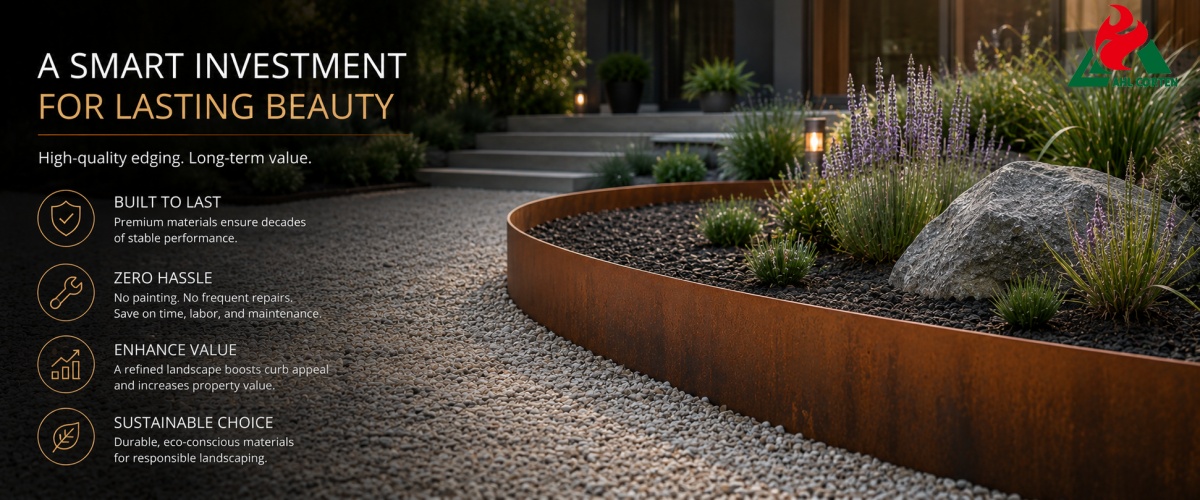
Garden edging is not a mere accessory—it is a core element that significantly impacts your garden’s aesthetic appeal, maintenance costs, and longevity. Low-cost, inferior edging may save money in the short term, but it is prone to deformation, aging, and damage over time, requiring repeated replacement and repairs—resulting in extremely high hidden costs. High-quality weathering steel and other premium edging materials ensure decades of stable performance with a single installation. With zero painting and zero frequent maintenance required, they save on labor and material costs over the long term. A neat and durable edging system helps maintain the refined appearance of your garden, effectively enhancing the overall landscape quality and adding value to your property.
Frequently Asked Questions (FAQ) About Corten Steel Edging
Q1: Which Garden Edging Material Is The Most Durable?
Metal edging offers the best durability. Among these, genuine weathering steel edging—thanks to its self-healing and corrosion-resistant properties—has a service life far exceeding that of ordinary steel, stone, and plastic, making it the optimal solution for long-term outdoor use.
Q2: I’m On a Tight Budget—Which Edging Offers The Best Value For Money?
For short-term, temporary projects, plastic edging is a viable option. For long-term residential gardens, prioritize standard 2–3 mm weathering steel. Considering durability, aesthetics, and maintenance costs, it offers far better overall value than low-cost materials.
Q3: Is Weathering Steel Edging Suitable For Small Residential Yards?
It’s very suitable. Weathering steel adapts to all residential scenarios—whether straight or curved—and offers a sophisticated appearance, requires no maintenance, and is sturdy and durable. It’s a perfect fit for both small yard renovations and comprehensive landscaping projects.
Q4: What’s The Best Edging For Curved Flower Beds?
Flexible rubber or plastic edging is suitable for simple curves; if you’re seeking a refined texture and long-term durability, prioritize thin, flexible weathering steel edging. Its smooth lines prevent creasing, balancing aesthetics with practicality.
Are You Ready to Choose the Corten Steel Edging That’s Right for You?
Different garden edging materials suit entirely different budgets, styles, and terrain conditions. Plastic and wood are suitable for short-term, low-cost landscaping; stone and concrete are ideal for traditional, formal landscapes; while weathering steel is the all-around top choice for long-lasting, refined landscaping in modern gardens. Choosing the right edging material not only completely solves problems like weed growth, soil erosion, and garden clutter, but also maintains clean, sophisticated landscape lines over the long term, significantly reducing the burden of future maintenance. Still struggling to decide which edging material to choose for your home garden, or unsure about the right dimensions and specifications? No need to compare options blindly and risk making mistakes! Contact us immediately for a free consultation and a one-on-one quote. Our professional landscaping team will create a customized, comprehensive garden edging solution based on your garden’s style, terrain, and budget—ensuring your garden is transformed once and for all with long-lasting elegance!

.jpg)
 Fill In The Inquiry