Is a Corten Planter Suitable for a Slab? Pros, Cons, and Risks
In modern courtyards, patios, and landscaping, corten steel planters have become a popular choice. With their unique vintage rust-red texture and low-maintenance properties, they complement a variety of landscaping styles, including modern, industrial, and rustic.
Many homeowners and landscape designers face a key question: Can weathering steel planters be placed directly on hard surfaces such as concrete or stone slabs?
Concerns primarily center on four points, which are also the main challenges during selection and installation:
1. Will rust seeping from the planter leave hard-to-clean rust stains or rings on the ground?
2. Will poor drainage at the bottom cause water to pool, leading to moss growth and damage to the paving?
3. Will prolonged exposure to heavy weight cause the ground to sink, discolor, or suffer structural damage?
4. Will the metal’s high temperature after exposure to intense summer sunlight scorch the plants’ root systems?
This article will thoroughly analyze the pros and cons, as well as the potential risks, of placing weathering steel planters on stone slabs or concrete surfaces. It will also provide practical solutions to mitigate these risks, along with selection and installation tips to help you balance aesthetic appeal with long-term practicality.
.jpg)
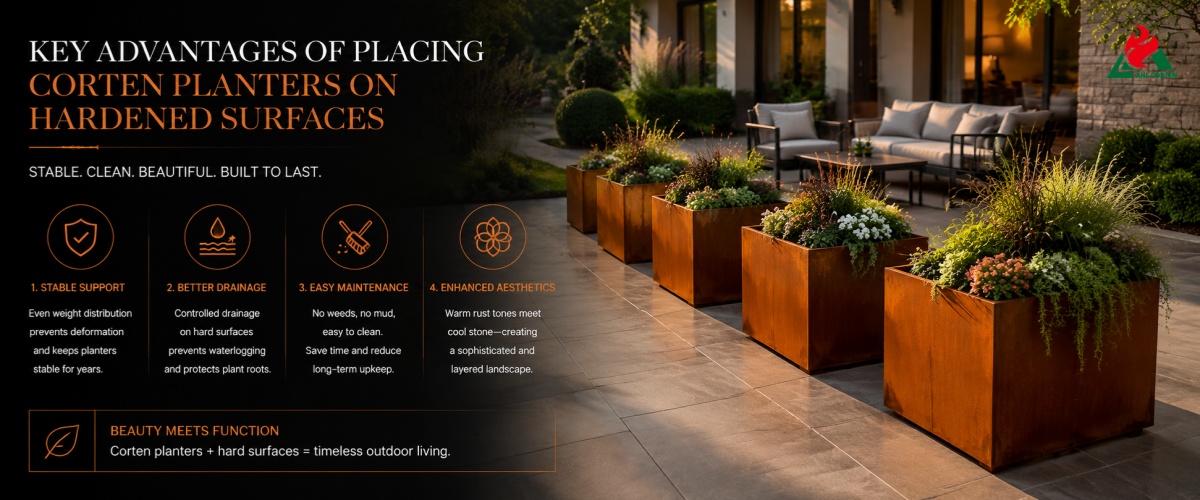
Key Advantages of Placing Corten Planters on Hardened Surfaces
Setting aside concerns about rust stains, placing rusty metal planters on flat, paved surfaces such as concrete or stone slabs is an extremely cost-effective and practical approach to landscape design, offering significant advantages.
1. More Stable Support, Protecting the Planter Structure from Deformation
Soft surfaces such as lawns and bare soil are loose and uneven, making it easy for large, heavy planters to experience uneven stress distribution when placed there long-term. Localized stress concentration can cause slight deformation of the planter’s base, shortening its service life.
Concrete and stone surfaces are flat and hard, evenly distributing the combined weight of the planter, soil, and plants. This completely eliminates the problem of uneven stress distribution, ensuring that large weathering steel planters remain stable and are less likely to deform or tilt over time.
2. Controlled Drainage Effectively Prevents Waterlogging and Root Rot
Most hard-paved surfaces have built-in drainage slopes and fixed drainage paths, allowing for clear and predictable water flow. Compared to the erratic drainage of soil, the drainage on paved surfaces is more controllable and cleaner.
When used in conjunction with drip trays and bottom drainage channels, standing water can be quickly directed away, preventing it from accumulating at the bottom of large Corten steel planters. This not only protects plant roots from waterlogging and rot, but also prevents long-term ground moisture that could lead to hidden hazards.
3. Simple Maintenance, a Clean Yard Free of Weeds and Mud
When flower boxes are placed on dirt surfaces, mud splatter and weed growth are common after watering or rain, making daily maintenance very tedious.
Concrete and stone slab surfaces are highly impermeable, making it difficult for mud to accumulate or weeds to grow. A simple rinse or wipe is all that’s needed to keep them clean, significantly reducing long-term garden maintenance costs while ensuring a clean and attractive appearance over time.
4. Sophisticated Aesthetics: A Contrast of Warm and Cool Tones Creates Layered Landscaping
The Corten garden bed planter’s unique warm rust-red texture creates a striking visual contrast with the cool grey tones of concrete and stone slabs. The fusion of warm and cool materials, combined with natural textures and man-made paving, creates a rich sense of depth and dimension.
This combination complements mainstream garden styles such as modern minimalism, industrial chic, and rustic naturalism. It serves not only as a planter for greenery but also as a central focal point in the garden, significantly enhancing the overall aesthetic quality of the space.
Disadvantages and Potential Risks of Planters on Stone or Concrete Surfaces
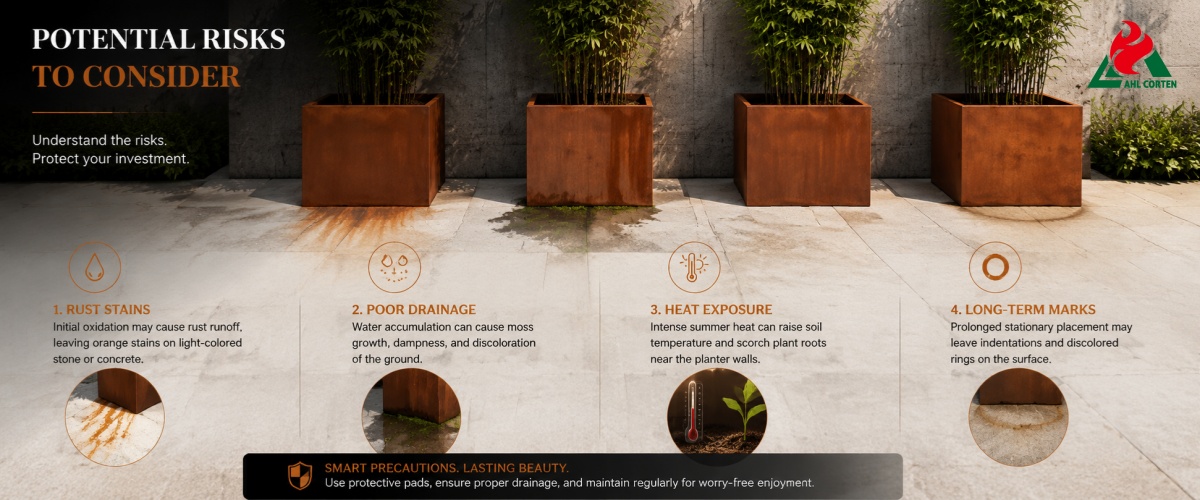
While weathering steel planters offer significant advantages when paired with paved surfaces, they are not without their drawbacks. Various issues may arise, particularly during the initial use and with improper maintenance; understanding these in advance can help you effectively avoid potential problems.
1. Initial Oxidation Can Easily Cause Rust Stains on the Surface
The core characteristic of weathering steel is the formation of a dense, rust-resistant layer through natural oxidation, but this stabilization process takes several months.
During the initial period of use, the rust layer is not yet stable, and watering or rain can wash away suspended rust particles. Rust-stained water flows down the bottom and sides of the planter, easily leaving orange-red marks on the ground.
Light-colored concrete and light-gray stone slabs are particularly susceptible to rust stains; the contrast is stark, making the stains highly noticeable, and if not cleaned promptly, they can become stubborn marks. Dark-colored paving surfaces are more stain-resistant and will generally not show noticeable marks.
2. Poor Drainage Can Lead To Water Accumulation, Moss Growth, And Discoloration Of The Ground
If the planter lacks drainage holes, has poorly designed drainage holes, or is placed in a low-lying area, rainwater and irrigation water will accumulate over time in the gaps between the bottom of the planter and the ground.
Prolonged water accumulation not only hinders the formation of a stable rust layer on weathering steel—thereby shortening the planter’s lifespan—but also causes the paved surface to become damp and moldy, leading to moss growth, localized fading, darkening, and mottling, which detracts from the surface’s aesthetic appeal.
3. Intense Heat From Summer Sun Can Easily Scorch Plant Roots
Weathering steel is a metallic material; under intense summer sunlight, its surface temperature rises rapidly, far exceeding the ambient temperature.
Heat is conducted through the planter walls into the soil inside, causing plant roots near the walls to experience heat stress, scorching, and withering.
If the ground surface consists of light-colored, reflective stone slabs, it will further reflect the sun’s heat, amplifying the temperature rise. This heightens the risk of high temperatures, requiring special protection during hot seasons.
4. Long-Term Stationary Placement May Leave Indentations And Discolored Rings On The Ground
Weathering steel planters are quite heavy. If left stationary in the same location for an extended period, the area where the bottom contacts the ground may develop ring-shaped marks due to moisture differences, slight rust seepage, and prolonged pressure.
The color and texture of these marks will differ noticeably from the surrounding pavement, affecting the overall aesthetic appeal of the paved area. However, this issue can be completely avoided with simple protective measures and does not constitute permanent damage.
Practical Solutions: Key Tips for Safely Placing Weathering Steel Planters
There is no need to worry excessively about most potential issues. As long as you implement proper preventive measures and routine maintenance, you can perfectly balance the planter’s appearance with the integrity of the pavement.
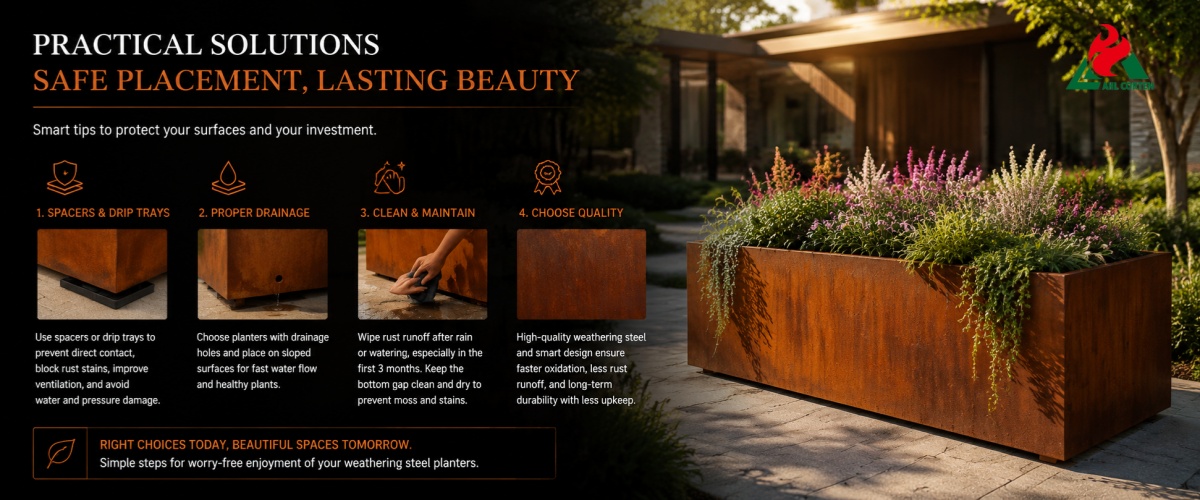
1. Install Spacers and Drip Trays to Prevent Direct Contact
Placing rubber or plastic spacers or specialized waterproof drip trays under the planter is the most cost-effective protective measure.
This not only completely blocks direct contact between rusty water and the ground—preventing rust stains—but also creates a ventilation gap beneath the planter to accelerate moisture evaporation, preventing water accumulation and dampness, while simultaneously preventing indentations caused by prolonged pressure.
2. Prioritize Planters with Compliant Drainage Designs
When purchasing or customizing metal planters, be sure to confirm that standard drainage holes are provided at the bottom. This is the fundamental requirement for resolving water accumulation issues and protecting both plants and the floor.
Additionally, place the planters in areas with a drainage slope or drainage channels to allow water to drain quickly, thereby reducing the risk of moisture at the source.
3. Perform Targeted Initial Cleaning and Regular Maintenance
The first three months of use—the oxidation instability period—is when rust stains are most likely to occur, so thorough cleaning is essential during this time.
After rain or watering, promptly wipe away rust stains from the bottom of the planter and the surrounding ground to prevent stains from seeping in and setting. Routinely clear debris from the bottom gaps to maintain ventilation and dryness, thereby preventing moss growth and standing water.
4. Select High-Quality Weathering Steel Planters to Minimize Long-Term Issues
High-quality weathering steel, produced using precise alloy ratios and meticulous manufacturing processes, undergoes a uniform and stable oxidation process, resulting in less initial rust seepage and faster formation of the rust layer.
Additionally, high-quality planters feature scientifically designed drainage systems and load-bearing bases that effectively reduce issues such as water accumulation, deformation, and rust seepage. This ensures worry-free long-term use and significantly lowers future maintenance costs.
Compatibility Solutions and Placement Recommendations for Different Paved Surfaces
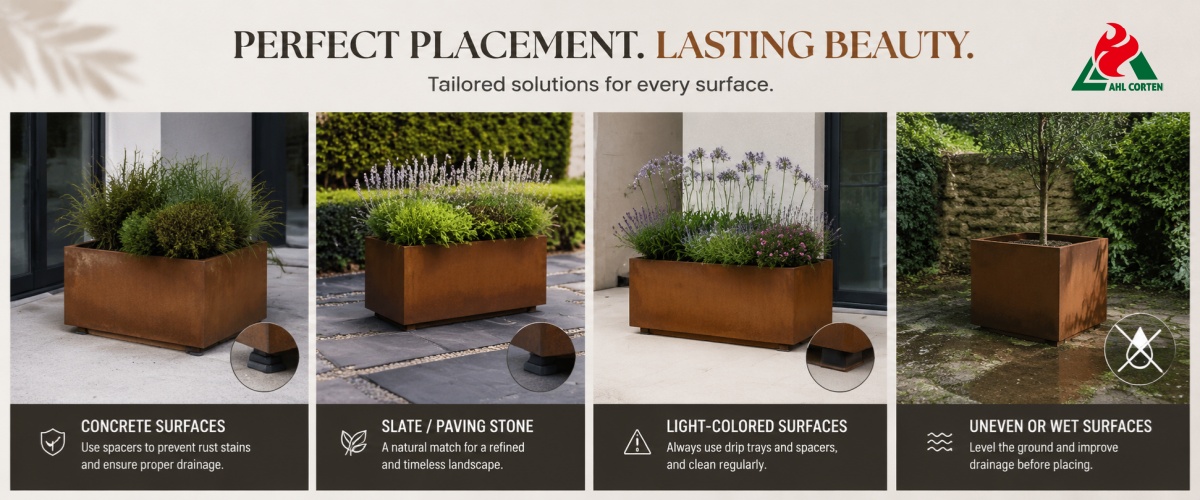
Weathering steel planters have varying levels of compatibility and specific protection requirements depending on the material and color of the paved surface, so a tailored layout is necessary.
1. Concrete Surfaces: Most Versatile; Focus on Preventing Water Pooling and Initial Rust Stains
Concrete surfaces are structurally stable and highly level, making them the most common surface material for weathering steel planters.
Basic protective measures are sufficient for long-term, stable placement: install spacers initially to prevent rust stains and ensure proper drainage on a daily basis.
2. Slate/Paving Stone Surfaces: Optimal Aesthetics, Ideal for Natural Gardens
Natural slates and paving stones feature inherent natural textures that perfectly complement the vintage rust tones of weathering steel, creating a sophisticated and natural landscape effect—one of the best combinations available.
By simply following basic protective measures, you can achieve both exceptional aesthetics and surface protection, making this combination ideal for courtyards, patios, and landscape design.
3. Light-Colored Paved Surfaces: Protection Must Be Maintained at All Times
Light-colored concrete and stone slabs—such as white or light gray—are extremely sensitive to rust stains; even slight rust seepage will be highly noticeable.
It is not recommended to place planters directly on these surfaces without protection. You must use drip trays and riser spacers at all times, and increase cleaning frequency during the initial period of use to prevent stubborn rust stains.
4. Uneven or Water-Prone Surfaces: Do Not Place Directly
It is not recommended to place corten steel planters directly on uneven, low-lying, or chronically waterlogged paved surfaces.
Uneven surfaces can cause uneven stress distribution on the planters, leading to deformation and damage over time; persistent water accumulation can exacerbate a series of issues, including rust seepage, moss growth, and surface deterioration. The ground must first be leveled and drainage optimized before placement.
Why are Weathering Steel Planters a Long-Term, Cost-Effective Investment for Your Garden?
Compared to wooden, plastic, ordinary steel, and ceramic planters, rusted steel planters offer outstanding long-term utility and aesthetic value, making them an excellent investment choice for garden landscaping.
Superior weather resistance, suitable for year-round outdoor use: The stable rust layer that forms after manufacturing provides comprehensive protection against wind, rain, UV rays, and frost. Unlike plastic planters, they won’t age or crack, and unlike ceramic planters, they won’t freeze and shatter—they can remain outdoors year-round without needing to be moved indoors.
They become more beautiful with use, and their texture continues to improve: Unlike wooden planters that fade and rot, or ordinary steel planters that develop holes and rust, weathering steel planters develop a richer, more refined rust-colored texture over time, exuding a timeless charm.
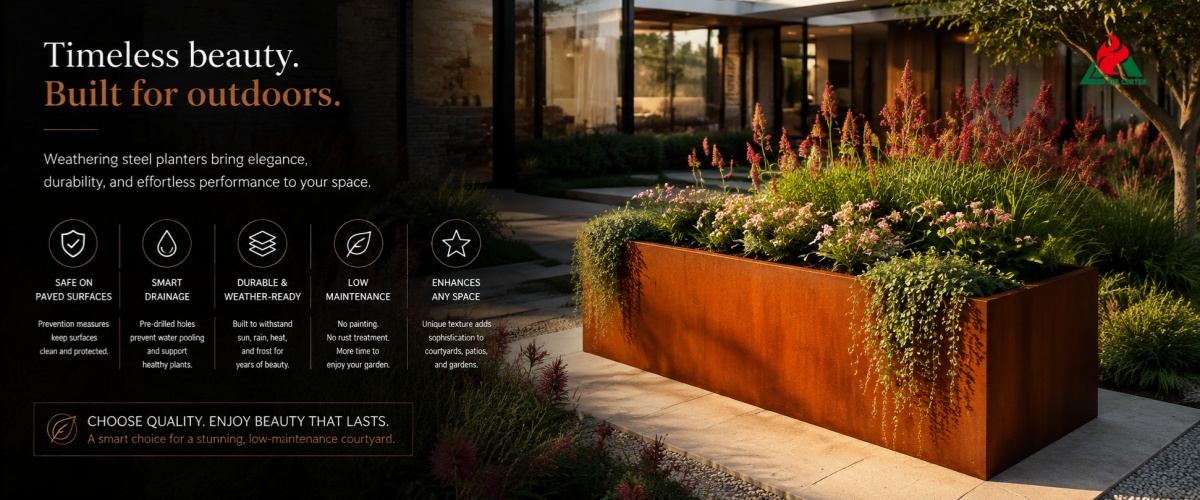
Ultra-low maintenance, saving you money and hassle in the long run: No need for regular painting, rust prevention, or anti-corrosion treatment; no risk of insect infestation. This significantly reduces the time and financial costs of ongoing maintenance, allowing you to focus on enjoying your garden landscape.
Combines aesthetics with practicality: Serving both as a functional planter for greenery and as a standalone decorative element, it offers dual functionality that elevates the overall sophistication and depth of your garden—an advantage ordinary planters simply cannot match.
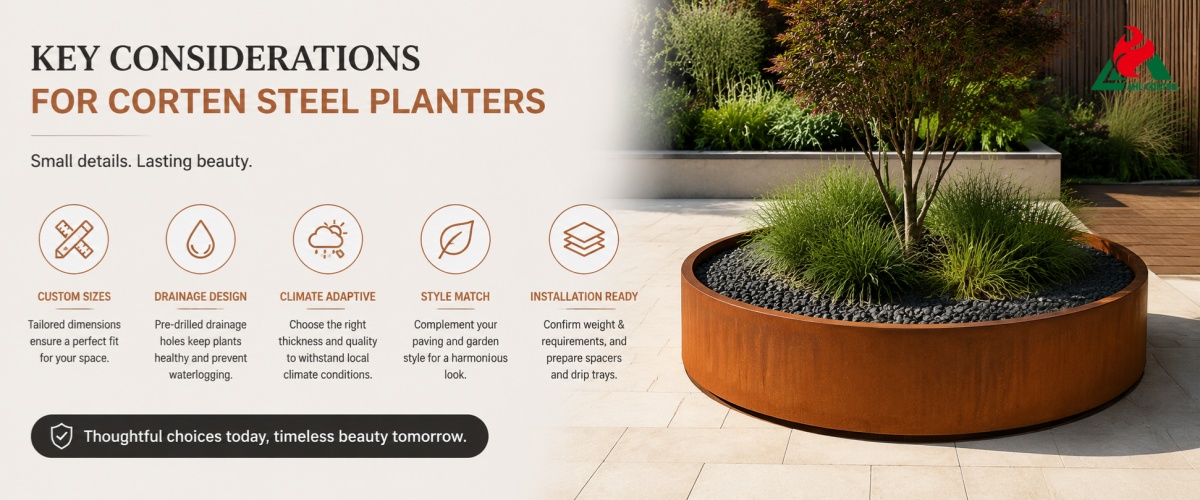
Key Considerations for Selecting and Installing Corten Steel Planters
To achieve a perfect final result, in addition to proper placement and protection, the details of selection and installation directly determine the user experience.
- Custom Sizes Available: Since garden patios vary in size and shape, custom dimensions ensure a precise fit for your space, preventing size mismatches that could compromise placement and overall aesthetics.
- Check Drainage Design: Confirm in advance that the bottom features pre-drilled drainage holes—this is essential for healthy plant growth and to prevent waterlogging.
- Adapt to Local Climate: In regions with heavy rainfall, high temperatures, coastal salt fog, or extremely cold winters, choose products with sufficient thickness and proven manufacturing processes to withstand local climatic conditions and extend service life.
- Match the Overall Garden Style: Select designs that complement the color of the paving and the garden’s overall style. For light-colored surfaces, plan protective measures in advance to avoid stylistic conflicts or stains that could detract from the aesthetic appeal.
- Confirm Installation Conditions: Determine the planter’s weight and installation requirements in advance, and prepare the necessary accessories—such as spacers and drip trays—to prevent issues like inability to place the planter properly or difficulty repositioning it after delivery.

Frequently Asked Questions (FAQ): Corten Steel Planter
Q1: Will Corten Steel Planters Permanently Stain Or Corrode Stone Or Concrete Surfaces?
No. Rust stains only appear during the initial period when the rust layer has not yet stabilized; these are merely surface stains and do not indicate surface corrosion. By taking preventive measures in advance and cleaning promptly, you can completely avoid this issue, and no permanent marks will remain.
Q2: Is It Necessary To Use Spacers And Drip Trays When Placing Corten Steel Planters?
We strongly recommend their use; they are essential for light-colored surfaces and aesthetically pleasing gardens. Spacers and drip trays are extremely cost-effective—they prevent rust stains and water accumulation while allowing ventilation to protect both the planter and the surface, offering excellent value for money.
Q3: Are Rusted Steel Planters Suitable For Long-Term Outdoor Placement?
They are very suitable. The core advantage of weathering steel is its long-lasting resistance to weathering and corrosion outdoors. As long as proper drainage and basic protection are ensured, they can be placed year-round and used reliably.
Q4: Will Long-Term Placement Of Planters Damage The Structure Of The Paved Surface?
Normal use will not cause structural damage. Only in cases of prolonged water accumulation or when the planters are completely fixed in place without movement may surface discoloration or water stains occur; these can be completely avoided by periodically repositioning the planters or adding spacers.
Q5: What Is The Optimal Drainage Setup For Stone Paving?
Pre-drilled drainage holes in the bottom combined with a waterproof drip tray is the optimal basic configuration. Additionally, placing the planters near the ground’s drainage slope or drainage channels can effectively eliminate the risk of water accumulation.
Conclusion: Are You Ready to Choose the Perfect Outdoor Corten Steel Planter for You?
Overall, weathering steel planters can be safely placed on hard surfaces such as concrete or stone slabs without excessive concern. Common worries—such as rust stains, water pooling, indentations, and high temperatures—are minor issues that can be easily prevented in advance and are not inherent defects of the product.
As long as you take the initial steps to prevent rust seepage, optimize drainage, install spacer pads, and perform simple, regular cleaning, weathering steel planters can be used stably and reliably on paved surfaces for the long term.
With their unique vintage texture, they add a touch of sophistication to courtyards, patios, and gardens, striking a perfect balance between aesthetics, practicality, and durability—making them the top choice for outdoor landscape planters.
Want to create a visually stunning, low-maintenance outdoor courtyard? Choose high-quality weathering steel planters and use thoughtful protective measures to ensure your courtyard landscape remains beautiful for years to come.
Get a Quote
Back


 Fill In The Inquiry