How to Prepare for Corten Steel Garden Screen Installation?
Date:2026.08.28
Share to:
Introduction to Corten Steel Garden Screen
Key Advantages of Corten Steel Screens
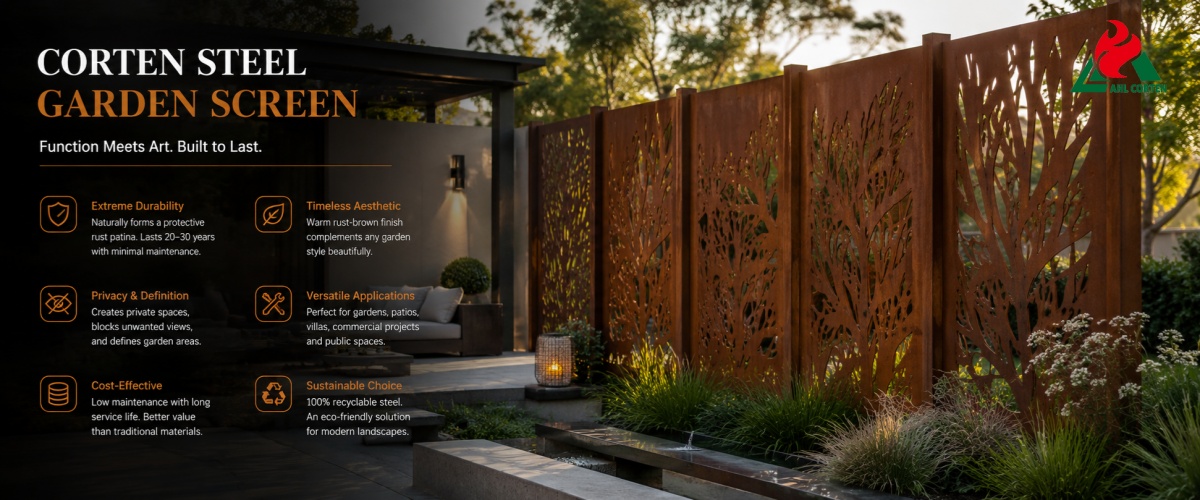
Corten steel garden screens are a popular choice in modern landscape design, combining practical functionality with artistic appeal. They are widely used in outdoor settings such as private gardens, patios, and commercial complexes. Compared to wooden, standard wrought iron, and fabric screens, their advantages are particularly notable. The steel surface naturally forms a dense, rust-colored protective oxide layer, eliminating the need for paint or防腐 treatment and ensuring an exceptionally long service life of 20–30 years. Its unique vintage rust-brown hue exudes a sophisticated aesthetic, seamlessly complementing various garden materials such as greenery, stone, natural wood, and concrete, and effortlessly adapting to diverse landscape styles including minimalist, natural, and industrial. At the same time, daily maintenance costs are extremely low, and its long-term cost-effectiveness far exceeds that of traditional outdoor partition materials.
Why Preparation Is Crucial Before Installing Rust-Finished Steel Screens
Many garden screens suffer from issues such as tilting, warping, rust stain contamination, insufficient privacy, and stylistic mismatches. The root cause of these problems is not product quality defects, but rather inadequate preliminary planning and preparation. Thorough and well-planned preparation can prevent rework costs at the source and shorten the construction timeline. It also ensures an even patina forms on the screens, prevents rust stains from contaminating surrounding ground and greenery, and results in a more stable structure and a more refined visual appearance—truly achieving “install once, last a lifetime.”
Article Overview
This article will systematically break down the preparatory work for installing weathering steel garden screens from multiple perspectives—including needs assessment, site survey, product selection, compliance verification, foundation preparation, maintenance planning, and installation method selection—to help homeowners and landscape designers implement flawless outdoor landscape solutions.
Identifying Core Needs: Custom Screen Design Solutions Tailored to Your Needs
1. Main Functional Categories of Weathering Steel Screens
Before installation, it is essential to precisely identify the core purpose to avoid functional waste or failure to meet requirements due to haphazard selection. The core functions of weathering steel screens are primarily divided into six categories, which can be used individually or in combination. These primarily include: privacy protection by blocking neighbors’ views; functional zoning of courtyards; windbreaks for outdoor seating areas; screening for equipment zones such as air conditioner units and trash bins; serving as focal points for artistic courtyard landscapes; and providing vertical climbing supports for vines.
2. Design Parameter Standards Corresponding to Functional Requirements
Different functions directly determine the screen’s height, panel type, perforation rate, and structural design; precise matching is essential to balance practicality and aesthetics. Privacy Protection Scenarios: Recommended height of 1.8–2.5 meters; use solid panels or panels with low perforation rates to completely block external views. Courtyard Zoning Scenarios: Use low-profile, semi-transparent screens measuring 1.2–1.5 meters to achieve a sense of “separation without isolation,” maintaining an open spatial feel without obstructing the overall view of the courtyard. Wind Protection Scenarios: Prioritize solid, continuous panels paired with reinforced structures to withstand strong winds and safeguard outdoor relaxation areas. Landscape Decoration Scenarios: Feature laser-engraved patterns to create a visual focal point in the courtyard through light and shadow effects, de-emphasizing the screening function while enhancing artistic appeal.
Comprehensive Site Survey: Avoiding Potential Construction Issues Later On
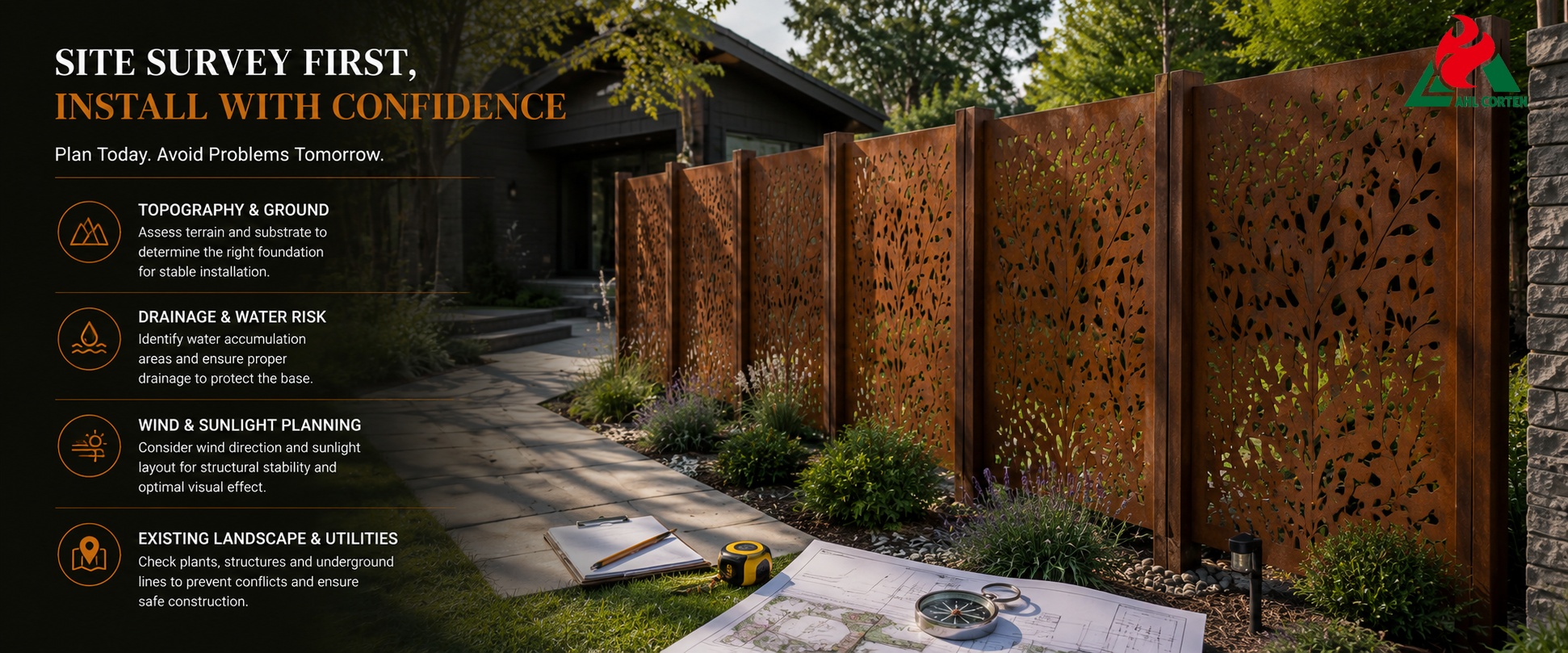
1. Topography and Ground Substrate Survey
The ground substrate directly determines the foundation construction method and is the foundation for ensuring the screen’s stability; therefore, it must be surveyed accurately in advance. Grass or Dirt Surfaces: Excavation of pile holes and pouring of a concrete foundation are required to ensure the stability of the posts. Concrete or Paved Surfaces: No deep excavation is needed; a base plate with anchor bolts can be used to minimize damage to the surface. Slopes, Rocky Terrain, or Areas with Extensive Root Systems: Post heights must be adjusted, and a stepped foundation must be used. Where necessary, localized excavation and grading should be performed to prevent installation at an angle.
2. Drainage and Water Accumulation Risk Assessment
Water accumulation is the primary cause of corrosion at the base of weathering steel screens and uneven rust formation; this must be prioritized for avoidance during the survey phase. It is necessary to identify low-lying areas prone to water accumulation, rainwater runoff paths from roofs, landscaping irrigation lines, and areas around water features where water may pool. It is strictly prohibited to install the screens in areas subject to prolonged dampness or standing water to prevent the base from being constantly submerged, which can cause localized excessive corrosion and irregular rust spots, while also preventing contamination of the surrounding paved surfaces.
3. Wind Direction and Sunlight Layout Planning
Wind and sunlight directly affect the structural stability and aesthetic impact of the screens; therefore, their layout must be planned reasonably in accordance with the site environment. For areas with year-round prevailing winds, high-wind zones, and windy coastal regions, deepen the foundation, reduce the spacing between posts, and add horizontal bracing to enhance wind resistance. Regarding sunlight, plan the screen’s orientation carefully to avoid blocking natural light from reaching garden plants and seating areas. Utilize the open, perforated design on the sun-facing side to create a play of light and shadow, while using solid panels on the shaded side to block wind and retain heat.
4. Inspection of Existing Landscaping and Utility Lines
Before installation, a comprehensive survey of the site’s existing facilities must be conducted to avoid construction conflicts and future maintenance issues. Mark the locations of courtyard plants, walkways, fences, building doors and windows, and outdoor furniture in advance to ensure the screen harmonizes with the overall landscape. Additionally, contact municipal authorities to locate underground utility lines to prevent damage during drilling or excavation and eliminate safety hazards.
Precise Selection: Screen Designs and Specifications Tailored to Your Setting
4 Main Types of Weather-Resistant Steel Screens
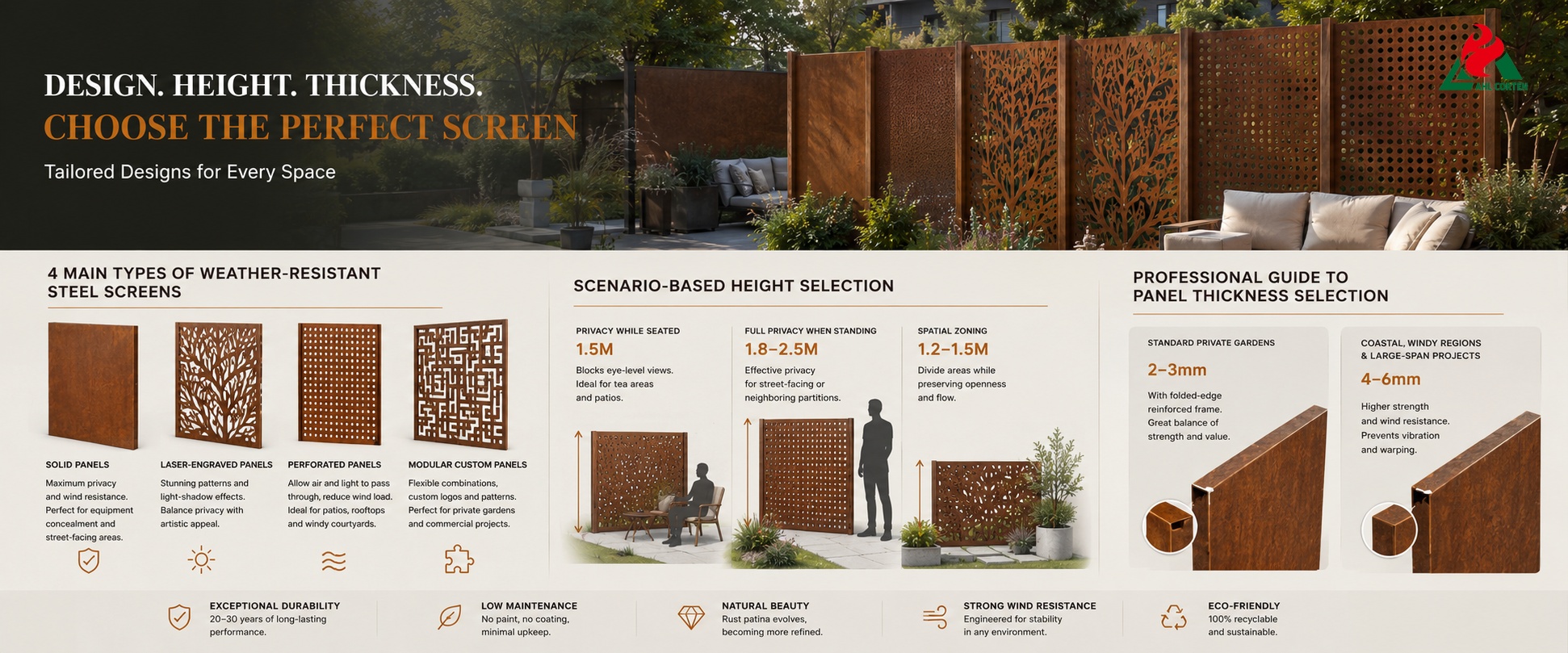
Different designs vary significantly in terms of openness, practicality, and aesthetics, so it’s essential to choose carefully based on your site’s specific needs. Solid Panels: Maximize privacy and wind resistance; ideal for concealing equipment and providing privacy along street-facing areas; offer the best wind resistance. Laser-Engraved Panels: Support geometric, botanical, and custom patterns; create stunning light and shadow effects; balance privacy with artistic appeal; well-suited for landscape design. Perforated Panels: Allow air and light to pass through while reducing wind loads, preventing the screen from being blown over by strong winds; suitable for patios, rooftops, and windy courtyards. Modular Custom Panels: Standardized interlocking design allows for flexible length combinations; supports customization with logos and exclusive patterns; suitable for private gardens and commercial spaces.
Scenario-Based Height Selection Criteria
There is no need to blindly increase screen height; selecting the appropriate height based on your needs strikes a balance between aesthetics and structural safety.
Privacy Protection While Seated: A height of 1.5 meters is sufficient to block eye-level views, making it suitable for courtyard tea areas and leisure patios. Comprehensive Privacy Protection When Standing: 1.8–2.5 meters, suitable for street-facing or neighboring yard partitions, effectively blocking views from upper floors. Spatial Zoning and Landscaping: Low-profile screens (1.2–1.5 meters) divide functional areas while preserving the garden’s overall sense of openness.
Professional Guide to Panel Thickness Selection
Panel thickness determines the screen’s rigidity and resistance to deformation; different thickness specifications are suitable for different scenarios. Standard Private Gardens: Choose 2–3 mm thick panels reinforced with folded edges on the frame; this is sufficient for daily use and offers the best value for money. Coastal Areas, Windy Regions, and Large-Span Curtain Walls: Prioritize 4–6 mm thick panels, which offer superior wind resistance and resistance to deformation, preventing panel vibration and warping caused by prolonged exposure to wind.
Compliance Review: Mitigating Policy and Property Management Remediation Risks
1. Key Compliance Review Points
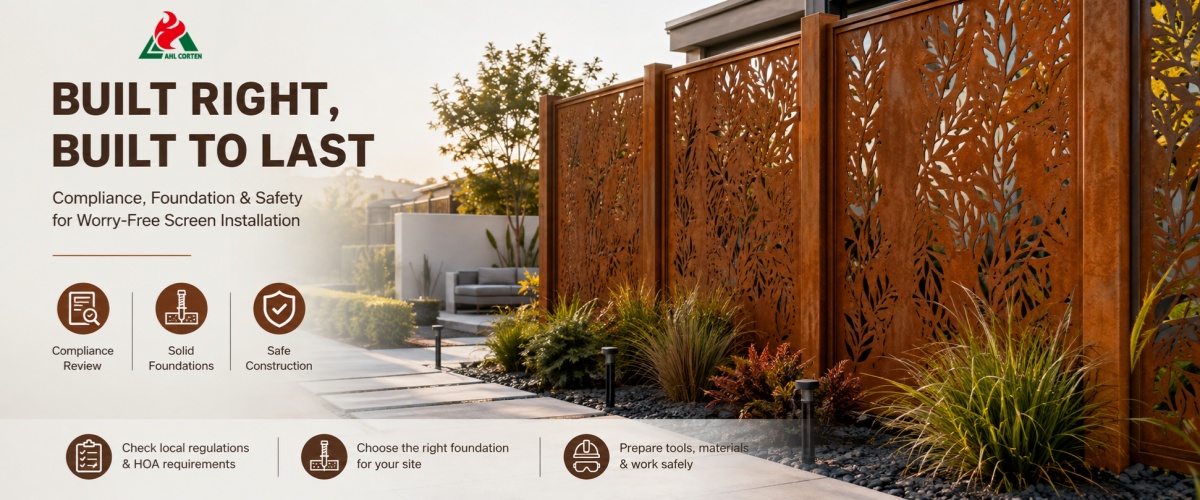
Most residential communities and municipal areas have explicit regulations regarding outdoor partitioning structures. It is essential to conduct a compliance review prior to installation to avoid being ordered to dismantle or make corrections later. Key points to verify: maximum height limits for area screens/fences, building setback requirements, homeowners’ association (HOA) renovation regulations, construction permits for high-rise and common areas, and special restrictions in historic preservation districts.
2. Professional Advice to Avoid Pitfalls
For extra-tall screens, open installations facing the street, and commercial park projects, it is recommended to consult with property management and municipal housing and construction authorities in advance. Submitting construction plans in advance, confirming compliance details, and obtaining necessary construction permits can effectively mitigate various risks—such as non-compliant construction, forced demolition, and fines for non-compliance—ensuring the smooth completion of the project.
Foundation Construction Preparation: Laying a Solid Foundation for Long-Term Stability
1. Three Main Foundation Repair Solutions
Select the appropriate foundation solution based on site ground conditions to ensure the screen’s wind resistance and resistance to settlement. Pre-embedded Concrete Foundation: The most stable and versatile option. The column burial depth should be no less than one-third of the screen’s above-ground height. Suitable for soil surfaces and windy areas. Anchor Bolts in Concrete Slab: Suitable for hardened, paved surfaces; requires no excavation, is quick to install, and causes minimal damage to the site. Ground Anchors with Counterweights: Ideal for temporary installations, rental courtyards, and terraces where excavation is not possible; flexible, convenient, and can be disassembled and relocated.
2. Key Points for Site Preparation
Before formal construction begins, meticulous site preparation must be completed to ensure the success of the foundation work. Clear the installation area of weeds, gravel, and debris, and level the ground; precisely mark the column positions according to the design spacing. When excavating pile holes, ensure the hole diameter is 100–150 mm larger than the column diameter to facilitate concrete filling and compaction; lay a gravel base at the bottom of the hole to enhance drainage and prevent water accumulation that could rot the roots.
3. Tools, Materials, and Safety Precautions
Prepare a complete set of construction materials and safety equipment in advance to ensure efficient and safe progress. Essential tools: tape measure, level, surveying cord, post hole digger, electric drill, concrete mixing tools. Key Materials: Concrete, 304/316 stainless steel hardware (to prevent electrochemical corrosion), waterproof underlayment, protective supplies. Safety Precautions: Corten steel sheets have sharp edges; workers must wear non-slip gloves and safety goggles during construction. Two people must work together to handle the sheets to avoid injuries from bumps or impacts and to prevent sheet deformation.
Long-Term Maintenance Planning: Avoiding Future Maintenance Challenges in Advance
1. Understanding the Natural Rusting Process of Weathering Steel
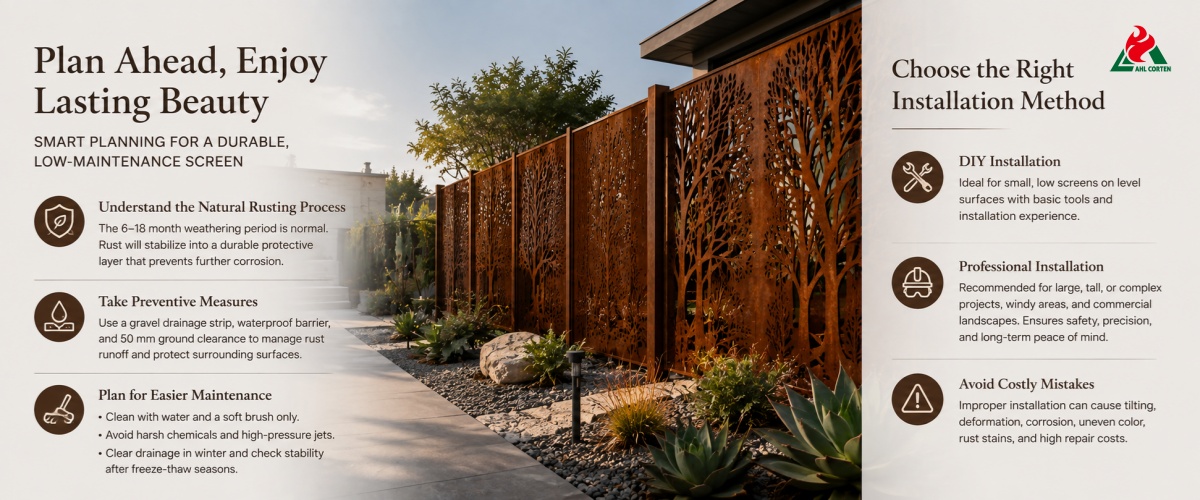
The formation of a rust layer on weathering steel screens is a natural process that requires no human intervention; understanding this in advance can help avoid misconceptions. The 6–18 months following installation constitute the natural weathering stabilization period, during which orange-red rust stains, slight color variations, and rust runoff may appear on the panel surface—all of which are normal phenomena. After cycles of drying and wetting, a uniform, dense, dark brown protective film will gradually form on the panel surface. Once fully stabilized, the panels will no longer rust, and there will be no staining or flaking.
2. Proactive Measures to Prevent Contamination
To address the issue of rust runoff during the initial phase, protective measures can be taken in advance to prevent ground contamination. Lay a gravel drainage strip and a waterproof barrier pad at the base of the corten privacy screen to catch the initial rust runoff. Additionally, leave a 50-mm gap between the bottom of the panels and the ground during installation to prevent prolonged contact with standing water on the ground. This protects the paved surface and ensures the even formation of the rust layer.
3. Pre-Planning for Routine and Winter Maintenance
Weathered steel is virtually maintenance-free; simply plan basic maintenance procedures in advance to preserve its aesthetic appeal over the long term. Daily Cleaning: Use only clean water and a soft-bristle brush to remove dust and debris. Never use strong acids or alkalis, high-pressure water jets, or metal wire brushes, as these can damage the protective rust layer.
Winter Maintenance: Promptly clear drainage channels at the base to prevent snow and ice from accumulating on the panel surface for extended periods. After the freeze-thaw season, inspect the foundation for stability to prevent the screen from tilting due to soil loosening.
Choosing a Corten Steel Screen Installation Method: DIY vs. Professional Installation
1. Scenarios Suitable for DIY Installation
For small, low-profile modular standard screens installed on level, paved surfaces with no complex terrain or strong wind risks, and where the installer has basic tools and experience, DIY installation is a viable option to save on labor costs.
2. Situations Requiring Professional Installation
For large, extra-tall screens; sites with complex slopes; windy coastal areas; and commercial landscape projects, it is recommended to entrust the work to a professional team. Professional installation ensures precise wind load calculations, foundation reinforcement, level calibration, and uniform joint treatment, thereby avoiding potential issues such as tilting, deformation, and corrosion. It also provides an after-sales warranty, offering greater peace of mind in the long term.
3. Common Consequences of Improper Installation
Inadequate preparation and non-standard installation can lead to various long-term issues, including tilting or swaying screens, deformation and unusual noises during strong winds, premature corrosion at the base, uneven or inconsistent panel colors, widespread rust stains on the ground, and extremely high costs for subsequent repairs—all of which severely impact the landscape’s aesthetic appeal and service life.
Upfront Landscape Design: Enhancing the Overall Quality of Your Garden
1. Plant Pairing and Planning
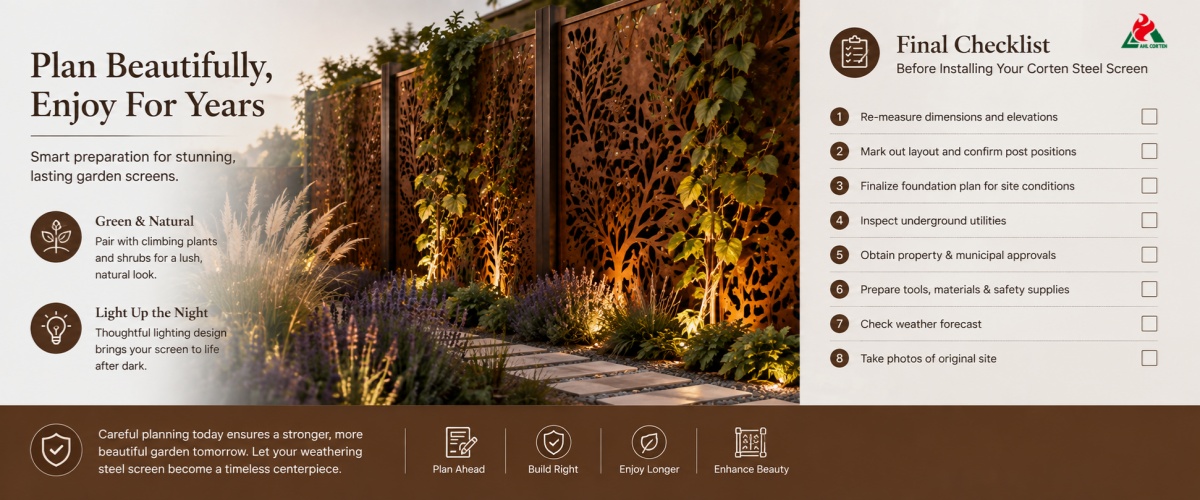
Weathering steel screens can serve as a climbing framework for natural plants, supporting vines such as wisteria, clematis, and jasmine to create a natural green wall effect. These can be paired with ornamental grasses, lavender, and evergreen shrubs to use the softness of greenery to balance the steel’s rugged texture. It is important to ensure adequate ventilation gaps are left at the base of the screen to prevent the accumulation of damp branches and leaves, which can corrode the panels.
2. Provision for Nighttime Lighting Layout
Pre-planning lighting locations before installation can significantly enhance the garden’s nighttime ambiance. Combine bottom-up lighting, backlighting, and recessed light strips to create dappled light and shadow patterns through perforations and carved designs at night. This allows the screen to serve as a scenic element by day and shine at night, enriching the garden’s depth and dimension.
Final Checklist Before Installing Corten Steel Screens
Before starting construction, check each item on the checklist to ensure zero oversights and zero rework.
1. Re-measure all dimensions and elevations to confirm that the screen specifications perfectly match the site; 2. Accurately mark out the layout to confirm the column locations and spacing are correct; 3. Finalize the foundation construction plan to accommodate the site’s topography; 4. Complete an inspection of underground utilities to eliminate potential construction hazards; 5. Obtain all necessary property management and municipal compliance approvals; 6. Ensure all tools, materials, and safety supplies are on hand; 7. Check the weather forecast and avoid construction during extreme weather conditions such as heavy rain or strong winds; 8. Take photos of the original site for comparison during the final inspection.
The aesthetic appeal, stability, and service life of weathering steel garden screens depend not only on the product itself, but also on meticulous and comprehensive preparatory work prior to installation. From defining requirements, conducting site surveys, selecting the precise model, and verifying compliance, to preparing the foundation, planning maintenance, and coordinating with the landscape—every step of this preliminary preparation is designed to prevent future issues and fully unlock the unique advantages of weathering steel.
Scientific preliminary planning allows the rusted steel screen to naturally develop a warm, vintage rust-colored patina over time, becoming a central landscape feature in your garden that will last for decades and grow more refined with use.
Exclusive Corten Steel Screen Service Consultation
Looking to customize a weathering steel screen solution for your garden? AHL Corten Group offers free site surveys, one-on-one design consultations, personalized sizing and pattern customization, professional installation, and comprehensive after-sales support. Contact us today to receive a customized quote for your garden’s weathering steel screen and effortlessly create a high-end outdoor landscape that combines aesthetic appeal, practicality, and texture.


 Fill In The Inquiry