How to Combine Corten Steel Planters, Screens and Lights?
Many residential and commercial outdoor spaces share the same problem: they look ordinary during the day and lack atmosphere at night. They also suffer from shortcomings such as insufficient privacy, disorganized spatial functions, and a cluttered landscape. Especially in densely populated urban residential areas, small courtyards are easily overlooked by neighbors, resulting in a lack of privacy and a failure to create an exclusive atmosphere for relaxation.
To thoroughly optimize an outdoor space, a simple landscape renovation is far from sufficient. Scattered plants, ordinary railings, and basic lighting fixtures fail to create a unified design language, ultimately resulting in a disjointed courtyard style and significantly reduced practicality.
This article introduces a proven corten steel courtyard solution: weathering steel planters + laser-cut weathering steel screens + integrated outdoor lighting. When combined, these three elements simultaneously address the four key challenges of privacy, zoning, aesthetics, and nighttime ambiance, creating an outdoor space that remains visually appealing year-round, requires minimal maintenance, and exudes a sense of sophistication.
Why are Corten Planters, Screens, and Lighting the Perfect Combination?
1. A Unified Material Texture That Complements a Variety of Garden Styles
Weathered steel features a unique warm brown rust-colored texture that naturally oxidizes and deepens over time, developing a richer, more mellow hue. This distinctive texture pairs perfectly with common garden materials such as pressure-treated wood pergolas, concrete pavers, natural stone, and gravel.
At the same time, it complements a wide range of design styles—including modern minimalism, industrial chic, natural rustic, light luxury, and commercial landscaping—creating a unified visual aesthetic for the entire outdoor space and eliminating the cluttered feel of haphazardly assembled elements.
2. Balancing Openness and Privacy, Avoiding a Closed-Off, Oppressive Atmosphere
Traditional solid walls and railings block natural light and ventilation, making small gardens feel closed off and oppressive. In contrast, laser-cut weathering steel screens feature an openwork design, with their core advantage being that they “filter views rather than completely block them.”
Paired with layered greenery in weathering steel planters, this design effectively blocks direct views from neighbors and passersby—ensuring privacy for leisure, dining, and relaxation in the courtyard—while maintaining airflow and natural light to create a comfortable space that is both open and private.
3. Dual-Effect Landscaping for Day and Night, Delivering Beauty Around the Clock
This integrated solution offers outstanding visual contrast between day and night, achieving a sophisticated, tidy look by day and a fully immersive atmosphere by night.
During the day, the vintage rust-colored weathering steel complements the greenery and wooden structures, creating a richly layered, high-end aesthetic. At night, enhanced by professional lighting, the openwork patterns of the screen cast artistic light and shadow, while the outlines of the plants and the texture of the steel are precisely illuminated, transforming the courtyard from an ordinary outdoor space into an immersive landscape experience.
4. Durable and Maintenance-Free, Suited for Complex Outdoor Environments
Corten steel is a specialty steel developed specifically for outdoor use. Once its surface oxidizes, it forms a dense protective layer that effectively prevents the internal steel from rusting. It requires no painting or frequent maintenance; the natural aging process enhances the landscape’s aesthetic value.
Whether in rainy, sun-drenched, or temperature-varying outdoor environments, it maintains a stable condition over the long term. It is perfectly suited for a variety of settings—including residential yards, commercial venues, and pool areas—significantly reducing long-term maintenance costs.
Start With a Clear Garden Design Goal
1. Precision Privacy Optimization: Targeted Sight Blocking
Before renovating, first identify all exposed viewpoints in the courtyard, including key vantage points such as neighbors’ windows, stairwells, and street sidewalks. There’s no need to completely enclose the entire space; simply adjust the angle, openwork density, and height of the screens to precisely block prying eyes.
Combined with planters of varying heights and greenery, this creates multi-layered, soft screen that safeguards privacy while maintaining a sense of openness, completely resolving the awkwardness of urban courtyards being “completely exposed.”
2. Flexibly Define Spaces and Clearly Delineate Functional Zones
The core issue with most ordinary courtyards is a lack of clear functionality, where dining, leisure, gardening, and walkways are jumbled together, resulting in extremely low usage rates. The combination of weather-resistant steel screens and planters can replace heavy walls to achieve flexible spatial zoning.
By using rusted steel screens to partition areas and planters to define boundaries, functional spaces—such as the outdoor dining area, lounge seating area, pool area, and entrance landscape area—are clearly delineated, resulting in a neat and orderly courtyard layout that significantly enhances practicality.
3. Balancing Nighttime Safety and Ambience
Courtyard lighting design does not need to be excessively bright; the key is to balance safety with ambiance. In the early planning stages, it is essential to clarify the three core functions of lighting: illuminating walkways and steps to ensure safe passage, highlighting landscape textures to enhance visual appeal, and creating soft lighting and shadows suitable for nighttime gatherings and relaxation.
By avoiding direct glare and haphazard lighting, and employing layered lighting, the nighttime courtyard achieves both practicality and a sophisticated aesthetic.
How to Position Corten Steel Screens?
1. Creating a Three-Dimensional, Layered Landscape Background
Placing rusted steel privacy screens behind planters and greenery creates a clean, unified landscape backdrop. The solid-color steel base maximizes the vitality of the greenery while preventing the garden background from appearing cluttered.
This layout is particularly well-suited for courtyard corners, behind relaxation areas, and along pool edges, as it quickly extends the sense of depth in the space, making a small courtyard appear more spacious and refined.
2. The Spatial Divider: Flexibly Separating Functional Zones
Using openwork screens to divide areas is a core technique in small courtyard design. Compared to solid walls, the open nature of screens does not disrupt the visual flow of the space while clearly distinguishing different functional zones.
For example, you can set up an outdoor dining area on one side and a natural planting area on the other; or separate the leisure area from the utility and storage area, balancing aesthetics, practicality, and the overall cohesion of the space.
3. As a Visual Focal Point: Creating a Highlight at the Entrance
Custom weathering steel screens featuring geometric patterns, plant motifs, abstract textures, or exclusive logos can serve as the main visual focal point of the courtyard. Placing them along the courtyard’s central axis, in the entryway, or behind an outdoor kitchen counter can instantly elevate the space’s design aesthetic.
When paired with backlighting, the screen transforms into a light-and-shadow art installation at night, becoming an iconic feature of the courtyard and suitable for both residential and commercial settings.
4. Prioritize the Foundation to Ensure Long-Term Stability
Rusted steel privacy screens are heavy and have a large wind-exposed surface area, so they must never be secured solely by counterweights in planters. During installation, a concrete foundation 45–80 cm deep must be poured based on the screen’s dimensions and local wind conditions.
Additionally, use specialized mounting brackets that avoid the screen’s open, structurally weak areas, and strictly follow outdoor installation standards to eliminate the risk of tilting or toppling, ensuring long-term safety.
How to Use Corten Planters With Screens?
1. Create a Layered Arrangement
Move away from the monotonous layout of flower boxes at a single height and instead combine weathering steel flower boxes in three heights—tall, medium, and short. Plant vertical greenery in the tall flower boxes to enhance privacy; plant shaped shrubs and ornamental grasses in the medium-sized boxes to enrich the mid-level landscape; and arrange groundcover plants and seasonal flowers in the short boxes to accent the lower level.
This staggered arrangement softens the screen’s stark industrial lines, creating a landscape that is richly layered, natural, and dynamic.
2. Use Planters As Soft Transitions
Corten steel inherently possesses a rugged, industrial quality, and a steel structure on its own can appear cold and harsh. Pairing it with natural greenery perfectly balances this texture, achieving a visual effect that harmoniously blends strength and softness.
Ornamental grasses sway gently in the breeze, creating a light and airy effect; evergreen shrubs maintain a lush, year-round presence, providing a stable foundation for the landscape; and climbing plants can wind through the screen’s openwork sections, creating a natural vertical greenery effect that allows the steel structure to showcase different seasonal beauties.
3. Combination Screening Plants and Decorative Panels
The openwork structure of laser-cut screens serves as a natural support for climbing plants. Plants such as clematis, jasmine, wisteria, and climbing roses can grow naturally through the openwork holes, gradually covering the surface of the screen.
In spring and summer, lush foliage forms a vibrant living green wall; in fall and winter, the branches and stems allow the delicate steel texture to show through, providing the garden with dynamic seasonal changes.
4. Stabilizing Planters and Screen Structures
Moist soil and the weight of the plants significantly increase the load on planters. If the screen is not directly secured to a standard planter, it is highly prone to deformation and tipping.
The professional design employs a separate structure for the screen and planters: the screen is secured with its own poured foundation, while the planters are flexibly positioned in front. This approach ensures overall stability while facilitating future layout adjustments and plant replacements.
Lighting Techniques for Corten Screens and Planters
1. Backlighting for Laser-Cut Screens
By concealing LED strips or spotlights behind weathering steel screens, light passes through the openwork patterns and is projected onto the ground, walls, or greenery, creating regular and intricate patterns of light and shadow.
With the lights installed out of sight—no exposed light sources and no glaring glare—this technique creates a serene and sophisticated artistic atmosphere at night, making it a core technique for setting the mood in a garden.
2. Uplighting for Corten Planters
Installing recessed uplights at the base of rusted steel planters or along the sides of greenery directs light upward onto the Corten steel surface, precisely highlighting the material’s natural, rough, rust-colored texture.
At the same time, it outlines the three-dimensional contours of plant branches and foliage, creating a clearly layered nighttime landscape and eliminating the flat, pitch-black appearance often associated with gardens at night.
3. Downlighting from Screens or Structures
Install downward-facing diffused lights above screens, wooden pergolas, or high on walls to evenly illuminate garden paths and outdoor dining areas.
This type of lighting is soft and non-glare, meeting the lighting needs for nighttime walking and dining without disrupting the garden’s overall tranquil atmosphere, thus balancing practicality with aesthetic appeal.
4. Grazing light across Corten surfaces
By positioning fixtures close to the surface of the screens and angling the light at a shallow angle, the light evenly “sweeps” across the steel surface, maximizing the visibility of the weathering steel’s naturally oxidized texture, joints, and openwork details.
This lighting technique transforms the inherently understated texture of steel into a sophisticated aesthetic, making it ideal for high-end residential gardens and commercial landscape settings.
5. Warm White Lighting For Rust Tones
To perfectly showcase the warm texture of corten steel, the color temperature of the lighting must be strictly controlled within the 2700K–3000K warm white range. Cool white or blue light will make the rust tones appear dull and aged, significantly diminishing the garden’s aesthetic appeal.
At the same time, outdoor lighting fixtures must have a waterproof rating of IP65 or higher. For residential gardens, a 12V low-voltage system is recommended, as it is safe, moisture-resistant, and highly durable, making it well-suited for complex outdoor environments.
5 Proven Layout Designs Suitable for All Types of Gardens
1. Private Courtyard Retreat
Install a medium-to-tall rusted steel screen at the rear of the courtyard to serve as a backdrop, paired with a combination of flower boxes of varying heights in the foreground, planted with evergreen shrubs and ornamental grasses. Add soft backlighting to the rear of the screen to create a secluded and tranquil relaxation corner—perfect for quiet contemplation, tea-drinking, or small gatherings—transforming a compact courtyard into a private sanctuary.
2. Modern Outdoor Dining Area
Use rectangular weathering steel planters to define the boundaries of the dining area, paired with a semi-transparent laser-cut screen at the rear to block outside views and gusts of wind. The planters are equipped with uplighting for the greenery, while the screen features backlighting. The design maintains a neat and orderly appearance during the day and creates a warm, inviting atmosphere at night, making it a perfect fit for patios, small courtyards, and outdoor dining areas at restaurants.
3. Poolside Privacy and Landscaping Area
A custom-patterned, corten steel screen along the poolside is paired with narrow, elongated planters filled with neatly trimmed shrubs and fine-leaved ornamental grasses. Low-intensity, diffused lighting is used to prevent glare caused by strong light reflecting off the water’s surface.
The layout balances privacy, ventilation, and waterproofing/moisture-proofing requirements. Corten steel resists moisture and corrosion, making it suitable for the high-humidity, chlorine-containing environment of a pool area.
4. Commercial Entrance Landscaping
For the entrances of hotels, retail stores, and office buildings, tall custom screens can serve as the main backdrop, engraved with brand logos or text, and paired with large, sculptural planters in front. Underground uplighting illuminates the greenery in the planters, while recessed lighting highlights the screen’s contours, creating a sophisticated and refined first impression upon entry and enhancing the brand’s prestige.
5. Minimalist Solutions for Small Gardens and Balconies
For small courtyards and balconies with limited space, lightweight modular screens can be paired with narrow wall-mounted or freestanding planters. Solar-powered lights and low-voltage LED strips simplify wiring, and the screens are mounted directly to the wall without the need for deep foundation excavation. Counterweights in the planters provide stability, balancing privacy, aesthetics, and practicality—making them ideal for small-space renovations.
High-Quality Plant Combinations Suitable for Corten Steel Landscapes
1. Ornamental Grasses: Light and Airy, Softening the Harshness
Ornamental grasses with slender stems, such as pampas grass, have a soft texture and sway gracefully in the breeze, perfectly balancing the rugged, industrial aesthetic of weathering steel. When illuminated at night, the delicate play of light and shadow on the grass blades lends a dynamic beauty to the static steel structures, making them ideal for modern minimalist and natural-style gardens.
2. Evergreen Shrubs: Year-Round Stability and Guaranteed Privacy
Selecting compact evergreen shrubs suited to the local climate and planting them in medium-to-tall planters creates a stable green screen throughout the year. This not only enhances the garden’s privacy but also provides a natural backdrop for the weathering steel screen, ensuring the landscape remains vibrant and full throughout the year.
3. Climbing Plants: Year-Round Movement, Enriching Landscape Layers
Climbing plants such as jasmine, clematis, and climbing roses can grow naturally through the screen’s openwork openings. In summer, their lush foliage forms a green screen that provides shade while remaining airy; in winter, the foliage thins out, revealing the intricate texture of the steel, giving the courtyard a distinct look in every season.
4. Native Plants: Low Maintenance, Adapted to Outdoor Climates
Prioritize native plants that are drought-tolerant, flood-tolerant, salt- and alkali-tolerant, and frost-resistant to suit the local climate. Not only do they have a high survival rate and extremely low long-term maintenance costs, but they also allow the weathering steel landscape to blend naturally into the surrounding environment without any sense of incongruity.
Installation and Drainage Considerations
1. Prioritize Drainage to Eliminate Water Logging Hazards
All corten steel planters must be equipped with drainage holes at the bottom, and the interior must be lined with a gravel filter layer and geotextile fabric to prevent water from pooling in the potting soil and causing root rot. The base of the planter should be slightly raised off the ground to ensure air circulation and prevent prolonged exposure to moisture and waterlogging.
Electrical wiring must be routed away from drainage channels to prevent water from soaking the wires and causing safety hazards.
2. Ensure Protection Against Rust-Tinted Runoff
During the initial oxidation phase, weathering steel produces a small amount of rust-tinted runoff that can easily stain light-colored pavers, stone, and wooden decks. During the initial installation phase, a gravel buffer zone or drainage channel can be placed beneath the structure to collect the rust-tinted runoff and protect hard surfaces.
For light-colored paving areas, pre-oxidized weathering steel can be selected to prevent future staining and maintain a clean site.
3. Waterproofing and Moisture Protection for Electrical Systems
All outdoor connectors, transformers, and controllers must be equipped with waterproof rubber sleeves and waterproof junction boxes; they must not be buried directly in planter soil or in low-lying areas prone to water accumulation. Reserve dedicated access panels to facilitate future maintenance and replacement of lighting fixtures and wiring without dismantling the landscape structure.
4. Allowing Space for Maintenance
Sufficient clearance must be left between screens, planters, and lighting fixtures to facilitate future plant pruning, cleaning of steel surfaces, inspection of lighting equipment, and clearing of drainage channels. This prevents situations where the landscape becomes impossible to maintain after installation, leading to deterioration and damage.
Common Design Mistakes to Avoid
- Excessive Enclosure: The use of high-density, solid screens blocks all light and ventilation, making the courtyard feel cramped, oppressive, dark, and damp.
- Incorrect Lighting Color Temperature: The use of cool white light with a color temperature above 4000K makes the warm rust color of weathering steel appear dull and worn, diminishing the overall aesthetic quality.
- Neglect of Structural Safety: Relying solely on planters as counterweights to secure the screens, without an independent foundation, makes them prone to swaying or toppling during strong winds.
- Lack of Landscape Depth: Using planters of the same height and a uniform plant layout results in a flat, monotonous courtyard landscape that lacks sophistication.
- Lack of Drainage Design: Neglecting drainage and proper water management leads to plant root rot and rust-stained ground.
Choose AHL for a One-Stop Custom Weathering Steel Courtyard System
1. Comprehensive Product Range with a Unified Design Language
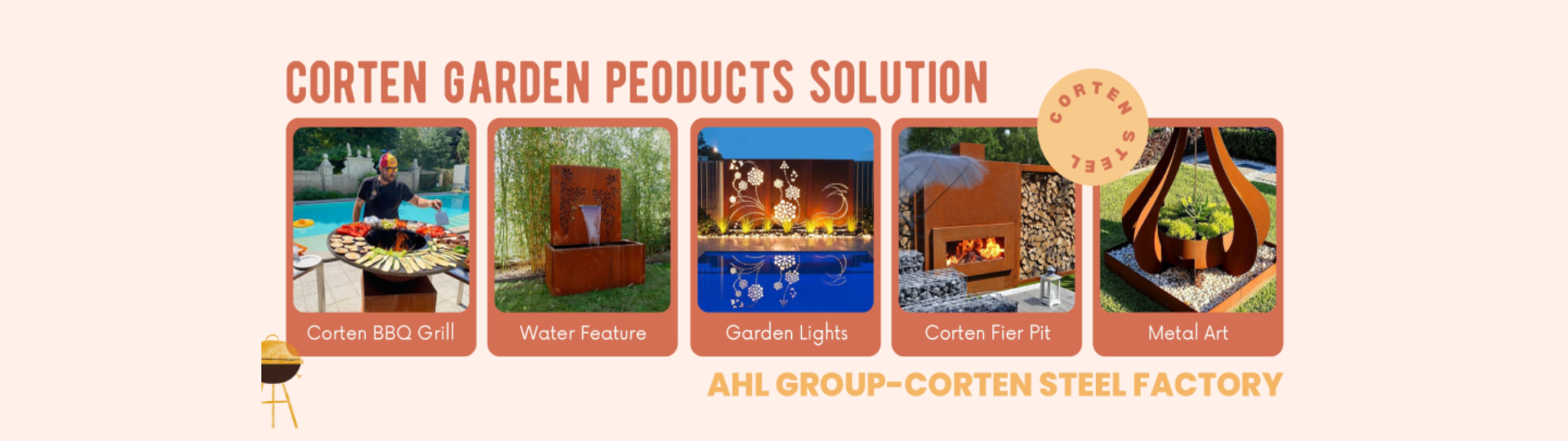
AHL offers a complete suite of weathering steel outdoor landscape products, including custom planters, laser-cut privacy screens, courtyard edging, tree surrounds, water features, fire pits, lounge seating, and integrated lighting systems. Products made from the same material, using the same craftsmanship, and featuring the same color palette eliminate issues such as a patchwork appearance and inconsistent textures.
2. Comprehensive Customization to Suit Any Site
We support personalized customization, including screen patterns, aperture sizes, planter shapes, embedded lighting structures, and brand logo engraving. We provide one-on-one, tailor-made design solutions based on garden dimensions, wind direction, lighting conditions, decor style, and commercial needs, ensuring a perfect fit for any setting.
3. Comprehensive Professional Technical Support
From initial site surveys, privacy and sightline analysis, and layout planning, through mid-phase structural design, drainage solutions, and lighting ratios, to post-installation guidance and after-sales maintenance, AHL provides end-to-end professional technical services. We empower designers, property owners, and contractors to efficiently bring high-quality weathering steel courtyard landscapes to life.
4. Customization Consultation
Looking to create a weathering steel outdoor space that combines privacy, texture, ambiance, and low-maintenance features? Contact AHL to receive a customized, all-in-one solution featuring planters, screens, and lighting.
Frequently Asked Questions (FAQ)
Q1: How Long Does It Take for Weathering Steel to form a Stable Rust-Resistant Layer?
Under normal outdoor conditions with alternating dry and wet periods, a stable, dense oxide protective layer will form within 6–9 months. No subsequent painting or maintenance is required, and the texture becomes more refined with use.
Q2: Can Corten Steel Be Used In Humid Environments Such As Around Swimming Pools or At the Beach?
Yes. Weathering steel offers excellent corrosion resistance and moisture resistance, making it suitable for swimming pools and coastal areas. As long as proper drainage is ensured and the steel is periodically rinsed with clean water, it will remain stable and durable over the long term.
Q3: What Type of Lighting Is Best Suited for Corten Steel Landscaping?
Prioritize low-voltage LED fixtures with warm white light (2700K–3000K), as they best bring out the sophisticated texture of weathering steel’s warm brown rust color while creating a soft, non-glare ambiance.
Q4: Do Corten Steel Planters Require Special Drainage?
Yes. Drainage holes must be provided, and a drainage layer must be installed to prevent waterlogging and root rot, while also protecting the bottom of the steel from prolonged immersion to extend its service life.
Q5: Is the Long-Term Maintenance of a Weathering Steel Garden a Hassle?
Maintenance is minimal. The steel requires no anti-rust coating; simply trim the plants regularly and clear the drainage channels. This makes it ideal for long-term use in busy households and commercial spaces.
Create a Complete Corten Garden Design
The combination of corten steel planters, laser-cut screens, and professional lighting redefines the design logic of modern outdoor gardens: screens shape the spatial structure, greenery and planters soften hard landscaping, and lighting creates an atmospheric ambiance at night.
This integrated solution addresses the pain points of traditional gardens—insufficient privacy, disorganized layouts, a disconnect between daytime and nighttime aesthetics, and cumbersome maintenance. Whether for small apartment balconies, detached villa gardens, commercial entrances, or poolside landscapes, we create a unique outdoor space that remains visually appealing year-round, exudes a sense of sophistication, and is built to last.
With a unified, proven, and low-maintenance weathering steel landscaping system, your courtyard will be elegant and well-organized by day and brimming with ambiance by night.
Back

 Fill In The Inquiry