

| Application | Suitable Uses | Key Benefits | Important Considerations |
|---|---|---|---|
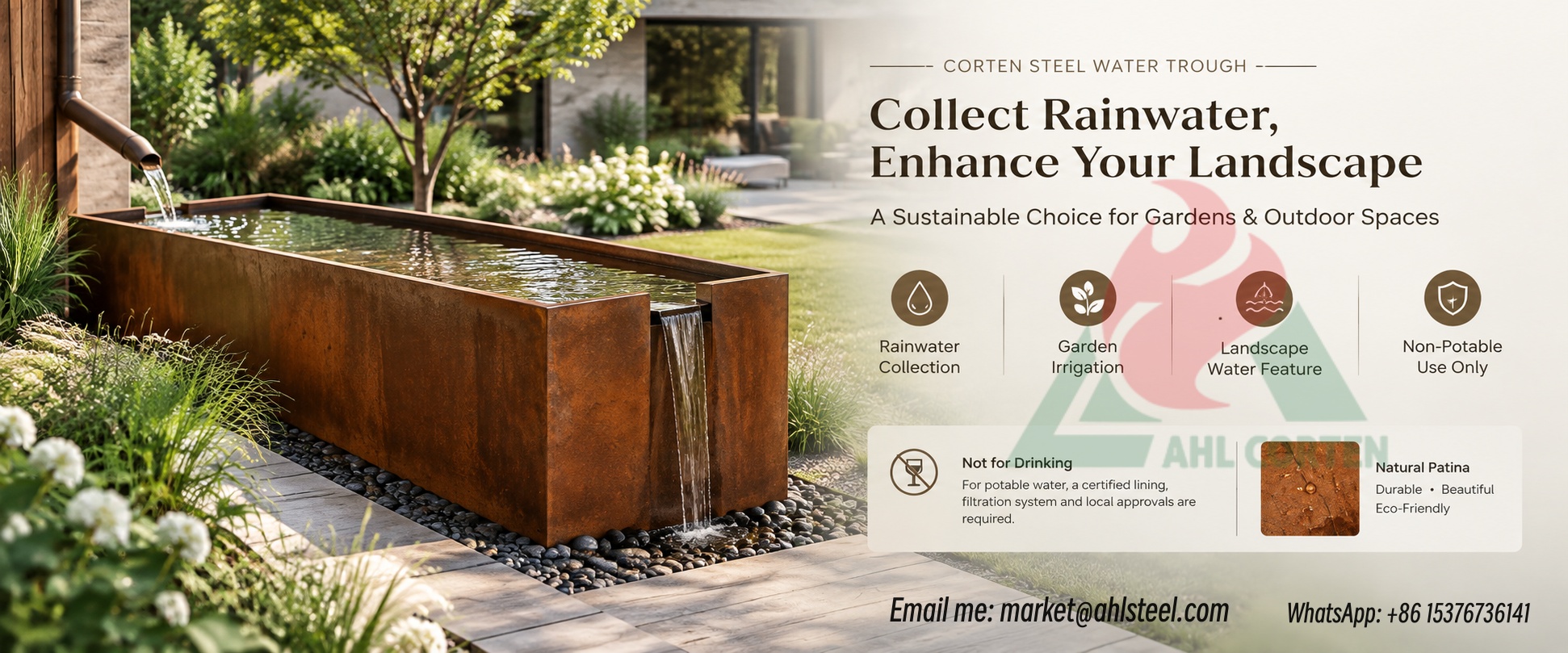
| Garden Irrigation | Ornamental plants, lawns, shrubs, trees, flower beds, landscaped areas, and non-edible plants | Stores rainwater while adding a decorative landscape element | Use for non-edible horticulture unless water quality is tested; include drainage, filtration, and overflow control |
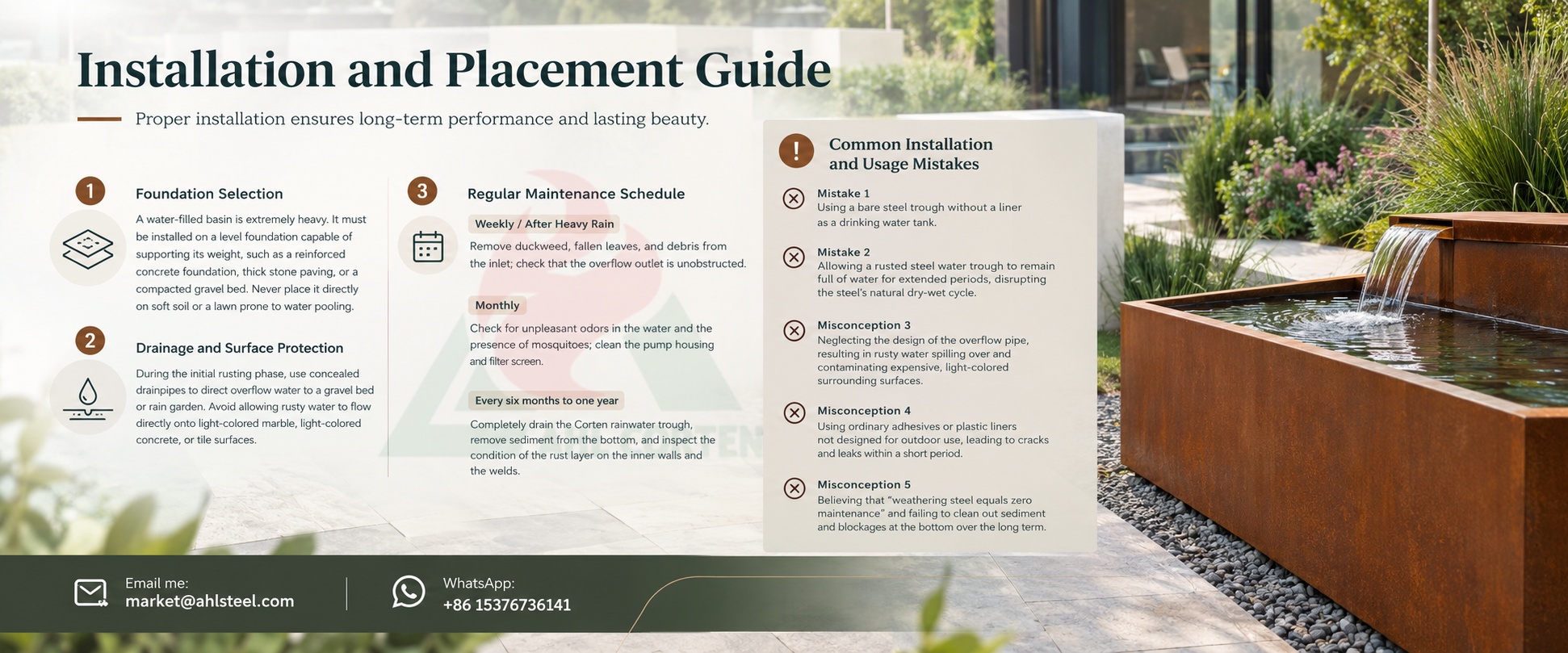
| Decorative Rainwater Basin | Collection beneath eaves, rain chains, or downspouts | Creates a visual water feature and complements plants, stone, timber, and concrete | Direct overflow safely away from buildings and light-coloured paving; remove debris regularly |
| Courtyard Pond | Small garden ponds and reflective water areas | Adds depth, movement, and a strong architectural focal point | Use an internal liner, safe edges, proper drainage, and regular cleaning |
| Recirculating Water Feature | Small fountains, water walls, and circulating troughs | Provides soothing water sounds and improves courtyard ambience | Install a pump, filter, inspection access, and controlled water-level system |
| Linear Water Feature | Modern courtyards, pathways, entrances, and commercial landscapes | Creates a clean architectural line and guides movement through the space | Ensure the base is level and include overflow, drainage, and maintenance access |
| Rainwater Display Installation | Decorative roof runoff systems and landscape focal points | Turning rainfall into an attractive visual experience | Plan the inlet, splash control, overflow path, and nearby surface protection |
| Ecological Rain Garden | Rain gardens, planted drainage zones, and sustainable landscapes | Slows runoff and supports water-sensitive landscape design | Use suitable plants, permeable ground, overflow protection, and sediment removal |
| Wildlife Watering Station | Bird and wildlife drinking areas | Provides water while adding natural character to the garden | Keep water clean, control algae and mosquitoes, and provide safe wildlife access |
| Temporary Rainwater Storage | High-rainfall areas and heavy storm events | Temporarily slows runoff before it reaches walls, paving, soil, or drainage systems | Calculate capacity, provide emergency overflow, and prevent uncontrolled discharge near foundations |
| Intended Use | Suitability | Recommendations |
|---|---|---|
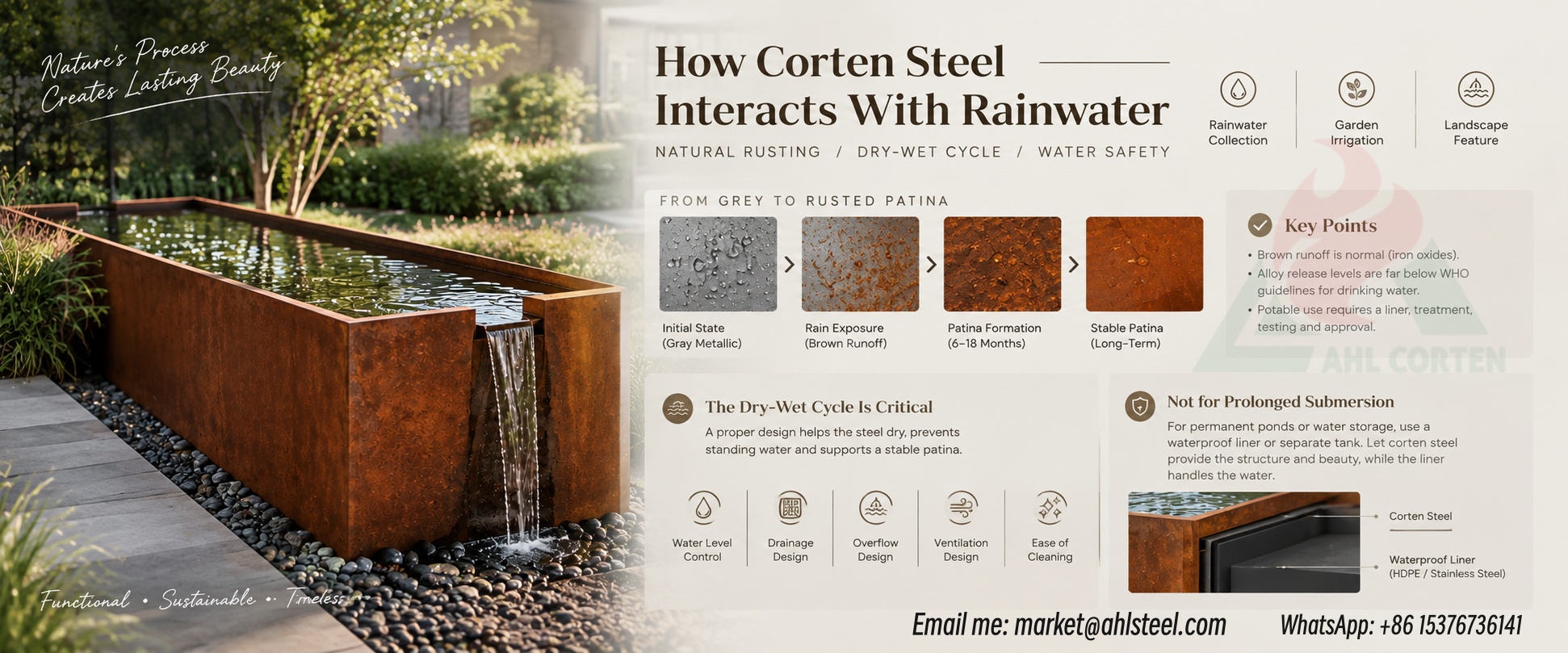
| Watering Ornamental Plants and Lawns | Suitable | Install filtration, drainage, and overflow systems. |
| Decorative Ponds and Water Features | Suitable | Use an internal liner, circulation system, or regular drainage and cleaning. |
| Wildlife Watering Stations | Suitable with Caution | Keep the water clean and shallow, and replace it regularly. |
| Temporary Rainwater Storage | Suitable | Calculate the required capacity and provide a safe emergency overflow route. |
| Cleaning Garden Tools and Outdoor Surfaces | Suitable | Clearly label the system as non-potable water. |
| Irrigating Edible Plants | Use with Caution | Consider an internal liner and apply water directly to the soil rather than onto edible plant parts. |
| Drinking-Water Storage | Not Suitable as an Exposed Trough | Use a potable-water-certified tank or a certified liner system. |
| Cooking, Bathing, or Food Preparation | Not Suitable as an Exposed Trough | Requires complete treatment, water testing, and relevant regulatory approval. |
All outlets, hose connections, taps, and storage facilities should be clearly labelled:
Clear labelling helps prevent confusion with drinking-water systems and supports safer rainwater use.
| Comparison Factor | Corten Steel Trough | Dedicated Rainwater Tank |
|---|---|---|
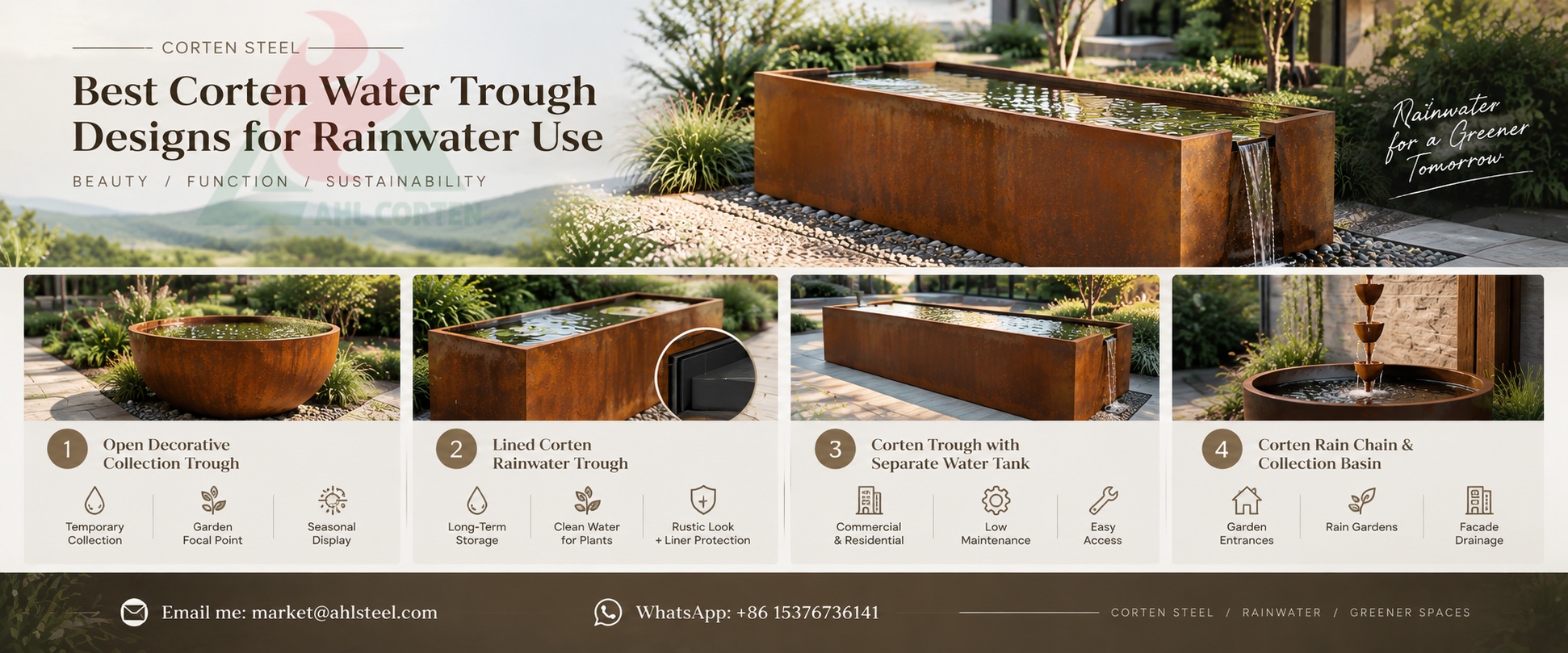
| Main Purpose | Landscape features and limited rainwater collection | Long-term water storage for household or irrigation use |
| Visual Appeal | High architectural value; integral part of garden design | Usually more utilitarian; often hidden or screened |
| Potable-Water Suitability | Requires specialist liners, treatment and certification; not inherently designed for drinking water | More options specifically designed and certified for potable storage (e.g. polyethylene, fibreglass, lined steel) |
| Rust Runoff Risk | Possible during early weathering; must be managed with drainage and detailing | Depending on tank material; plastic and fibreglass tanks do not produce rust runoff |
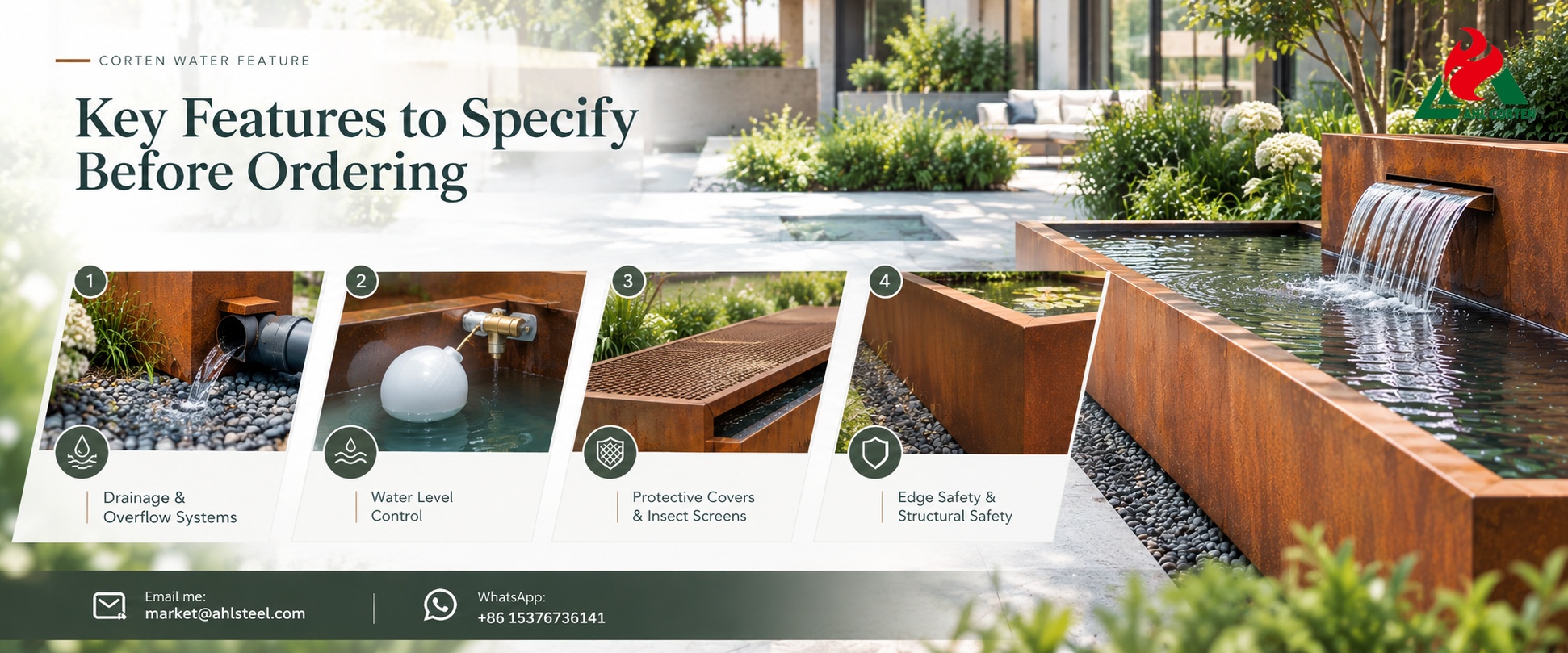
| Water-Level Control | Often custom-designed with separate pumps and controls | Typically includes integrated inlet, outlet, overflow and sometimes first-flush systems |
| Overflow Management | Must be specified and detailed by the designer | Normally built into the tank system as standard |
| Maintenance Access | Depending on fabrication; may require custom access covers | Usually purpose-designed with inspection hatches, cleaning ports and standard fittings |
| Best For | Gardens, water features, irrigation accents, decorative basins | Household or larger-scale rainwater harvesting for irrigation or potable use |
| Customisation | Very high: size, shape, pattern, integration with other Corten elements | More product-specific; customisation usually limited to size, colour and fittings |
| Cost | May be higher for bespoke fabrication and integration | Varies by capacity and material; often more cost-effective per litre of storage |

 Fill In The Inquiry