
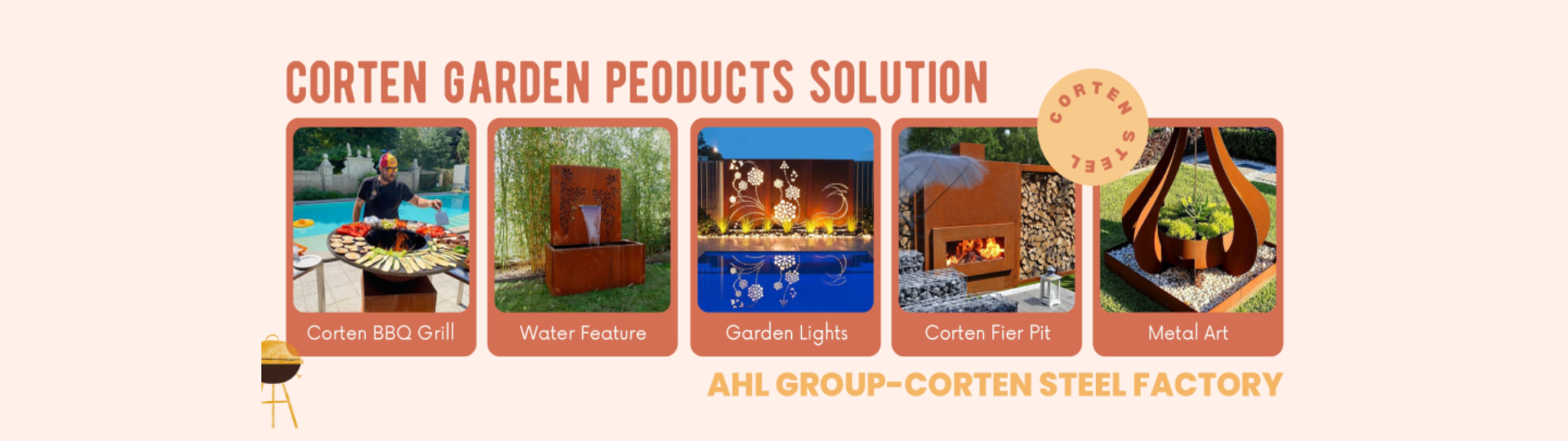
To keep your yard clean, tidy, and well-defined, a neat garden border is essential. However, the traditional edging materials used in most home gardens tend to develop problems over time, reducing both the appearance and functionality of the outdoor space.
Plastic edging can become brittle, crack, warp, fade, and suffer damage from lawn mowers after long exposure to sunlight. Wooden edging is vulnerable to moisture, rot, insects, cracking, and deformation. Gravel edging often lacks a defined outline, and rain or spreading plants can cause the material to scatter and make the border look untidy.
These recurring issues lead to frequent touch-ups and higher maintenance costs. Corten steel garden edging offers a long-lasting alternative that creates clean, stable, and visually appealing borders for lawns, flower beds, gravel paths, planting zones, and landscape features.
Thanks to its natural weathering properties, Corten steel develops a warm rust-coloured patina over time and does not require repeated painting. It provides crisp garden boundaries while adding a modern, natural, and durable finish to outdoor spaces.
This guide explains how to select, measure, prepare, and install Corten steel garden edging. It also includes design ideas, installation tips, common mistakes, and practical advice to help you create a professional-looking garden border.
.jpg)
Want the Latest Catalog for Corten Steel Edgings? Contact Us!
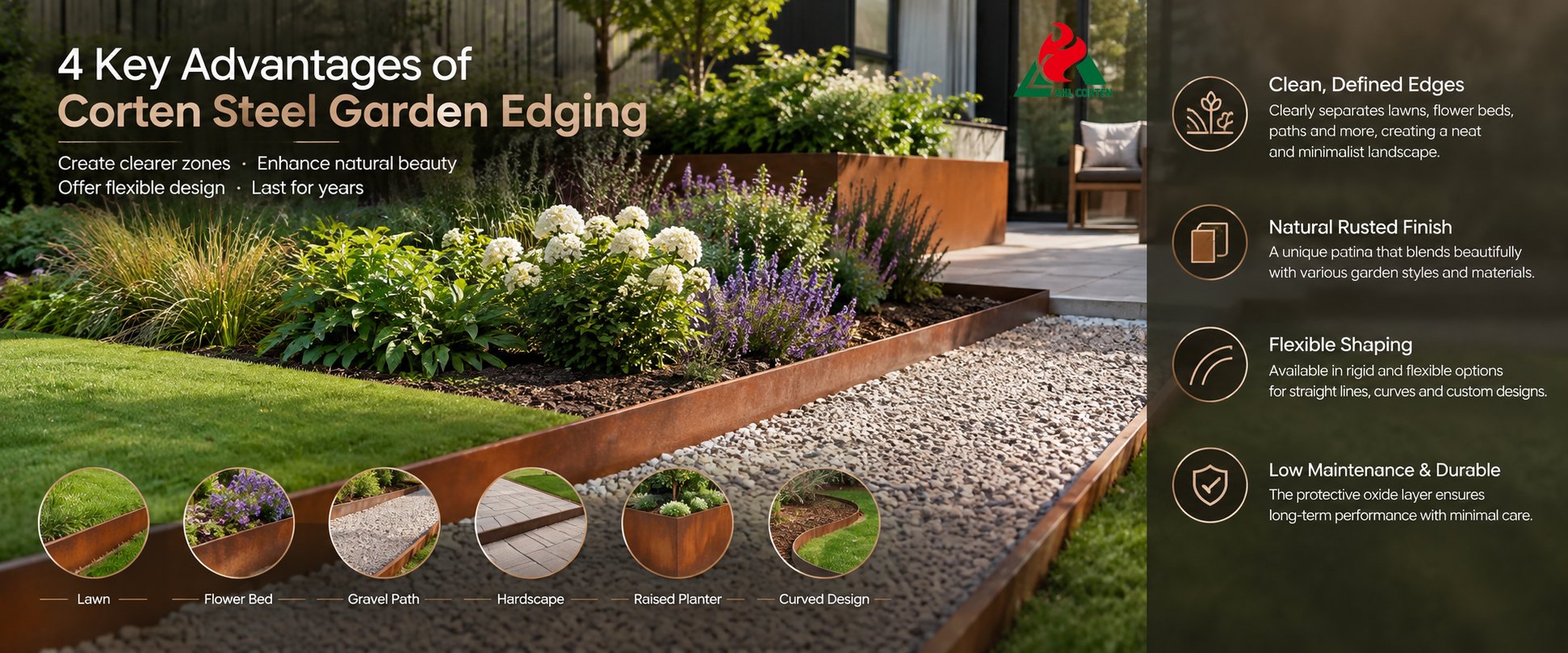
With its slim profile and clean lines, Corten steel garden edging clearly separates lawns, flower beds, gravel paths, hardscaped areas, raised planters, and planting zones. Unlike loose gravel or timber borders, it creates a precise and minimalist landscape layout.
It can also help limit the spread of grass roots into flower beds, making it easier to maintain clear boundaries and reducing the amount of routine garden maintenance required.
New weathering steel typically begins with a dark grey metallic appearance. Through repeated outdoor wet-and-dry cycles, it gradually develops a dense rust-coloured patina in warm brown and reddish-brown tones.
This natural finish gives every installation a slightly different character. It works well with gravel, natural wood, stone, concrete, brick, ornamental grasses, planting beds, and contemporary paving materials.
Corten steel edging can suit modern minimalist gardens, natural gardens, rustic landscapes, commercial courtyards, hotel gardens, parks, and residential outdoor spaces.
Corten steel edging is available in both rigid and flexible styles. Rigid panels are ideal for straight paths, sharp geometric borders, patios, and formal garden layouts. Flexible edging can be shaped into smooth curves for lawns, flower beds, winding paths, and irregular planting areas.
For tighter curves, tree rings, circular beds, and fire pit areas, pre-formed curved sections can provide a more accurate finish while reducing the risk of creases or distortion during installation.
One of the major advantages of weathering steel is its protective oxide layer. Once the rust patina stabilizes, the material generally requires little ongoing maintenance compared with painted steel, plastic edging, or timber edging.
Routine care is usually limited to removing leaves, clearing standing water, checking stakes and connectors, and ensuring drainage remains effective. This makes Corten steel edging a durable solution for long-term landscape projects.
Want a Free Quote on Corten Steel Edging? Contact us!
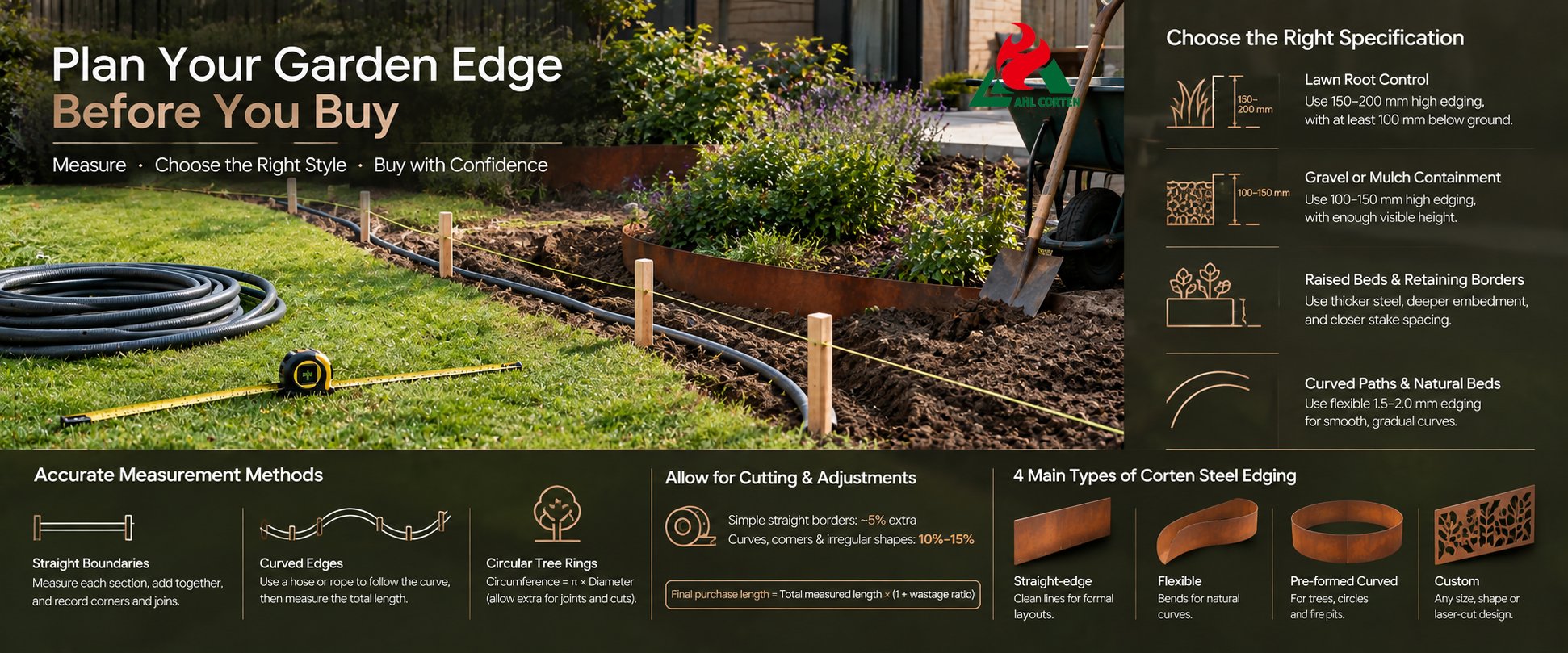
Different garden settings require different Corten steel edging specifications. Choosing the right height, thickness, and fixing method helps ensure the finished border remains stable and suitable for its intended use.
Accurate measurement helps avoid material shortages, excess waste, and unnecessary cutting. The correct method depends on whether the edging route is straight, curved, or circular.
For simple straight garden borders, allowing approximately 5% extra material is generally sensible. For layouts with several curves, corners, joints, or irregular shapes, allow approximately 10%–15% to cover cutting, joining, and on-site adjustments.
Calculation formula: Final purchase length = Total measured length × (1 + wastage ratio).
Want a Free Quote on Corten Steel Edging? Contact us!
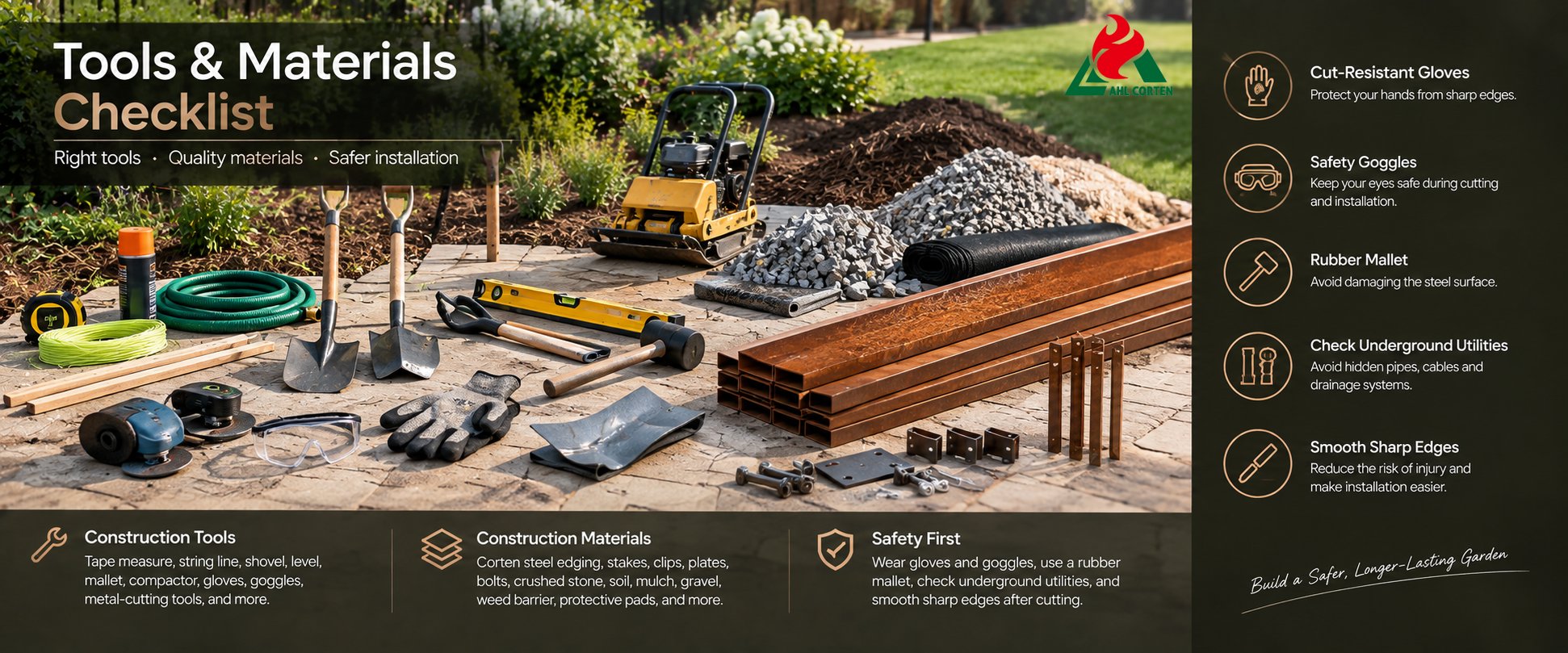
Tape measure, string line, marking spray paint, garden hose, wooden stakes, trenching shovel, spade, spirit level, rubber mallet, soil compactor, cut-resistant gloves, safety goggles, and metal-cutting tools where required.
Corten steel edging, matching steel stakes, joining clips, connection plates, bolts where required; crushed stone base material, soil, mulch, decorative gravel, weed barrier fabric, and protective pads for nearby paving.
Corten steel may have sharp edges after cutting. Always wear cut-resistant gloves and safety goggles when handling, cutting, or installing the edging.
Avoid striking steel panels directly with a metal hammer. Use a rubber mallet or a timber block to protect the steel surface and reduce the risk of dents or deformation.
Check for underground utility lines, irrigation pipes, drainage systems, electrical cables, and other buried services before digging.
After cutting any steel sections, smooth sharp edges with a suitable tool to reduce the risk of injury during installation and future garden maintenance.
Ready to Create a Professional Corten Steel Garden Border? Contact us!
Before you begin: Wear gloves and safety glasses when handling metal edging. Check your layout, edging height, ground conditions, drainage direction, stakes, connectors, and installation tools before starting.
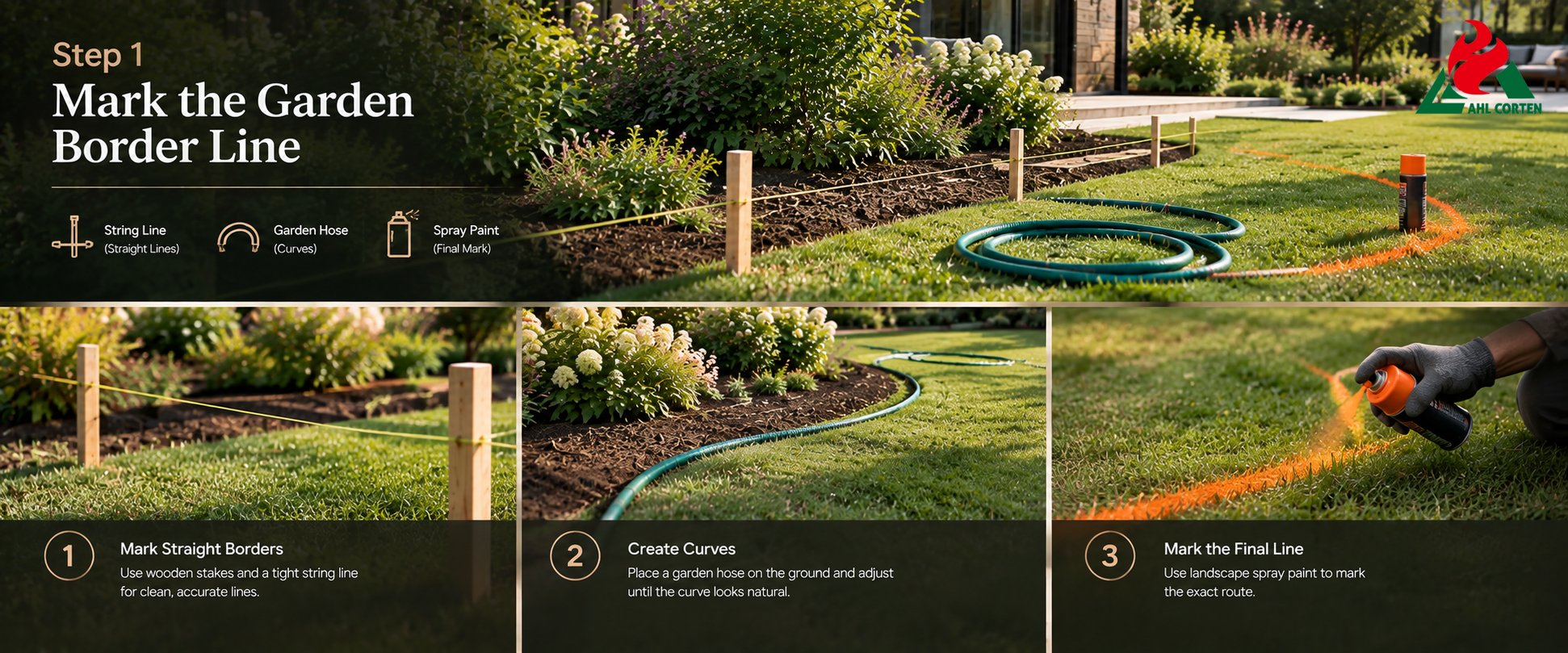
Start by marking the exact route for your steel garden edging. For straight borders, use wooden stakes and a tightly stretched string line to keep the layout neat and accurate. For curved flower beds or lawn edges, place a garden hose on the ground and adjust it until the curve looks natural. Once you are satisfied, mark the final route with landscape spray paint.
View the outline from key areas such as the patio, garden entrance, pathway, or seating area. Make small adjustments before digging so the finished Corten border looks balanced and visually appealing.
Want to Get Your Own Corten Edging? Click to Customize!
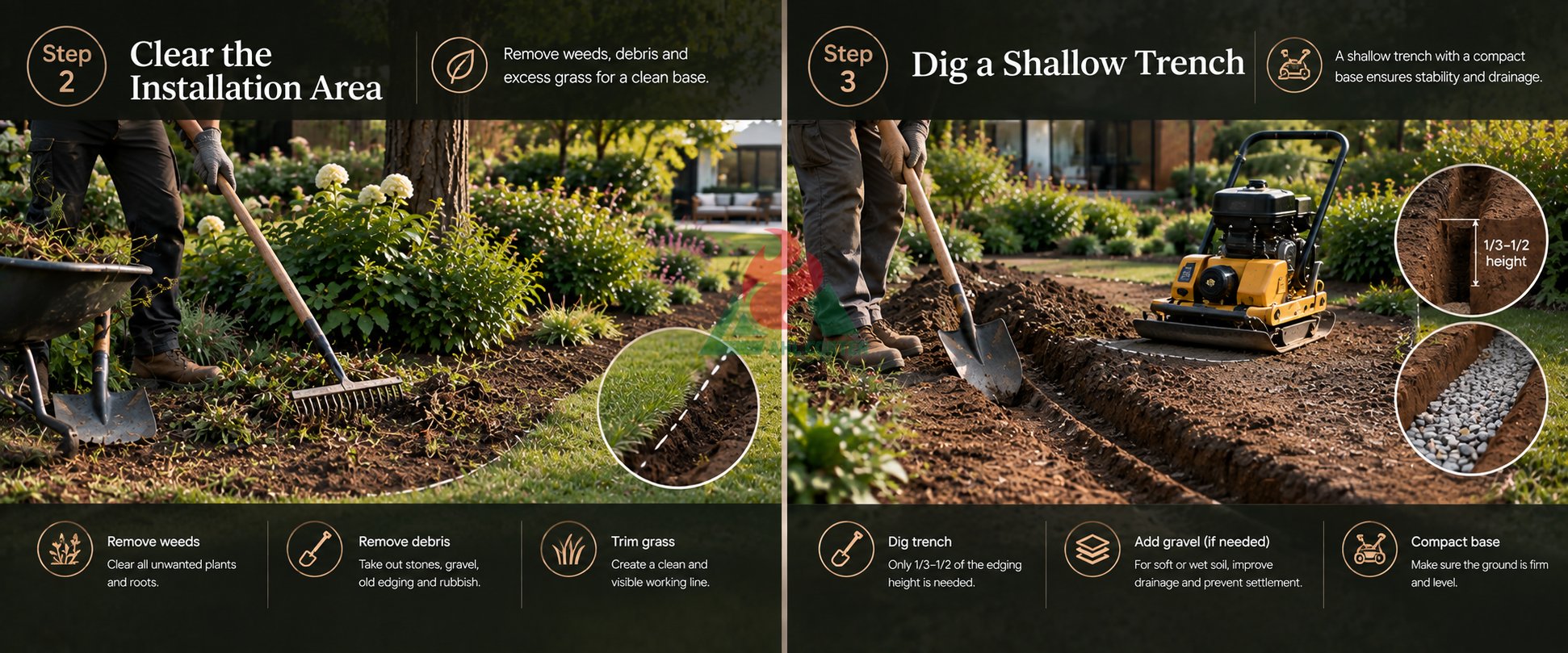
Remove weeds, loose soil, stones, gravel, old edging, roots, and garden debris along the marked route. Trim excess grass to create a clean working line. A well-prepared path makes it easier to install the edging straight, level, and securely.
If you encounter major tree roots, avoid cutting them where possible. Instead, make a small adjustment to the edging route to protect the tree and maintain a healthy root system.
Dig a narrow trench along the marked line. In most garden edging projects, the trench only needs to be deep enough to bury approximately one-third to one-half of the Corten steel edging height. This provides stability while leaving enough steel visible above ground for a crisp landscape finish.
Compact the trench base firmly. In soft, wet, or loose soil, add a thin gravel base layer before installation to improve drainage, reduce settlement, and help prevent the edging from leaning over time.
Want to Get Your Own Corten Edging? Click to Customize!
Begin placing the Corten steel edging at a fixed point, such as a garden corner, pathway end, wall edge, or straight boundary. Position each section in the trench and use a spirit level to check that the edging is vertical and that the top edge remains consistent in height.
Take time to align the first section correctly. It acts as the reference point for the remaining edging, helping you create a smooth, level, and professional garden border.
Join each additional steel lawn edging section using the supplied connection plates, clips, bolts, or joining structures. Secure the sections lightly at first so you can still make small alignment adjustments along the complete border line.
Once the full layout is level and correctly positioned, tighten all fasteners. Keep each joint flat and aligned to prevent visible gaps, uneven top lines, or weak connection points.
For curved garden borders, bend flexible Corten steel edging slowly and gradually along the marked route. Avoid forcing a sharp bend in one location, as this may create permanent creases, twisting, or deformation.
Tight curves require more support than straight sections. Use closer stake spacing along curves to reduce spring-back and keep the edging securely in its intended shape. For very tight circles or precise arcs, consider pre-formed Corten edging sections.
Secure the edging with matching metal stakes, pegs, or ground anchors. For straight sections, use stake spacing of approximately 900–1,200 mm. For curves, corners, soft ground, or high edging, reduce the spacing to approximately 450–600 mm.
Install stakes on the inner side of the garden bed where possible. Ensure each stake sits below the top edge of the steel so it does not interfere with mowing, walking, or the clean visual line of the border.
Backfill both sides of the edging in layers using soil, gravel, crushed stone, or the material required for your garden design. Compact each layer gently but firmly to remove empty spaces and prevent the edging from moving under soil pressure.
Compacting both sides evenly is important. Filling only one side first may push the Corten edging out of alignment or cause it to lean.
Before completing the project, inspect the entire border. Check that the edging is level, vertical, secure, and smooth along straight lines and curves. Confirm that rainwater can drain away naturally and does not collect against the steel edging.
Good drainage is essential for long-term landscape performance. Adjust the surrounding soil or gravel slope if necessary so water flows away from the garden edge instead of creating damp areas.
Complete your garden border by adding bark mulch, decorative gravel, planting soil, flowers, shrubs, ornamental grasses, or neatly trimmed lawn. Keep the finished surface slightly below the top edge of the Corten steel to preserve a clean and crisp border line.
New Corten steel develops its natural rust patina over time. During the early weathering stage, protect nearby light-coloured paving, stone, or concrete from rust runoff by directing drainage away from sensitive surfaces or using temporary ground protection.
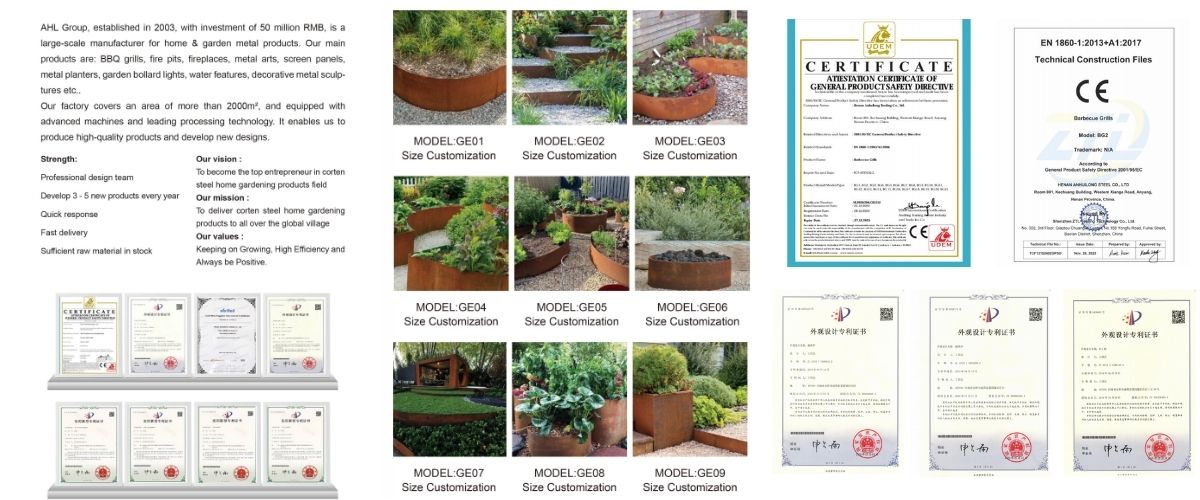
Choose AHL Corten steel garden edging for durable, modern, and low-maintenance landscape borders. Contact our team for standard edging sizes, curved sections, tree rings, matching stakes, custom dimensions, and a tailored quotation for your garden or commercial project.
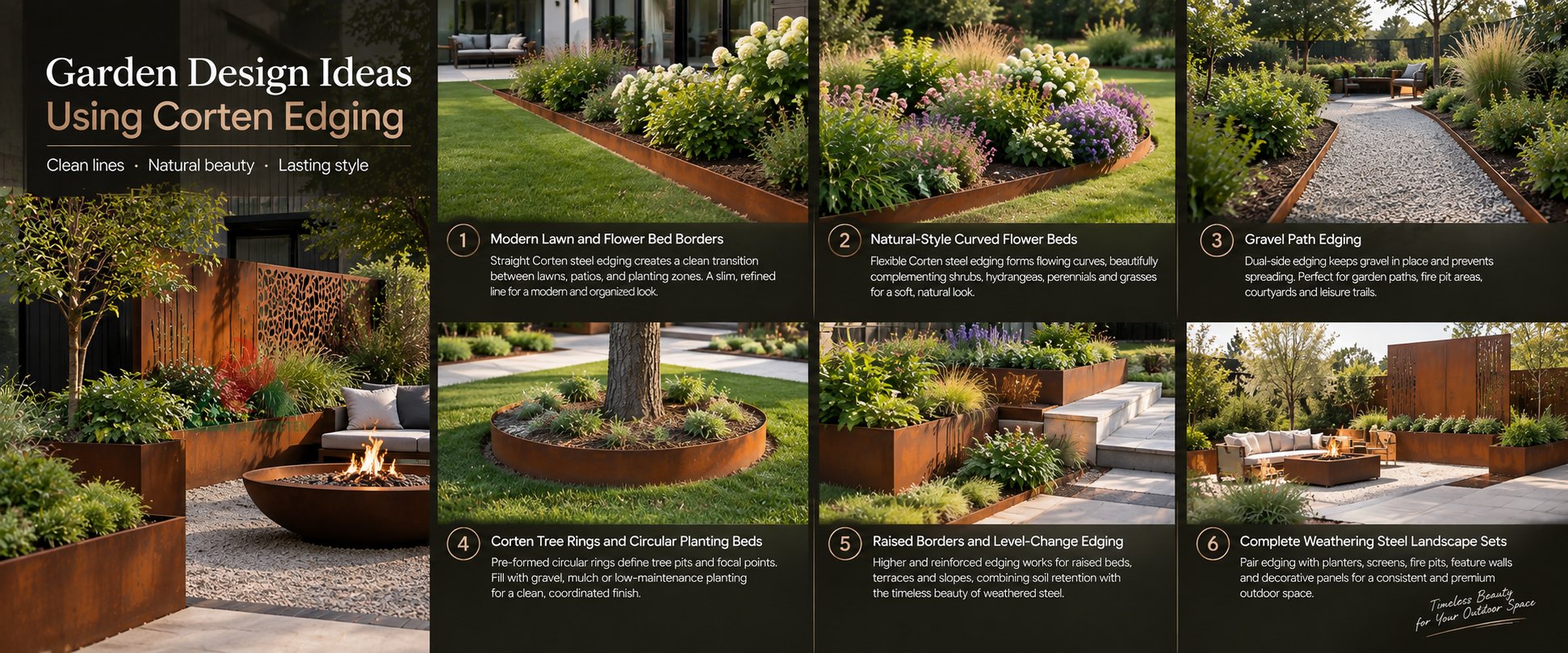
Straight Corten steel lawn edging separates lawns from flower beds, patios, planting zones, and gravel surfaces. The slim metal line creates a refined transition between different materials and helps establish a modern, organised landscape design.
Pair Corten edging with grey paving, dark bark mulch, ornamental grasses, low-maintenance shrubs, and clean lawn edges for a contemporary residential garden, entryway landscape, patio, or commercial courtyard.
Flexible Corten steel edging can create flowing flower beds with gentle curves. When paired with shrubs, hydrangeas, perennial flowers, grasses, and natural mulch, the warm steel finish contrasts beautifully with soft green planting.
Installing Corten edging on both sides of a gravel path helps contain loose stone and prevents gravel from spreading into lawns or planting beds. This creates neat walkways for gardens, fire pit areas, courtyards, and leisure trails.
Pre-formed circular weathering steel tree rings can define tree pits, circular flower beds, and planted focal points. Fill the interior with decorative gravel, mulch, groundcover plants, or low-maintenance planting for a clean and coordinated result.
Higher and reinforced Corten edging can be used for raised flower beds, terraced gardens, sloped sites, and level transitions. It combines soil-retaining function with the distinctive appearance of weathered steel.
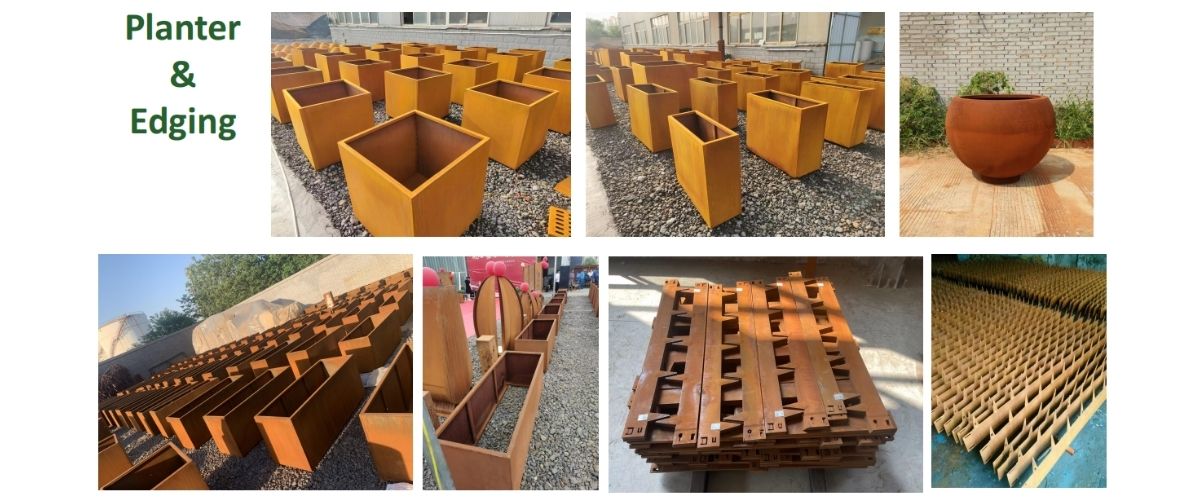
Pair garden edging with Corten steel planters, screens, fire pits, feature walls, and decorative panels. Using the same material throughout the landscape can create a consistent and premium visual identity across the entire outdoor space.
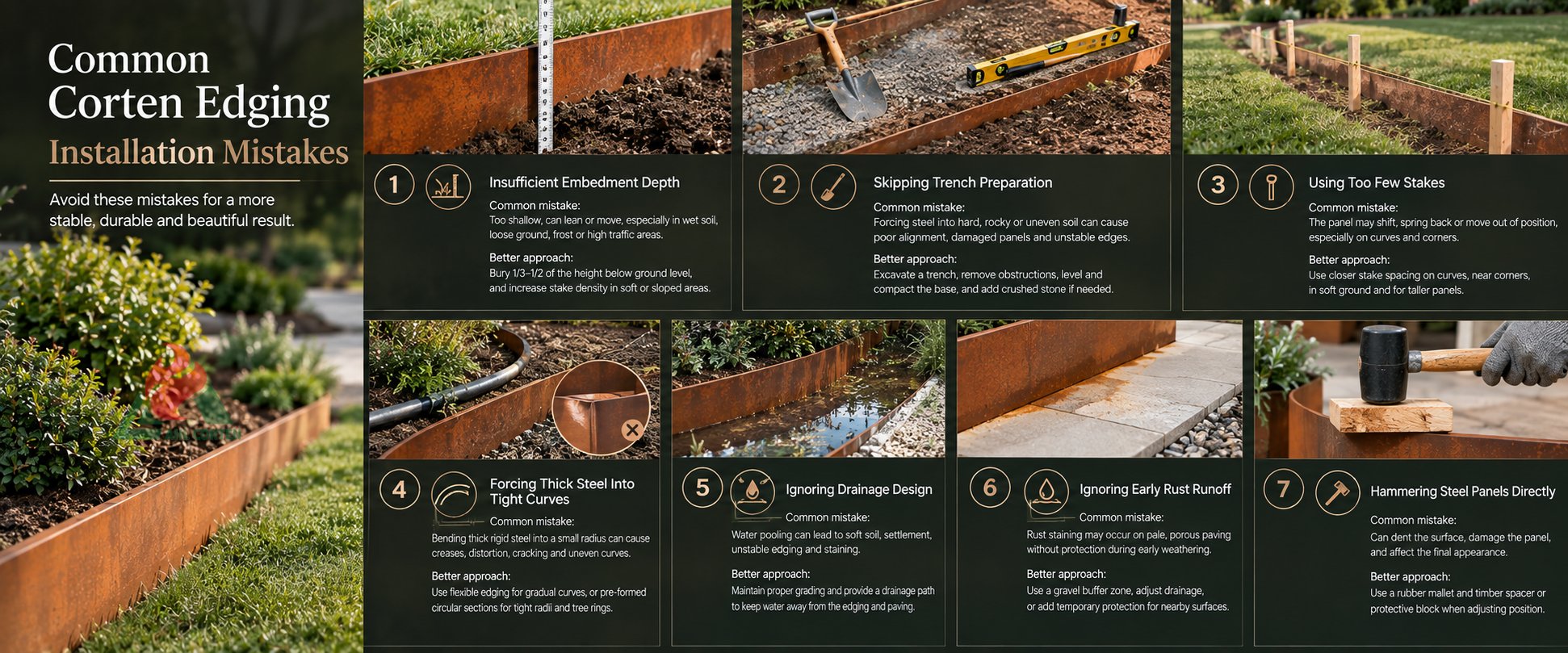
Common mistake: Installing the steel too shallowly can result in leaning, movement, and instability over time, especially in wet soil, loose ground, frost-prone areas, or locations exposed to foot traffic.
Better approach: Install approximately one-third to one-half of the edging height below ground level where appropriate. Increase the embedment depth and stake density in soft ground, sloped areas, or raised border applications.
Common mistake: Forcing steel panels directly into hard, rocky, or uneven soil can cause poor alignment, damaged panels, unstable connections, and an inconsistent top edge.
Better approach: Excavate a narrow trench, remove obstructions, level the base, and compact the soil before placing the edging. Add crushed stone where drainage or base stability requires improvement.
Common mistake: Fixing only a few points along a long edging section can allow the panel to shift, spring back, or move out of position, particularly on curves and corners.
Better approach: Use closer stake spacing on curved sections, near corners, in soft ground, and for taller edging panels.
Common mistake: Attempting to bend thick rigid steel into a small radius can create creases, distortion, cracking, and uneven curves.
Better approach: Use flexible edging for gradual curves, or select pre-formed circular and curved sections for tight radii, tree rings, and circular beds.
Common mistake: Allowing water to pool along the garden edge can lead to soft soil, settlement, unstable edging, and staining on adjacent surfaces.
Better approach: Maintain suitable grading around the border and provide a drainage path so water flows away from the edging and surrounding paved areas.
Common mistake: Installing new Corten steel directly next to pale, porous paving without protecting it from early weathering runoff may result in rust staining.
Better approach: Use a gravel buffer zone, adjust drainage direction, or use temporary protection for nearby light-coloured stone, concrete, or paving during the initial weathering stage.
Common mistake: Striking the edging directly with a metal hammer may dent the surface, damage the panel, and affect the final appearance.
Better approach: Use a rubber mallet and a timber spacer or protective block when adjusting the height or position of the steel edging.
| Project Type | Best Option | Why |
|---|---|---|
| Short, Straight Flower Bed Edge | DIY | The layout is simple, and basic garden tools are usually sufficient for accurate installation. |
| Gentle Curved Lawn Edge | DIY or Assisted Installation | Flexible steel edging can be shaped gradually and fixed along smooth curves with suitable stake spacing. |
| Circular Tree Ring | Pre-Formed Ring or DIY Kit | Pre-formed curved sections provide faster installation and a more accurate circular finish. |
| High Edging or Raised Border | Professional Installation | Higher borders need stronger anchoring, appropriate embedment depth, drainage, and a stable base. |
| Long Commercial Pathway | Professional Installation | Professional fitting helps maintain consistent levels, drainage, straight alignment, and clean finishing details. |
| Complex Curves or Custom Geometry | Custom Fabrication and Professional Fitting | Professional planning helps reduce material waste, uneven curves, visible joints, and installation errors. |
AHL offers outdoor metal landscape border options for straight borders, flexible curves, circular tree rings, raised planting beds, landscape features, and commercial outdoor projects.
Matching stakes, connectors, joining clips, corner fittings, and other accessories can help create cleaner joins and simplify installation. Choosing compatible accessories also improves alignment and visual consistency.
Custom options can include different heights, thicknesses, radii, diameters, lengths, corner shapes, laser-cut patterns, and larger landscape components for specialised projects.
Corten garden edging can be combined with weathering steel planters, screens, fire pits, retaining borders, decorative panels, and feature walls to create a coordinated outdoor design.
For larger or custom projects, accurate measurements, layout planning, material selection, and installation guidance can help reduce waste, avoid installation issues, and ensure the finished edging suits the requirements of the site.
For standard garden edging, installing approximately one-third to one-half of the panel height below ground level generally provides suitable stability. For soft soil, slopes, raised beds, or frost-prone locations, a deeper installation and closer stake spacing may be required.
Yes. Flexible steel edging can be bent gradually to create smooth natural curves. For small-radius circles, tree pits, or precise arcs, pre-formed curved sections are usually the better option.
For straight sections, stake spacing of approximately 900–1,200 mm is commonly used. For curves, corners, soft ground, and taller edging, spacing of approximately 450–600 mm provides additional support.
Standard garden edging usually does not require a concrete foundation. A properly prepared trench, compacted base, suitable drainage, and correctly spaced stakes are often sufficient. Higher retaining borders or unusual soil conditions may require a more engineered solution.
During the initial weathering stage, Corten steel can produce rust-coloured runoff. This may stain pale, porous paving such as light concrete or natural stone. Use suitable drainage, gravel buffers, or temporary protection where required.
Yes. Simple straight borders and gentle curves can often be installed by beginners using basic garden tools and careful preparation. For raised borders, long commercial runs, complex geometry, or tight curves, professional support may provide a more accurate and durable result.
With clean lines, a naturally weathered finish, low maintenance requirements, and flexible design options, Corten steel edging is an effective alternative to plastic, timber, and loose gravel borders.
By planning the layout carefully, measuring accurately, preparing the trench correctly, using suitable stakes, and managing drainage, you can create a neat and long-lasting garden border that improves the appearance and structure of your outdoor space.
Whether you need straight lawn edging, natural curved borders, gravel path containment, circular tree rings, raised planting beds, or custom landscape components, Corten steel can provide a durable and visually distinctive solution.
.jpg)
Contact AHL for standard Corten steel garden edging, flexible sections, curved tree rings, matching stakes, customised dimensions, and factory-direct support for residential and commercial landscape projects.
 Fill In The Inquiry