How Do You Clean Ash From a Corten Steel Fire Pit?
Date:2026.06.11
Share to:
Corten steel fire pits are iconic landscape features in upscale gardens. With their reddish-brown patina formed through natural oxidation, they create a unique vintage industrial aesthetic that grows more charming with use.
Many garden owners share the same dilemma: after a bonfire gathering, should they clean up the large amount of ash left behind? Will rinsing it directly with water damage the steel or destroy the precious protective rust layer?
Most people mistakenly believe that ashes are merely ordinary debris that affects aesthetics. In fact, long-term accumulation of ashes is a hidden killer that quietly shortens the lifespan of weathering steel fire pits, impairs combustion efficiency, and causes steel corrosion.
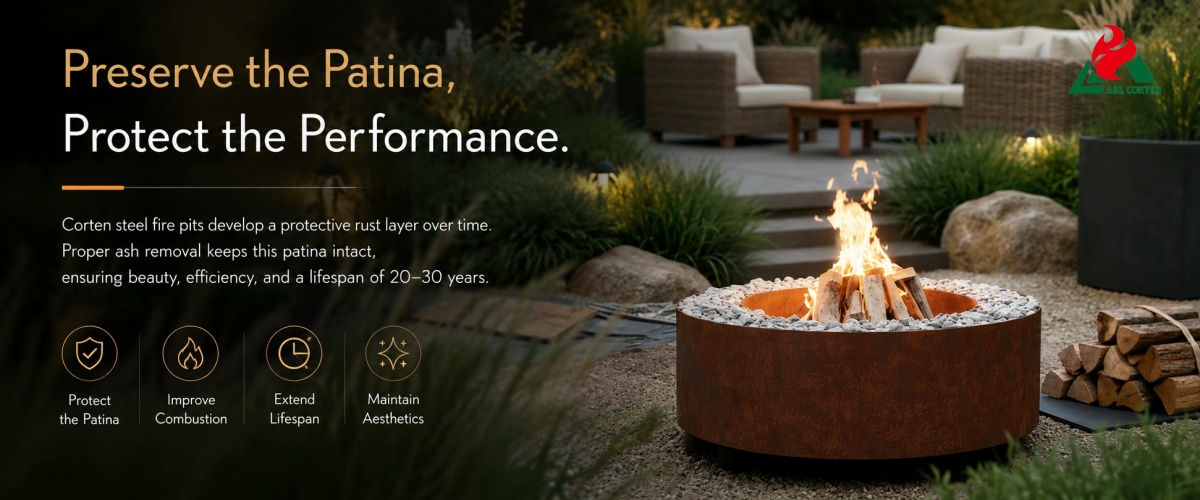
Mastering a scientific, non-damaging ash removal method not only preserves the unique aged patina of corten steel but also ensures the fire pit remains in stable use for 20–30 years, maintaining optimal combustion performance over the long term.
The Key Reason Outdoor Corten Fire Pits Require a Dedicated Cleaning Solution
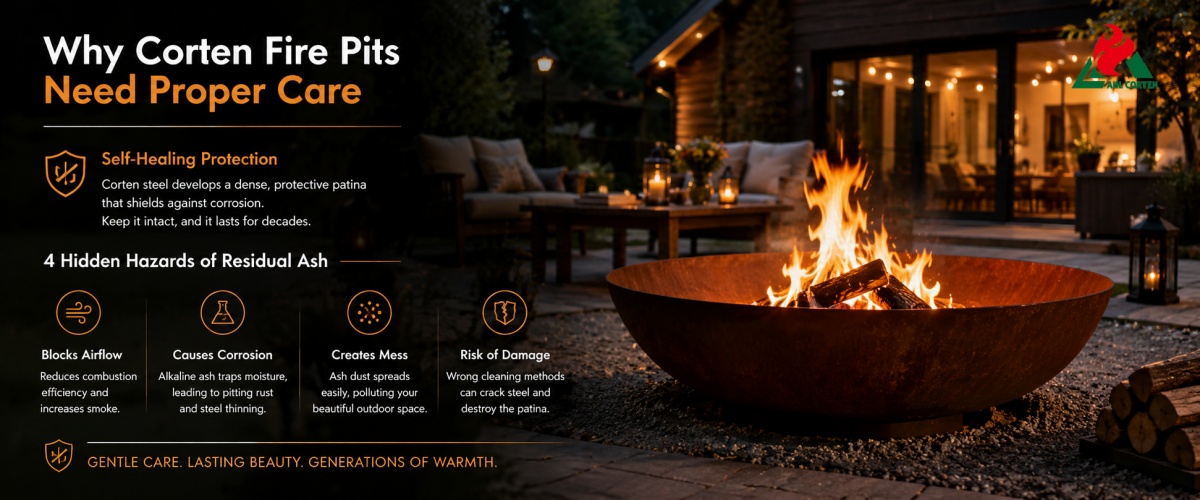
The Unique Self-Healing Protection Mechanism of Corten Steel
The biggest difference between weathering steel and ordinary carbon steel is its naturally formed, self-healing, dense rust layer (patina). Alloy elements in the steel, such as copper, chromium, and nickel, form a protective film that adheres tightly to the base material when exposed to the natural cycle of wet and dry conditions.
This special patina acts like a suit of metal armor, isolating the steel from air and moisture to prevent deep corrosion. Unlike the loose, flaking rust found on ordinary steel, this patina remains intact, making it the key to weathering steel’s long-term durability. The durability of weathering steel fire pit relies entirely on the stable natural cycles of dry and wet conditions; rough cleaning or stagnant, damp conditions can completely disrupt this balance.
4 Hidden Hazards of Residual Ash
1. Blocking Air Channels, Leading to a Significant Drop in Combustion Efficiency
Accumulated ash can block the air intake channels at the bottom of the rusted steel fire pit, disrupting the chimney convection effect necessary for combustion. This results in difficulty relighting the fire, weak flames, and thick smoke, which not only affects the heating experience but also leads to fuel waste.
2. Alkaline Chemical Corrosion Causing Pitted Rust Penetration
Wood ash is highly hygroscopic and continuously absorbs dew, rainwater, and moisture from the air. When damp, wood ash releases strong alkaline substances such as potassium carbonate, creating a localized highly alkaline environment at the bottom of the fire pit. This environment disrupts the micro-oxidation balance of corten steel, triggering localized electrochemical corrosion at vulnerable points like welds and edges. Over time, this leads to thinning of the steel plate and perforation.
3. Dust Pollution Compromises Yard Cleanliness
Residual fine ash is lightweight and easily scattered by strong winds, contaminating surrounding lawns, stone pavers, and outdoor furniture, creating an additional cleaning burden.
Pouring cold water directly onto a hot fire pit table or scrubbing with a wire brush can cause the steel to crack due to thermal expansion and contraction, leading to the peeling of the protective layer. This strips the weathering steel of its self-healing ability and accelerates aging and deterioration.
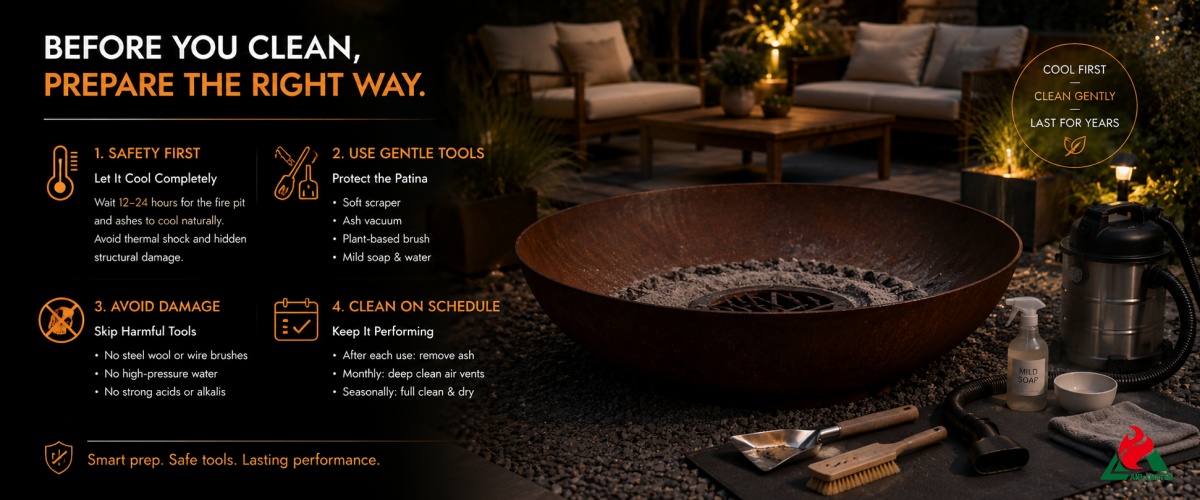
Regardless of the cleaning method used, you must wait for the metal fire pit and ashes to cool completely to room temperature naturally; it is recommended to let it sit for 12–24 hours. Direct contact between hot steel and cold water causes severe thermal shock, leading to steel plate deformation, micro-cracks in welds, and structural stress imbalance. This damage is invisible to the naked eye and cannot be repaired.
2. Recommended Cleaning Tools (Non-Destructive Use Only)
All tools are selected based on the core standard of “not scratching the protective patina” and are suitable for the unique properties of corten steel: Soft plastic or soft metal scraper: Gently removes large chunks of charcoal and thick ash; has no sharp edges to damage the steel surface Industrial-grade ash vacuum cleaner: Removes micron-level fine ash and thoroughly eliminates corrosion sources hidden in air ducts and crevices Plant-based soft bristle brushes (sisal/palm brushes): Gently remove ash and grime adhering to interior walls without causing abrasion Room-temperature water + neutral soap solution: Used exclusively for cleaning stubborn grease stains; gentle and free of chemical corrosion
3. High-Risk Tools Strictly Prohibited (Directly Damaging the Material)
Steel wool, wire brushes, sharp metal scrapers: Scrape away the dense protective rust layer, forcing the steel to rust aggressively again High-pressure water jets: High-pressure water jets strip away the patina and force alkaline soapy water into crevices, trapping moisture and accelerating corrosion Strong acid and alkali cleaners: Completely destroy the self-healing microenvironment of weathering steel, causing extensive chemical corrosion
Light Maintenance After Each Use: After cooling down, remove large pieces of charcoal and thick surface ash to prevent moisture buildup and caking Monthly Deep Cleaning: Every 1–2 months, thoroughly clean air ducts and fine dust from corners to ensure unobstructed airflow Seasonal Whole-House Cleaning: Before the rainy season or prolonged periods of inactivity, thoroughly remove dust and completely dry the unit to prevent corrosion caused by dampness
5-Step Non-Destructive Ash Removal Processfor Fire Pits
The AHL industrial-grade five-step cleaning method thoroughly removes ash and prevents corrosion while preserving 100% of the weathering steel’s protective layer, ensuring both its aesthetic appeal and longevity remain unaffected.
Step 1: Gently Remove Large Debris Vertically (2 minutes)
Use a soft plastic scraper to lift debris vertically, removing unburned charcoal, large wood chips, and thick ash buildup. Never scrape the bottom of the pot with lateral force. The weathering steel's protective layer is resistant to weathering but not to physical abrasion; lateral friction will scrape off the not-yet-fully-stabilized patina, causing permanent scratches.
Step 2: Vacuum Fine Alkaline Ash (3 minutes)
After removing large debris, the remaining micron-sized fine ash is the primary culprit behind moisture absorption, alkali leaching, and steel corrosion. It must be thoroughly removed using an industrial-grade ash vacuum cleaner. Do not use a household vacuum cleaner, as the fine ash will clog the filter and burn out the motor, and the residual heat may pose a fire hazard.
Step 3: Clear Ventilation Channels and Hard-to-Reach Crevices (2 minutes)
Use a soft-bristle brush to clean dust from the inner walls, seams, and bottom air intake channels of the fire pit, working from the inside out. Pay special attention to removing hardened, damp grime in corners and crevices. Ensure all ventilation channels are completely unobstructed to restore the convection effect of secondary combustion, preventing subsequent smoke and ignition difficulties.
Step 4: Lightly Remove Grease with Neutral Soap Solution (Optional)
If the interior walls of a rusted steel fire pit have accumulated barbecue grease or blackened residue, dilute a neutral baby soap solution with room-temperature water and gently wipe the surface with a soft cloth. Immediately dry the area with a dry cloth after wiping. Never use strong degreasers or acidic/alkaline cleaners, as they may corrode the protective coating.
Step 5: Clear Drainage and Thoroughly Dry (1 minute)
Inspect the bottom drainage holes and use a thin wooden stick to clear any clogged charcoal ash, ensuring the drainage is unobstructed and there are no areas where water can pool. After cleaning, be sure to completely wipe away any residual moisture. Keep the interior of the fire pit dry and well-ventilated to maintain a healthy moisture cycle.
4 Common Cleaning Mistakes: 90% of Users Make These Errors
Mistake 1: Pouring Water Directly onto a Hot Fire Pit to Extinguish the Fire
Many people, for the sake of convenience, pour cold water directly onto a hot rusted steel fire pit. The sudden shift between hot and cold causes severe thermal shock, leading to steel plate deformation and micro-cracks in the welds.
Additionally, cold water mixed with ash forms highly concentrated alkaline sludge. This sludge seeps into cracks and remains there for extended periods, accelerating pitting corrosion and significantly shortening the fire pit’s lifespan.
Correct Method: Allow the metal fire pit to cool naturally for 12–24 hours before dry-cleaning the ashes. Only after it has completely cooled should you wipe it with a slightly damp cloth, followed by immediate drying.
Misconception 2: Using Wire Brushes to Scrape Hardened Ash
When hardened ash is difficult to remove, using wire brushes or metal scrapers to forcefully scrape it off is the biggest mistake. Hard tools will directly strip away the precious self-healing patina of weathering steel.
Once the patina is damaged, the steel re-enters a vicious cycle of rusting, leading to localized thinning, uneven coloration, and a mottled appearance, which completely destroys its premium aesthetic.
Correct Method: Gently pry off hardened deposits with a soft plastic or bamboo scraper, and use a soft-bristled brush to clean gently.
Misconception 3: Using Harsh Cleaners to Polish the Fire Pit Interior
Many users seek a brand-new, shiny appearance and use heavy-duty kitchen degreasers or acidic cleaners to wash the fire pit. These chemicals will directly dissolve the protective rust layer.
The dark textures and vintage hues formed by high-temperature baking on the interior walls of weathering steel are the core of its premium aesthetic—they are not dirty and do not require excessive polishing or refurbishment.
Misconception 4: Believing That Corten Steel Is Durable and Not Requiring Regular Ash Removal
The weather resistance of a weathering steel fire pit relies on stable cycles of drying and wetting. Thick layers of accumulated ash form a sealed, water-absorbing layer that traps moisture during rainy or foggy weather. When steel is exposed to prolonged oxygen-deprived, highly alkaline, and damp conditions, it cannot naturally dry and oxidize. This leads to gradual rusting and perforation, completely compromising its durability.
Key Takeaway: No matter how durable the steel is, it requires proper maintenance. Corrosion caused by ash buildup is a form of wear and tear that can be prevented through proper care.
Long-Term Maintenance of Corten Steel Fire Pits After Cleaning
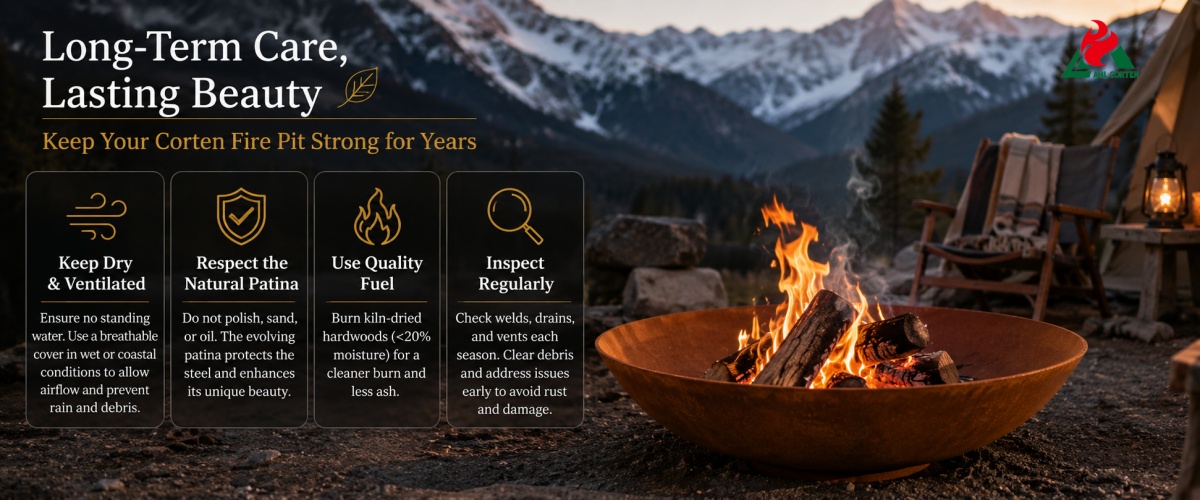
1. Keep It Completely Dry and Well-Ventilated
After cleaning, ensure there is no standing water left inside. In areas with heavy rainfall, high humidity, or coastal salt fog, use a specialized breathable, rainproof cover once the fire pit is completely dry.
This prevents rainwater and fallen leaves from entering while allowing air to circulate freely, maintaining the normal breathing and oxidation cycle of weathering steel.
2. Respect the Natural Patina; Avoid Excessive Maintenance
There is no need to deliberately remove rust, polish, or sand the surface. Weathering steel’s gradually deepening bronze hues and dark, heat-seared textures are a sophisticated aesthetic born of time.
Excessive cleaning, artificial glazing, or oiling will seal the steel’s pores, disrupting its self-healing mechanism and leading to color inconsistencies and localized rot.
3. Use High-Quality Fuel to Minimize Ash Buildup at the Source
For daily use, prioritize kiln-dried hardwoods with a moisture content below 20%, such as oak, apple wood, and walnut. These burn thoroughly, produce minimal smoke, and generate very little ash.
Strictly avoid burning painted scrap wood, salt-laden driftwood, or unidentified chemical accelerants to prevent acidic or alkaline residues from corroding the steel plates.
4. Regular Microstructural Inspections
Before each seasonal use, inspect welds, bottom flanges, drainage holes, and vents. Promptly remove any debris causing blockages and check for peeling, loose, or rusted areas.
Early detection and resolution of minor issues can prevent extensive rusting and structural damage later on.
How Scientific Ash Removal Enhances Fire Pit Performance and Garden Value
1. Optimize the Burning Experience and Say Goodbye to Smoking and Difficult Ignition
Unobstructed airways and a clean bottom structure restore perfect chimney convection. Ignition is fast, flames are tall and stable, and combustion is complete and smoke-free.
This completely resolves issues such as smoldering, heavy smoke, and odors, significantly enhancing the comfort of gatherings around the fire pit in your garden.
2. Prevent Microscopic Corrosion and Significantly Extend Service Life
Regular ash removal completely eliminates the risks of strong alkali exposure and oxygen-deprived corrosion, preventing localized rust spots, thinning, and aging of the steel plates.
By following this maintenance routine, high-quality weathering steel fire pits can reliably last 20–30 years, developing a richer patina over time.
3. Preserves Garden Aesthetics and Enhances Property Value
With no dust or rust water contamination, it keeps garden pavers and lawns clean and tidy over the long term. Its stable, vintage patina continuously elevates the garden’s upscale ambiance and adds value to your property.
Frequently Asked Questions (FAQ) About Corten Steel Fire Pits
Q1: Do I Need to Thoroughly Clean the Fire Pit Until It’s Spotless After Every Use?
No, it doesn’t need to be spotless. After each use, simply remove large pieces of charcoal and thick ash once it has cooled down; there’s no need to specifically clean up small amounts of fine ash. A thorough deep cleaning every 1–2 months is sufficient.
Q2: Will Occasionally Leaving Ash In the Fire Pit Really Damage the Metal Fire Pit Table?
A single instance may have minimal short-term impact, but habitual ash buildup over time creates a corrosive environment when exposed to moisture. This gradually erodes the protective layer, eventually leading to rust-through and rendering the steel plate unusable.
Q3: Can I Use a Household Vacuum Cleaner to Remove Ash From the Corten Steel Fire Ring?
Absolutely not. Residual heat can easily ignite the unit, and fine ash can clog the filter and burn out the motor, posing a safety hazard. You must use an industrial-grade ash vacuum cleaner.
Q4: Do I Need to Apply Oil or Spray a Sealant After Cleaning the Fire Pit?
Absolutely not. Artificial coatings will seal the steel’s pores, disrupting the natural self-healing mechanism that relies on moisture cycles. This can cause color variations, internal corrosion, and damage to the original protective layer and appearance.
Q5: How Can I Reduce Ash Buildup In a Corten Steel Fire Pit From the Source?
The key is to use dry, high-quality hardwood and avoid wet wood or chemically treated wood. High-quality fuel that burns completely can reduce ash buildup by over 70%, significantly lowering maintenance requirements.
Why Choose AHL High-End Weathering Steel Fire Pits?
With over 20 years of expertise in weathering steel landscape equipment, AHL utilizes industrial-grade materials and structural design to minimize maintenance requirements from the outset, creating long-lasting, high-end garden furniture.
1. High-Purity Industrial-Grade Materials Ensure Structural Stability and Durability
We use standard SPA-H high-purity corten steel combined with fully automated robotic seamless welding. The product withstands high temperatures, resists deformation and weld cracking, and remains resilient against thermal cycling and harsh outdoor environments.
2. Suited for All Harsh Outdoor Conditions
A mature and stable natural patina protective layer resists complex climates such as heavy rainfall, high humidity, coastal salt fog, and frost, making it resistant to corrosion and aging.
3. Low-Maintenance Aesthetic Design
Features built-in optimized drainage, ventilation, and ash-shedding structures, making daily dust removal and maintenance simple and convenient. The vintage patina resulting from natural oxidation becomes more sophisticated and timeless with age.
4. Exceptional Long-Term Value
A one-time investment ensures 20–30 years of reliable use, eliminating the need for frequent replacements or repairs. With extremely low annual operating costs, it represents a high-quality, long-lasting investment for premium gardens.
Are You Ready to Choose Your Own Corten Steel Fire Pit?
The key to maintaining a weathering steel fire pit has never been complex repairs or renovations, but rather scientific, gentle, and regular non-damaging ash removal.
What may seem like an insignificant buildup of ash is the primary cause of corrosion, smoke, and aging. By following the maintenance principles of allowing the fire pit to cool completely, using specialized tools, adhering to a five-step non-damaging process, and ensuring a dry, well-ventilated environment, you can perfectly preserve the self-healing mechanism of weathering steel.
Just three minutes of daily light maintenance will ensure your fire pit maintains stable performance and a vintage, sophisticated texture for decades, transforming it into a timeless landscape artwork in your garden that grows more cherished with use.
Looking for a low-maintenance, long-lasting, and visually stunning outdoor gathering space? Explore the AHL premium corten steel fire pit series and unlock a worry-free, luxurious outdoor lifestyle. Contact us now!




 Fill In The Inquiry