Corten Water Features: Installation, Design & Maintenance Guide
Date:2026.02.06
Share to:
Imagine a focal point that seamlessly blends industrial texture with natural tranquility, growing more mellow and charming with time—transforming your outdoor space into a soothing, vibrant sanctuary. This is the unique allure of corten steel water features.
But how do you design, install, and maintain rustic water features to unlock their full potential? That's precisely what this article addresses. This guide covers every aspect of modern water features: from creative design ideas suited to diverse spaces, to step-by-step installation tutorials for beginners and professionals alike, to straightforward maintenance techniques. We skip the fluff and deliver actionable advice you can implement right away.
Landscape water feature design is far more than mere decoration—it's a long-term investment. It enhances property values, attracts wildlife, improves air quality, and creates a private sanctuary for relaxation. Unlike fragile stone or high-maintenance plastic water features, weathering steel stands out as the premier choice for minimalist aesthetics and enduring, low-maintenance landscapes, thanks to its natural patina and exceptional durability.
1. The Unique Aesthetic Value of Metal Water Features
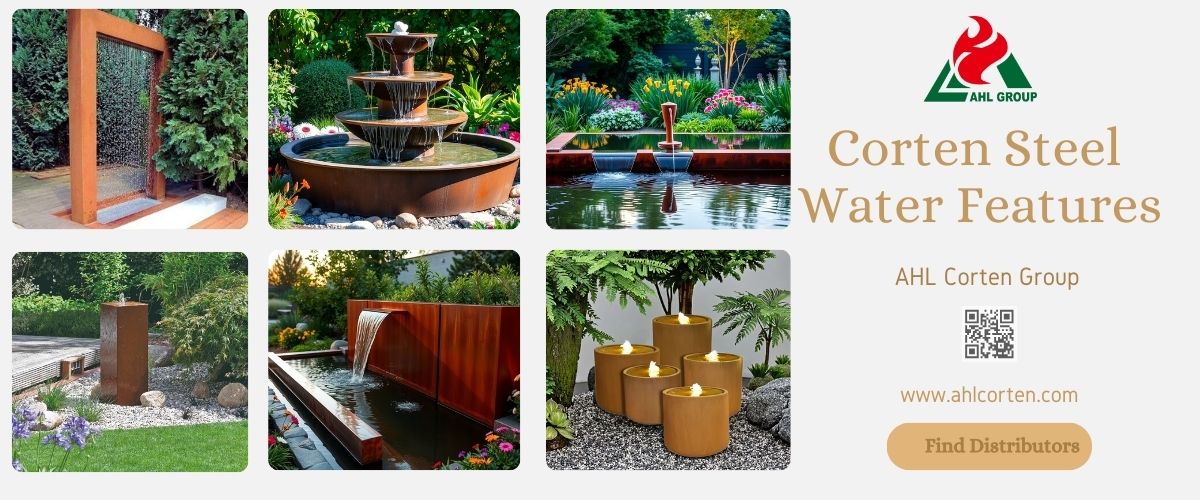
Corten steel naturally develops a rich, warm patina over time, offering a distinctive texture that seamlessly integrates with modern, rustic, minimalist, or natural landscape styles without appearing jarring or out of place.
It serves as a visual focal point in outdoor spaces. Leveraging water's reflective properties, it adds depth and dimension to landscapes, creating an expansive and dynamic visual effect even in compact gardens.
2. Functional and Ecological Advantages of Water Features
Enhanced Multi-Sensory Experience: The sound of flowing water effectively alleviates stress and masks background noise from traffic or neighbors, crafting a tranquil and peaceful retreat.
Supporting Ecological Balance: Rustic water features attract beneficial wildlife like birds, butterflies, and dragonflies, fostering small ecosystems that infuse outdoor spaces with natural vitality.
Improving Air Quality: The mist generated by water features traps airborne dust, pollen, and pollutants while increasing humidity, promoting lush plant growth and enhancing living comfort.
3. Long-Term Value and Low-Maintenance Advantages of Water Features
Enhance Property Value: A well-designed rusted steel water feature is a highly attractive premium amenity that makes your property stand out in the real estate market, increasing its market value and likelihood of sale.
Durable and Hassle-Free: The protective rust layer that forms on the surface effectively resists corrosion, eliminating the need for frequent painting, sealing, or costly long-term maintenance, significantly lowering the barrier to use.
Extended Lifespan: Compared to traditional materials like stone, plastic, or ceramic, weathering steel water features offer superior durability. With proper daily care, they provide a longer service life.
Space and Maintenance Considerations: Select designs based on outdoor space size and available maintenance effort—compact, minimalist options (e.g., corten steel basins) suit low-maintenance needs, while larger water features complement expansive landscapes.
Stylistic Cohesion: Integrate the industrial rust-toned aesthetic of weathering steel with your garden's overall theme (modern, rustic, natural, etc.) to ensure harmonious integration and avoid stylistic dissonance.
Sound and Rhythm Design: Tailor water features to desired ambiance—soothing trickling water suits meditation/rest zones, dynamic waterfall sounds complement leisure areas, and lively pond features enhance interactive spaces.
3. Eco-Friendly Design Techniques for Corten Steel Water Features
Integrate Rainwater Collection Systems: Incorporate rainwater harvesting devices during design to store natural rainfall for replenishing water features, reducing tap water consumption and enabling resource recycling.
Select Energy-Efficient Pumps: Prioritize high-efficiency pumps to lower energy costs while ensuring stable water flow. Smaller features can utilize solar-powered pumps, further reducing reliance on conventional electricity and advancing eco-friendly practices.
Natural Filtration Over Mechanical Systems: For pond-style features, plant ample oxygenating vegetation. Harness the purifying power of plants for natural filtration, replacing traditional mechanical systems to create self-sustaining ecological water features.
Corten Steel Water Feature Installation Guide
1. Preparations Before Installing a Rusted Steel Water Feature
Site Assessment: Select a flat, stable installation location, avoiding areas with sharp rocks (for pond-type water features) or low obstacles to ensure stability and safety after installation.
Tools and Materials Preparation: Prepare the corten water feature components (basin, pond liner, standing stones, etc.), water pump (electric or solar-powered), reservoir, metal mesh (for flowing water features), water pipes, and cleaning supplies in advance.
Compliance Check: Understand local regulations regarding outdoor water features (e.g., pump safety standards, water conservation requirements), ensuring the installation plan meets specifications to avoid future modifications.
2. Step-by-Step Installation Guide for Different Corten Water Features
Weathering Steel Basin Installation:
Place the basin steadily on the prepared level surface → Slowly fill with water (gently pour from the top to avoid disturbing bottom sediments) → Optional: Install a small pump to create water circulation.
Weathering Steel Waterfall Installation: Dig and bury the reservoir → Install the pump inside the reservoir → Cover the reservoir with sturdy metal mesh (to support stone weight and prevent small stones from falling) → Arrange stones and pebbles on the metal mesh → Connect the pump to the outlet → Test the water flow; install a faucet or regulator if adjustments are needed.
Corten Steel Pond Installation: Use an excavator (for large ponds) to dig the soil → Remove sharp rocks from the pit bottom to prevent puncturing the liner → Lay a bottom protective layer, then cover with pond liner → Fill with an appropriate amount of clean water → If keeping fish, install a filtration system and UV lamp → Arrange rocks, plant aquatic plants, and complete the decoration.
Water Feature Installation Tips and Common Pitfalls
Tip 1: For flowing water features, pair with a flow regulator to prevent excessive pump speed causing turbulent currents and loud noise. Aim for a gentle, soothing flow effect.
Tip 2: Reserve safe access points for birds and small mammals in pond-style water features. Balance aesthetics with protecting outdoor wildlife.
Mistake 1: Adding water too forcefully or excessively stirs bottom sediments, causing water turbidity → Correction: Add water gently and slowly from the top, controlling the volume.
Mistake 2: Using fragile or overly coarse metal mesh in flowing water features causes rocks to fall and blocks reservoirs → Correction: Select sturdy metal mesh with fine mesh size.
1. Regular Cleaning of Corten Steel Water Features
Cleaning Frequency: Recommended monthly cleaning to remove surface dust, scale, and algae, maintaining the feature's clean appearance.
Cleaning Method: Wipe weathering steel surfaces with a soft cloth or non-abrasive sponge to remove stains and scale. Avoid strong acidic or alkaline cleaners, as they may damage the protective rust layer.
Scale Treatment: If scale appears, gently wipe with diluted white vinegar. Rinse thoroughly with clean water afterward to prevent vinegar residue from corroding the steel.
2. Water Quality Management for Steel Water Features
pH Control: Regularly test water quality, maintaining pH at neutral to slightly alkaline (7.0-8.0) to provide an optimal environment for aquatic life and plants.
Filter System Maintenance: Clean the filtration system regularly and replace filter cartridges promptly to prevent clogging, which can lead to poor water quality and unpleasant odors.
Water Circulation: Keep the pump running continuously or set it to a timed operation mode to ensure smooth water circulation, preventing algae growth and sediment buildup.
Water Renewal: For basin-type water features, periodically add small amounts of fresh water to maintain quality. Avoid complete drainage to prevent stirring up rust layers at the bottom, which causes cloudiness.
Long-Term Maintenance and Patina Care for Steel Water Features
Patina Care: Respect the natural oxidation process of weathering steel. Do not paint, seal, or vigorously scrub the surface rust layer, as these actions damage the protective patina and accelerate corrosion.
Pump Maintenance: Regularly clean the pump, removing internal debris and scale. Inspect components for wear and promptly replace damaged parts to ensure proper pump operation.
Seasonal Maintenance: During cold weather, drain water from the pump to prevent ice damage. Cover large water features with breathable covers to protect the installation while allowing air circulation.
Common Misconceptions and FAQs About Water Features
Common Misconceptions
Misconception 1: Landscape water feature design requires extensive maintenance. Fact: Only simple monthly cleaning is needed, along with basic care for water quality and pumps. Maintenance costs are extremely low and require minimal effort.
Misconception 2: The rust layer on weathering steel contaminates water and plants. Fact: The protective rust layer on weathering steel is stable, does not flake off, and does not pollute water or harm aquatic plants and surrounding greenery.
Misconception 3: Weathering steel water features are only suitable for large gardens. Fact: Compact designs like small weathering steel basins are ideal for balconies, small patios, and other limited spaces, offering exceptional practicality.
FAQs about Weathering Steel Water Features
Q: How Long Does It Take For the Rust Patina to Formon a Water Feature?
A: In outdoor natural environments, it typically takes 2-4 months. The patina deepens gradually over time, developing a richer, more mellow texture.
Q: Can Solar-Powered Pumps be Used for Large Steel Water Features?
A: Not recommended. Solar pumps are only suitable for small water features (e.g., water basins, miniature fountains). Large water features require electric pumps to ensure a stable water flow.
Q: Does a Corten Steel Pond Need a Filtration System?
A: If fish are kept in the pond, installing a filtration system and UV lamp is recommended to prevent water quality deterioration. If primarily growing oxygen-rich plants, natural filtration suffices without mechanical equipment.
Ready to Choose Your Own Outdoor Rusted Steel Water Feature?
Corten water features perfectly blend aesthetics, functionality, and durability—featuring a simple design, easy installation, and low-maintenance care. They elevate outdoor landscapes, attract wildlife, improve air quality, and add lasting value to your property.
With the right design approach, installation techniques, and maintenance know-how, your rusted steel water feature will become an enduring focal point in your outdoor space. It will develop character over time, accompanying you through countless moments of relaxation and tranquility.
Ready to transform your outdoor space with a landscape water feature design? Draw inspiration from the design concepts and installation guides in this article to craft your own private landscape sanctuary. Contact us today for a complimentary quote and catalog of weathering steel water features!



 Fill In The Inquiry