Corten Steel Water Feature Installation: Above-Ground vs. In-Ground Designs
With its unique natural rust-colored texture, combined with the play of light and shadow on flowing water and the sound of water, the Corten steel water feature has become a popular choice for modern gardens and commercial landscapes.
Once you’ve decided on a design, the first key decision is whether to choose an above-ground or in-ground installation. The final appearance, installation difficulty, and maintenance requirements of these two options are completely different; there is no absolute advantage or disadvantage, so you’ll need to make a comprehensive judgment based on site conditions, budget, and the desired water feature effect.
Many simple basin-style designs are suitable for DIY installation; however, for complex water features such as Corten steel water walls and cascading water features, it is recommended that the pump and piping systems be installed by professionals. Before finalizing a plan, be sure to check the available space, water supply, drainage, and outdoor power sources in advance.

What Is an Above-Ground Corten Steel Water Feature?
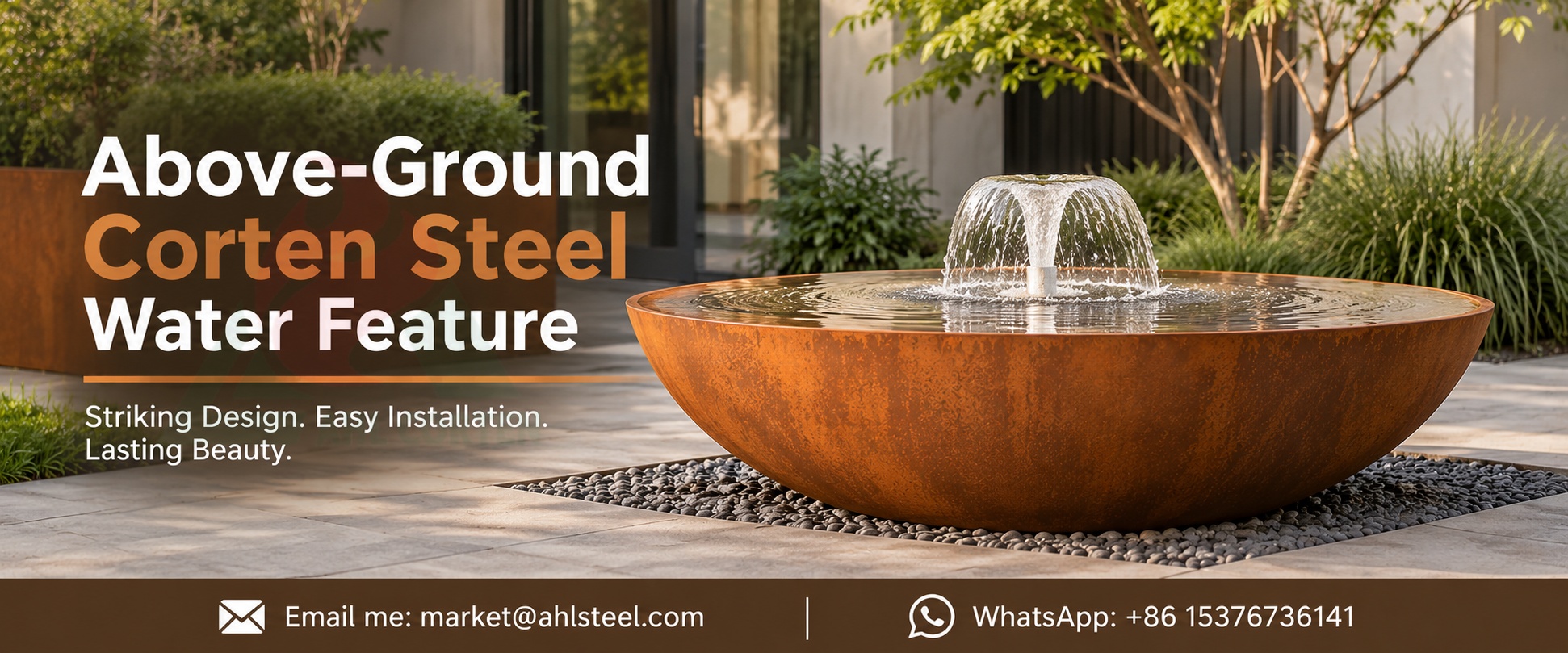
Above-ground corten water features are placed directly on a paved platform, pedestal, or stable ground, with the entire steel structure, water basin, and sculptural elements fully exposed, serving as a visual focal point in the landscape.
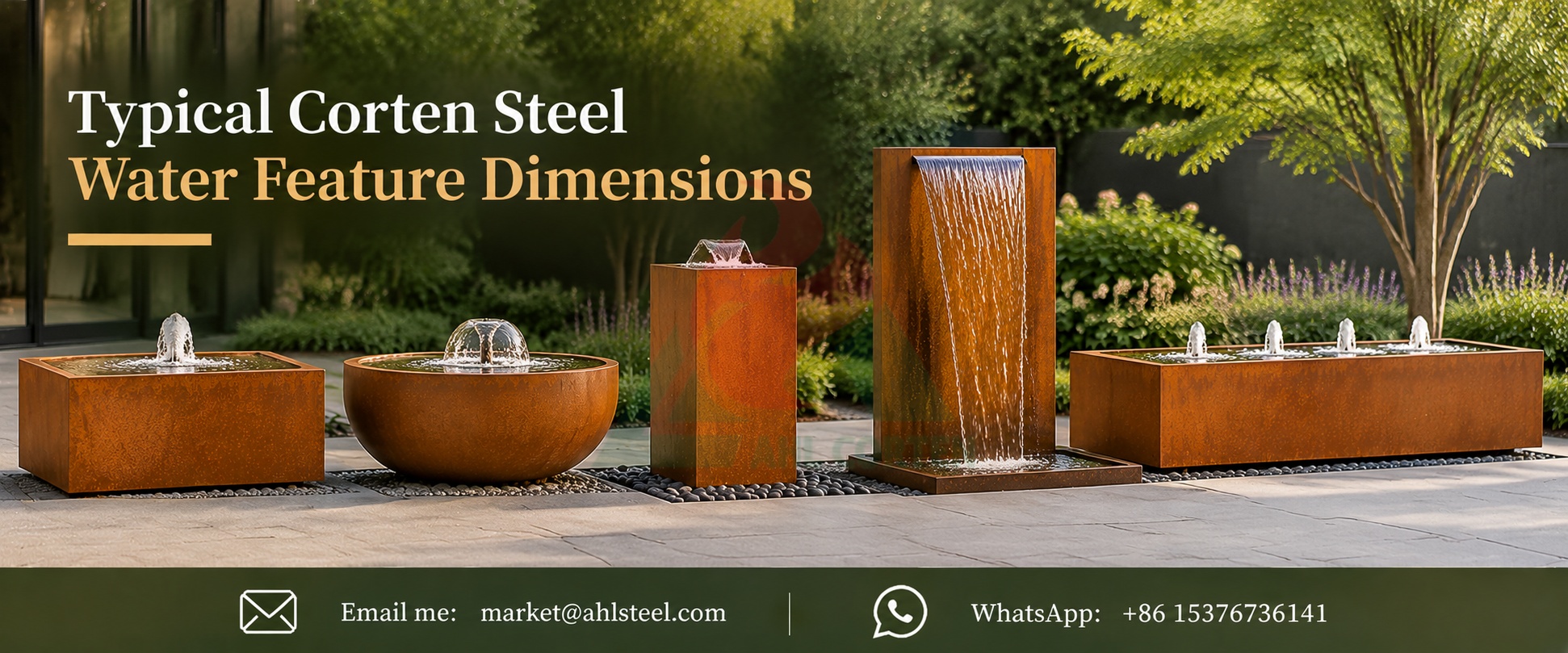
Common styles include water basins, elevated pools, freestanding fountains, and prefabricated water features. Some models offer optional built-in water storage tanks, support grids, water pumps, and ambient lighting kits.
These water features are ideal for patios, entryways, small courtyards, and commercial spaces—particularly in settings where the aesthetic of weathering steel is emphasized and the water feature is meant to be admired from multiple angles.
Above-Ground Water Features: Advantages and Installation Considerations
1. Key Advantages of Above-Ground Water Features
Above-ground water features do not require extensive excavation, resulting in a shorter construction timeline. The shape and rusted texture of the weathering steel are fully showcased, making it the visual centerpiece of the landscape. Since equipment such as pumps and piping is exposed, maintenance, cleaning, and component replacement are more convenient.
2. Installation Precautions
The ground must be level, stable, and capable of supporting the total weight when the feature is filled with water; do not consider only the empty basin’s weight. Never place the feature directly on soft soil, lawns, or low-lying areas prone to water accumulation, as long-term settlement can cause an uneven water surface and misalignment of the water flow.
Plan in advance for power lines, pump connections, splash zones, and overflow drainage paths. Reserve maintenance space around the rusted steel water feature; we recommend at least 60 cm to facilitate future cleaning and maintenance.
3. Suitable Settings for Above-Ground Water Features
Private gardens, patios, balconies, paved courtyards, hotel entrances, and commercial outdoor areas. If installing on a rooftop terrace or balcony, be sure to have a professional verify the floor’s load-bearing capacity in advance and request the empty weight and full-water weight specifications before placing an order.
What Is an In-Ground Corten Steel Water Feature?
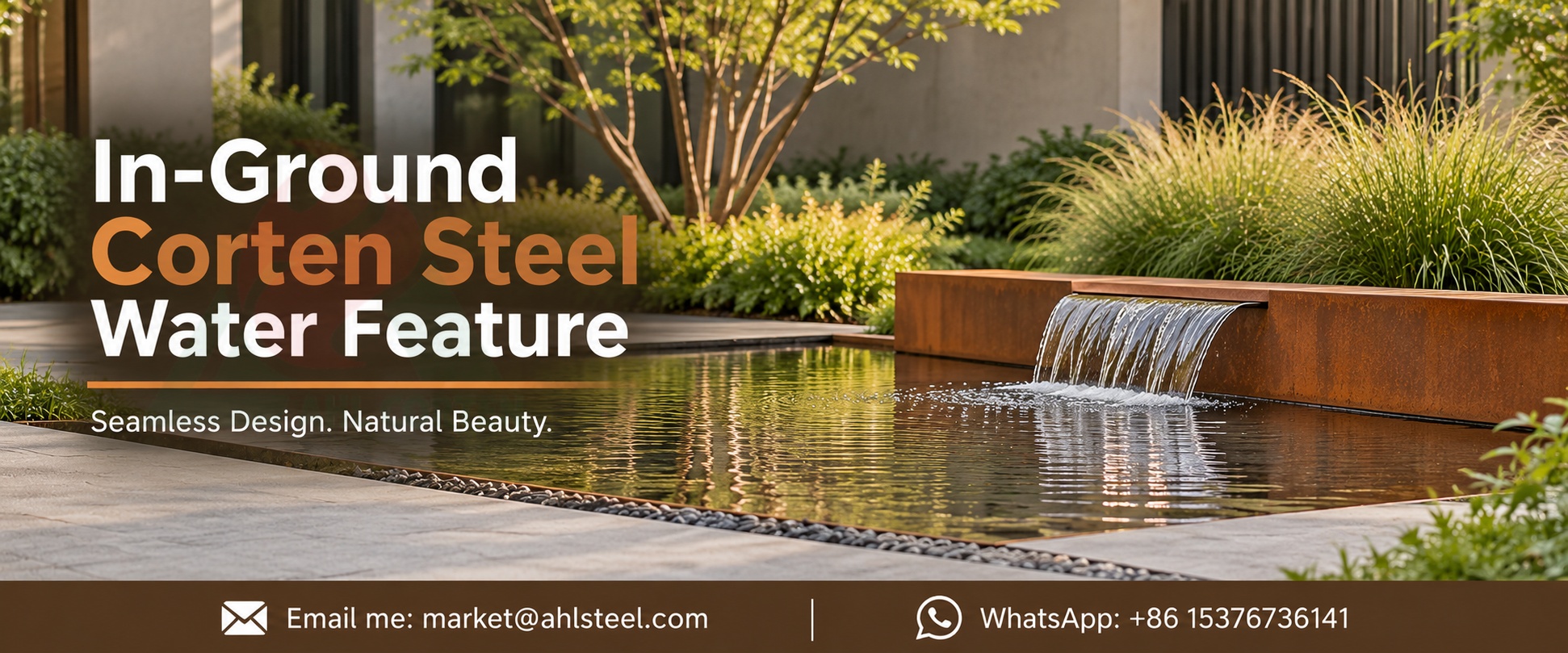
In-ground water features have most of the water reservoir and pump chamber buried below ground level, with only the weathering steel trim, water surface, overflow outlet, or cascading structure exposed.
Common designs include flat water surfaces, shallow stream channels, and waterfall features. The typical installation process involves excavating a foundation pit, embedding the water reservoir, placing the pump inside the reservoir, laying a support grid on top, and covering the surface with pebbles or stone to conceal the equipment.
In-ground water features allow for a seamless integration of the water feature with paving and plants, creating a minimalist and clean aesthetic—a solution frequently used by modern landscape designers.
In-Ground Weathering Steel Water Features: Advantages and Installation Key Points
1. Core Advantages of In-Ground Water Features
Visually simpler and more natural, with the water surface flush with the surrounding ground, minimizing the visibility of equipment. This makes them ideal for minimalist and natural-style gardens. The water storage tank, pump, and piping are mostly concealed underground, ensuring they do not disrupt the site’s overall landscape lines.
2. Installation Considerations
Initial surveys of soil conditions and groundwater levels are required to plan the dimensions and burial depth of the foundation pit. Waterproofing, overflow, and drainage systems must be properly implemented. When determining the actual effective volume of the underground water storage tank, do not rely solely on external dimensions, as the pump and grating will occupy internal space.
For complex rusted steel water features, large pools, and custom cascades integrated with walls, it is recommended to entrust construction to a professional team.
3. Suitable Settings for In-Ground Water Features
Modern residential gardens, municipal landscapes, resorts, hotel gardens, and large-scale commercial landscape projects. Ideal for landscape designs that aim for a water surface flush with the surrounding ground, pursuing a seamless, unobtrusive aesthetic.
Above-Ground vs. In-Ground Corten Water Features: A Comparison of Key Differences
| Comparison Factor |
Above-Ground Water Feature |
In-Ground Water Feature |
| Construction Difficulty |
Relatively simple, with less earthwork |
Requires excavation and a more complex construction sequence |
| Ground Preparation |
Only requires a level, load-bearing base |
Requires excavation, soil testing and waterproofing treatment |
| Visual Effect |
Independent, sculptural and visually prominent |
Integrates with the surrounding surface; simple and understated |
| Piping and Maintenance |
Exposed equipment allows easy access for maintenance |
Equipment is concealed underground and requires reserved maintenance access |
| Space Requirement |
Occupies above-ground display space |
Uses underground space while keeping the ground level clean |
| Cost Composition |
Base construction costs are controllable |
Additional costs for excavation, waterproofing, backfilling and inspection wells |
| Preferred Applications |
Terraces, small courtyards and entrance focal points |
Integrated paving, streams and level water-surface landscapes |
Cost Analysis of the Two Options
Many people mistakenly believe that above-ground metal water features are always cheaper, but this is not necessarily true. The cost of an above-ground water feature depends on its size, the load-bearing base, transportation, and the necessary water and electrical components.
In-ground water features incur additional costs for earthwork excavation, waterproofing membranes, backfilling, and maintenance access covers. However, their advantage is that all equipment is concealed, resulting in a more polished landscape.
When calculating the budget, one must not focus solely on the price of the weathering steel structure itself; the total cost must include the water reservoir, pumps, lighting, drainage, electrical wiring, and structures for future maintenance.
Key Technical Factors to Confirm Before Installation
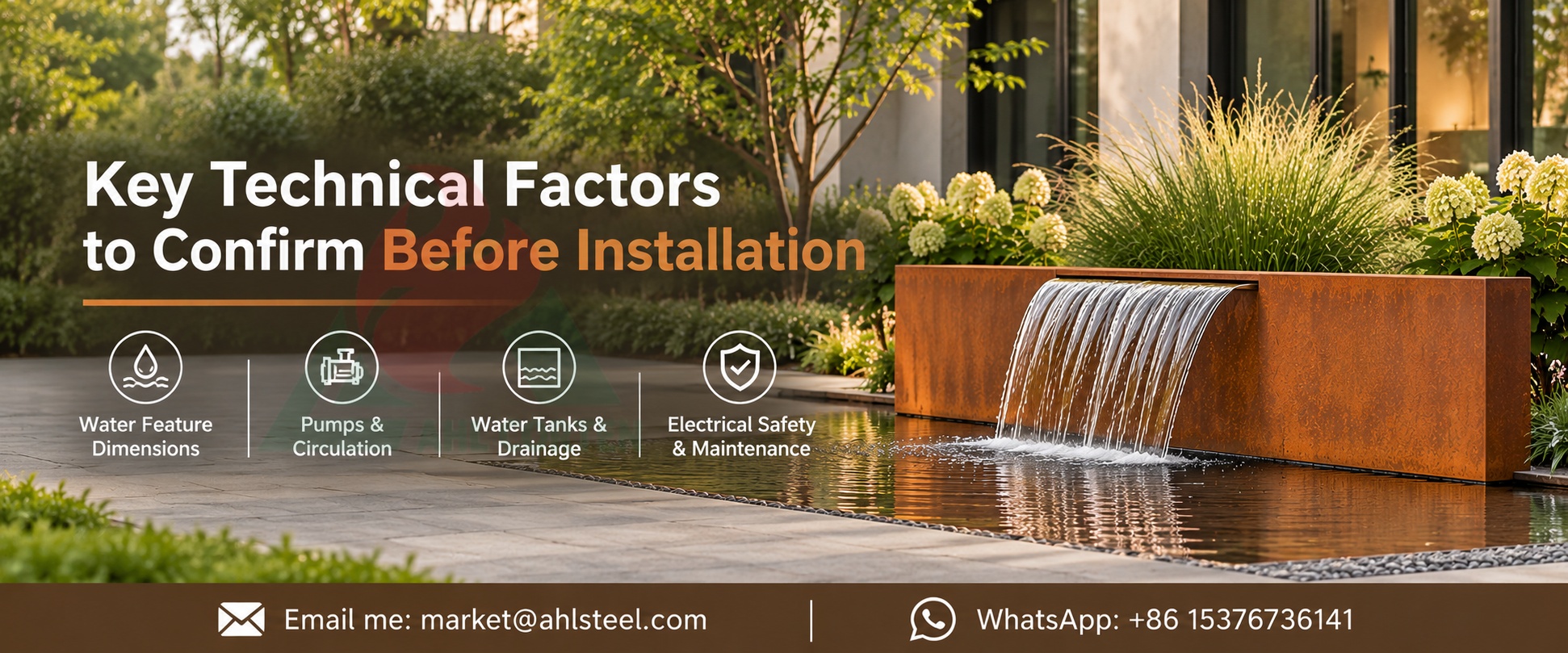
1. Water Feature Dimensions and Design
When measuring the available space, in addition to the water feature itself, be sure to allow room for walkways, seating areas, plants, and drainage points. Distinguish between the product’s total height, basin depth, actual water level, and waterfall height; do not confuse these parameters.
2. Pumps and Circulation Systems
Pump selection is based on flow rate, head, and piping layout; a larger water feature does not necessarily require a larger pump. Before placing an order, confirm the pump model, performance parameters, and maintenance procedures. For water curtain designs, match the flow rate to the outlet width and the desired water flow effect.
3. Water Storage Tanks and Drainage Design
Confirm the location of the water storage tank, its effective volume, water level control, and automatic refill method. Plan in advance for rainwater overflow and water replacement/drainage solutions. For in-ground installations, ensure that piping, cables, and access hatches are in place before hardscape paving is completed.
4. Electrical Safety and Maintenance Access
All electrical components in contact with water must be installed by a licensed electrician in accordance with local codes, using outdoor-rated, waterproof components. Whether above-ground or in-ground, be sure to include access panels to facilitate future cleaning and replacement of pump and filter components.
How to Choose: Above-Ground or In-Ground Water Features
Prioritize above-ground installations if you meet any of the following conditions:
- You want the corten water feature to serve as a visual focal point in the garden, highlighting the weathering steel design
- The site is not suitable for excavation, or the soil conditions do not allow for digging a pit
- You prioritize ease of future maintenance, and the layout may be adjusted down the line Once selected, be sure to verify the base’s load-bearing capacity, the weight of the water when full, the splash range, and the drainage route.
Prioritize an in-ground water feature if any of the following conditions apply:
- You want a flush water surface, stream, or waterfall that blends seamlessly with the surroundings
- You can plan in advance for excavation, waterproofing, and underground piping
- You can reserve a maintenance access point and are willing to accept higher upfront construction costs
Do not blindly choose an in-ground option simply for aesthetic reasons; underground waterproofing and maintenance access are essential. The absence of maintenance structures will lead to significant complications later on.
Custom Weathering Steel Water Features for Unique Landscape Projects
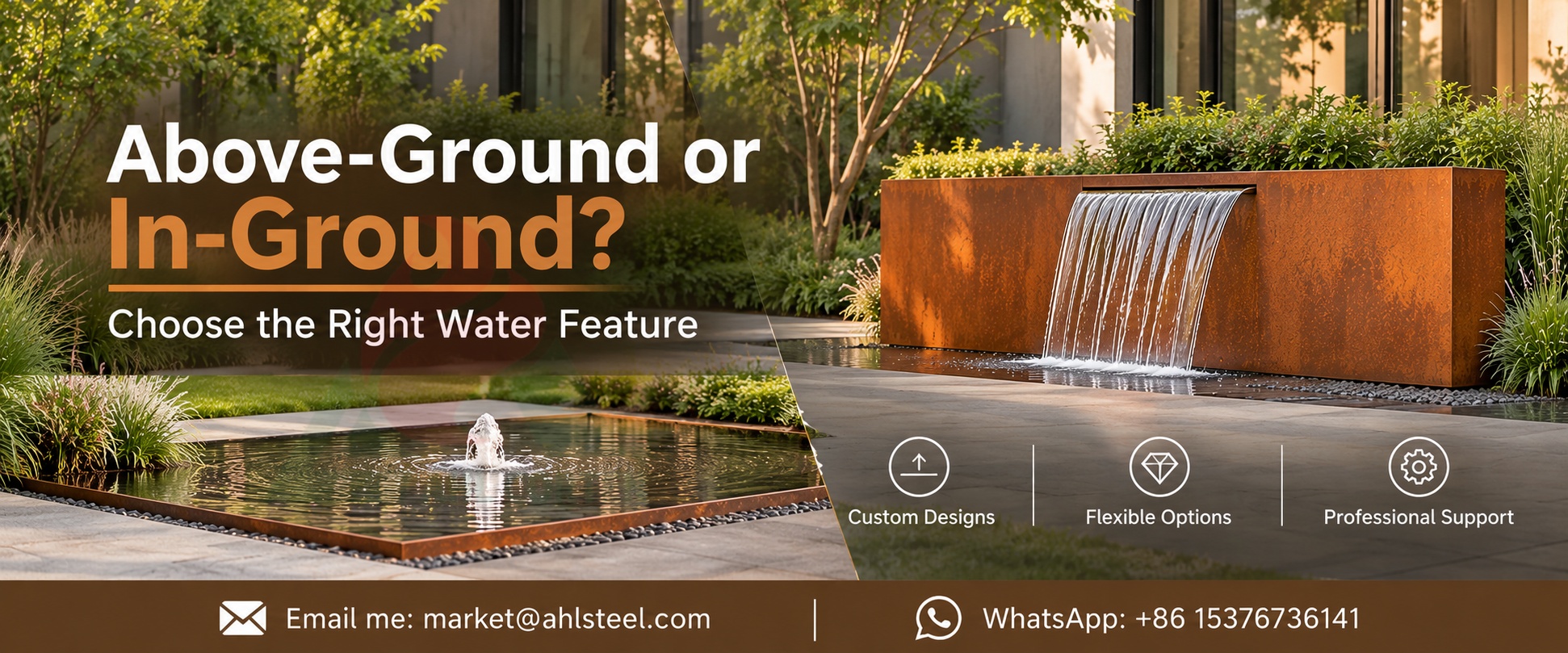
Standard models cannot meet the needs of all residential and commercial projects. Custom water features allow for flexible adjustments to length, width, height, steel plate thickness, water storage structure, lighting, water flow patterns, and surface finishes (bare steel or pre-rusted).
When placing a custom order, provide site photos, landscape drawings, target dimensions, and desired water flow effects. The manufacturer will assess structural feasibility in advance before providing a quote and production plan.
Why Choose AHL Corten Steel Water Features?
We offer a wide variety of styles, including water basins, water tables, fountains, rain curtains, cascades, and ponds, available in both bare steel and pre-rusted finishes. Finished water basins can be equipped with built-in water storage tanks, support grids, water pumps, and LED lighting components; the quotation will clearly list all accessories.
We support customization of dimensions, structures, lighting, and water flow designs, making our products ideal for bulk purchases by landscape contractors and distributors. For international orders, we can break down the cost into the steel body, electromechanical components, packaging, and shipping fees, and provide comprehensive installation instructions.
Common Installation Pitfalls to Avoid in Advance
1. Placing the feature directly on soft ground: When filled with water, the weight is immense; foundation settlement can cause the water surface to tilt.
2. Incorrect pump selection: Focusing solely on the size of the water feature while ignoring head and pipeline losses results in water flow that falls short of expectations.
3. Neglecting overflow drainage: Rainwater and splashes have no outlet, leading to prolonged saturation of the surrounding paving.
4. Sealing off all equipment without leaving access panels: If the pump fails later, the paving must be destroyed to perform repairs.
5. Failing to waterproof electrical circuits: Electrical circuits exposed to water outdoors pose a safety hazard due to the risk of electrical leakage.
6. Ignoring the overall external dimensions: Insufficient access pathways or hoisting space may prevent the water feature from being delivered to the site smoothly.
FAQ
Q: Can An Above-Ground Water Feature Be Placed On a Balcony?
A: Yes, but you must verify the floor’s load-bearing capacity in advance. Prioritize models with a lighter weight and confirm the total load when the feature is full of water.
Q: Are In-Ground Water Features Prone To Leaks?
A: Leaks can be controlled with proper waterproofing, a compliant water reservoir, and an overflow structure; the greatest risk stems from inadequate waterproofing during the initial excavation phase.
Q: Which of The Two Types Is Easier to Maintain?
A: Above-ground features are easier to maintain, as the pump and piping are clearly visible; in-ground features rely on pre-installed access hatches.
Q: Can In-Ground Water Features Be Modified Later?
A: Modifications are more difficult and require breaking up the surface paving; above-ground features offer greater flexibility for relocation and repositioning.
CTA: Get a Quote for Weathering Steel Water Feature Solutions
Both above-ground and in-ground water features have their advantages; the final solution depends on the desired landscape effect, site conditions, and maintenance requirements. If you’re looking for a reliable supplier of weathering steel water features, contact AHL to receive product brochures, technical specifications, and customized solutions.
Whether you need a freestanding above-ground water feature or an in-ground flat-surface or cascading water feature, simply provide the site dimensions, desired water flow effects, and purchase quantity to receive a comprehensive quote that includes the water storage tank, pump, lighting, and shipping.
Want a Custom Corten Water Feature? Contact Us!
Back


 Fill In The Inquiry