Corten Steel Planters: Care and Maintenance Tips
Corten steel planters seamlessly blend durability, vintage charm, and modern style, effortlessly elevating the ambiance of any outdoor space—whether residential balconies, backyards, commercial entrances, or park plazas.
With their distinctive rust-toned finish and exceptional resilience, these planters have become a popular choice for outdoor landscaping. However, to ensure decades of aesthetic appeal and consistent performance, proper care and maintenance are essential.
This guide comprehensively covers the core maintenance of metal planter boxes: from understanding their unique properties (heat resistance, stain resistance, water resistance) to daily and seasonal care essentials, plus pre-purchase tips and common pitfalls to avoid—ensuring your weathering steel planter stays in peak condition year-round.
Compared to plastic, wood, or ceramic alternatives, weathering steel planters offer superior longevity, lower maintenance costs, and a distinct aesthetic appeal. By following this professional care guide, you'll not only preserve their structural integrity but also enhance their natural rust patina, transforming them into enduring focal points in any outdoor setting.
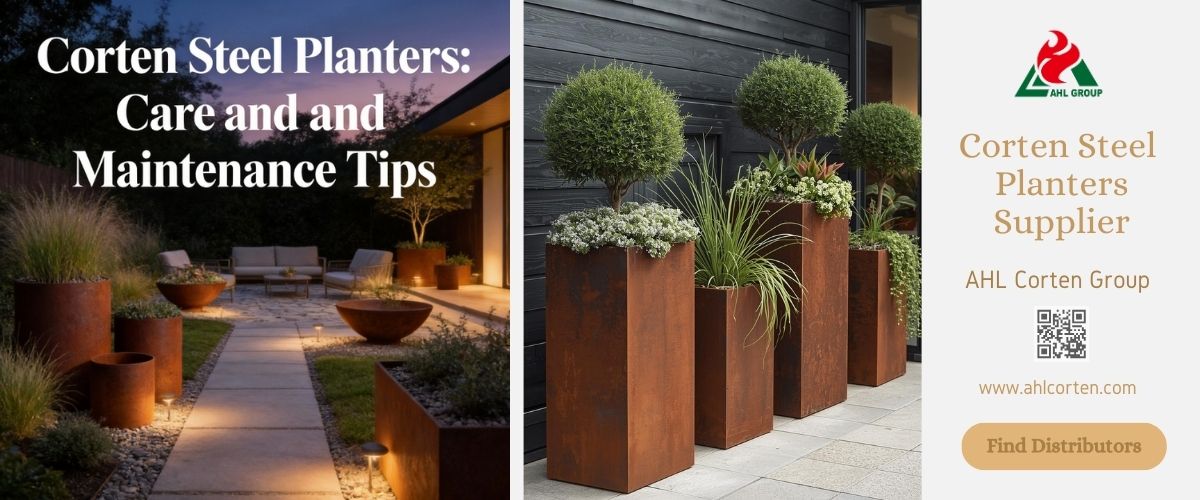
Understanding Corten Planters: Analysis of 3 Core Properties
1. Can Weathering Steel Planters Overheat?
As a metal material, weathering steel absorbs heat under direct sunlight. Excessive temperatures may affect plant root growth.
Prevention Tip: Place planters in partial shade to avoid prolonged exposure. Alternatively, line the inner walls with an insulating layer to reduce heat transfer.
2. Will Corten Steel Planters Stain Surrounding Surfaces?
No—this is one of their core advantages! The intentionally formed rust-colored protective layer on their surface won't stain nearby floors, countertops, or other surfaces.
Additional Tip: For added protection, place a tray or non-slip mat beneath the planter to catch any minor rust water seepage, further safeguarding the placement surface.
3. Are Rusted Steel Planters Waterproof? Drainage Is Key
While weathering steel itself is water-resistant, standing water inside severely damages plant roots and accelerates corrosion at the base, shortening the planter's lifespan.
Essential requirement: A quality large metal planter must feature built-in drainage holes and an elevated base to prevent soil saturation, ensuring plant health and planter durability.
.jpg)
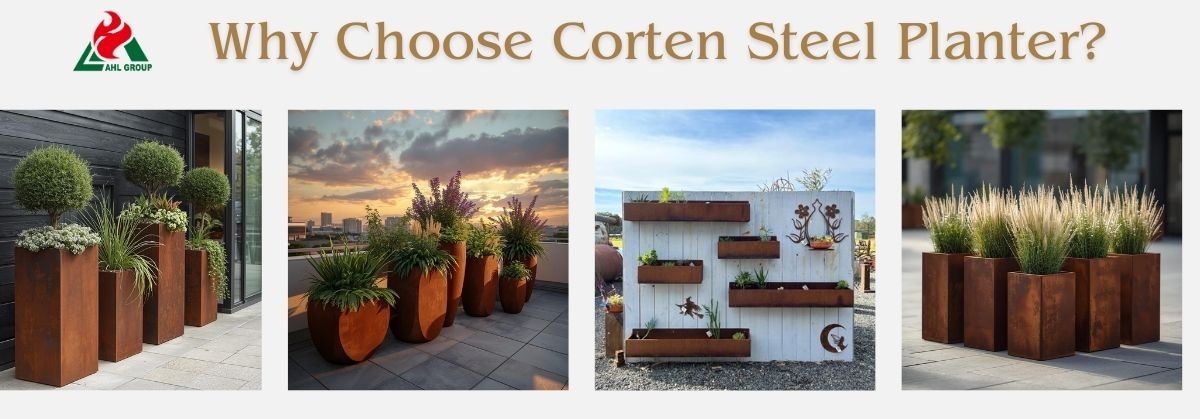
Why Are Corten Planters the Top Choice for Outdoor Horticulture?
1. Unmatched Durability and Weather Resistance
Corten steel round planters naturally develop a protective rust layer in outdoor environments. This rust film effectively prevents further corrosion, fundamentally differing from ordinary metal planters prone to rusting and damage.
They effortlessly withstand extreme weather like torrential rain, heavy snow, and intense sunlight without cracking, warping, or fading, offering far greater stability than other materials.
Comparative Advantages: Plastic planters become brittle and age under UV exposure; wooden planters rot and mold in damp conditions; ceramic planters crack during sudden temperature shifts. Weathering steel planters perfectly avoid these issues.
2. Growing More Beautiful Over Time
The most distinctive charm of large metal pots lies in their surface developing a rich, vintage orange-brown patina over time. No painting or refurbishment is needed—the longer they age, the more striking they become.
Exceptionally versatile in style, they seamlessly integrate with modern, natural, minimalist, rustic, and other outdoor landscapes. Whether paired with greenery, stone pavements, or concrete structures, they create a harmonious and unified aesthetic.
3. Versatile Applications
Offering a wide range of sizes and designs, from compact planters (ideal for herbs and succulents) to large planters (suitable for trees and shrubs), our selection includes square, round, rectangular, conical, and vase-shaped options to meet diverse planting needs.
Versatile Applications Whether adorning residential balconies, private backyards, hotel entrances, park plazas, or commercial terraces, Corten steel planters deliver both decorative appeal and practical functionality.
4. Low Maintenance, High Value
Maintenance costs are minimal—no frequent repainting, sealing, or complex cleaning required. Simple daily care keeps them in excellent condition.
Though the initial purchase cost exceeds that of plastic or wooden planters, their decades-long lifespan eliminates repeated replacements. This long-term cost savings delivers significant value.
5. Eco-Friendly
Weathering steel is fully recyclable. Its natural patination process requires no harmful paints or chemical coatings, eliminating environmental pollution.
The exceptionally long lifespan drastically reduces planter replacement frequency and waste generation, aligning with sustainable gardening principles.
Selecting Premium Planters: Critical Pre-Maintenance Steps
4 Core Factors for Purchasing Weathering Steel Planters
- Steel Thickness: Prioritize 16-20 gauge steel (approx. 1.5-3 mm thick). Thinner steel is prone to deformation and dents, while thicker steel increases weight and procurement costs. The 1.5-3 mm range offers the optimal balance of cost-effectiveness and durability.
- Drainage & Base: Must feature built-in drainage holes and an elevated base. Drainage holes swiftly remove standing water, while the raised base prevents direct contact with damp ground, minimizing corrosion.
- Liner Design: Premium metal planter boxes often feature plastic or metal liners. These liners isolate soil moisture to extend the planter's lifespan while facilitating future repotting.
- Customization Services: For commercial projects or unique spatial requirements, select brands offer custom sizing and shaping services to ensure the planter seamlessly integrates with its intended setting.
Rusted Steel Planter Size and Shape Selection Guide
- Size Selection: Determine planter dimensions based on plant root systems, allowing 2-3 years of growth space. Larger canopy plants require correspondingly larger planters for stability.
- Shape Selection: For visual focal points, choose distinctive shapes like round, vase, or cone. For plant-centric displays, opt for minimalist neutral shapes like rectangular or square. Ensure the shape complements the garden style—minimalist gardens suit rectangular/square forms, while vibrant gardens pair well with more dynamic shapes.
.jpg)
Before Using Large Metal Planters: Preparation Pays Off
Select Weathering Steel Planters Based on Your Needs
- Style Compatibility: Harmonize the industrial aesthetic and rustic texture of weathering steel with plant types and surroundings to ensure the planter aligns with the overall landscape style.
- Plant Compatibility: For deep-rooted plants (trees, shrubs), select planters with sufficient depth. For shallow-rooted plants (herbs, succulents), choose wide-mouthed shallow pots to ensure proper root development.
- Drainage Verification: Before use, thoroughly inspect drainage holes for blockages and ensure adequate quantity to prevent waterlogging and subsequent maintenance issues.
Creating the Perfect Planter Base: Drainage and Soil Are Key
- Drainage Layer Setup: Lay a 3-5 cm thick layer of expanded clay pellets or gravel at the bottom as the drainage layer. Cover with a permeable fabric to prevent soil loss while enhancing drainage efficiency.
- Soil Selection: Use well-draining potting soil specifically formulated for containers. Add perlite or river sand to improve aeration. Never use pure garden soil, as it compacts easily, retains water, and can cause root rot and box corrosion.
Corten Planter Maintenance: Simple Care for Long-Lasting Durability
Regular Cleaning: Gentle Maintenance Without Damage
- Daily Dusting: Use a soft-bristle brush to remove surface dust from the planter, or gently wipe with a dry cloth. No need for frequent cleaning—maintain surface cleanliness.
- Monthly Deep Cleaning: Clean monthly with diluted neutral detergent (pH 5.5-6.8). Use a soft sponge to wipe; avoid hard tools like metal brushes. Rinse thoroughly with clean water immediately after cleaning.
Cleaning Don'ts: Never Do These
❌ Avoid strong acidic or alkaline cleaners like hydrochloric acid or bleach, as well as chlorine- or salt-based products. These substances damage the protective rust layer on the planter surface.
❌ Do not use high-pressure water jets at close range. High-pressure water can strip the surface rust layer, accelerating steel corrosion.
✅ Recommended cleaning method: Wipe with water only, or use a mild metal-specific cleaner.
Routine Inspections: Identify Potential Issues Early
Regularly check drainage holes for blockages. Clear any soil buildup promptly to prevent waterlogging that could harm plants and the planter.
Inspect the planter surface for loose rust patches. Do not scrape or peel them off; allow them to re-oxidize naturally.
If oil stains appear on the surface, wipe them immediately with a mild detergent to prevent oil penetration that could disrupt rust layer formation.
(1).jpg)
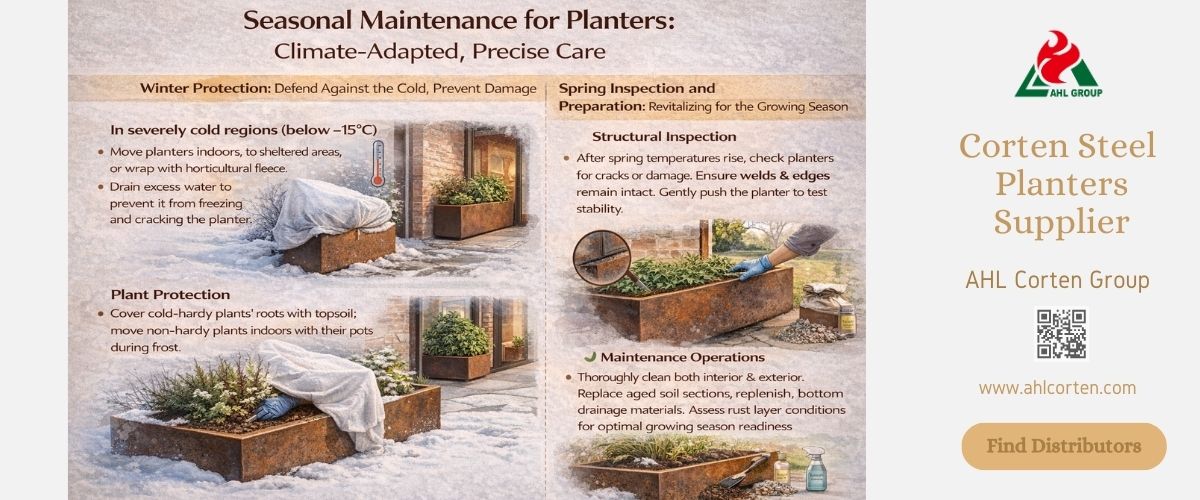
Seasonal Maintenance for Planters: Climate-Adapted, Precise Care
1. Winter Protection: Defend Against the Cold, Prevent Damage
- In severely cold regions (temperatures below -15°C): Move planters indoors or to sheltered areas, or wrap sides with horticultural fleece. Thoroughly drain all excess water to prevent freezing expansion from cracking the planter.
- Plant Protection: Cover cold-hardy plants' roots with a layer of topsoil for insulation; move non-hardy plants indoors with their pots to prevent frost damage.
2. Spring Inspection and Preparation: Revitalizing for the Growing Season
- Structural Inspection: After spring temperatures rise, check planters for cracks or damage. Ensure welds and edges remain intact. Gently push the planter to test stability.
- Maintenance Operations: Thoroughly clean both interior and exterior surfaces. Replace aged soil sections, replenish bottom drainage materials, and assess rust layer conditions to ensure planters are in optimal condition for the growing season.
Long-Term Maintenance for Planters: Extend Lifespan, Preserve Value
1. Annual Structural Integrity Inspection
Conduct a comprehensive spring inspection each year, focusing on corrosion levels in critical areas like welds and edges. Test planter stability to promptly identify potential structural issues.
Prompt Repair: Minor rust spots require no special treatment; allow natural oxidation. Immediately repair any damage or cracks with a professional metal adhesive to prevent further deterioration.
2. Oxidation Layer Maintenance: Preserving Unique Rust Texture
- Let Nature Take Its Course: Avoid frequent wiping or cleaning during new rust layer formation to allow natural development of an even protective patina.
- Addressing uneven rust distribution: If rust coloration appears patchy on the planter surface, lightly spray water to promote uniform oxidation of the steel, resulting in a more consistent rust patina.
- Humidity control: Maintain appropriate humidity levels in the planter's environment to facilitate stable rust layer formation. Avoid prolonged exposure to extremely dry or humid conditions.
Moving and Scratch Prevention Techniques: Minimizing Physical Damage
Before moving the corten steel planter, empty the soil to reduce weight and prevent deformation or damage during transport due to excessive load.
- Scratch Protection: Place the planter on a level surface. If the ground is uneven, add shims to the bottom to prevent scratches from friction between the base and the ground.
- Maintenance Log: Establish a simple maintenance log to record the date and details of each inspection, cleaning, and repair. This facilitates long-term tracking of the planter's condition.
Common Pitfalls in Planter Maintenance: Avoid These Mistakes
❌ Mistaking Painted Steel for Genuine Weathering Steel: Only authentic weathering steel naturally forms a protective rust layer. Painted steel will rust and corrode rapidly once the coating peels off, rendering it unsuitable for long-term use.
❌ Choosing steel that's too thin: Insufficient thickness makes planters prone to deformation and dents, compromising both longevity and aesthetics.
❌ Neglecting drainage issues: Poor drainage leads to soil waterlogging, which not only causes plant root rot but also accelerates corrosion at the planter's base, shortening its lifespan.
❌ Failing to verify steel grade and brand reputation: Purchasing without confirming compliance with ASTM A606/A588 standards or choosing products from unqualified small manufacturers risks acquiring substandard weathering steel planters.
❌ Excessive cleaning or use of harsh chemicals: Frequent cleaning or strong acidic/alkaline cleaners can damage the protective rust layer on the planter's surface, accelerating corrosion.
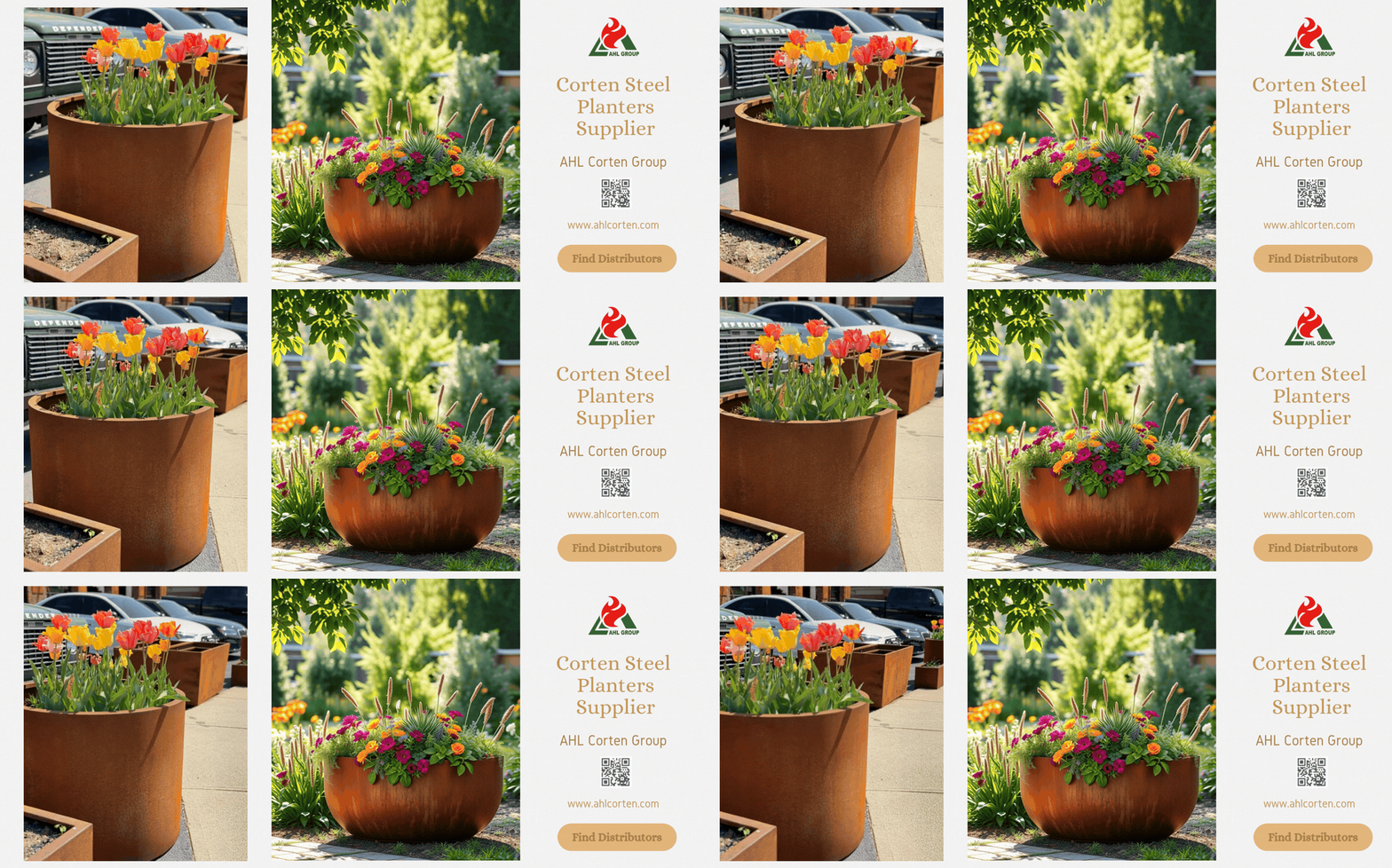
Ready To Choose Your Perfect Outdoor Weathering Steel Planter?
With low maintenance, high durability, and distinctive aesthetics, weathering steel planters are an ideal choice for outdoor landscaping. By mastering scientific daily care, seasonal maintenance, and long-term upkeep techniques while avoiding common pitfalls, you can ensure it continues to enhance your outdoor space for decades.
Whether creating a cozy corner in your private garden or elevating the aesthetic appeal of commercial spaces, weathering steel planters deliver on their promise. For personalized sizing recommendations or tailored maintenance advice, contact our team of horticultural experts. We offer one-on-one professional services to maximize the value of your outdoor gardening investment!
Back


 Fill In The Inquiry