Landscape edging is a core element in creating clean, sophisticated outdoor spaces. It not only defines garden boundaries and stabilizes the soil but also enhances the overall design quality of the landscape. In 2026, Corten Steel Edging, with its unique weathered texture, superior durability, and low maintenance, became the mainstream choice for global landscape design, completely replacing traditional plastic and wood edging. However, faced with the wide variety of metal garden edging on the market, many people easily fall into problems such as "thickness selection pitfalls" and "style mismatch with the scene." This article will guide you step-by-step in choosing the best landscape steel garden bed edging for 2026, covering all practical knowledge points from core advantages, style classifications, thickness selection to installation and maintenance, helping you avoid pitfalls and create an outdoor landscape that is both aesthetically pleasing and practical.
Why Is Corten Steel Edgingthe Top Choice for Landscape Design in 2026?
1. Unique Weathering Patina
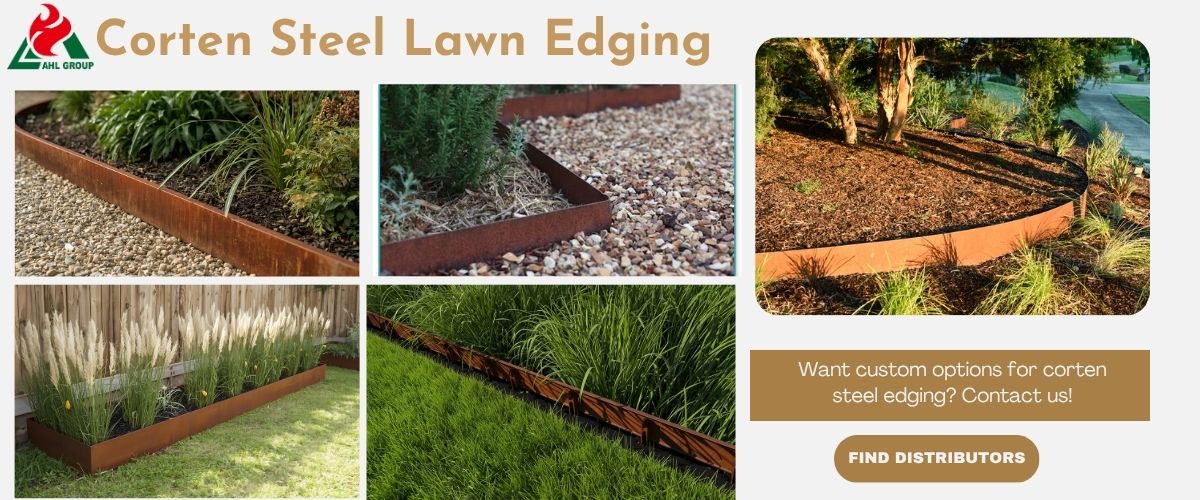
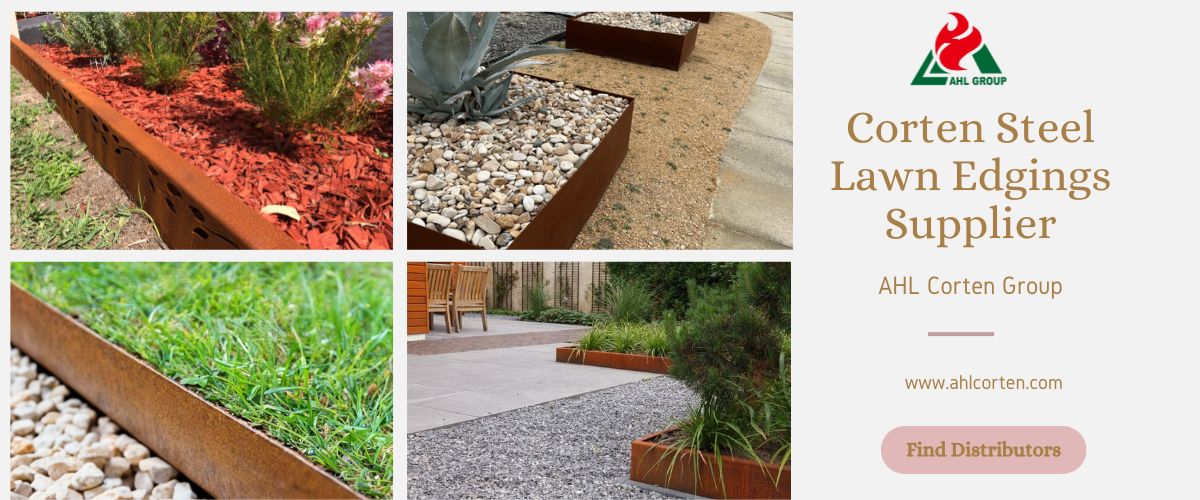
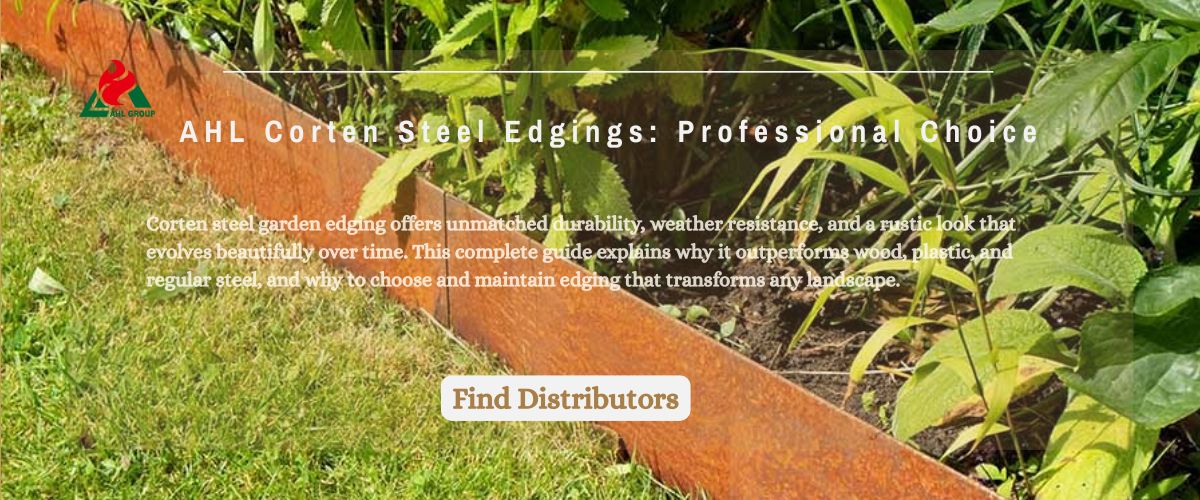
The most significant advantage of weathering steel edging is that it forms a unique rust-colored patina when exposed to the natural environment. This patina is not only a natural protective layer, but also showcases a warm ochre color and dark brown texture. Each section of sapwood has a unique patina, exuding a retro industrial style and natural texture. Whether it's a modern minimalist garden, a natural courtyard, or a commercial landscape, metal lawn edging blends seamlessly, instantly elevating the sophistication of the space, becoming the "face of the space" in 2026 landscape design.
2. Self-protection + Ultra-long lifespan
Unlike traditional sapwood, the patina of metal yard edging actively isolates oxygen, moisture, and contaminants, preventing internal metal corrosion and eliminating the need for additional painting or rust prevention treatments. High-quality weather-resistant steel sapwood has a lifespan of over 50 years, and its texture improves with use, completely solving the problems of brittle plastic sapwood and rotten wood sapwood, truly achieving "one-time investment, lifelong benefit."
3. Superior Practicality
Corten steel garden edging is not only aesthetically pleasing but also highly practical. It effectively prevents soil erosion, controls rainwater runoff, and protects the integrity of the garden topography; it also acts as a root barrier, preventing plant roots from spreading and damaging paths or lawns, combining aesthetics and functionality.
4. Flexible Design
Weathered steel edging boasts excellent flexibility, easily bending and shaping to create both clean, straight boundaries and smooth, natural curves. Whether it's a simple lawn boundary, a complex flower bed design, or irregular path edges, it adapts perfectly to meet various creative landscape design needs.
5. Low Maintenance Advantage
Compared to wood sapwood which requires regular painting and plastic sapwood which needs frequent replacement, weathered steel sapwood requires virtually no maintenance. Only occasional rinsing with water is needed to remove surface debris, ensuring its beauty and performance, significantly saving time and costs in later maintenance. This is especially suitable for busy homeowners and commercial landscape maintenance.
6. Clean Lines
Metal garden bed edging creates clean, sharp architectural lines, clearly defining garden boundaries and preventing soil overflow and messy lawns. Whether it's dividing lawns and flower beds, paths and vegetation, or creating raised flower beds, it can make the landscape layout more orderly and present an exquisite and high-end visual effect.
Straight-line weathering steel edging is the most classic and commonly used style, featuring clean, neat lines and a focus on a "simple and sophisticated" design. Metal border edging is suitable for creating formal, symmetrical landscape layouts, such as minimalist gardens, French courtyards, and commercial landscape belts. It can clearly define functional areas and, when paired with neat hedges and paving, highlights architectural aesthetics. The mainstream thickness in 2026 is 1.5-3mm, balancing strength and flexibility. After installation, the lines are smooth and not easily deformed.
2. Curved-Line Corten Steel Lawn Edging
Curved-line rusted steel edging undergoes a special annealing treatment, resulting in extremely high toughness. It can be bent on-site by hand without professional equipment, creating smooth, curved boundaries. It is suitable for naturalistic and English-style gardens, or courtyards with native trees. It can outline soft curves around trees and flower beds, breaking the harshness of straight lines and making the landscape more dynamic and layered. Paired with naturally growing vegetation, it creates a dynamic effect of "a new view at every step," making it the top choice for edging in "biodiversity gardens" in 2026.
3. Raised Planter Bed Weathering Steel Edging
Raised planter beds with corten steel edging is a popular style in 2026. It features a modular design, allowing for stacking and splicing. The height can be adjusted from 20cm to 90cm to accommodate the root systems of different plants. Steel edging for landscaping not only demarcates planting areas but also effectively isolates underground pests and weeds. The raised design also reduces back strain for gardening enthusiasts, combining practicality and user-friendliness. Some models also feature a widened top edge, enhancing structural stability and serving as a temporary bench—a multi-purpose item.
4. Heavy-Duty Retaining Wall Rusted Steel Edging
Heavy-duty retaining wall steel edging prioritizes "load-bearing protection," with a thickness of over 6mm. It is suitable for retaining wall scenarios with heights of 600-1200mm, such as sloping courtyards and flower beds with significant elevation differences. Rusted garden edging can withstand significant lateral soil pressure, preventing landslides and collapses. Requires professional structural design and installation, it is an indispensable heavy-duty edging material in large courtyards and commercial landscaping.
How to Choose the Thickness of Corten Steel Edging?
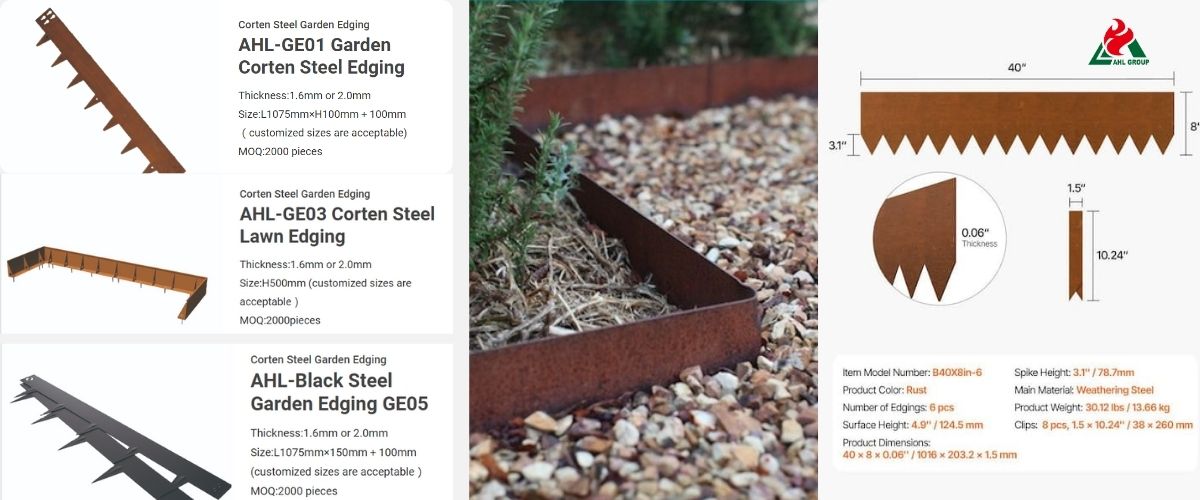
1. 1.6-2mm Thickness: Lightweight Application, Ideal for Small Flower Beds
The thickness of corten metal landscape edging emphasizes "lightweight and flexible" design, suitable for lightweight applications such as small vegetable gardens, small flower beds, and potted plant edging.
Advantages: Balances strength and flexibility, easily bent and shaped, convenient installation, and lower cost;
Disadvantages: Only suitable for installations with a height ≤150mm, weak load-bearing capacity, easily shifted by external forces, unsuitable for heavy-duty applications.
2. 3-4mm Thickness: Mainstream Choice, Suitable for Most Home Gardens
3-4mm is the most popular thickness in 2026, balancing durability and practicality, suitable for most home garden applications.
Advantages: Highly durable, withstands moderate soil pressure, not easily bent or deformed, suitable for lawn edges, ordinary flower beds, and small path edges, providing a professional and neat finish after installation.
Disadvantages:Heavier than 1.6-2mm thickness, requires more effort to install, and is slightly more expensive.
3. 6mm+ Thickness: Heavy-duty applications, ideal for driveways and retaining walls
6mm and above thickness landscape metal edging is heavy-duty, suitable for high-load applications such as driveway edges, large flower beds, and lightly reinforced retaining walls.
Advantages: Extremely robust, withstands immense soil pressure and external impacts, longer lifespan, and a high-end look.
Disadvantages: Heavy, cannot be easily bent on-site, requires prefabrication, complex installation, and higher cost; not suitable for small-scale home applications.
4. 10-12mm Thickness: Extra-Heavy-Duty Retaining Walls, For Large Landscapes
This thickness is extra-heavy-duty metal path edging, only suitable for retaining walls with a height of 600-1200mm, such as sloping courtyards and high-drop areas in large commercial landscapes.
Advantages: High impact resistance, excellent load-bearing capacity, stable structure, and can withstand large amounts of soil pressure for extended periods;
Disadvantages: Difficult to process, requires on-site welding, complex installation, high cost, and only suitable for professional large-scale landscape projects.
1. 100-300mm Height: Basic Model, for Lawns and Small Flower Beds
100-300mm is the most basic height, mainly used to demarcate the boundaries between lawns and flower beds, paths and vegetation, and to prevent soil overflow. Suitable for small family courtyards and balcony gardens. With a thickness of 1.6-4mm, it meets basic needs without appearing obtrusive, maintaining the simplicity of the landscape.
2. 300-600mm Height: For Raised Flower Beds, Balancing Practicality and Aesthetics
300-600mm height weathering steel edging is mainly used to create raised flower beds, suitable for planting vegetables, herbs, and small shrubs. When choosing, pay attention to whether the top has a folded edge: Folded edges are safer (avoiding sharp edges) and structurally more stable; unfolded edges are simpler, but edge protection is necessary to prevent corrosion and scratches.
3. 600-1200mm Height: Retaining Wall Dedicated, Essential for Large Landscapes
600-1200mm height edging is classified as retaining wall grade, used in landscapes with significant elevation differences and sloping courtyards. It requires a thickness of at least 6mm and must be professionally structurally calculated. This type of edging must withstand soil pressure and resist wind and rain erosion. It is recommended to choose products with professional certification to ensure structural safety.
Straight vs. Curved Corten Steel Edging: Which to Choose in 2026?
Straight Weathering Steel Edging: Suitable for These Scenarios
Straight-line edging is more suitable for landscape styles that pursue "order and formality," such as: 1. French, modern minimalist, or neoclassical house styles requiring symmetrical and orderly landscape layouts; 2. Courtyards with neat hedges and rows of plants requiring straight-line boundaries; 3. Commercial landscapes and community greening require a unified and clean visual effect for easy maintenance.
Curved Weathering Steel Edging Material: Suitable for These Scenarios
Curved designs are better suited for landscape styles that emphasize "naturalness and dynamism," such as: 1. Houses in English, pastoral, or Edwardian styles, or courtyards with native trees, requiring soft lines to complement the overall aesthetic; 2. Planting randomly arranged flowers and shrubs to create natural-style flower beds, where curves enhance the landscape's layering; 3. Terrain with undulations, where curved designs follow the contours of the terrain, stabilizing the soil while creating a smoother landscape.
Key Considerations: House Style and Surrounding Environment
Choosing between straight and curved lines depends not only on personal preference but also on the house style and surrounding environment:
- French or modern style houses: Prioritize straight lines to highlight the building's symmetrical beauty; - Pastoral or natural style houses: Prioritize curved lines to create a relaxed and dynamic atmosphere; - Houses with native trees: Prioritize curved lines to define boundaries around the trees, creating a more natural and harmonious feel; - Unobstructed, flat courtyards: A mix of straight and curved lines can be used, achieving both a sense of order and dynamism.
First, determine the installation location of the weathering steel edging, outlining the boundary (straight or curved). Then, use a measuring tape to measure the total required length of the edging. It is recommended to allow 5%-10% extra length to avoid insufficient material due to cutting errors.
Step 2: Digging a Trench for Enhanced Stability
Optional but recommended: Dig a trench approximately 50mm deep along the planned boundary. The trench helps the edging hold better in the soil, preventing displacement later, and also ensures a smoother transition between the installed edging and the ground, resulting in a cleaner visual appearance.
Step 3: Positioning, Bending, and Fixing
Place the weathering steel edging into the trench, adjusting its position to ensure a smooth (straight) or flowing (curved) line. If bending is required, manually and slowly shape it (2-4mm thickness), avoiding excessive force that could cause breakage. Once in place, gently tap the edging into the trench with a hammer to secure it firmly.
Step 4: Connecting the Joints and Finishing Touches
If multiple edge pieces need to be connected, align the joints and secure them with special clips, ensuring a tight, secure connection. Finally, backfill the trench with soil, compact it, and then rinse the edge piece surface with clean water to remove dust. Installation is now complete.
Weathering steel edging pieces require no complex maintenance. Rinse them once a year with clean water to remove fallen leaves, dust, and debris. Avoid using high-pressure water guns, as this may wash away the forming patina, leading to uneven oxidation; also, avoid using cleaning agents, as this may corrode the patina.
2. Regular Inspection
It is recommended to conduct visual inspections twice a year, in spring and autumn, focusing on three key points: 1. Stability: Check for displacement or deformation of the sapwood, especially in cold regions, to prevent displacement caused by frost heave; 2. Debris Accumulation: Remove fallen leaves and coverings from the sapwood surface to prevent damp areas that can affect patina formation; 3. Root Invasion: Check for compression or deformation of the sapwood by plant roots, and promptly remove any invading roots.
3. Rust Water Runoff Management
During the initial installation period (6-18 months), a small amount of rust water runoff will occur from the weathering steel sapwood, which is a normal process in patina formation. If the sapwood is near light-colored paving or stone, a layer of gravel buffer can be laid around it, or a biodegradable protective layer can be applied to prevent rust water staining; if staining has already occurred, it can be cleaned with a diluted phosphoric acid solution or a specialized rust remover.
4. Long-Term Maintenance
Once the patina has fully formed (approximately 18 months), the protective performance of the weathering steel edge material will reach its peak, at which point no additional maintenance is required. Do not use wire brushes, sandpaper, or other hard objects to polish the surface, as this will damage the patina; there is no need to spray paint or apply coatings. Let it weather naturally, and the color will gradually deepen, and the texture will become increasingly warm and lustrous.
Conclusion
In 2026, Corten Steel Edging, with its aesthetic appeal, durability, low maintenance, and environmental friendliness, will become the preferred material for landscape design. When choosing, focus on three key aspects: select the style based on the scenario (straight/curved/elevated/retaining), select the thickness based on the load (1.6mm-12mm), and select the height based on your needs (100mm-1200mm). Combine this with material certification and professional installation to find the perfect product for your needs. It's not just a tool for defining landscape boundaries; it's a crucial element in enhancing the quality of outdoor spaces and achieving sustainable landscapes. A single installation can accompany your garden for decades, showcasing a timeless quality that grows with use.
Ready to Choose a Corten Edging Material Specifically for Your Outdoor Space?
Still struggling to choose a landscape edging material? Want to own the most popular and durable weathering steel edging material of 2026 and create a sophisticated outdoor landscape? Visit our website now to browse our full range of premium weathering steel edge trims, from straight to curved, from light to heavy-duty – there's something for every yard! Contact our professional customer service team for free one-on-one support!

.jpg)
.jpg)
.jpg)
 Fill In The Inquiry