5 Drainage Mistakes to Avoid When Installing Corten Steel Planters
Corten steel planters have become a popular choice for gardens, patios, and commercial landscapes thanks to their unique rust-patina texture. Many people assume that since weathering steel is inherently durable, there’s no need to worry about drainage design.
In reality, weathering steel only gradually forms a protective rust layer; it does not automatically solve the problem of water accumulation. The structure of the planter’s base, the surface on which it’s placed, the growing medium, and local rainfall conditions all collectively determine whether excess water can drain away smoothly.
Drainage design directly affects the health of plant roots and also influences the long-term stability of the planter. This article outlines the top 5 drainage mistakes most commonly made when installing large steel planter boxes, helping you avoid them before you even start planting.
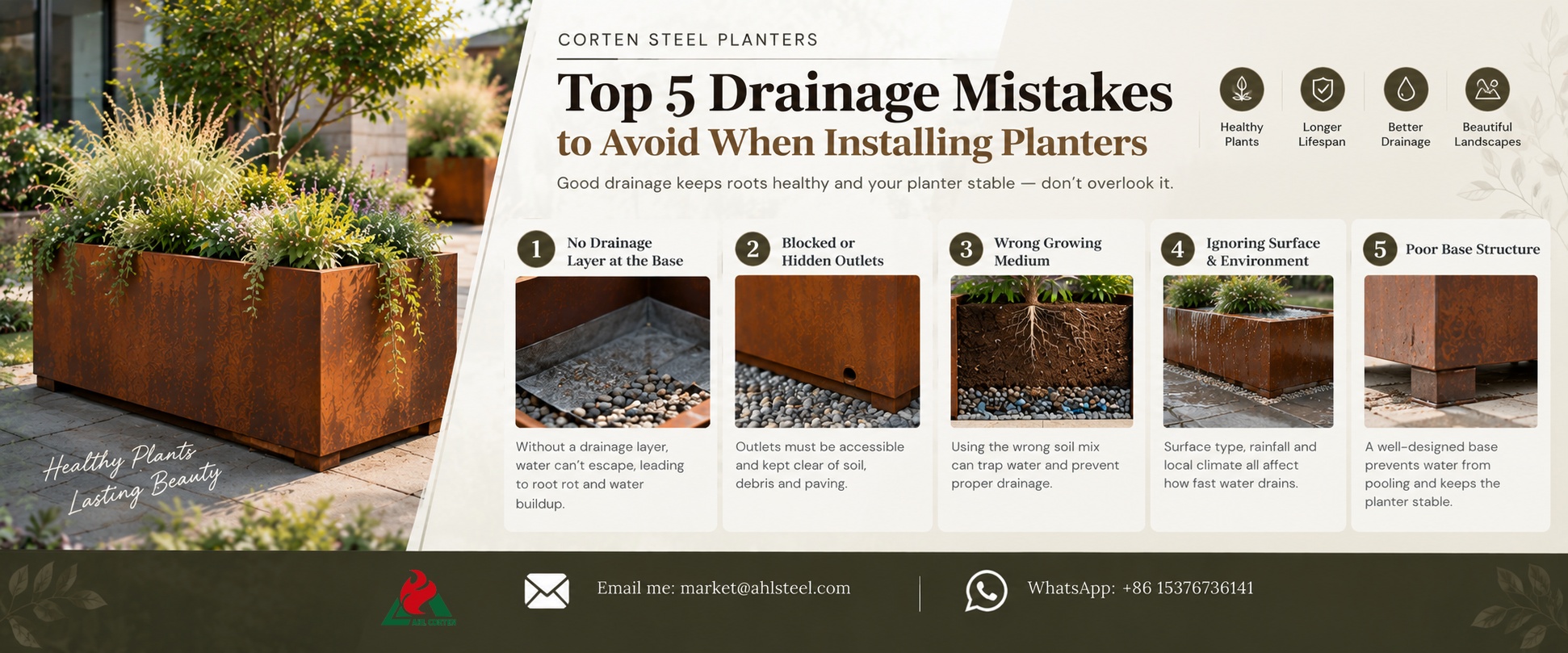
Quick Guide: Why Drainage in Corten Steel Garden Planters Is Essential
The hazards posed by standing water are twofold. For plants, when roots are submerged in water for extended periods, oxygen is displaced from the soil, leading to root hypoxia and root rot, causing the plants to gradually wither and die. For the weathering steel planters themselves, persistent moisture and standing water disrupt the natural cycle of drying and wetting, resulting in uneven patina formation and localized abnormal corrosion.
Proper drainage isn’t just a simple hole—it’s a complete system: drainage outlets, drainage channels, the supporting surface, substrate selection, and ongoing maintenance—none of which can be overlooked.
Misconception 1: Garden Planters Lack Drainage Outlets Or Have Poorly Designed Ones
Many customers assume that metal planters will naturally allow water to seep out, so the presence of drainage holes doesn’t matter. This is a very common misconception.
Enclosed rusted steel planters with a base plate must have drainage holes or channels pre-drilled in the base plate. Baseless models can be placed directly on the ground, but only if the underlying native soil has sufficient permeability.
Even if drainage holes are provided, water can still pool easily if there are too few holes, the holes are too small, or they are concentrated in one area. Small holes are also prone to clogging with soil and debris; if the holes are too large, the potting soil will be washed away with the water.
✅ Correct Approach
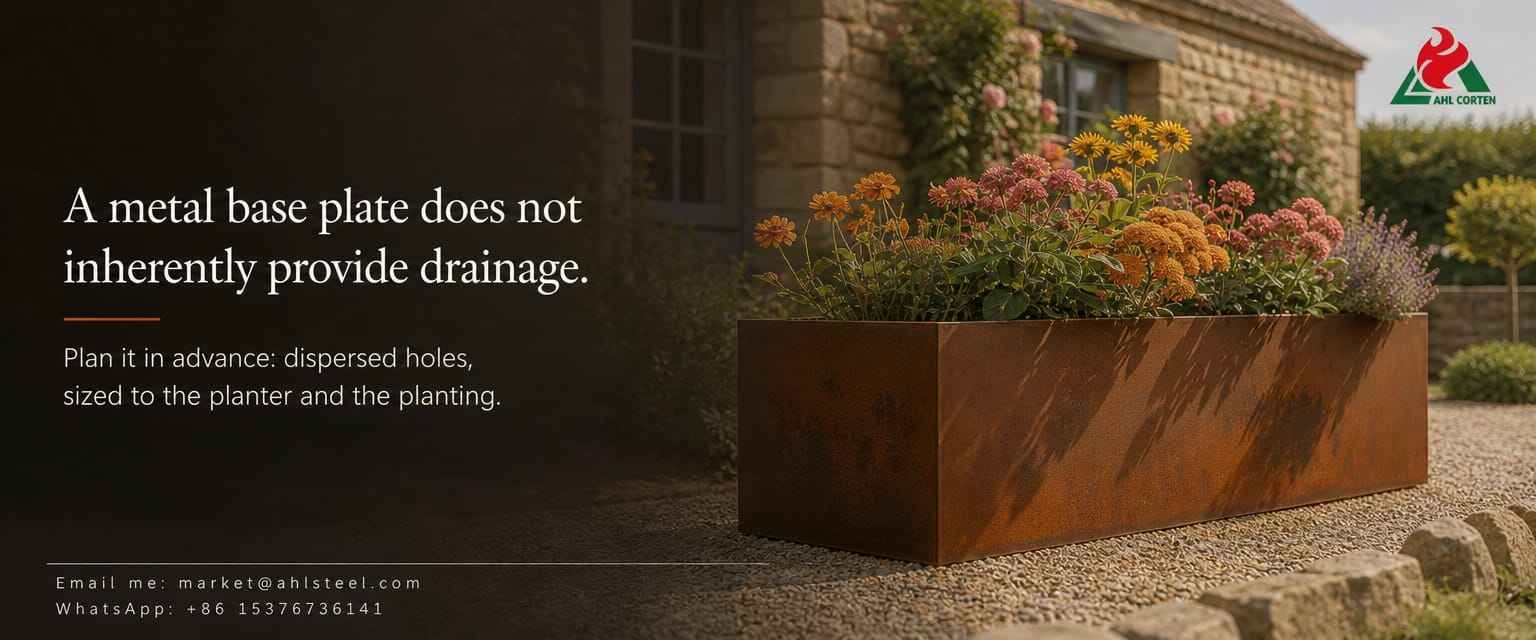
Arrange drainage holes in a dispersed pattern so that standing water in every corner of the planter can drain out. Determine the number and size of the holes based on the raised garden bed’s dimensions, local rainfall, watering frequency, and the plants’ water requirements. You can use mesh screens or geotextile fabric to prevent soil loss without obstructing water flow.
Summary: A metal base plate does not inherently provide drainage; a drainage system must be designed in advance and regularly checked for blockages.
Misconception 2: Placing Corten Planters Directly On Surfaces Prone To Water Pooling
Just because water flows out of the drainage holes doesn’t mean drainage is effective. The water must have a place to go.
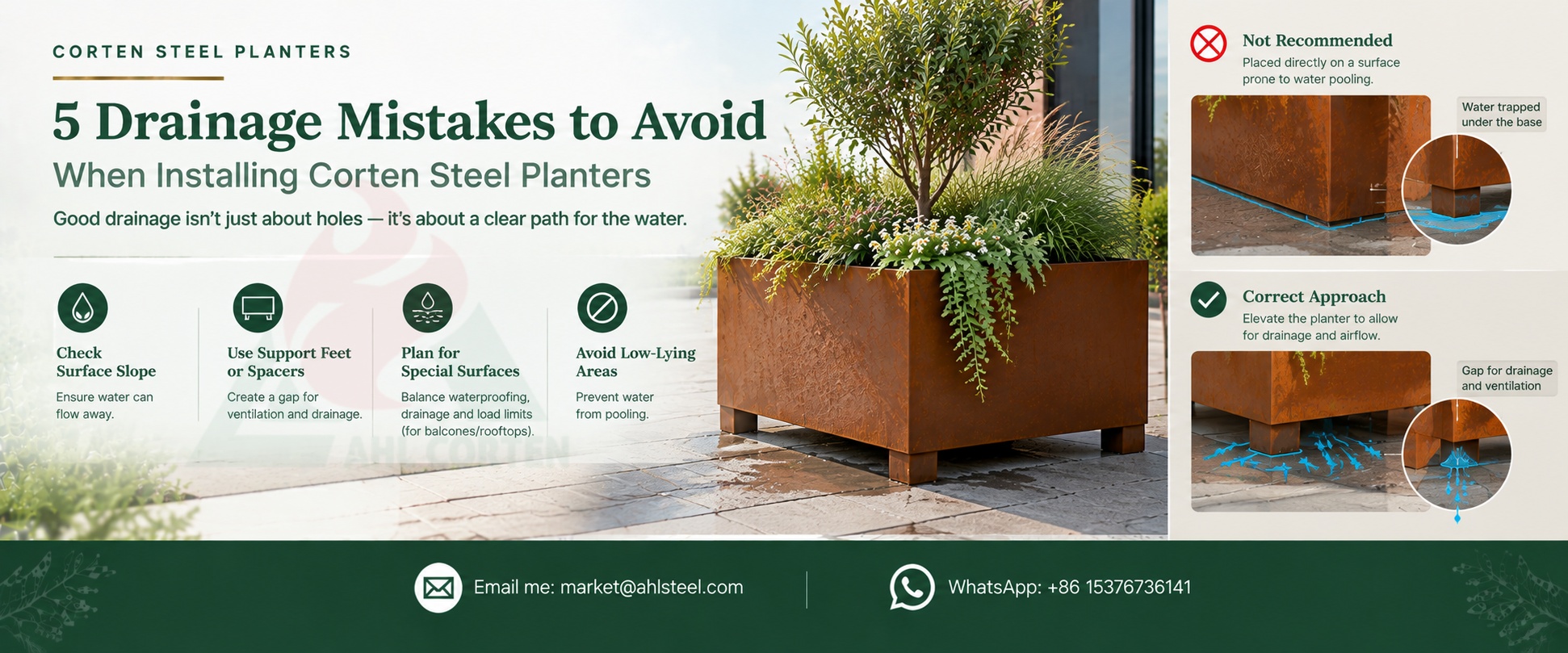
If the planter is placed directly against concrete, paved tiles, a balcony floor slab, or a surface with improper slope, the drained water will become trapped at the bottom of the planter. When the base plate is constantly submerged in standing water, the steel remains persistently damp, which not only accelerates localized rusting but also negatively affects the soil moisture levels inside the planter.
Drainage characteristics vary significantly depending on the surface: natural soil, clay, paved terraces, and rooftop platforms all require completely different solutions. For balconies and rooftops, additional considerations include the waterproofing layer, drainage points, and load-bearing limits.
✅ Correct Approach
Before placement, check the ground slope and anticipate the flow direction of rainwater and irrigation water. Use support feet or spacers to elevate the planter, creating a gap beneath the base to allow for ventilation and water drainage. For balcony and rooftop projects, verify the waterproofing layer, surrounding drainage outlets, overflow paths, and the platform’s weight capacity in advance. Do not place the planter in low-lying areas where rainwater naturally pools.
In a nutshell: Drainage holes are just one part of the solution; the water that drains out must have a clear and safe path to flow.
Misconception 3: Relying Solely on a Thick Layer of Gravel at the Bottom for Drainage
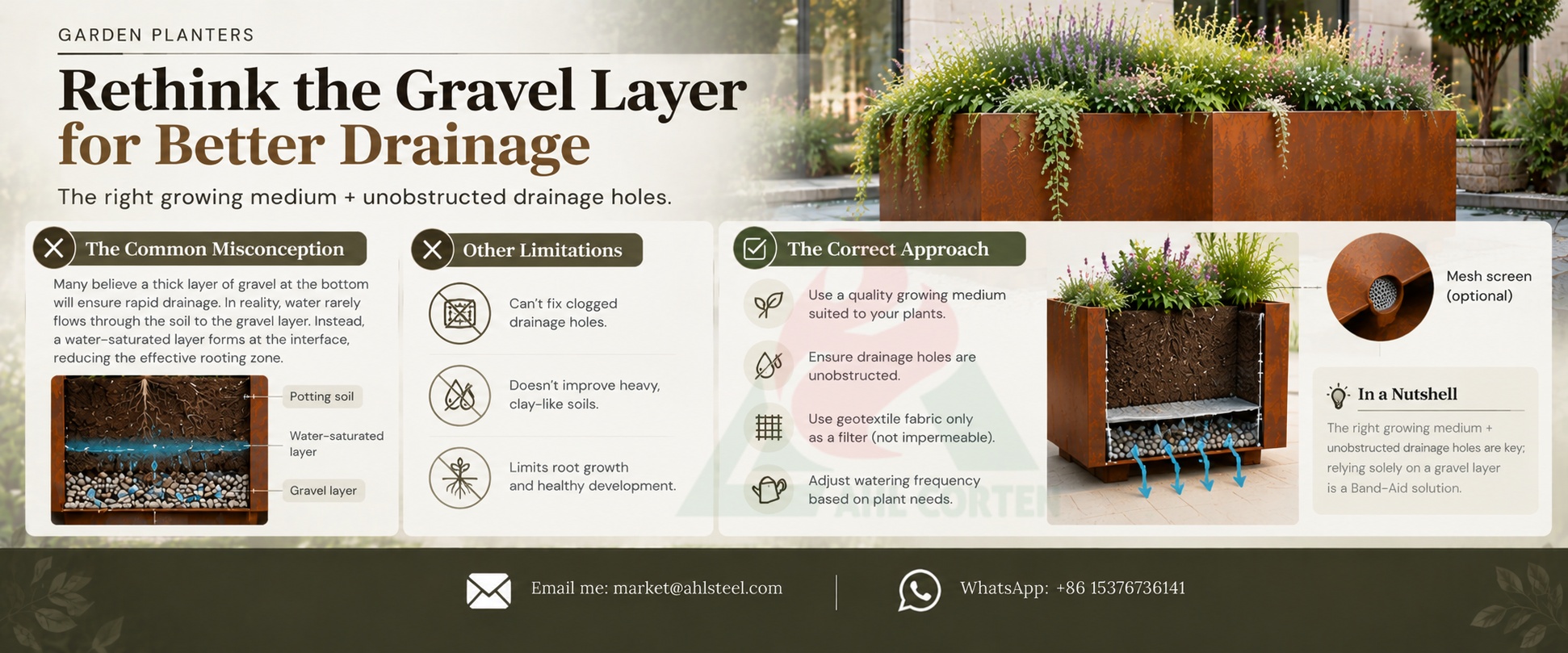
There is a long-standing misconception in the gardening community: that laying a thick layer of gravel at the bottom of a planter will ensure rapid drainage.
In container gardening, water rarely flows naturally from fine-grained potting mix down to a coarse gravel layer. Instead, a water-saturated layer forms at the interface between the soil and the gravel, reducing the effective rooting zone and limiting the space available for plant root growth.
A gravel layer cannot fix clogged drainage holes, nor can it improve heavy, clay-like soils that retain too much moisture.
✅ The Correct Approach
Prioritize using a specialized growing medium suited to the plant variety, rather than relying on gravel as the primary drainage solution. Ensure drainage holes are unobstructed so water can flow directly out of the container. If concerned about soil erosion, lay a permeable geotextile as a filter—but be careful not to use impermeable materials that block water flow. Adjust watering frequency according to the plant’s needs.
In a nutshell: The right growing medium + unobstructed drainage holes are key; relying solely on a gravel layer is a Band-Aid solution that doesn’t address the root cause.
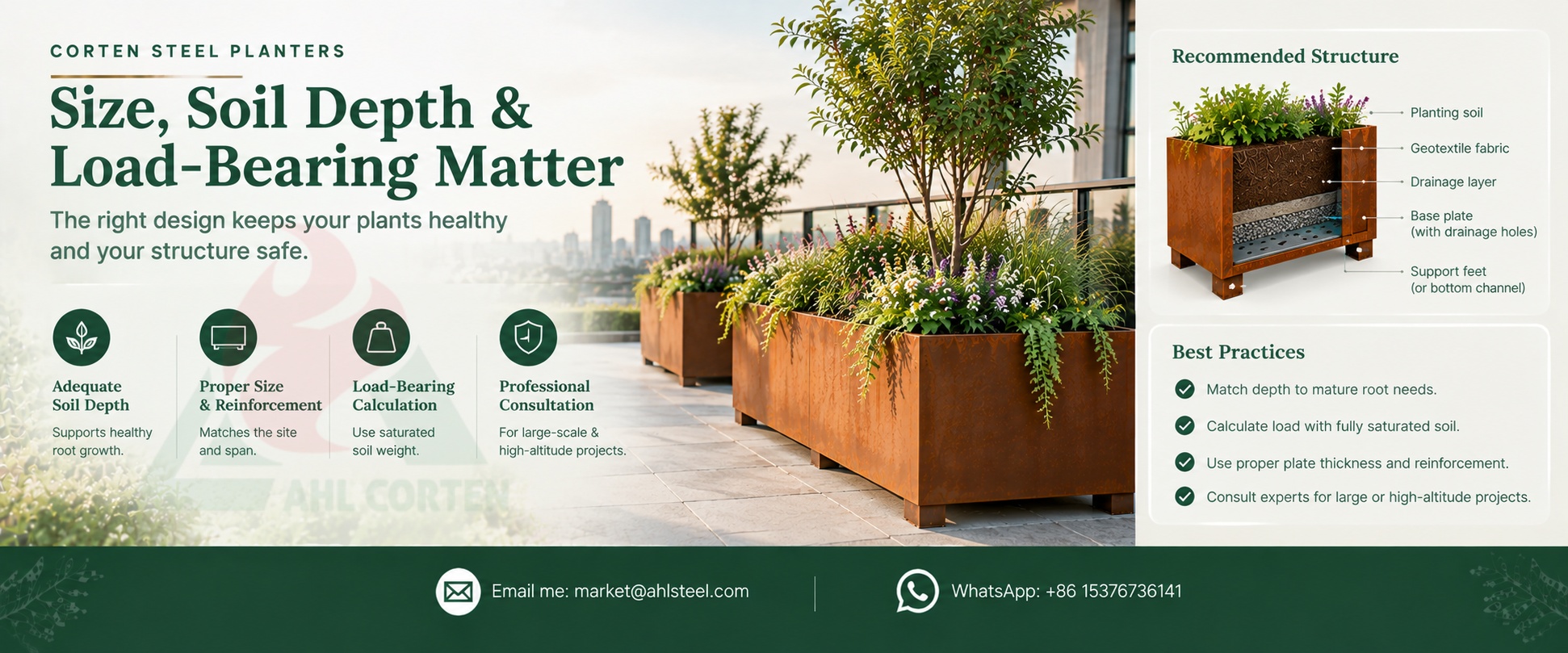
Misconception 4: Ignoring Container Size, Soil Layer Depth, and Load-Bearing Requirements
Even with adequate drainage holes, drainage performance and safety will be compromised if the container is too shallow, its dimensions don’t match the site, or the bottom lacks reinforcement.
The deeper the metal square planter, the greater the space available for an unsaturated soil layer, resulting in a more stable environment for the root system. Large planters become significantly heavier once saturated with water, posing a high load-bearing risk on elevated surfaces such as decks, rooftops, and balconies. The weight of the soil, drainage materials, the planter itself, and the plants must all be factored into the load calculation.
✅ Best Practices
The depth of the planter should match the root growth requirements of the plants once they reach maturity. When calculating load-bearing capacity, base calculations on the weight after the soil is fully saturated with water; do not estimate using the weight of dry soil. Select appropriate steel plate thickness, folded-edge reinforcement, and bottom support structures based on the planter’s span and soil depth. For large-scale commercial planters and high-altitude installation projects, consult with fabricators and structural engineers in advance to develop a plan.
Summary: Drainage, plant growth, and structural safety form an integrated system; coordinated design is especially critical for large-scale rooftop projects.
Misconception 5: Neglecting Rust Water Overflow and Failing to Maintain Long-Term Drainage
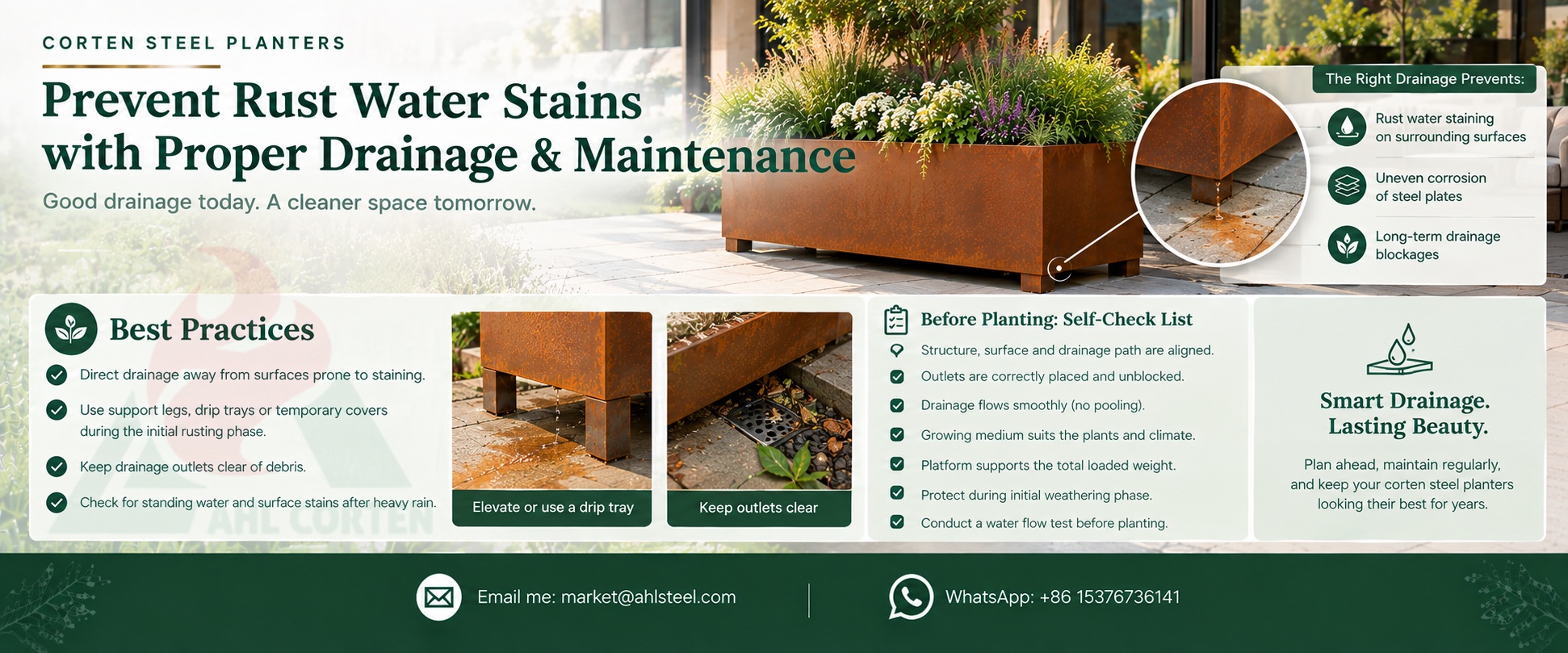
Weathering steel relies on repeated cycles of drying and wetting to gradually form a stable, protective rust layer. If drainage is poor or water accumulates over the long term, it disrupts the development of this protective layer, leading to uneven corrosion of the steel plates.
During the initial weathering stage, rainwater runoff carries yellowish-brown rust water. This rust water easily stains light-colored paving, stone, pressure-treated wood, and building facades, leaving stains that are difficult to remove.
✅ Best Practices
Direct drainage away from surfaces prone to staining, such as stone, light-colored pavers, and wood finishes. During the initial rust-aging phase, elevate the planter box using support legs, or install a drip tray or temporary protective covering. Regularly clean leaves, silt, and roots from drainage outlets to prevent blockages.
After heavy rain or frequent watering, check for standing water at the bottom of large steel planter boxes and ensure surrounding surfaces have not been stained.
In a nutshell: Drainage design must balance water flow management with long-term maintenance plans—it shouldn’t be limited to just the day of installation.
Before Planting: Self-Check List for Drainage in Corten Steel Garden Planters
Before filling your custom steel planters with soil and placing seedlings, check each item on the list below to reduce the likelihood of problems later on:
- The planter structure, installation surface, and drainage path are properly aligned
- Drainage outlet specifications and locations are appropriate, and the outlets have not been blocked prematurely
- Drainage flows smoothly and does not pool at the bottom of the planter
- The growing medium must be suitable for the plant species and local climate
- The installation platform can support the total load of the planter when it is saturated with water
- Protect the box during the initial weathering phase to prevent rust water from staining the surface
- If conditions permit, conduct a water flow test before backfilling with soil and planting.
FAQ About Drainage in Planters
1. Do Corten Steel Planters Require Drainage Holes?
Enclosed planters with a base plate generally require drainage holes or channels to allow excess water to drain out. Bottomless, freestanding models do not require drainage holes, but the underlying soil must have good permeability.
2. Can Rusted Steel Planters Be Placed Directly On Concrete?
They can be placed on concrete, but it is not recommended to place them directly against the ground. Direct contact can trap moisture at the bottom, and rust water during the initial stages may also stain the concrete. It is preferable to use support feet, spacers, or a drip tray to create a gap for ventilation and drainage.
3. Does Laying Gravel at the Bottom of the Planter Improve Drainage?
Relying solely on a layer of gravel is not effective. Gravel tends to raise the water table and restrict root space. A suitable growing medium combined with unobstructed drainage holes is the most reliable solution.
4. How Can I Prevent Water from Pooling at the Bottom of The Planter?
Check the ground’s drainage slope, keep drainage channels clear, and elevate the planter using support brackets. For balcony and rooftop projects, additionally verify the waterproofing layer, drainage points, and weight capacity limits.
5. Can Poor Drainage Damage Corten Steel?
The primary hazard of standing water is root rot. Prolonged, continuous submersion and environments that remain damp year-round can interfere with the formation of a stable rust layer, leading to localized, uneven corrosion.
6. How Often Should Drainage Holes Be Inspected?
Inspections are mandatory after installation and backfilling, as well as when repotting or replacing soil. Conduct thorough inspections during rainy seasons and after snowmelt; for complex drainage systems with concealed structures, we recommend inspecting at least once a year.
Effective Drainage Begins with Comprehensive Design Planning from the Outset
The five misconceptions listed above are the primary causes of drainage failure in weathering steel planters: insufficient drainage holes, placement on waterlogged surfaces, reliance solely on gravel, neglect of dimensions and load-bearing capacity, and lack of rust water management and regular maintenance.
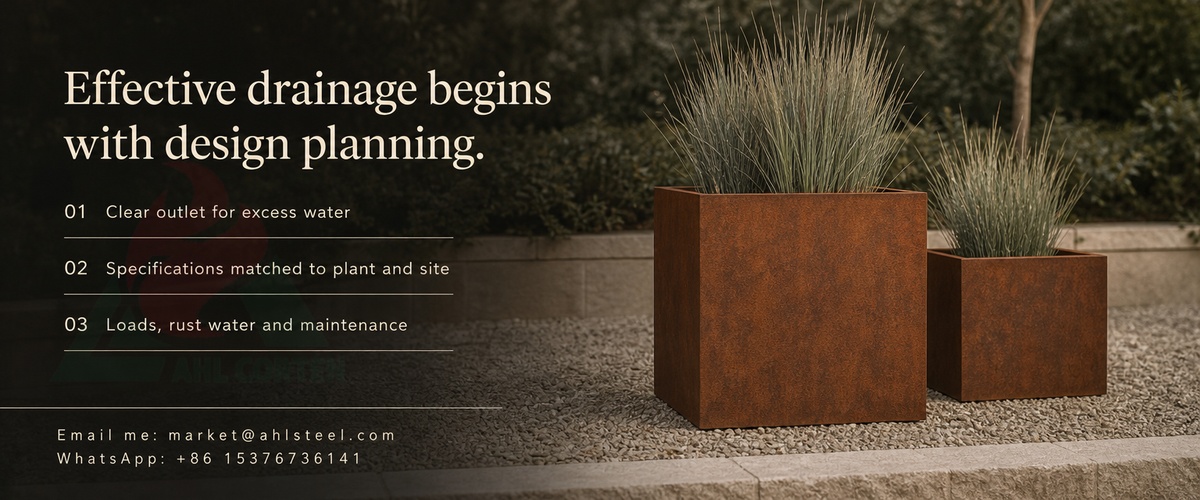
To ensure effective drainage, follow these three core principles: First, provide a smooth outlet for excess water; Second, ensure the planter specifications match the plants’ needs and the installation site; Third, consider structural loads, rust water drainage, and future maintenance in advance.
Whether for a private garden or a commercial landscaping project, if you need custom weathering steel planters, please contact AHL. Based on your site conditions, we can customize planter dimensions, base plate structures, drainage hole layouts, and reinforcement techniques, delivering a one-stop solution for custom made metal planters that meet your drainage requirements.
Want to Create a Unique Backyard Metal Planter? Contact Us!
Back


 Fill In The Inquiry