When you first spot a weathered steel planterin a garden, it always evokes a special feeling. It lacks the sheen of something brand new; instead, it seems as though it has been there from the very beginning, imbued with a texture that comes from the passage of time.
The most captivating aspect of corten steel planters lies in their warm, layered copper-orange tones, the subtle variations in patina between adjacent panels, and the way their colour shifts with the light and weather. This material develops a unique character the more it is used, making it a rare find in garden décor.
However, the reality is that many people do not have a deep understanding of metal trough planters before purchasing them, and often have various questions: Will it really stop rusting eventually? Will it stain my patio? How long does the weathering process take? What will it look like during the weathering process? Can it be used on a rooftop terrace? Is it suitable for growing edible crops?
Based in Anyang, Henan Province, China, AHL Group supplies weathering steel and powder-coated aluminium planters to homeowners, landscape architects and commercial developers across North America, Oceania, Europe and the rest of the world. We have had countless discussions with clients about weathering steel, and this article will focus on providing design tips for weathering steel planters.
We won’t exaggerate. For the right applications and garden aesthetics, weathering steel is indeed an excellent choice, but it is not suitable for every surface, every setting, or every buyer. By the end of this guide, you will know whether it is right for your project; if so, you will also understand how to make the most of its benefits.
Key Design Considerations: Choosing Between Pre-weathered and Virgin Planters
When you order large metal planter boxes, you will typically receive the products in one of two states. Unweathered, raw steel planters appear dark silver-grey, occasionally with a blue-grey metallic sheen, which is a stark contrast to the warm orange-brown appearance shown in photographs. Pre-weathered rusted steel planters, on the other hand, have undergone an accelerated oxidation process prior to delivery and already display the characteristic orange-brown tones. Currently, weathering steel planters sold by online metal retailers are usually pre-weathered by default, and there are several key reasons for this.
Why Pre-Weathered Corten Planters are the Top Choice for 2026
Firstly, from an aesthetic perspective, pre-weathered planters are visually striking right from the start, rather than sitting lifelessly in your garden for months like a grey tin box.
More importantly, from a practical standpoint, pre-weathered means the planter has already passed through the most intense rusting phase before it reaches you. Untreated weathering steel produces a significant amount of rusty runoff during its first few weeks of outdoor exposure, which can easily stain surrounding surfaces. Pre-weathered planters have already passed this stage, significantly reducing the risk of rust stains.
Tips for Accelerating the Weathering of Untreated Corten Planters
If you have received an untreated steel planter (or have specifically ordered the untreated version), there is a simple way to accelerate the formation of initial rust on the surface: place it on grass or gravel for 4 to 6 weeks before moving it to its intended location. If the weather is dry, simply water the planter occasionally. When you move the planter, most of the initial rust will remain on surfaces that can withstand staining, rather than contaminating the core areas of your garden.
Types of Planters: Shapes, Dimensions and Best Design Practices
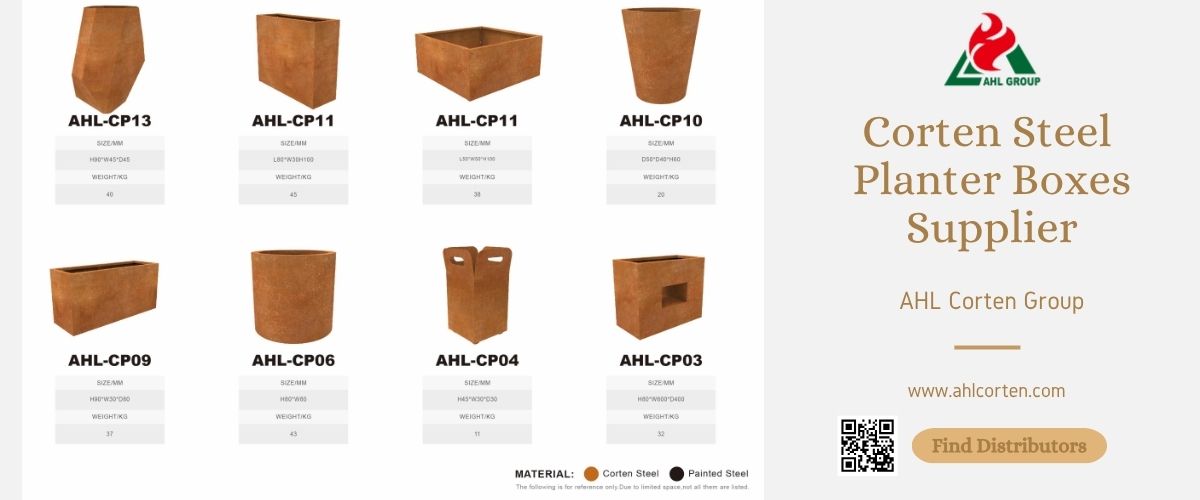
Outdoor planters are broadly similar in shape to aluminium planters, but due to the weight and aesthetic characteristics of the material, certain shapes are particularly well-suited to it. Below are several common types and design tips.
Square and Rectangular Trough-Style Weathering Steel Planters
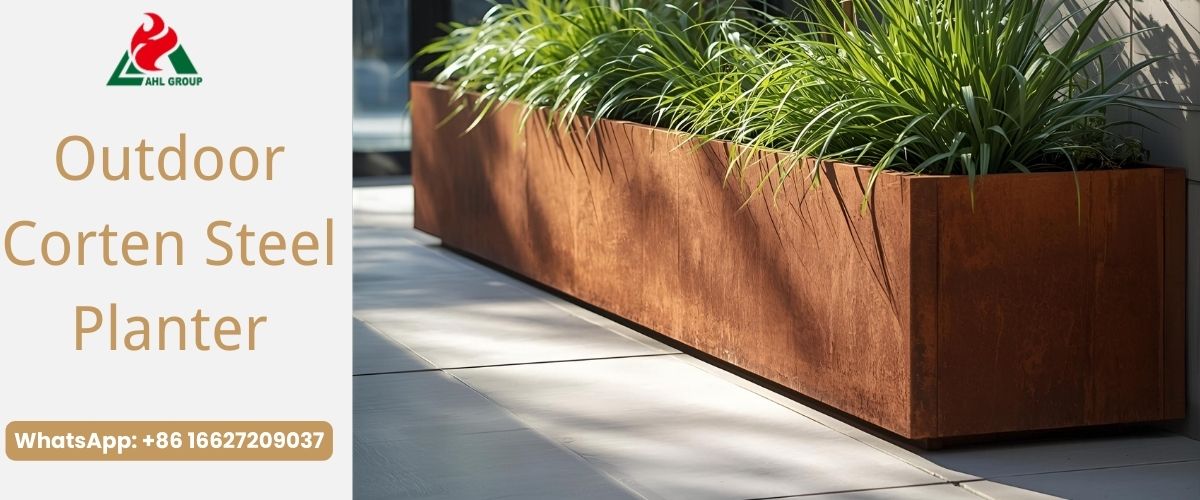
Square planters are the most popular shape for weathering steel planters, and for good reason. Their slender, low-profile horizontal form creates a visual contrast with the vertical growth of the herbaceous plants or shrubs planted within. The warm rust tones blend naturally and harmoniously with rendered walls, hardwood decking, light-coloured limestone and modern brickwork. In landscape design, trough planters are widely used for defining boundaries, edging patios and screening pathways. For residential use, placing a pair of square or rectangular weathering steel planters on either side of an entrance or gate is one of the most elegant and understated ways to utilise this material. The weight and texture of weathering steel lend a sense of stability to the arrangement that lighter materials cannot match.
Tall Columnar and Tower-Style Weathering Steel Planters
Tall, slender rusted steel planters are ideal as vertical accent features in modern gardens. Compared to aluminium or fibreglass, weathering steel is heavier, meaning that tall columnar planters are inherently stable and typically do not require anchoring in residential settings. These planters are particularly well-suited for growing ornamental grasses or single-stemmed bamboo; the vertical lines of the plants echo the vertical form of the planter, creating a clean and layered visual effect.
Weathering Steel Raised Beds
Weathering steel raised beds have become one of the most popular kitchen garden elements in modern residential design. At the appropriate height (typically 600 to 800 millimetres), weathering steel raised beds are not only ergonomic, facilitating planting and harvesting, but also visually striking. The warm, rust tones complement the green foliage of the vegetables, adding a sense of design to the kitchen garden that wooden or plastic raised beds cannot achieve.
Large-Scale and Landmark Weathering Steel Planters
For commercial projects and high-end residential schemes, large corten steel planters ranging from 800 mm to 1,500 mm in size are increasingly being specified as landmark decorative elements. A large weathering steel cube planter, planted with multi-stemmed white birch and large New Zealand flax, becomes a sculptural work of art in its own right, rather than merely a container.
Bottomless Weathering Steel Raised Beds
Bottomless corten steel raised beds are a variation on standard planters; they are placed directly on the ground, allowing plant roots to grow freely into the soil beneath. This design is suitable for planting larger shrubs or small trees, which would eventually become root-bound in enclosed containers; it is also ideal for creating vegetable beds on lawns or bare soil. As the steel only comes into contact with the soil at the base, rather than containing large amounts of damp growing medium, concerns regarding internal corrosion are significantly reduced, and the outer walls of the planter will develop a complete, stable patina through normal cycles of wet and dry conditions.
2026 Design Tips: Plant Pairings for Weathering Steel Planters
Choosing the right plants can maximise the aesthetic appeal of weathering steel planters. Given their durable nature, here are some specific recommendations for plant pairings.
Recommended Plant Types: Drought-Tolerant and Cold-Hardy Varieties
Rusted steel planters are inherently durable and resistant to wind and rain, making them ideal for pairing with drought-tolerant and cold-hardy plants. These plants are not only easy to maintain but also complement the rugged texture of the steel, creating a natural and harmonious visual effect. Examples include lavender, sedums and kale, which can adapt to the variable outdoor climate whilst providing a striking colour contrast against the rust-coloured steel.
Plant Pairing Techniques: Layering and Colour Coordination
When selecting plants, focus on creating a sense of depth through varying heights to avoid the monotony of uniform levels. Combine tall ornamental grasses and shrubs with low-growing herbaceous plants and succulents to create a three-dimensional composition.
At the same time, pay attention to colour coordination. The orange-copper hue of weathering steel is a warm tone, which can be paired with cool-toned plants (such as blue lavender or green ferns) to create contrast, or with warm-toned plants (such as orange marigolds or red carnations) to enhance a sense of warmth.
Seasonal Plant Selection: A Year-Round Solution
To ensure the corten planters remain visually appealing throughout the year, plants should be selected according to the season. In spring, bulbous flowers such as tulips and daffodils can be chosen to add vitality; in summer, flowering plants such as roses and cosmos can be paired to enrich the colour palette;
In autumn, chrysanthemums and sage can be planted to complement the warm tones of the weathering steel; in winter, hardy evergreens such as holly can be selected to maintain a degree of visual appeal even in the depths of winter.
Styling Weathering Steel Planters
Weathering steel planters possess a unique texture that complements a variety of garden design styles; simply adjust the styling approach according to the style’s characteristics to achieve the desired effect.
Modern Minimalist Style: A Fusion of Clean Lines
The modern minimalist style pursues simplicity and grandeur, and the clean lines of metal plantersperfectly align with these characteristics. Opt for planters with clean, geometric lines—such as square or rectangular shapes—paired with minimalist plants (such as single-stemmed bamboo or succulents).
When arranging them, emphasise symmetry and negative space, avoiding excessive ornamentation. Allow the texture of the weathering steel to become the visual focal point, complementing the clean lines of the garden and light-coloured walls.
Rustic Style: Creating a Warm, Natural Atmosphere
The rustic style emphasises nature and warmth, and the vintage rust tones of weathering steel planters blend seamlessly into this setting. Opt for trough or raised planters to grow practical plants such as vegetables and herbs, creating a pastoral feel.
Pair them with wooden fences and flagstone paths to ensure the weathering steel planters blend perfectly with the natural surroundings, fostering a warm, unpretentious rustic garden atmosphere.
Industrial Style: A Clash of Concrete and Brick
Industrial style is characterised by its rugged and robust aesthetic, and the material properties of weathering steel align perfectly with this style. Pair weathered steel planters with concrete walls and brick paving to create a strong industrial texture.
Opt for minimalist columnar or large-scale planters, paired with tall ornamental grasses, cacti and similar plants, to enhance the space’s rugged feel and sense of depth, highlighting the unique charm of industrial style.
Layout and Design Techniques for Weathering Steel Planters
A well-thought-out layout and design allow metal trough planters to blend seamlessly into the garden space, enhancing its overall aesthetic appeal. Here are several practical techniques.
Layered Design: Creating Visual Interest Through Height and Depth
Layering is a common technique in garden design. When it comes to weathering steel planters, combining planters of varying heights can create a rich visual hierarchy. For example, in a corner of the courtyard, pairing tall columnar planters with low-slung trough planters, and combining this with plants of varying heights, creates a visually staggered effect that lends the space a greater sense of depth.
Space Optimisation: Strategies for Negative Space and Circulation
When planning the layout, it is important to leave sufficient negative space and avoid placing corten steel planters too densely, which can make the space feel cramped. Plan the placement of planters sensibly according to the size of the garden and the flow of foot traffic, ensuring that they do not obstruct daily movement.
For instance, placing trough planters along the edge of a terrace as accents, and positioning a pair of columnar planters at the entrance for decoration, is both aesthetically pleasing and space-efficient, maximising the utilisation of the available area.
Utilising Boundaries: Cleverly Using Weathering Steel Planters to Define Spaces
Rusted steel planters can serve as natural boundary markers in the garden, effectively separating different functional areas whilst also providing a decorative element.
For instance, using trough-style metal planter boxes to delineate the boundary between flower beds and pathways, or arranging multiple small weathering steel planters to demarcate leisure areas from planting zones, creates a clearer and more orderly garden layout.
Although planters are durable, proper maintenance can extend their lifespan and preserve their aesthetic appeal. Below are some specific maintenance tips.
Cleaning Tips: Preserving the Patina of Weathering Steel Planters
The patina on weathering steel planters is a reflection of their unique charm. There is no need to deliberately remove it when cleaning; simply wipe away surface dust gently with a soft cloth. If there are stubborn stains on the surface, rinse with clean water. Avoid using corrosive cleaning agents, as these may damage the patina layer, affecting both the planter’s appearance and its corrosion resistance.
Plant Care: Ensuring Healthy Soil and Plants
The quality of the soil in the planter directly affects plant growth. Choose loose, well-aerated, and well-draining soil to prevent soil compaction, which can lead to root rot. Check soil moisture regularly and water appropriately according to the plants’ needs, avoiding waterlogging. At the same time, fertilise regularly to replenish soil nutrients, ensuring healthy plant growth and creating a more harmonious effect with the weathering steel planter.
To address common queries regarding the purchase and use of large metal planter boxes, we have compiled the following answers to help you make the best choice and use them effectively.
1. What Factors Should Be Considered Before Purchasing Outdoor Planters?
First, consider the placement, available space and the types of plants you wish to grow. Outdoor planters must be weather-resistant and sturdy, whilst also complementing the overall style of your garden, patio or balcony. Planning ahead can help you avoid choosing planters that are too small or unsuitable, ensuring they fit perfectly with the space and your plants.
2. What Material Is Best for Outdoor Planters?
Different materials offer distinct advantages: polyester planters are lightweight and practical, ideal for balconies and patios; aluminium planters are durable and low-maintenance; weathering steel planters are robust and long-lasting, exuding a natural, vintage aesthetic. The best choice depends on your needs: if you require flexibility in placement, opt for lightweight materials; if you are looking for a long-term, fixed and stylish decorative feature, weathering steel planters are an excellent choice.
3. How Important Is Drainage In Outdoor Planters?
Good drainage is crucial for plant health, particularly outdoors where planters are prone to waterlogging. Drainage holes or built-in drainage systems effectively prevent waterlogging and root rot, thereby extending the lifespan of both the plants and the planters. When purchasing planters, ensure they feature a good drainage design; if not, you can drill holes yourself.
4. What Size Planter Do You Need?
The size of the planter depends on the space required for the plant’s root system and the type of plant. Flowering plants and ornamental grasses are generally suited to smaller planters, whilst shrubs and small trees require larger containers. Adequate volume not only allows the plant to grow healthily but also maintains visual balance, preventing the planter from appearing out of proportion with the plant.
5. Which Planters are Suitable For Patios, Balconies or Roof Terraces?
For elevated spaces, lightweight planters are generally the preferred choice, as they are easier to move and position. Planters made from materials such as polyester or aluminium combine lightness with durability, making them an excellent option.
If the terrace has sufficient load-bearing capacity, small weathering steel planters can also be considered; their unique texture adds a striking feature to elevated spaces, but care must be taken to ensure they are placed securely to avoid the risk of falling.
Conclusion: Upgrade Your 2026 Garden With Planters
With their unique texture, durability and diverse designs, corten steel planters have become a popular choice for garden design in 2026. Using the tips in this article, you can easily select, style and maintain weathering steel planters, allowing them to add a unique charm to your garden.
AHL Group remains committed to providing high-quality planters to clients worldwide. Whether for residential gardens, commercial projects or landscape design, we can offer you the right products and professional advice.
In 2026, why not choose a suitable metal planter and use its vintage texture and natural charm to create your ideal garden space? Contact us now for a free quote on corten steel planters!


.jpg)
.jpg)
.jpg)
.jpg)
 Fill In The Inquiry
