In outdoor landscape design, the appeal of corten steel lies in its resilience, which stands the test of time. That weathered oxide layer, sculpted by wind and rain, is not only a hallmark of industrial aesthetics but also the most natural expression of earthy tones.
However, when a weathering steel fire pit finds its way into your private outdoor space, mere ‘good looks’ are simply not enough.
We have seen far too many cases where people have fallen into pitfalls due to that ‘love at first sight’: after rain, they turn into unsightly ‘rust-coloured bonsai’ with poor drainage and stagnant water; insufficient wall thickness leads to warping and buckling under high temperatures; and poor ventilation causes thick smoke to billow the moment the fire is lit. Such fire pits are merely a name, failing to become the cosy corner where family and friends gather. A high-quality fire pit table should be the emotional heart of your space, not a heavy burden of maintenance.
This is not merely a shopping list, but a ‘guide to avoiding pitfalls for a better quality of life’. Approaching the subject from three dimensions—physical properties, materials science and spatial aesthetics—we help you look beyond superficial aesthetics to understand the true value behind wall thickness, drainage, air-fuel ratio and structural stability.
We firmly believe that a truly outstanding portable fire pit should be like an old friend: capable of withstanding the tempering of flames and the cleansing of rain, releasing the inherent tranquillity and restraint of fire with precision every time it is lit. Now, follow this guide to select a ‘guardian of the flame’ for your garden that will stand the test of time.
Define Your Outdoor Setting: Matching the Fire Pit to Your Space
Before purchasing a metal fire pit for sale, first clarify the role it will play in your outdoor space. Different settings demand vastly different wall thicknesses and performance characteristics from the steel.
Private Residential Gardens: Fire Pits That Blend Seamlessly with Refined Landscapes
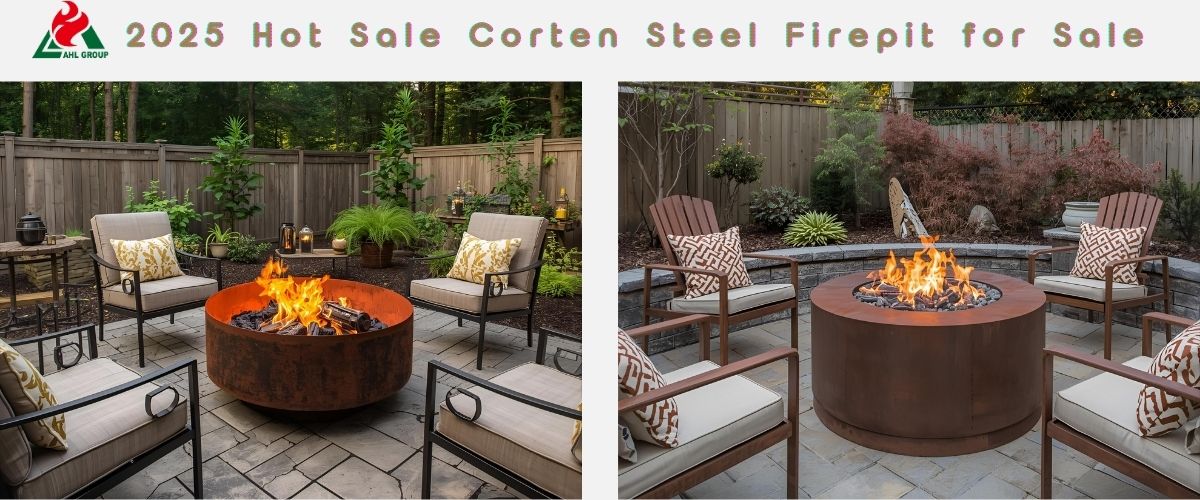
For private residences, a backyard fire pit is not merely a heating appliance, but a ‘mobile sculpture’ that enhances the aesthetic appeal of the landscape throughout the seasons. Key Consideration: Focus on the rate at which the oxide layer stabilises. High-quality weathering steel forms a dense protective layer rapidly, minimising the risk of rust water staining paved surfaces (such as expensive marble or light-coloured tiles). Design Recommendations: Prioritise models with built-in bases or ash trays to better protect hard landscaping in the garden and minimise cleaning hassle later on.
Resorts, Holiday Homes and High-End Campsites: Durable Fire Pits for High-Frequency Use
Fire pits at campsites and holiday homes are used extremely frequently and suffer severe wear and tear; safety and resistance to burn-through are the primary considerations. Key Selection Criteria: A scientifically designed air intake system determines combustion efficiency; a smooth secondary combustion design can significantly reduce smoke and enhance the guest experience. Safety Considerations: The finish of the edges and the design of heat-resistant, non-scalding zones are key factors determining product quality and are central to ensuring guest safety.
Commercial Outdoor Display Areas: Visually Striking Weathering Steel Fire Pits
Commercial spaces require rusted steel fire pits to serve as visual focal points, attracting footfall and elevating brand prestige. Key Selection Criteria: Harmony of dimensions and proportions. Large commercial spaces typically require fire pits with a diameter of 100cm or more to project a sense of solidity and quality. Array Aesthetics: When multiple fire pits are arranged in an array, the consistency of the oxidised colour of the fire pit bodies directly influences the overall aesthetic appeal of the commercial space.
The core value of corten steel lies in its ‘self-protective’ properties, and the physical foundation of this capability is the wall thickness of the steel plate. Wall thickness directly determines the fire pit’s resistance to deformation under high temperatures and natural environmental conditions, and is the key factor distinguishing a ‘disposable item’ from a ‘heirloom-quality asset’.
Wall Thickness Grading
Lightweight (<3.0mm): Short-term consumables. Frequent heating can easily lead to warping and deformation; service life is typically only 2–3 years, making them suitable only for temporary use.
Standard Grade (3.0mm–5.0mm): The golden ratio for high-end outdoor furniture. Extremely stable structure with more even heat distribution; service life in natural environments can reach 10–15 years, making this the best value-for-money choice.
Collector’s Grade (>5.0mm): Exceptionally substantial, suitable for extreme coastal environments or projects seeking heirloom-quality craftsmanship. These fire pits are virtually impossible to burn through and can withstand decades of exposure to the elements.
Welding and Mechanics
A high-quality metal fire pit requires not only thick sheet metal but also a structurally sound design.
Full-penetration welding: Inspect the joints between the base and side walls to ensure they feature continuous, seamless full-penetration welds. Inferior spot welding is highly prone to cracking after repeated cycles of thermal expansion and contraction.
Heat zone design: An excellent structural design incorporates thermal stress relief channels within the fire pit to prevent the steel plates from warping or deforming due to localised overheating.
The Oxidation Process of Weathering Steel Fire Pits
Purchasing a corten fire pit is, in essence, acquiring a ‘work of art that evolves with time’. Its colour will gradually change over time, with each stage possessing a unique aesthetic appeal; understanding and managing this process correctly will ensure the fire pit remains in optimal condition.
Initial Stage: Raw Industrial Aesthetic
The brand-new steel fire pit features a deep grey, metallic sheen, with a minimalist and imposing texture. If the fire pit you receive already has a rusted appearance, this indicates that the manufacturer has carried out a pre-oxidation treatment, allowing it to immediately display a vintage aesthetic and saving you the initial waiting period.
Oxidation Stage: A Spectacular Colour Transformation
When exposed to the outdoors, the surface of the fire pit undergoes a transformation from orange-red to light rust tones and eventually to a deep brown. During this process, the surface may exhibit slight flaking (rust runoff); this is an essential step in forming a dense protective layer and is entirely normal.
Stabilisation Stage: Timeless Amber Hue
After approximately 12–24 months, the oxidation layer will have fully matured. At this stage, the rusted steel fire pit’s surface will feel smooth and refined, with no further flaking of the rust layer. This mature protective layer completely isolates the internal steel from oxygen, achieving the remarkable effect of ‘rusting without corrosion’ and ensuring the fire pit retains its aesthetic appeal for years to come.
Oxidation Management Tips: Avoiding the Problem of ‘Dirty Rust’
During the initial oxidation phase, rainwater may wash away loose rust particles, causing yellow stains to appear on the surface and affecting its appearance. It is recommended to avoid laying expensive light-coloured stone paving around the fire pit until the rust layer has stabilised; temporary protective mats can be laid to minimise staining.
Corten Steel Fire Pit Dimensions and Burning Efficiency
The dimensions of a rusted steel fire pit not only determine its visual proportions but also directly affect the heat dispersion range and ease of use. Only by selecting the correct dimensions can a fire pit be both aesthetically pleasing and practical, making outdoor gatherings more comfortable.
Key Parameters: The Golden Ratio of Diameter and Depth
Fire pit opening diameter: Determines the ‘social radius’. A diameter of 60–80 cm is suitable for 3–5 people sitting around it; a diameter of 100 cm or more is suitable for large terraces or commercial public spaces, meeting the needs of larger gatherings.
Combustion chamber depth: Depth determines the thickness of the charcoal bed. Excessive depth can lead to insufficient oxygen exchange, resulting in smouldering; conversely, if too shallow, wind resistance is poor and logs are likely to fall out.
Ease of adding fuel: The firebox opening should be positioned on the leeward side, with a width suitable for standard-sized logs (approximately 30 cm). This ensures that users do not need to stand up or frequently adjust their position when adding fuel, thereby enhancing the user experience.
Scenario Matching Formula: Matching Fire Pit Size to Site Area
To simplify the decision-making process, the following guidelines may be used to select the appropriate size:
Compact spaces (<15 m²): The metal fire pit diameter should not exceed one-fifth of the shorter side of the area, leaving ample space for movement and avoiding crowding.
Open spaces (>30 m²): The fire pit must have sufficient visual presence (diameter of 90 cm or more); otherwise, it will appear too small and fail to create the desired atmosphere.
Air Intake and Ventilation Design for Outdoor Fire Pits
Many users encounter the most frustrating issues when using weathering steel fire pits: excessive smoke, weak flames and difficulty in lighting the fire. These problems are largely due to flaws in the ventilation design.
Secondary Combustion and Air Intake Layout: Improving Combustion Efficiency
Air Intake Methods: Bottom air intake supplies oxygen directly to the core of the charcoal fire, suitable for rapid heating; side air intake helps create a swirling airflow, improving the completeness of combustion and reducing unburned impurities.
Flame Stability: The excellent ventilation design utilises the principle of thermal convection to create negative pressure within the fire bowl, reducing the impact of crosswinds and allowing the flame to rise vertically in a ‘torch-like’ manner, rather than scattering in all directions.
Smoke-free principle: The double-walled design preheats the air entering the fire pit, enabling ‘secondary combustion’ that consumes over 80% of the particulates responsible for black smoke, putting an end to smoke-related nuisances.
Effortless ignition: A thoughtfully designed air intake array ensures sufficient oxygen penetrates even densely stacked firewood, completely eliminating the inconvenience of 'half an hour of fiddling with the fire’.
Interactive Guidance: Does your patio frequently face crosswinds? Contact us for ventilation structure recommendations tailored to your specific wind conditions.
Steel Fire Pit Base Support and Drainage: The Key to Extended Lifespan
Although weathering steel is corrosion-resistant, it is highly susceptible to ‘waterlogging’. An ill-conceived base design is the number one threat to a fire pit’s lifespan, directly affecting both its durability and aesthetic appeal.
Risk of Water Accumulation and Aesthetic Deterioration
Water pooling at the base after rain causes the oxidation layer in that area to turn black and brittle, forming unsightly ‘black rust spots’ and even leading to flaking, which severely affects the fire pit’s appearance and lifespan. Drainage Hole Design: A high-quality backyard fire pit must be equipped with self-draining holes, and the drainage path must avoid load-bearing structural areas to prevent structural weakening caused by prolonged waterlogging.
Elevated Solutions and Ground Protection
Base Support: We recommend selecting models with legs or a base. An elevated design not only aids ventilation but also prevents high temperatures from being directly transferred to the ground, protecting expensive patios or lawns from scorching or damage.
Stability and Safety of Steel Fire Pits: Prerequisites for a Premium Experience
An unstable, wobbly outdoor fire pit not only poses a safety hazard but can also completely ruin the atmosphere of a gathering. The weight of a weathering steel fire pit is both an advantage and a physical parameter that must be considered during installation.
Weight and Centre of Gravity Balance: Ensuring Safe Use
Physical Stability: High-quality corten fire pits typically utilise 3mm–6mm thick steel plates, resulting in substantial weight and a low centre of gravity. Even when exposed to strong winds or accidental collisions from pets or children, they remain stable and avoid tipping over.
Ground Load-bearing Capacity and Compatibility: Suitable for Various Locations
Lawn/Gravel Surfaces: It is recommended to choose a wider base to prevent one-sided subsidence caused by the unit’s weight, which could compromise stability.
Wooden Decks/Tiled Surfaces: Heat-resistant supports must be used to prevent high temperatures from causing the surface to crack or char, ensuring safety.
Corten Steel Fire Pit Ignition and Daily Maintenance
A well-designed corten fire pit should allow you to relax and enjoy the flames without being burdened by subsequent cleaning. The ease of ignition and maintenance directly impact the user experience.
Ease of Ash Removal and Cleaning Difficulty
Feed Opening Design: The opening height should be within an ergonomically comfortable range, eliminating the need to bend over excessively and making it easier to add wood and clear ash.
Efficient Ash Removal System: Check whether the fire pit is equipped with a separate ash tray or an easily accessible ash outlet. Frequent ash removal is not just for tidiness, but also to ensure that the air intake channels remain unblocked, guaranteeing combustion efficiency.
Maintenance Costs: The True Advantage of ‘Zero Maintenance’
Unlike standard corten steel fire pits that require frequent repainting to prevent rust, weathering steel fire pits offer virtually ‘zero maintenance’. No need for additional painting or rust removal; a simple cleaning is all it takes to keep it looking good for years, significantly saving on maintenance time and costs.
Climate Adaptation: Choosing the Right Weathering Steel Fire Pit for Your Region
Although weathering steel is 'weather-resistant', the formation of its oxide layer and the manifestation of structural stresses vary under different climatic conditions. A tailored selection is essential to ensure the fire pit’s durability.
Tailored Strategies for Different Climates
Rainy/High-Humidity Regions (Southern/Coastal Areas):
Key Points: Emphasise drainage efficiency; water accumulation can lead to localised excessive corrosion, shortening the corten gas fire pit’s lifespan.
Optimisation Recommendations: Choose designs with widely spaced drainage holes at the base, paired with a raised plinth to maintain air circulation.
Cold/Snowy Regions (Northern/Inland):
Key Points: Emphasize dryness and moisture prevention; residual moisture during freeze-thaw cycles can damage the rust layer.
Optimisation Recommendations: Clear internal ashes when not in use (ashes become acidic when absorbing water, accelerating corrosion) and use a breathable dust cover.
Regions with intense sunlight/arid climates:
Key points: Emphasise thermal stress balance; extreme temperature fluctuations can cause extensive micro-deformation of the steel plates.
Optimisation recommendations: Choose models with reinforcing ribs or a modular structure to allow the metal to expand and contract freely with temperature changes, thereby preventing deformation.
Expert service: We will recommend the most suitable plate thickness and drainage structure based on your city’s rainfall and average humidity.
3-Step Selection Guide: Quickly Find the Right Corten Fire Pit for You
Faced with a wide array of designs, there’s no need to agonise over your choice. Simply answer the following three questions to make a quick decision.
Step 1: Define the Intended Use (Determines Size and Ventilation)
Is it solely for creating atmosphere? Choose a design with a small opening and strong decorative appeal. Is it for core heating in winter? Choose a design with a large opening, sufficient depth and good heat dissipation.
Step 2: Assess Environmental Conditions (Determines Drainage and Insulation)
Will it be placed on a wooden deck or a lawn? - Determine whether insulation panels or ground supports are required. Is rainfall abundant in your area? - Determine whether a drain valve is required.
Step 3: Define Long-Term Value (Determines Wall Thickness And Accessories)
Looking for a lifespan of over 20 years? Choose a model with a wall thickness of 5mm or more. Seeking ultimate convenience? Choose a one-touch ash-clearing system and an automatic patina kit.
Frequently Asked Questions About Corten Fire Pits: Addressing Your Key Concerns
1. Can Weathering Steel Fire Pits Burn Through Easily?
No. Compared to ordinary carbon steel, weathering steel forms a stable oxide layer that slows corrosion by 4–8 times. Under normal outdoor conditions, 3mm-thick panels can have a structural lifespan of 20–25 years or more.
2. Do I Need To Cover My Corten Steel Fire Pit In Rainy Weather?
Covering is recommended during prolonged periods of disuse, but please note: you must use a breathable, waterproof cover. If you use a sealed plastic sheet, moisture condensing inside cannot escape, leading to ‘dirty rust’ and accelerating localised corrosion.
3. Can I Barbecue Directly On a Weathering Steel Fire Pit?
If your fire pit is made entirely of untreated weathering steel (without any chemical coating), it can be used with a grill. However, we recommend conducting 1–2 high-intensity dry-firing sessions first to remove any residual machining oils and ensure food safety.
Are You Ready to Choose a Corten Fire Pit That’s Just Right for You?
The true value of a weathering steel fire pit lies not in its fleeting aesthetic appeal, but in its ability to stand the test of time and become a long-term companion for your outdoor lifestyle.
From suitability for your setting and wall thickness to ventilation, drainage and safety, every factor plays a role in determining the fire pit’s user experience and lifespan.
A high-quality corten fire pit not only resolves various practical challenges but also becomes the emotional heart of your outdoor space, bearing witness to every gathering of family and friends.
Want to discover your own bespoke weathering steel fire pit solution? Contact us to receive customised designs, pre-oxidation services and professional installation guidance, so that the warmth of the flames can enhance every moment spent outdoors.

.jpg)
 Fill In The Inquiry