When installing corten lighting for the first time, many homeowners have the same core concern: Will the rust on the surface of the fixtures flake off in layers like ordinary rust?
This concern is entirely reasonable. Rust on ordinary steel is a form of destructive corrosion that causes the surface to peel, crumble, and perforate—not only affecting aesthetics but also contaminating the ground and shortening the lifespan of the equipment.
However, the rust on weathering steel is completely different from ordinary rust. To put it simply and directly: the core conclusion is that, in qualified weathering steel lighting fixtures, the rust layer formed after manufacturing is stable and secure—it will not continuously flake off, peel, or crumble. This article will comprehensively break down the characteristics of the rust layer on weathering steel lighting fixtures from various perspectives—including principles, the manufacturing process, influencing factors, and maintenance tips—to help you completely put your purchasing concerns to rest.
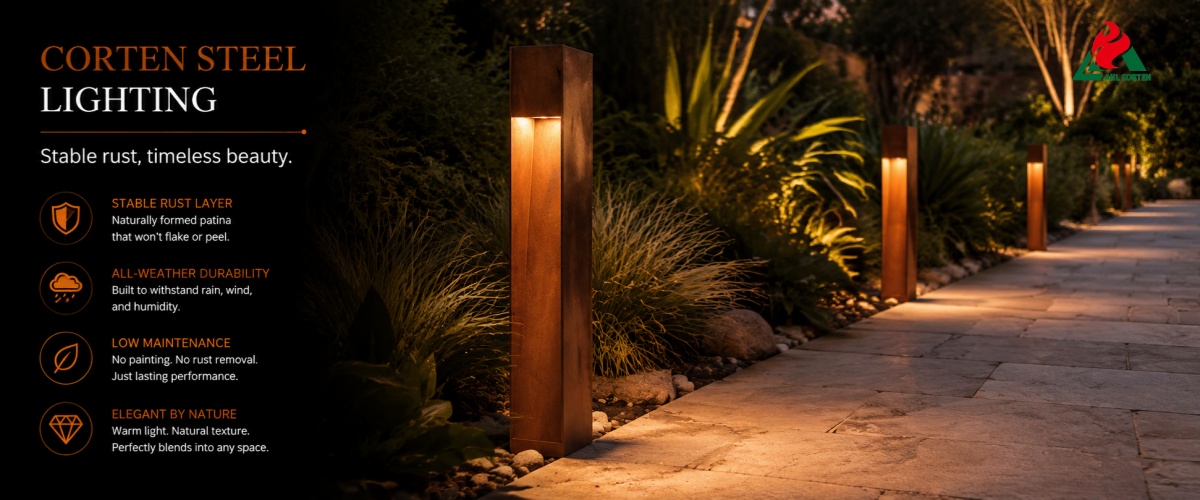
Rusted steel lights are outdoor landscape lighting fixtures crafted from special weathering steel, widely suitable for outdoor settings such as courtyards, patios, gardens, and walkways.
They differ from painted, aluminum alloy, and ordinary wrought-iron light fixtures; their most distinctive feature is that they rely on natural weather conditions to complete surface oxidation, eliminating the need for manual paint protection.
With ordinary steel, rusting involves continuous internal corrosion; the rust layer is loose and porous, constantly absorbing water and oxidizing, eventually causing the steel to rust through and become unusable.
In contrast, when weathering steel is exposed to wind and rain and cycles of wet and dry conditions, it naturally forms a dense, uniform, and highly adherent reddish-brown patina.
This rust layer is not damaging, but rather a natural protective armor. It firmly seals the steel substrate, isolating it from air, moisture, and corrosive agents, thereby stopping internal corrosion at its source.
Therefore, weathering steel lighting fixtures are not merely tools for illumination, but also garden landscape decorations that combine long-lasting durability with a vintage aesthetic.
Will the Rust Layer on Corten Steel Lightning Flake Off, Peel, or Crumble?
1. The Definitive Answer: A Mature Rust Layer Will Not Flake Off
Under normal outdoor use and with proper basic maintenance, the formed rust layer on weathering steel lightings will not continuously flake, peel, or crumble like ordinary rust.
The rust layer on high-quality weathering steel lighting fixtures is uniform, dense, and has extremely strong adhesion. Its overall condition is controllable and stable, and it will not stain garden surfaces, stonework, or plants.
2. Distinguishing Between: Initial Surface Dust vs. Destructive Flaking
Feature
Initial Surface Dust (Normal)
Destructive Flaking (Problem)
Cause
Early oxidation, excess particles
Poor material or fake weathering steel
Duration
Disappears after a few weathering cycles
Continues and worsens over time
Results
Rust layer fully set, no future issues
Perforation, staining, or structural damage
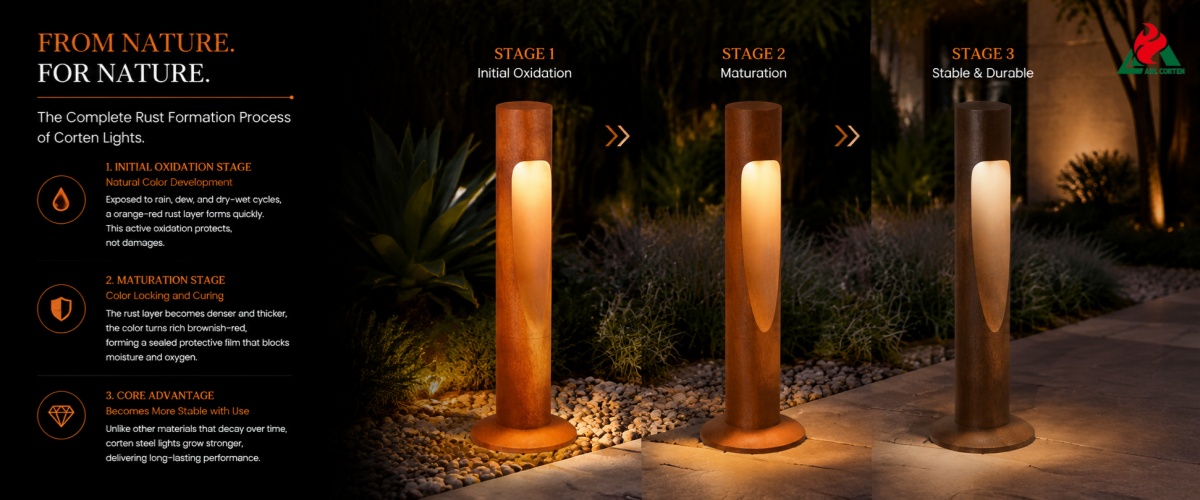
The Complete Formation Process of a Stable Rust Layer on Corten Lights
1. Initial Oxidation Stage: Natural Color Development
After outdoor installation, rusted steel lights are exposed to rain, dew, and alternating cycles of dry and wet conditions, causing an orange-red primary rust layer to form rapidly on their surfaces. This stage involves active oxidation and is an essential process for outdoor garden lighting to develop its unique protective layer; it does not damage the fixture’s underlying structure.
2. Maturation Stage: Color Locking and Curing
Over time, the surface rust layer continuously becomes denser, thicker, and more solidified, with the color gradually settling into a rich, vintage brownish-red hue. This ultimately forms a sealed protective film that completely blocks the penetration of oxygen and moisture, achieving controlled rusting and self-limiting corrosion.
3. Core Advantage: Becomes More Stable with Use
While ordinary lighting fixtures deteriorate with use, weathering steel fixtures do the exact opposite. Once the rust layer has fully set, structural stability continues to improve, and the service life is significantly extended.
4 Key Factors Affecting the Stability of the Rust Layer on Weathering Steel Lights
1. Outdoor Humidity Conditions High-humidity, rainy, and foggy environments accelerate the initial oxidation rate of weathering steel, causing the rust color to develop more quickly and evenly. However, as long as the product meets material standards, a humid environment will only accelerate the formation of the protective layer without causing destructive flaking or ongoing corrosion.
2. Natural Weathering from Wind and Rain
Long-term exposure to wind and rain merely removes a small amount of loose dust and excess particles from the luminaire’s surface. It does not damage the fully cured and matured passivated rust layer; rather, it helps the rust layer set evenly, enhancing the overall texture.
3. Product Material and Manufacturing Quality
These are the core factors determining the stability of the rust layer. High-quality, thick weathering steel, combined with standard processing techniques, results in a uniform, dense rust layer with exceptional adhesion. In contrast, low-quality, thin imitation weathering steel products—with substandard base materials and manufacturing processes—are highly prone to issues such as mottled rust, peeling, flaking, and rust perforation.
4. Daily Cleaning Methods
Gentle dusting and wiping with clean water will not affect the stability of the rust layer at all. However, the use of strong acidic or alkaline cleaners, wire brushes, or direct high-pressure water jets is strictly prohibited. Such aggressive cleaning methods will directly damage the unformed protective rust layer on the lights, leading to color discrepancies and localized peeling later on.
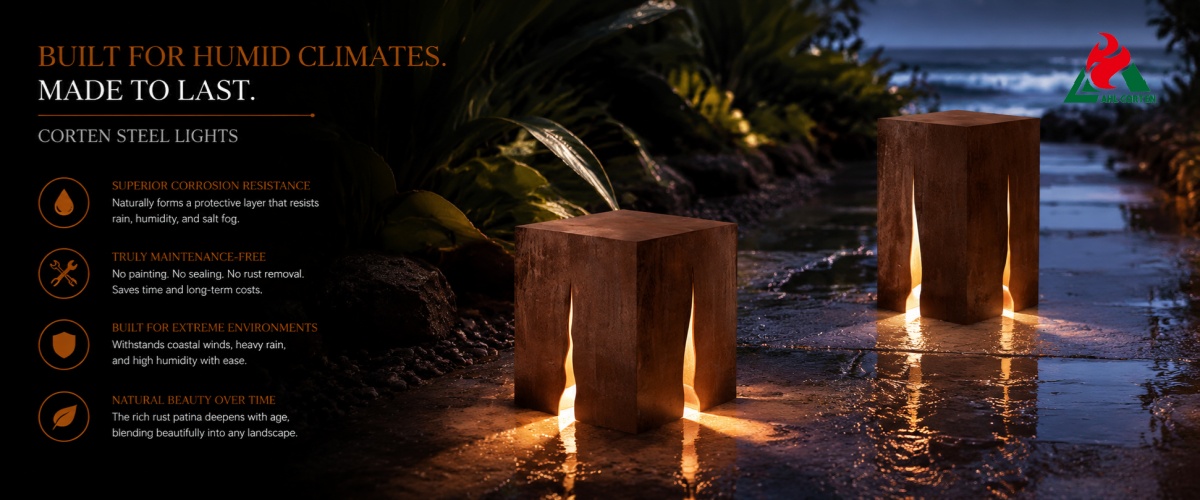
High-Humidity/Coastal Environments: The Long-Term Advantages of Corten Steel Lights
1. The Fatal Weaknesses of Ordinary Outdoor Lighting
In rainy and humid areas, courtyards near bodies of water, and coastal regions with salt fog, ordinary painted, wrought iron, and alloy lights are highly prone to coating blistering, chalking, and peeling. They age and fail within just one or two seasons, with internal circuits damaged by moisture, requiring frequent replacement, refurbishment, and repainting—resulting in extremely high maintenance costs.
Authentic SPA-H weathering steel, after undergoing dry-wet cycles, forms a molecular-level dense protective film that reduces the corrosion rate of the base material to nearly zero. This eliminates deep rust, perforation, and structural loosening at the source, ensuring structural stability for decades.
Traditional lights require annual sanding, rust removal, repainting, and application of rust-preventive oil, consuming significant time and labor costs. Weathering steel lighting requires no painting, no sealing, and no frequent rust prevention; it relies on natural weather conditions for self-maintenance, and its texture becomes more refined the longer it is used.
4. Maximum Adaptability to Extreme Environments
Whether in low-lying areas near water, damp gardens, rainy regions, or coastal courtyards with high salt fog, weathering steel lighting fully demonstrates its stability and low-maintenance advantages.
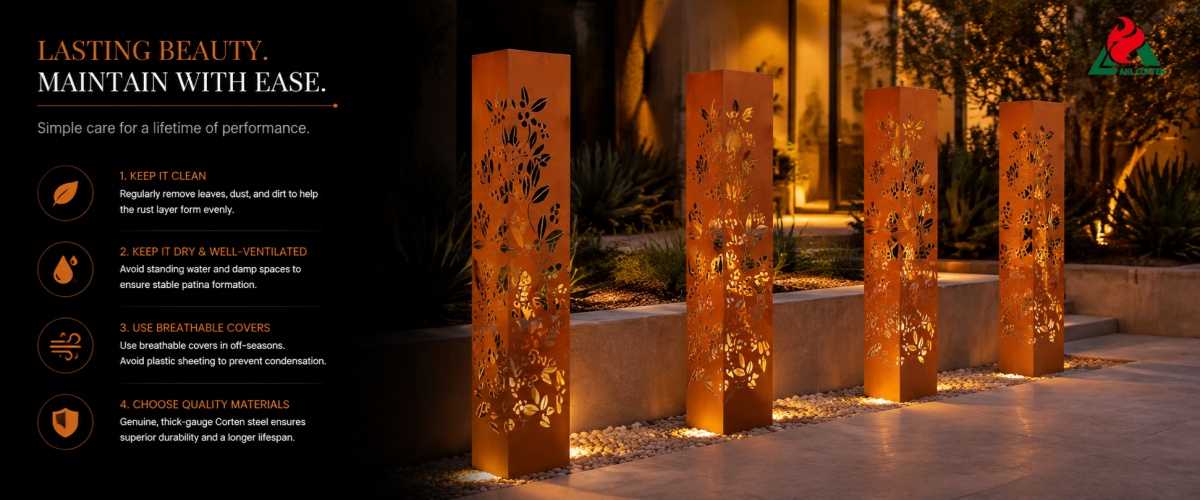
Practical Maintenance Tips to Extend the Lifespan of Weathering Steel Lights
While weathering steel is known for being maintenance-free, simple basic care can help the rust layer form more evenly, enhance the texture, and extend the lifespan of the fixtures.
1. Regularly Remove Debris from the Surface
Promptly remove fallen leaves, dust, and dirt from the surface of the fixtures to prevent debris from accumulating over time and becoming damp, which can interfere with the even formation of the rust layer.
2. Keep the Area Well-Ventilated and Dry; Prevent Water Accumulation
Avoid leaving fixtures in low-lying areas prone to standing water or in enclosed, damp spaces for extended periods. Maintaining a well-ventilated and dry environment is key to the stable formation of the rust patina.
3. Use Breathable Protective Covers During Periods of Inactivity
During long periods of inactivity or in rainy or snowy weather, install specialized breathable covers to prevent dust and debris buildup. Do not use non-breathable plastic sheeting to completely seal the fixtures, as this can cause internal condensation and dampness, which will damage the structure of the rust patina.
4. Prioritize Genuine, Thick-Gauge Materials
For long-term outdoor use and harsh environments, be sure to choose genuine, thick-gauge, corten steel garden lights. The thicker the base material, the greater the stability, corrosion resistance, and service life.
Do Weathering Steel Lights Require Additional Painting or Sealing?
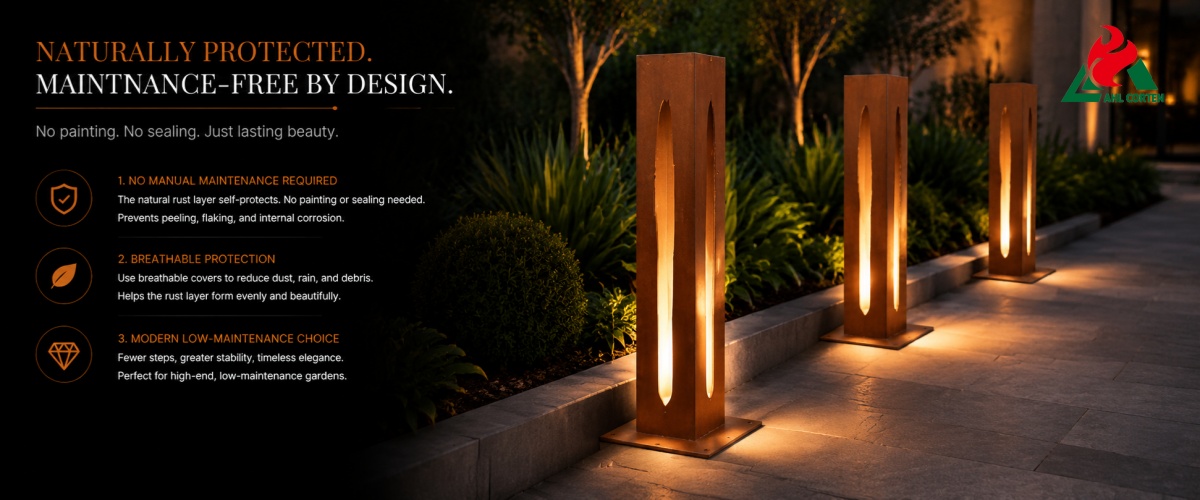
1. No Complex Manual Maintenance Required
The core value of corten steel lights lies in their natural rust layer, which provides self-protection. There is absolutely no need for periodic application of anti-rust paint or sealing agents. Manual painting disrupts the natural cycle of drying and wetting, undermining the self-repair mechanism and leading to internal rot and peeling or flaking of the coating.
2. Breathable Protection Offers Optimal Low-Maintenance Care
Simply add a breathable protective cover as needed to reduce the direct impact of dust, rain, snow, and debris, allowing the rust layer to form more evenly and develop a more refined texture.
3. Aligned with Modern Low-Maintenance Garden Concepts
Fewer maintenance steps, more stable outdoor performance, and an appearance that becomes more refined over time—these features perfectly align with the low-maintenance, high-quality aesthetic demands of upscale gardens.
Ideal Users and Scenarios for Corten Steel Bollard Lights
Rusted steel lights are not one-size-fits-all; the following scenarios offer the best value and user experience: 1. Gardeners living in areas with heavy rainfall, high humidity, frequent fog, or coastal salt fog. 2. Households seeking low-maintenance, renovation-free, and long-lasting outdoor lighting solutions. 3. Users who value the overall aesthetics of their garden and want lighting fixtures that develop a vintage patina over time, rather than rapidly aging and losing value. 4. Garden, walkway, patio, and water feature lighting projects that require year-round outdoor placement and long-term, permanent installation.
Frequently Asked Questions (FAQ): All Your Questions Answered in One Place
Q1: Will the Rust From Corten Steel Garden Lighting Continue to Flake Off and Stain the Ground?
No. Only a small amount of surface rust powder may appear initially, which is a normal phenomenon. Once the rust layer matures and stabilizes, it will not flake, shed powder, or fall off, and will not stain stone, pavers, or plants.
Q2: Do I Need to Regularly Paint or Apply a Glaze for Rust Prevention?
Absolutely not. Manually applying paint or sealant will disrupt the weathering steel’s self-repair mechanism and accelerate aging; the natural rust layer is the best protection.
Q3: Are Weathering Steel Lights Suitable for High-Salt-Fog Environments Near the Coast?
Yes, they are. We recommend choosing authentic, thick-gauge weathering steel for greater stability; it can withstand salt fog corrosion and is perfectly suited for long-term outdoor use.
Q4: Will the Rust Layer Shorten the Light’s Lifespan?
Quite the opposite. The stable, passivated rust layer acts as protective armor, blocking corrosion and safeguarding the base material, thereby significantly extending the fixture’s outdoor lifespan.
Are You Ready to Choose the Perfect Outdoor Corten Steel Light For You?
Key Takeaway: The rust patina on weathering steel lighting fixtures is fundamentally different from the destructive rust that affects ordinary steel. High-quality corten garden lightsdevelop a stable, compact rust layer after fabrication that does not peel, flake, or crumble, eliminating the need for frequent maintenance or refinishing. With its core advantages of natural corrosion resistance, a patina that becomes more refined over time, and ultra-low maintenance, it is perfectly suited for various challenging outdoor environments, including humid, rainy, and coastal areas. If you’re looking for high-end garden lighting that can be used outdoors year-round—durable, visually appealing, and hassle-free—high-quality weathering steel lighting fixtures are the optimal long-term investment. Looking for selection, installation, and maintenance solutions for weathering steel lighting fixtures tailored to your garden? Feel free to contact us for one-on-one professional recommendations and precise quotes to create a long-lasting, sophisticated outdoor lighting landscape.



 Fill In The Inquiry