With their vintage bronze finish and rugged industrial aesthetic, corten steel grills have become a mainstream choice for high-end outdoor kitchens. Many outdoor barbecue enthusiasts are immediately drawn to their unique rust-colored appearance.
However, almost all first-time buyers have the same question: Since the surface is already covered in rust, will it continue to rust until it eventually develops holes and becomes unusable?
There is a common misconception that rust equals damage to the steel. In fact, the defining characteristic of weathering steel is not that it never rusts, but that it rusts in a controlled manner.
For ordinary steel, rust is a form of corrosion and deterioration; for a weathering steel BBQ grill, the initial rust layer acts as a natural protective armor. This article breaks down the rust-prevention logic behind weathering steel grills. It also distinguishes between normal rusting and abnormal corrosion, and includes maintenance tips and a buying guide to help you purchase a high-quality outdoor grill that will last for generations—up to 20 to 30 years.
A corten steel bbq grill cannot completely stop rusting, but after a period of time, it will enter a stable, low-corrosion state. Unlike ordinary steel, which continues to deteriorate due to corrosion, the rate of rusting in a high-quality weathering steel grill becomes almost negligible over time. When weathering steel is exposed to the outdoors for an extended period, a dense oxide layer naturally forms on its surface, known in the industry as a patina. This rust layer adheres tightly to the steel surface and will not peel or flake off. It acts like a natural sealant, blocking out air and rain to protect the steel beneath.
Weathering steel’s self-protection is not a magical process; it requires two environmental conditions:
Wet-dry cycles: The steel must undergo repeated cycles of wetting and complete drying for the rust layer to harden and form.
Ventilation and drainage: Prolonged dampness or enclosed environments with standing water will directly prevent the protective layer from forming.
Rust Prevention Principle: The Self-Healing Mechanism of Corten BBQ Grills
A Simple Analogy: The Principle Of Skin Scabbing
When ordinary carbon steel rusts, it’s like a wound that repeatedly becomes inflamed and ulcerated; the rust layer flakes off loosely, allowing corrosion to continue inward. Weathering steel, however, possesses a biological-like self-healing ability. The steel contains alloy elements such as copper, chromium, and nickel. After initial rusting, a hard, dense “rust scab” forms on the surface. This rust crust acts like a ceramic glaze, firmly sealing the steel and blocking the intrusion of corrosive agents.
Ordinary Steel vs. Weathering Steel Grills
Ordinary carbon steel grills: Rust flakes off in layers, the steel plate continuously thins, and after a few years, the bottom develops holes and the supports break.
Weathering steel grills: The surface oxidizes while the interior strengthens; under normal conditions, they have a service life of 20 to 30 years.
Why AreRusted Steel Barbecue Grills Harder to Maintain than Planters?
Although both are made of weathering steel, planters come into contact only with soil and rain, resulting in a simple and gentle oxidation process. In contrast, weathering steel barbecue grills are exposed to harsh environments and face much more severe corrosion challenges.
1. Repeated Cycles of High Heat and Cold
During grilling, the grill’s temperature suddenly rises to hundreds of degrees Celsius, then cools naturally after use. Frequent thermal expansion and contraction can easily cause microscopic cracks in the protective layer of inferior steel.
2. Acidic Corrosion from Grease and Food
Meat fats, seasonings, and protein residues adhere to the grill walls, breaking down into acidic substances at high temperatures. If not cleaned promptly, this can cause localized pitting corrosion, disrupting the uniformity of the rust layer.
3. Improper Cleaning Damages the Protective Layer
Many users habitually scrub the grill vigorously with steel wool or strong alkaline cleaners. This practice directly removes the dense rust layer that has taken so long to form, forcing the steel to re-oxidize and accelerating the wear and tear of the steel plate.
4. Water Accumulation at the Bottom, Creating a Water Trap
Grills with poor drainage design cannot quickly drain rainwater or cleaning water. When the steel is constantly submerged, it cannot complete the drying process, preventing the rust layer from hardening. Eventually, it peels and thins out just like ordinary sheet metal.
5. Water and Dust Accumulation in Structural Nooks
Gutters, ash pans, and drip pans on outdoor kitchen BBQ grills are prone to becoming water-trapping dead zones. The long-term accumulation of damp charcoal ash disrupts the natural cycle of drying and wetting, leading to continuous rusting of the steel.
6 Major Causes of Abnormal Corrosion in Corten Grills
1. Water Accumulates at the Bottom, Creating a Water Trap
In poorly designed ovens, rainwater and wash water cannot drain quickly. When steel is left submerged for extended periods, it cannot complete the drying process, preventing the rust layer from hardening. Eventually, it peels and thins out just like ordinary sheet metal.
2. Airtight Dust Covers Cause a Damp Greenhouse Effect
Many users cover their grills with sealed plastic covers to keep out dust. This creates a sealed environment where condensation forms and moisture cannot escape. Prolonged exposure to dark, damp conditions triggers severe corrosion.
3. High-Humidity Coastal Environments with Salt Fog
The high concentration of chloride ions in coastal air accelerates electrochemical reactions, damaging the formed rust layer. Weathering steel grills in coastal areas deteriorate significantly faster than those in dry inland regions.
4. Physical Impact and Excessive Cleaning
Impact from hard objects can scratch the protective rust layer; frequent rust removal with steel wool repeatedly damages the oxide layer on Corten BBQ grills, leading to continuous loss of steel thickness.
5. Welding Defects
If welds are not made with weathering-resistant filler material of the same grade, the weld areas will corrode first, resulting in weld cracking and localized rust perforation.
6. Long-Term Residue of Grease and Charcoal Ash
Grease mixed with damp charcoal ash forms acidic corrosive substances. This viscous mixture adheres tightly to the grill walls, obstructing airflow and continuously eroding the steel plates.
Checklist: Distinguishing Normal Rust from Dangerous Corrosion
1. Characteristics of Healthy, Normal Rust
Color Gradation: Bright orange → deep red → brown → purplish-brown, with a natural transition in hue.
Surface Texture: The rust layer is fine and compact, with a slightly rough texture; it does not flake off in large pieces.
Structural Condition: The steel plate maintains consistent thickness, with no holes, delamination, or peeling.
2. Abnormal Rust Requiring Intervention
Large-Scale Flaking: Rust flakes peel off like tree bark with a light touch, exposing fresh metal underneath.
Abnormal Rust Spots: Bright red or jet-black damp rust spots appear locally and spread rapidly.
Corrosion in Hard-to-Reach Areas: Crack-like rust marks appear at welds and on the underside; the steel plate thins and develops micro-pores that allow water to seep through.
Oil-rust mixture: A viscous mixture of oil and rust forms in areas with accumulated grease, remaining damp and never drying out.
Repair Methods: How to Remediate Abnormal Rust on a Corten BBQ Grill?
1. Thorough Cleaning and Descaling
Cleaning away damp charcoal ash and hardened grease is the most critical step in the repair process. This allows the damaged steel to re-expose itself to air, restarting the dry-wet cycle and activating its self-healing capabilities.
2. Gently Remove Loose Rust
For areas where rust is peeling, use a soft wire brush to gently scrape off loose rust. Avoid excessive polishing or grinding, as this can expose the shiny bare metal and cause secondary damage.
3. Improve Drainage and Ventilation
Clear the drainage holes at the bottom and elevate the grill. Ensure air circulation at the base to prevent water accumulation.
4. Professional Technical Assistance
In areas with year-round high humidity or coastal salt fog, contact a professional manufacturer to obtain customized solutions for weathering steel surface pretreatment and repair.
Maintenance Guide: Creating an Aesthetic and Durable Patina
1. The Golden Cleaning Window After Grilling
After using a Corten BBQ grill, promptly clean up food residue and heavy grease. Empty the ash tray and do not leave damp charcoal ash inside to prevent acid corrosion.
2. Post-Rain Drying Management
After rain, check that drainage holes are not blocked. In humid or rainy regions, use a soft cloth to wipe away surface water to accelerate air-drying and reduce exposure to moisture.
3. Choosing the Right Dust Cover
Avoid airtight, fully sealed plastic covers. Opt for professional outdoor covers with ventilation holes, which provide rain protection while maintaining airflow.
4. Natural Repair of Damaged Rust Layers
Don’t panic if accidental bumps expose bare steel. Weathering steel has self-healing properties; simply leave it outdoors to re-oxidize, and the color will gradually blend with the surrounding rust layer.
Why are AHL Corten Steel BBQ Grills More Low-Maintenance?
With 20 years of experience in producing and exporting weathering steel, the AHL factory prevents abnormal corrosion issues at the source, reducing maintenance requirements for users.
Original Base Material: Made from high-grade SPA-H weathering steel with a scientifically formulated alloy composition that easily forms a dense protective rust layer.
Fluid Drainage Structure: Optimized bottom vent layout eliminates dead zones where water accumulates, ensuring rapid drainage of rainwater and wastewater.
Scientific Ventilation Design: Pre-designed air channels balance charcoal combustion efficiency with the drying speed inside the grill.
Same-Material Welding: Specialized weathering steel welding materials ensure welds oxidize simultaneously, preventing premature rusting at the seams.
Export-Grade Packaging: Reinforced with solid wood to prevent surface damage from bumps during transport.
Look for genuine weathering steel marked SPA-H or A588. Beware of counterfeits made from ordinary steel coated with imitation rust paint, which will peel off at high temperatures and release harmful gases. For long-term use in high-temperature cycles, choose steel plates 3mm thick or thicker. Thicker plates resist deformation and maintain structural stability for decades. High-quality Corten BBQ grills feature smooth, full welds with rounded, passivated edges. Poor-quality welds become the weakest points and are the first to rust through. Drainage holes at the bottom and internal airflow channels must be provided to ensure rapid drying after rain and the formation of a healthy rust layer. Reputable manufacturers offer pre-rusting services or instructions for natural rusting to ensure consistent oxidation rates for the grill body and accessories, eliminating noticeable color differences. For international shipping, shock-resistant solid wood crates must be used to prevent impacts and scratches to the surface, which could lead to corrosion issues later on.
Frequently Asked Questions About Corten BBQ Grills
1. Will a Weathering Steel Grill Rust Through and Develop Holes?
Genuine weathering steel rarely rusts through. Its dense rust layer permanently protects the steel core, unlike ordinary carbon steel, which continuously flakes and corrodes.
2. Will Rust Water From a New Corten BBQ Grill Stain the Floor?
There may be slight rust staining for the first 6 to 12 months of oxidation. We recommend avoiding light-colored stone surfaces or using a dedicated base. Once the rust layer stabilizes, this issue will largely disappear.
3. Do Corten BBQ Grills Need to Be Painted With Rust-Proof Paint?
Never paint them. Paint isolates the steel from the air, blocking the self-healing oxidation process and completely undermining the protective mechanism and industrial aesthetic of weathering steel.
4. How Long Does It Take for a Stable Rust Layer to Form?
In a natural outdoor environment with normal cycles of wet and dry conditions, a stable, passivated rust layer will form within 6 to 12 months.
5. Can Corten BBQ Grills Be Used In Coastal Areas?
Yes, they can be used, but you’ll need to clean and dry them more frequently to prevent long-term corrosion from salt spray.
6. Can Corten BBQ Grills Be Stored Outdoors Long-Term?
Weathering steel is specifically designed for outdoor climates and is currently the most suitable material for outdoor BBQ grills.
Ready to Choose the Perfect Corten Steel BBQ Grill for You?
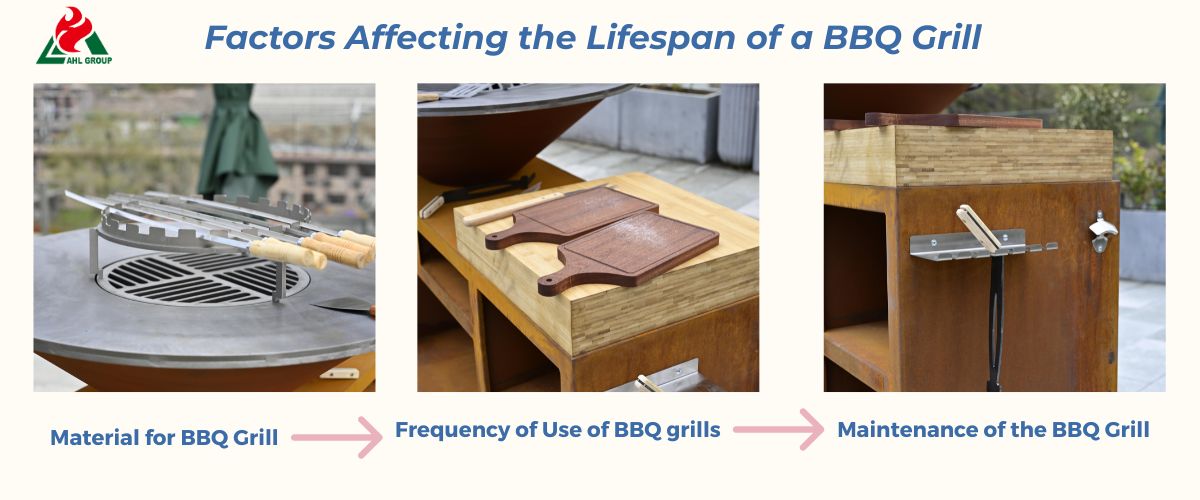
Weathering steel BBQ grills cannot completely stop rusting, but they achieve controlled, harmless, and stable oxidation. What truly determines the grill’s lifespan is the quality of the base material, structural design, and daily maintenance.
A high-quality weathering steel grill develops a more sophisticated patina over time and offers far greater durability than ordinary steel, making it a long-lasting outdoor garden accessory worth collecting. Contact us today!
Custom Solutions: Tell us your location, climate, and installation site to receive personalized recommendations on thickness and configuration. Bulk Purchases: For engineering and international trade orders, please inquire about export packaging and ocean freight delivery options.


.jpg)
.jpg)
 Fill In The Inquiry