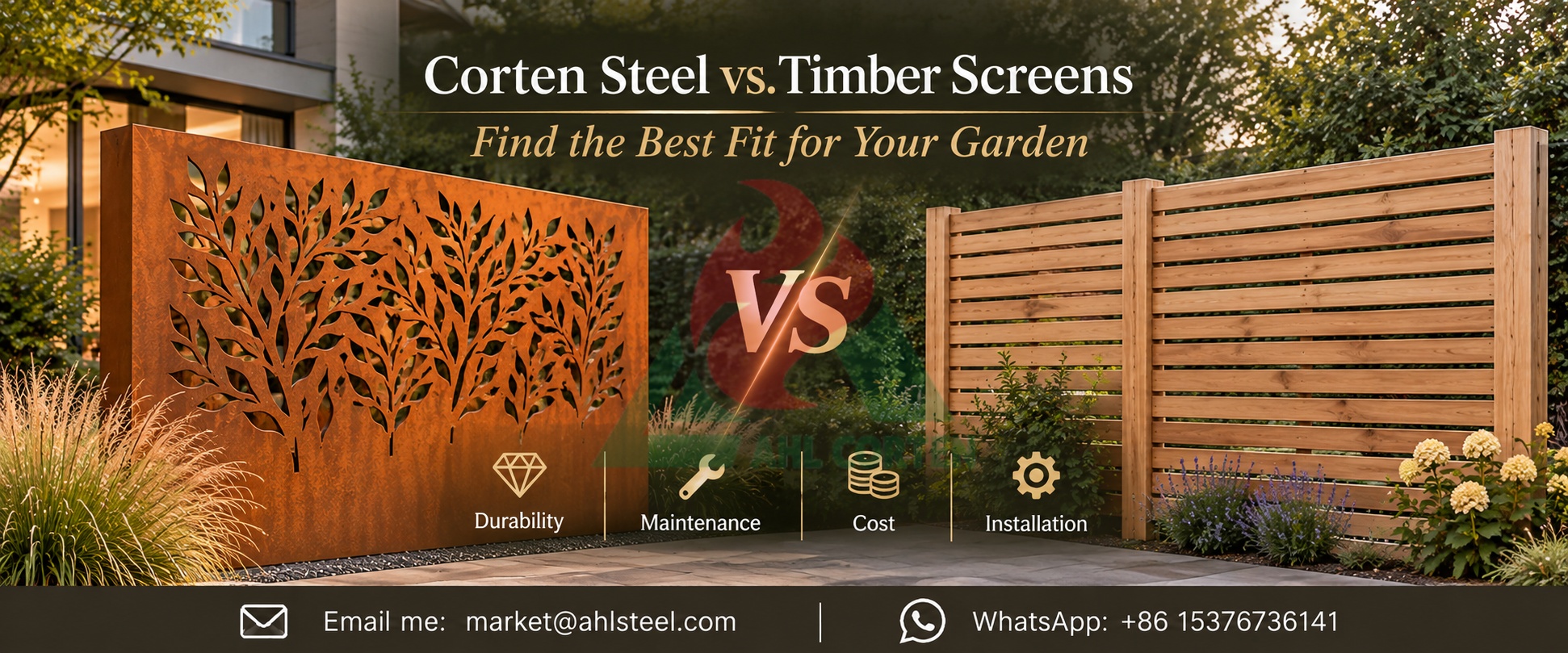
Corten Steel Privacy Screens vs. Timber Screens: Which Is Better?
When choosing privacy screens for your yard, there is no single “best” option. The final choice depends on your design style, budget, and long-term maintenance expectations.
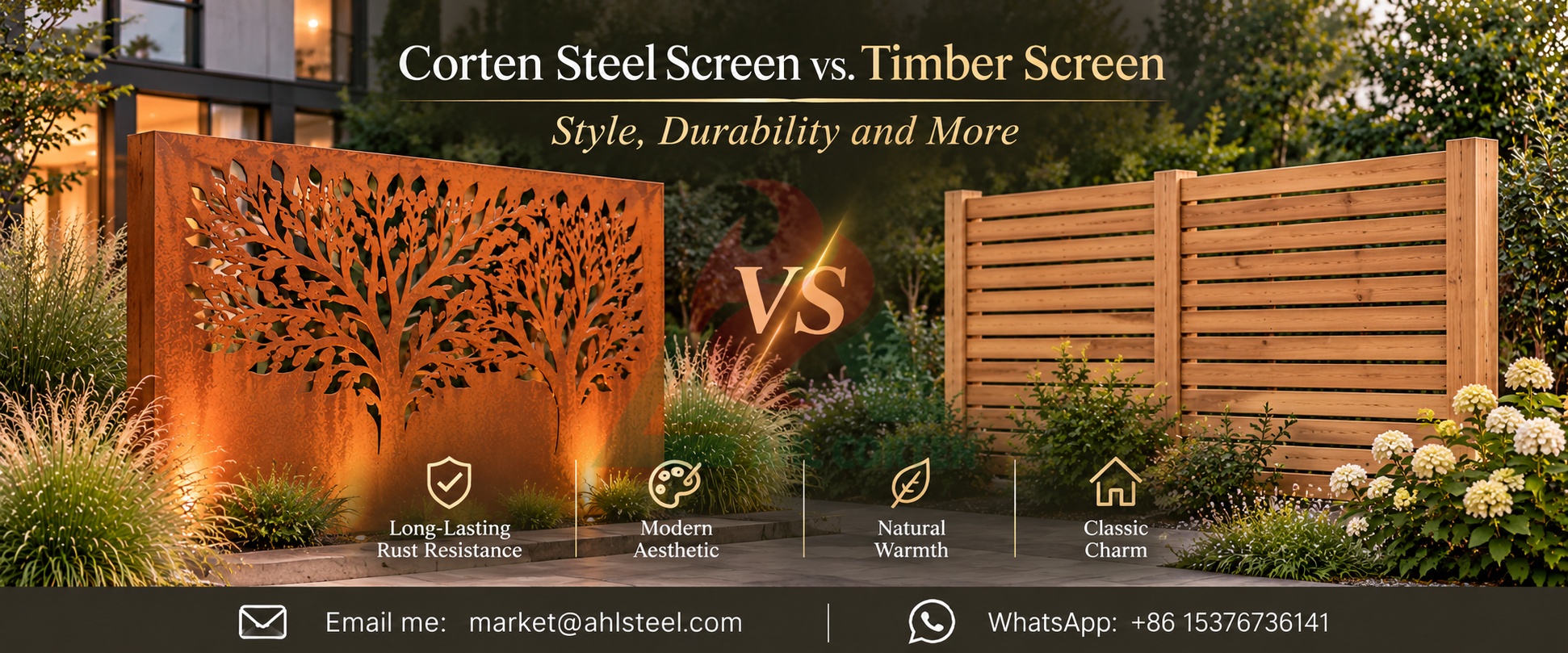
Corten steel screens feature a modern architectural aesthetic, excellent weather resistance, and minimal maintenance requirements; wooden screens offer a warm, natural texture and a lower initial investment, making them ideal for creating a soft, vintage garden atmosphere.
Below, we’ll comprehensively compare the two types of screens across multiple dimensions—including appearance, durability, maintenance, cost, and installation—to help you find the solution that best suits your garden.
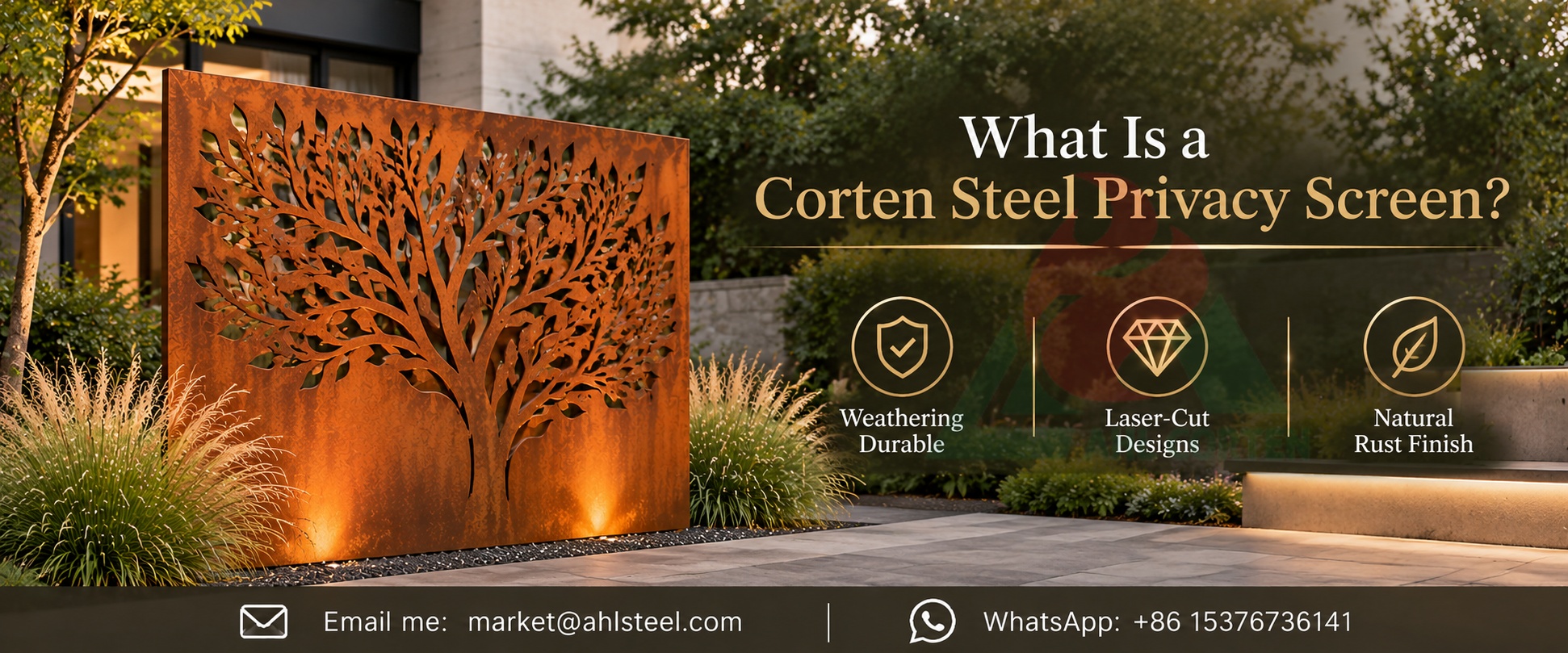
What Is a Corten Steel Privacy Screen?
Laser-cut metal screens are landscape partitions crafted from weathering steel. This special type of low-alloy steel gradually develops a stable, rust-colored passivation layer when exposed to alternating dry and wet conditions outdoors.
When first installed, the finished product displays the natural color of the metal. After 1.5–3 years of natural weathering, it gradually transitions to a rich palette of orange-red, rust-red, and deep chocolate brown hues. This natural rust layer prevents the steel from further internal corrosion.
Its core advantages are particularly notable:
- No need for painting, powder coating, or periodic sealing—the surface rust layer serves as a natural protective barrier
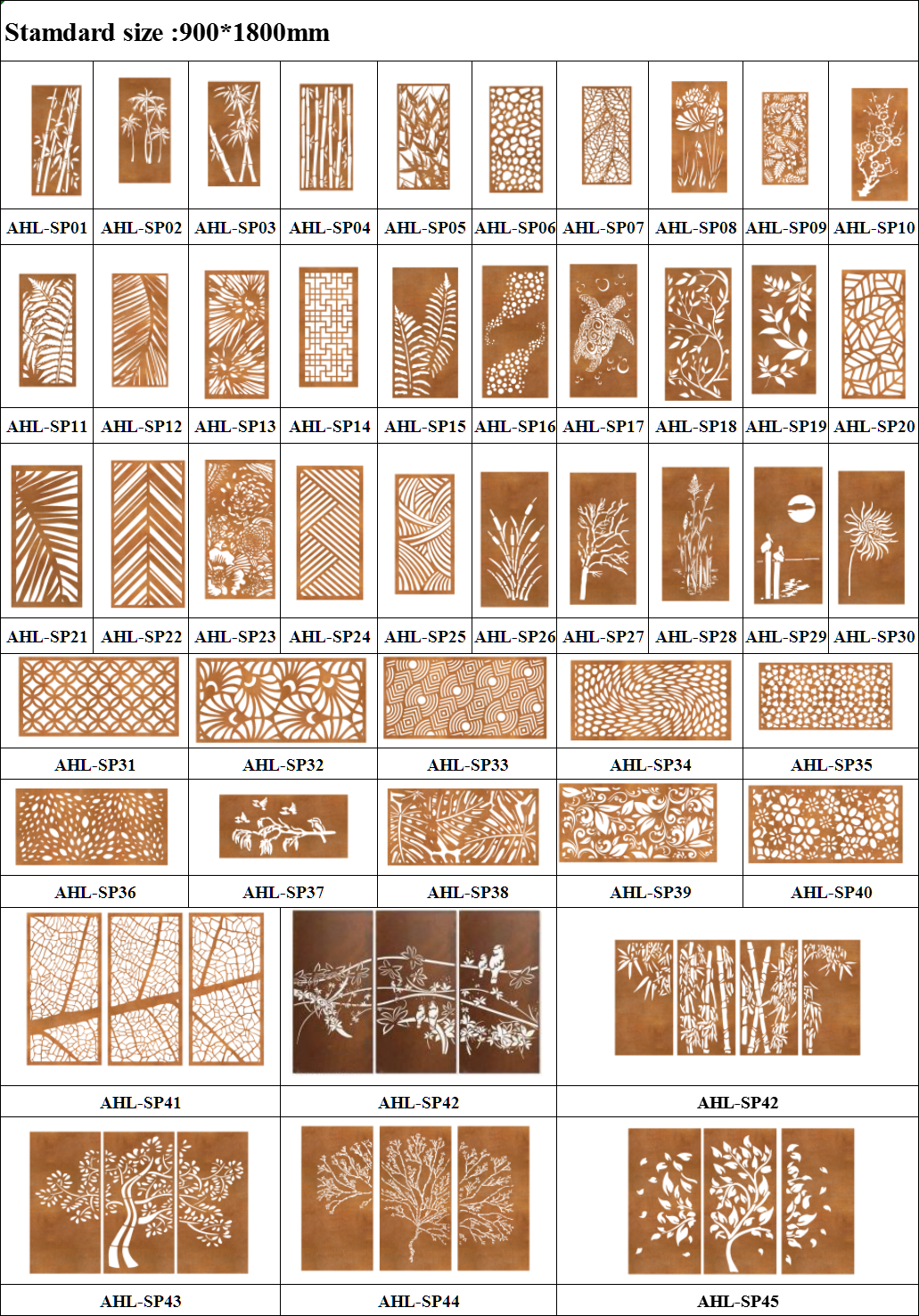
- Compatible with precision laser cutting, allowing for geometric patterns, botanical designs, and custom artistic shapes
- With clean lines and a strong sculptural presence, it is a popular focal point in modern gardens, high-end residences, and commercial landscapes
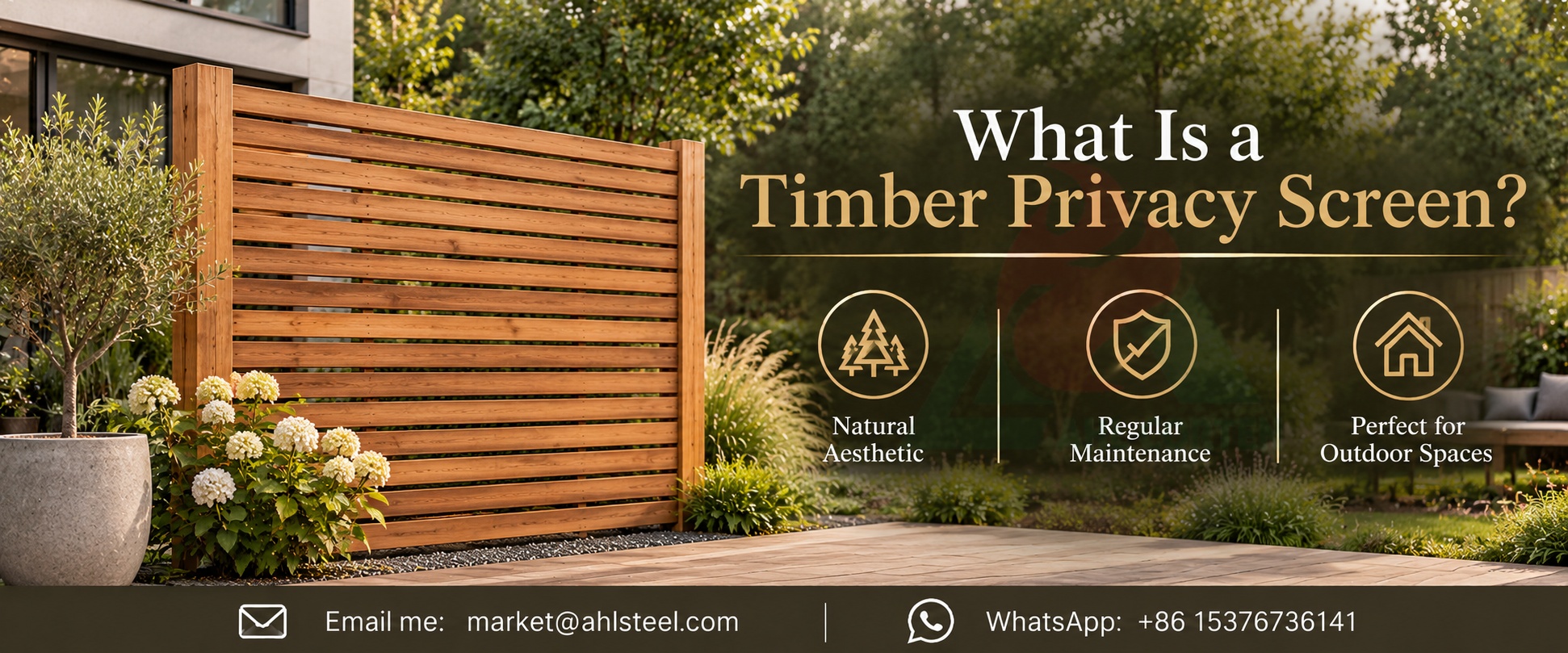
What Is a Timber Privacy Screen?
Wooden privacy screens are traditional outdoor partitions, commonly made from materials such as cedar, larch, teak, merbau, pressure-treated pine, and heat-treated wood.
The unique grain and texture of wood naturally create a soft, warm atmosphere, allowing it to blend seamlessly with greenery, wooden decks, trellises, and rustic-style gardens.
However, as an organic material, wood is significantly affected by outdoor conditions:
Prolonged exposure to sunlight, rain, and temperature fluctuations can cause the wood to gradually fade and turn gray, as well as crack and warp.
Without proper protection, issues such as mold, rot, and insect infestation may also arise. To maintain its appearance and structural integrity, the wood requires regular sanding and application of wood wax oil or a preservative treatment.
Quick Comparison: Corten Steel Screen vs. Timber
| Comparison Factor |
Corten Steel Screens |
Timber Screens |
| Appearance and Style |
Modern, industrial and sculptural, with rust tones that evolve over time |
Natural, warm, and traditional, weathering to gray over time |
| Maintenance Requirements |
Very low; painting or sealing is generally not required |
Higher: cleaning, oiling, staining, or sealing is required to maintain the color |
| Weather Resistance |
Excellent; develops a protective rust patina |
Susceptible to moisture, cracking, warping, rot, and insect damage |
| Initial Cost |
Generally higher |
Generally lower |
| Long-Term Cost |
Low maintenance costs and higher lifecycle value |
Lower material costs but higher long-term maintenance costs |
| Design Flexibility |
Suitable for laser-cut patterns, perforated designs, and light-and-shadow effects |
Suitable for slatted, lattice, and framed designs that showcase natural wood grain |
| Privacy |
Privacy can be controlled through the pattern's open-area percentage |
Solid-board screens provide greater privacy, while lattice screens provide less |
| Suitable Applications |
Modern courtyards, building facades, commercial spaces, and art gardens |
Country gardens, timber decks, and natural-style courtyards |
Appearance and Garden Style: Corten Steel Screen vs. Timber Screen
1. Corten Steel Screens
Corten garden screens are more than just simple barriers or partitions; they are artistic installations in the garden.
Their warm, rustic patina creates a striking yet harmonious visual contrast with natural stone, exposed concrete, black metal components, and ornamental grasses.
Suitable landscape styles: minimalist, modern gardens, Japanese kare-sansui, industrial, and high-end, understated luxury commercial landscapes.
When paired with backlighting or in-ground wall-washing lights, the openwork patterns cast exquisite light and shadow at night, creating a powerful atmosphere.
It elevates the overall quality of the garden and the property’s value, serving as a focal point that instantly captures the eye.
2. Wooden Screens
Wooden screens naturally exude a warm, relaxed, and organic feel, helping to soften the harsh lines of hard landscape elements.
The warm, soft texture of natural wood grain is ideal for settings where the landscape and greenery blend seamlessly.
Suitable Landscape Styles: Wooden deck gardens, flower-lined walkways, rustic cottage style, and traditional backyards.
It does not overshadow the garden itself, making it ideal for homeowners who prefer subtle screening rather than an exaggerated focal point.
Durability and Weather Resistance: Corten Privacy Screen vs. Timber Screen
1. Outdoor Performance of Laser Cut Corten Steel Panels
The key to corten steel’s durability lies in the dense, passivated rust layer that forms during cycles of wet and dry conditions, encapsulating the internal steel and slowing corrosion.
Unlike wood, it will not rot, harbor pests, crack from sun exposure, or warp from water exposure.
However, this is not foolproof: to allow the protective rust layer to form properly, the screen requires good drainage and ventilation.
Prolonged water accumulation, coastal salt fog environments, and continuous exposure to de-icing salt can all destabilize the rust layer, requiring adjustments to the material selection or additional protective measures.
2. Outdoor Performance of Wooden Screens
Wood continuously reacts with its environment. UV rays cause the wood to fade and turn white, while repeated cycles of absorbing and releasing moisture create internal stress, leading to cracking and warping.
High-end hardwoods such as Western Red Cedar, Siberian Larch, and Ipe naturally offer better rot resistance than standard pressure-treated pine.
Regardless of the type of wood, long-term outdoor use requires ongoing protection and maintenance.
Maintenance Comparison: Which Screen Saves More Time?
After selecting privacy screens, the real commitment lies in ongoing maintenance. Here's how the two materials compare in day-to-day care:
| Maintenance Aspect |
Corten Steel Privacy Screens |
Timber Privacy Screens |
| Protective Coatings |
None required (no sealing, painting, or staining) |
Regular staining, oiling, or sealing required every 1–2 years |
| Cleaning Needs |
Natural rainfall washes away surface dust |
Requires periodic power washing, sanding, and re-application |
| Resistance to Rot & Pests |
100% immune to fungal rot, mold, and termites |
Requires chemical treatment to prevent rot, mold, and insects |
| Operational Effort |
Minimal (occasional check on fasteners and drainage) |
High labor and material upkeep over the screen’s lifespan |
- Cost Perspective: While Corten steel carries a higher initial purchase price, its zero-maintenance model keeps long-term upkeep expenses at virtually zero. Timber appears more affordable upfront, but repeated purchases of stains, sealants, and replacement boards quickly add up over the years.
- Market Advantage: Shift your focus from the initial price tag to the total maintenance time saved—corten steel buys back your weekends.
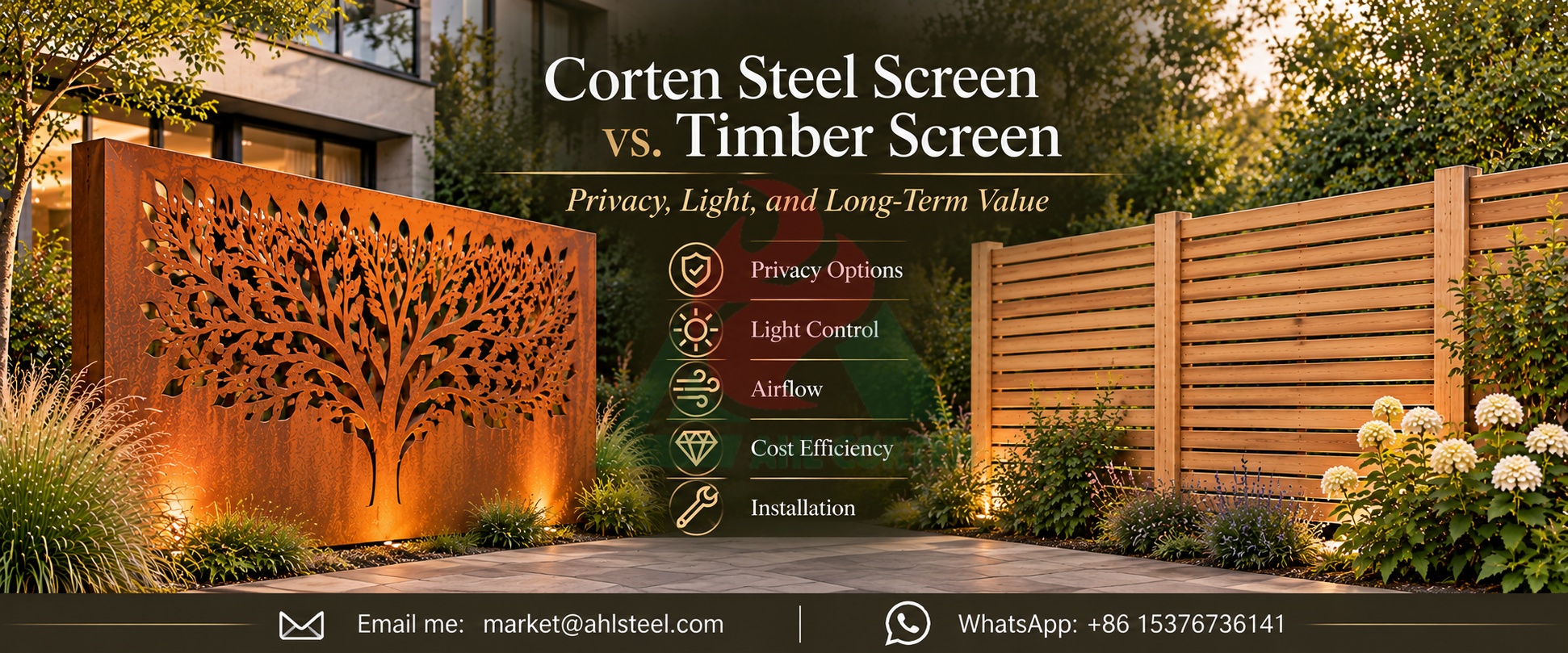
Privacy, Light, and Airflow: Corten Steel Screen vs. Timber Screen
1. Weathering Steel Screen
The laser-cutting process allows for precise control over the proportion of open areas, flexibly balancing privacy and openness.
Dense patterns provide high levels of privacy, while wide geometric cutouts gently filter light and create a play of light and shadow.
The open gaps allow airflow to pass through, reducing wind loads on the screen and preventing the courtyard from feeling enclosed and stifling.
Ideal for patios, pool partitions, courtyard boundaries, outdoor shower areas, and commercial entrance screens.
2. Wooden Screens
The level of privacy depends on the arrangement of the wood panels.
Tongue-and-groove solid wood panels and tightly fitted panels provide complete visual privacy and strong wind protection.
Horizontal slats and lattice designs allow for ventilation and light transmission, but offer reduced privacy.
Suitable for garden boundaries, screening in leisure areas, concealing trash cans, and natural windbreaks.
Cost: Corten Steel Privacy Screen vs. Timber Screen
When evaluating screen costs, do not rely solely on the initial quote; instead, calculate costs over a 10–30-year lifespan.
Wooden screens: Low entry barrier, suitable for projects with limited budgets or short-term garden renovations.
Weathering steel screens: Custom laser cutting, thickened panels, and specialized mounting hardware result in higher upfront costs.
Over a 20–30-year period, wooden privacy screens require repeated protective coatings, replacement of rotted panels, and even complete refurbishment.
Weathered steel privacy screens offer structural stability with virtually no additional expenses, resulting in a higher long-term return on investment.
When making a purchase, it is recommended to focus on the total cost of ownership over 10 years rather than simply comparing the initial unit price.
Installation and Structural Considerations for Privacy Screens
1. Key Points for Installing Weathering Steel Screens
Installation requires advance planning for posts, foundations, wind load resistance, drainage, and panel thickness.
For large-scale screens, it is recommended that professionals handle the design and construction to prevent warping and inadequate fastening.
Important Note: Initial rust runoff may stain light-colored concrete, stone, or wooden decks; ensure proper drainage and protection before installation.
2. Key Points for Installing Wooden Screens
The installation process for wooden privacy screens is relatively simple, relying on posts, crossbeams, and screws to secure the slats.
Be sure to seal the ends with paint, keep the bottom of the wood off the ground, and allow space for ventilation and drainage to prevent prolonged moisture exposure and rot at the base.
Long-term stability depends on the type of wood, preservative treatment, fastener selection, and a follow-up maintenance plan.
How to Choose: 5 Questions to Ask Before Buying
1. Aesthetic Focus: Should the screen serve as the central artistic focal point of your garden, or blend discreetly into the backdrop of greenery?
2. Maintenance Effort: How much time and budget can you allocate each year for inspections, refurbishment, and repainting?
3. Budget Planning: Do you prioritize keeping the initial purchase price low, or do you value the long-term total cost over 10–20 years?
4. Site Climate: Is your yard near the coast, consistently humid, or prone to water pooling?
5. Privacy Needs: Do you want complete coverage, or a perforated design that allows soft light to filter through and creates a play of light and shadow?
Why Choose a Custom Corten Steel Privacy Screen?
Standard off-the-shelf screens rarely match your yard’s dimensions and style perfectly. Custom laser cut metal privacy screens can be tailored to your site’s specific requirements—including height, width, openwork ratio, patterns, and mounting methods.
Whether you envision plant motifs, geometric lines, landscape silhouettes, or custom brand logos, we can bring your vision to life and create a one-of-a-kind landscape feature.
A technical review is required before customization: fine, narrow lines, extra-large panels, and edge treatments must balance manufacturability with installation stability.
Prepare the following information before placing your order to help the supplier develop a proposal:
Site dimensions, actual photos of the location, reference style images, desired level of privacy and light transmission, ground/wall mounting methods, installation locations, and quantity.
Also, confirm design fees, price ranges, and drawing services in advance.
.jpg)
Final Conclusion: Which Screen Is Better for Your Garden?
If you’re looking for an architectural, artistic design that’s stable, weather-resistant, and low-maintenance—and if your site is well-ventilated, dry, and not in a heavy salt fog area—prioritize weathering steel screens. They still require proper drainage design and periodic simple inspections.
If you prefer natural wood grain, a soft, rustic atmosphere, have a budget that prioritizes upfront costs, and are willing to invest time in ongoing maintenance, wooden screens are a classic and reliable choice. Be sure to confirm the wood species and preservative treatment, and set aside a budget for maintenance.
No single material is suitable for every garden. We recommend comparing quotes, site suitability, and long-term maintenance costs. For modern gardens, weathering steel is the preferred choice; for traditional, rustic styles, wooden screens will blend in more harmoniously. Climate conditions and wind-resistant construction should always be the top priority.
Get Expert Advice for Your Privacy Screen Project
The right privacy screen must align with your garden’s style, budget, local climate, and your maintenance expectations.
First, assess your site conditions, then evaluate materials, patterns, and mounting solutions as part of a comprehensive landscaping plan.
If you’re planning a weathering steel screen project, send photos of your yard, dimensions, and reference renderings to the AHL team to discuss customization feasibility, technical specifications, and detailed quotes—and inquire about our free design services.
Need a Factory Quote for Corten Steel Screens?
Send your drawings, size list, quantity, and destination country. Corten Factory can support custom weathering steel fabrication, export packing, and project quotation.
Back

 Fill In The Inquiry