Creating your own herb garden in your backyard, patio, or balcony has become a very popular gardening trend in recent years. Fresh herbs like basil, rosemary, and thyme not only beautify your space but can also be picked at any time for cooking—making them both practical and therapeutic.
Many gardening enthusiasts struggle with a common dilemma when choosing planting containers: Will corten steel planter boxes overheat in direct sunlight, rust, or damage the roots? Are they suitable for growing herbs?
This is the primary concern most people have about metal planter boxes. This article will provide a comprehensive answer from a professional horticultural perspective, covering the feasibility of growing herbs in corten steel planters, their key advantages, suitable varieties, and care tips.
Are Corten Steel Planters Actually Suitable for Growing Herbs?
The Bottom Line: They are Perfectly Suitable
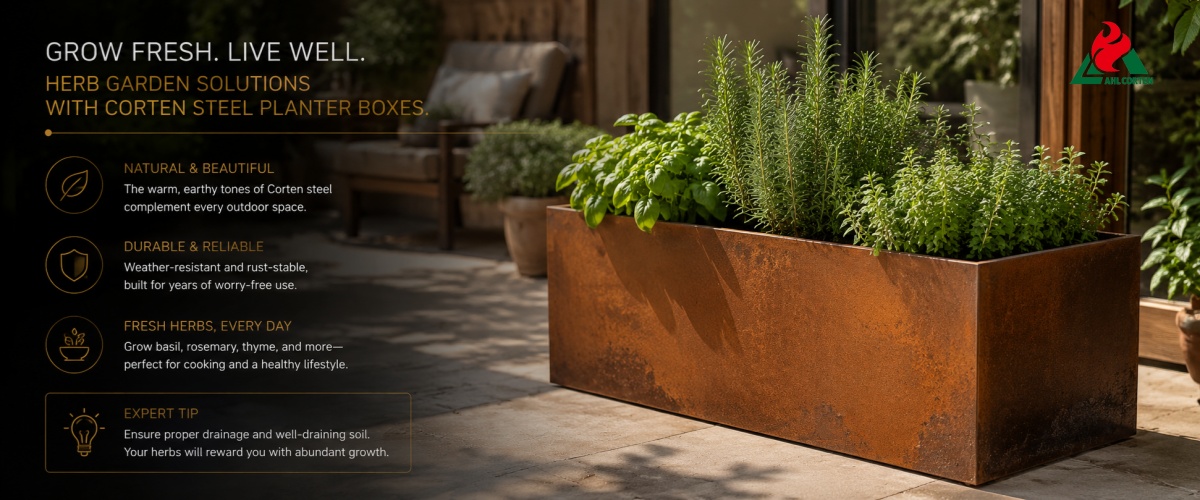
As long as proper drainage and soil selection are ensured, corten steel raised planters are currently among the best containers for long-term outdoor herb cultivation. Compared to plastic, wooden, or standard wrought-iron planters, they are better suited to the growth habits of herbs. Weathering steel differs from ordinary steel in that, after outdoor weathering, it forms a dense, stable rust-colored protective layer. This protective layer results from controlled weathering; it does not cause ongoing deep corrosion and will not harm the herb's root systems.
Adapting to Complex Outdoor Environments for More Stable Growing Conditions
Since most herbs are grown outdoors, their containers must withstand intense sunlight, rain, and temperature fluctuations. Weathered steel planters offer excellent outdoor durability and maintain stable performance throughout all four seasons. Rusty metal planters do not require frequent replacement or complex maintenance, providing herbs with a long-term, stable growing environment and eliminating planting risks caused by container deterioration.
4 Core Advantages of Weathering Steel Planters for Herbs
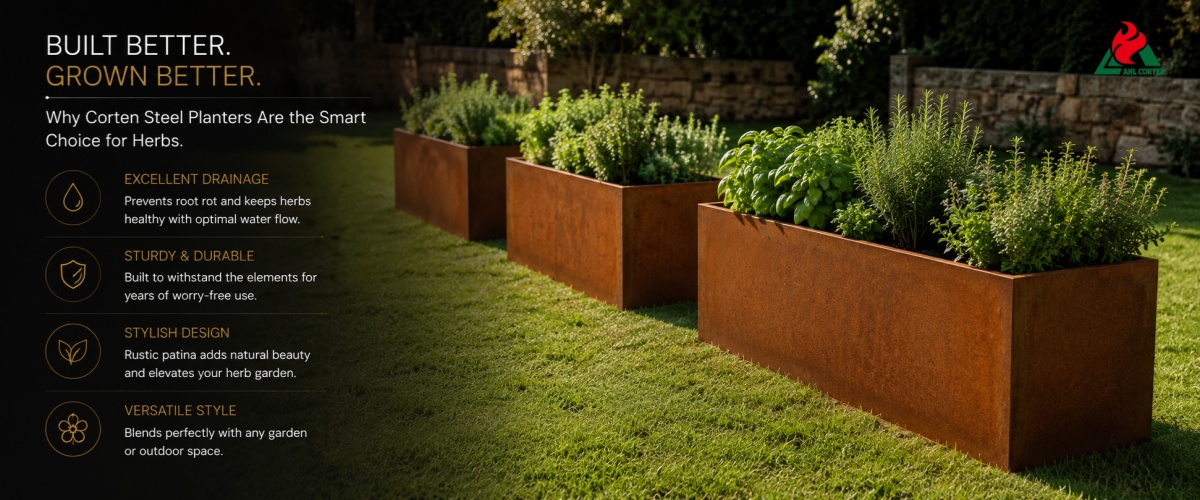
1. Excellent Drainage, Preventing Root Rot in Herbs
The vast majority of herbs are highly susceptible to waterlogged, stagnant soil; waterlogging is the number one cause of wilting and root rot in herbs. High-quality corten steel garden planters come equipped with standard drainage holes that quickly drain excess water, keeping the soil moist but not waterlogged—perfectly suited to herbs’ need for well-aerated soil and their sensitivity to standing water.
2. Sturdy and Durable—Say Goodbye to Frequent Repotting
Wooden planters are prone to mold, rot, warping, and damage when used outdoors for extended periods. Plastic planters age quickly, fade, and become brittle, resulting in an extremely short lifespan. Weathered steel planters feature a sturdy structure that withstands intense sunlight and rain erosion without aging or warping. Set them up once, and they’ll provide reliable service for years, significantly reducing the maintenance costs of your garden.
3. Stylish Design for a Scenic Herb Garden
The unique vintage rust-red texture of weathering steel creates a natural color contrast with the vibrant green foliage of herbs. The result is a sophisticated layered effect with a distinctive texture. Large corten steel planters break away from the cheap look of traditional vegetable pots, transforming ordinary herb beds into elegant focal points for your yard or patio.
4. Versatile Style, Suitable for All Types of Garden Designs
Whether in a modern minimalist garden, a natural-style garden, a slightly luxurious terrace, or a small kitchen garden for fresh produce, weathering steel planters blend in perfectly. Combining practicality with aesthetic appeal, they offer the dual benefits of “planting and landscaping.”
The Best Herb Varieties for Weathering Steel Planter Boxes
Rusted steel planter boxes are suitable for the vast majority of common edible herbs that thrive in sunlight and well-drained soil, making them ideal for everyday home gardening.
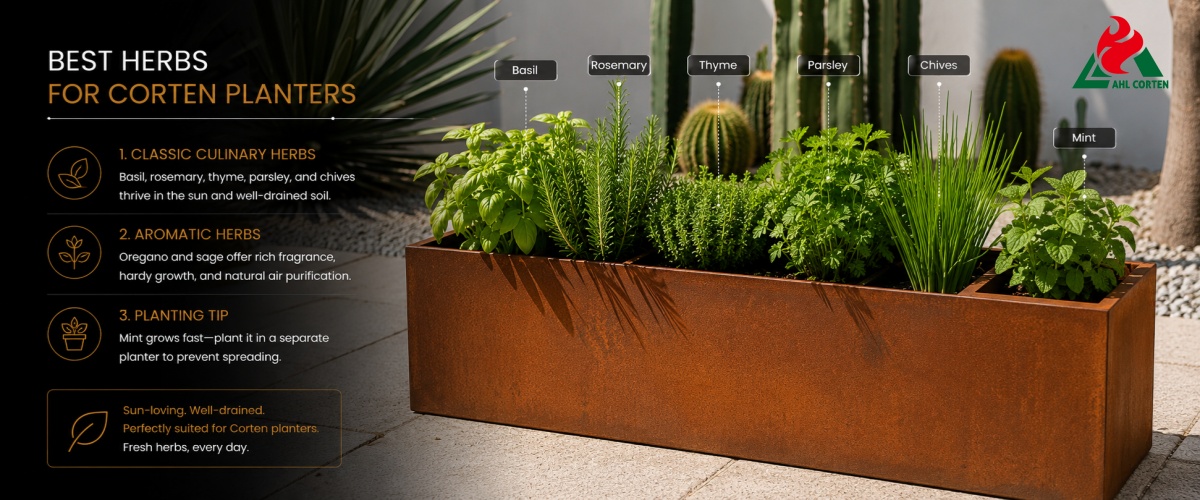
1. Classic, Versatile Culinary Herbs
Basil, rosemary, thyme, parsley, and chives—these herbs thrive in sunlight, are drought-tolerant, and dislike waterlogged soil, making them a perfect match for the growing environment of weathering steel planters. They grow vigorously and have a rich aroma.
2. Strongly Scented Ornamental Herbs
Oregano and sage possess a rich, natural aroma. They are hardy and easy to care for, making them ideal for both culinary use and purifying the air in your yard while enhancing the landscape.
3. Special Planting Tips
Mint is highly vigorous and extremely invasive. It is recommended to plant it separately in its own weathering steel planter box to prevent it from encroaching on the growing space of other herbs and affecting overall growth.
Essential Tips for Planting Herbs in Corten Planter Boxes
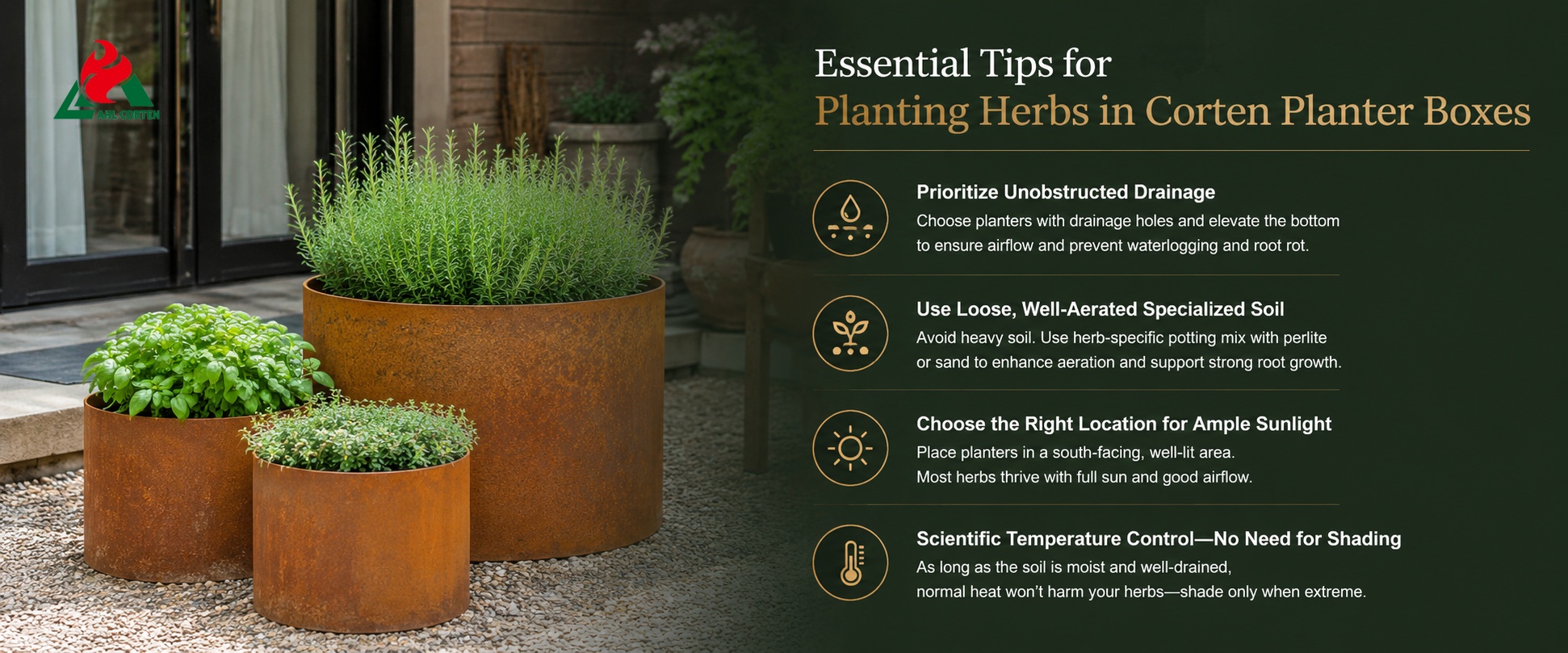
1. Prioritize Unobstructed Drainage
The key to successful herb cultivation lies not in the material but in drainage. Be sure to choose weathering steel planter boxes with standard drainage holes. When placing the planter, ensure the bottom is elevated to allow airflow and prevent the drainage holes from being blocked by the ground, thereby eliminating waterlogging and root rot at the source.
2. Use Loose, Well-Aerated Specialized Soil
Avoid heavy, compacted garden soil; instead, use a loose, well-aerated potting mix specifically formulated for herbs. You can mix in an appropriate amount of perlite and river sand to improve soil aeration and drainage, allowing the herb roots to breathe freely and promoting stronger growth.
3. Choose the Right Location to Ensure Ample Sunlight
The vast majority of herbs are sun-loving plants; ample sunlight is essential for full leaves and a rich aroma. We recommend placing rusted steel planters on south-facing, well-lit patios or in courtyards, avoiding shaded or obstructed areas.
4. Scientific Temperature Control—No Need for Deliberate Shading
Many people worry that the steel planter box will heat up in direct sunlight and scorch the herbs, but there’s really no need for concern. As long as the soil is loose, well-drained, and sufficiently moist, normal temperature increases from sunlight will not affect the herbs’ growth. Only during extremely hot and sunny weather should you provide light shading.
Why Choose a High-Quality Rusted Planter Box for Growing Herbs?
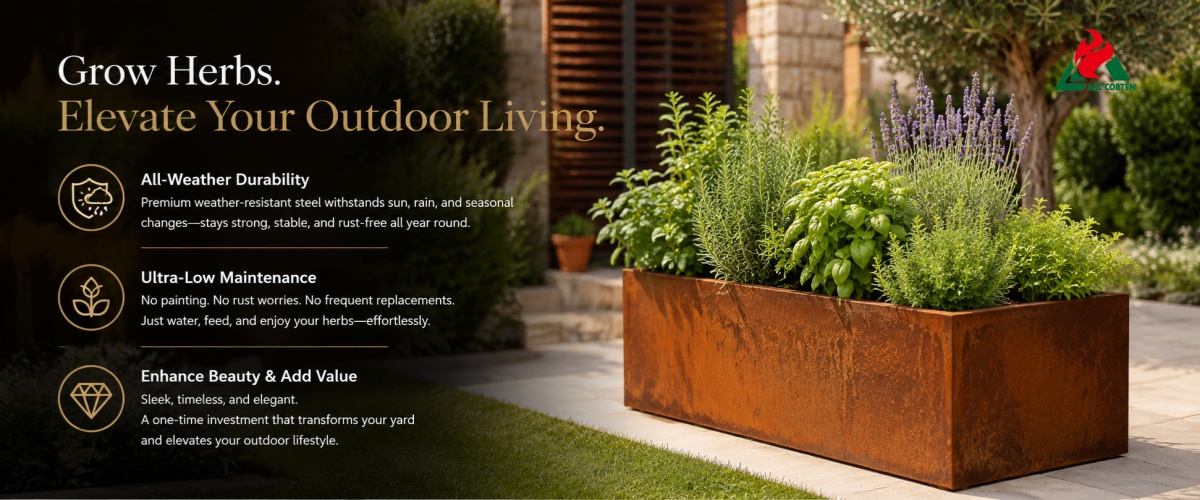
1. All-Weather Durability, Suitable for Year-Round Outdoor Planting
High-quality, weather-resistant steel withstands summer heat, rainy seasons, and temperature fluctuations in fall and winter. It remains stable year-round and won’t warp, break, or rust.
2. Ultra-Low Maintenance For Worry-Free, Long-Lasting Gardening
No need to paint to prevent rust or replace the planter frequently—maintenance is virtually zero. No need to constantly tend to the containers—just focus on watering and fertilizing your herbs for a more relaxed gardening experience.
3. Enhance the Overall Aesthetics and Value of Your Yard
Ordinary planters look cluttered and cheap, whereas metal rectangular planter boxes naturally add a touch of sophistication to your landscape. They not only meet the practical needs of herb gardening but also beautify your yard, elevating the overall quality of your outdoor landscape. They represent a one-time investment that adds long-term value to your yard.
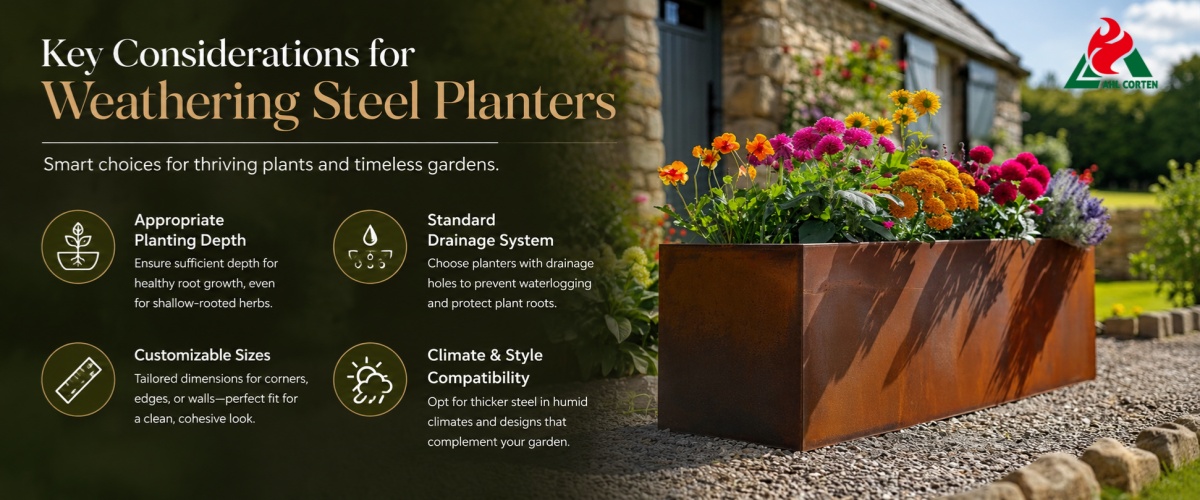
Key Considerations for Purchasing Weathering Steel Planters
1. Appropriate Planting Depth
Although herbs have shallow root systems, they require sufficient soil depth to spread out. When selecting a planter, prioritize models that meet depth requirements and offer ample soil space to ensure healthy root development.
2. Standard Drainage System
Be sure to verify that the planter comes with drainage holes—this is essential for the survival of herbs and preventing root rot. Avoid choosing closed, hole-less models.
3. Customizable Sizes
For specific locations such as garden corners, terrace edges, or along walls, choose weathering steel planters that support custom sizing to precisely fit the space, resulting in a neater and more aesthetically pleasing layout.
4. Compatibility with Local Climate and Garden Style
In rainy and humid regions, prioritize thicker models for greater stability. Additionally, select designs that complement your garden’s style to achieve a seamless integration of planting and landscaping.
Frequently Asked Questions (FAQ): Answers to All Your Gardening Queries
Q1: Will Weathering Steel Planters Overheat Under The Summer Sun And Scorch The Herbs?
No. As long as the soil is well-aerated, drains properly, and is watered and fertilized appropriately, normal temperature increases from sunlight will not affect herb growth—there’s no need for excessive concern.
Q2: Do Herbs Need Additional Shade During The Summer?
Most herbs thrive in sunlight and do not require daily shading. Only during periods of extreme, prolonged heat and intense sunlight should you provide light shade to prevent the leaves from drying out due to overexposure.
Q3: Can Corten Steel Planters Be Used for Indoor Herb Gardening?
Yes, they can be used indoors, but they must be placed near a window with ample natural light or supplemented with grow lights. Sufficient light is essential to ensure normal growth and a rich aroma in the herbs.
Q4: Does Rust On Weathering Steel Affect Herb Growth?
No. The rust layer on weathering steel is a stable, protective patina—not ongoing corrosion. The structure remains stable, and no harmful substances leach out, so it will not damage the herbs’ root systems or plants.
Q5: Which Herbs Are Best Suited For Growing In Metal Planters?
Basil, rosemary, thyme, parsley, chives, oregano, and sage are all highly suitable. It is recommended to grow mint in its own pot to prevent the roots from spreading and taking over.
Are You Ready to Choose Your Own Outdoor Corten Steel Planter?
Overall, weathering steel planters are ideal for growing all kinds of household herbs. As long as you ensure proper drainage, soil mix, and light management, you can enjoy stable, year-round growth.
Compared to traditional planters, they are more durable, require lower maintenance costs, and are more aesthetically pleasing—perfectly addressing the three major pain points of outdoor herb gardening: root rot, container deterioration, and unattractive garden aesthetics.
They not only meet the practical needs of daily harvesting for cooking but also create an elegant and sophisticated herb landscape in your garden, making them an excellent upgrade for home kitchen gardens and patio gardening.


 Fill In The Inquiry