The Best Way to Use Corten Steel Screen In A Garden
Date:2025.12.24
Share to:
Today, the courtyard has evolved beyond a purely functional space, gradually transforming into an outdoor “room” that combines privacy, structure, and artistic appeal. Within this transformative trend, Corten steel screens have emerged as a mainstream choice in the landscape architecture field for 2026, thanks to their unique advantages.
Serving as both a practical privacy barrier and a sculptural art installation, they have evolved beyond basic fencing to become architectural focal points within gardens. Their distinctive weathering properties and vintage rust patina infuse unique charm into diverse garden settings.
Drawing on the professional expertise of AHL Corten Group, this article comprehensively analyzes the application, installation, design, and maintenance of weathering steel screens to help create outdoor spaces that blend aesthetic appeal with practical functionality.
As one of China's premier suppliers of weathering steel screens, AHL Corten Group offers customization services for various sizes and designs to meet personalized needs. For a complimentary quote, please don't hesitate to contact us at your convenience.
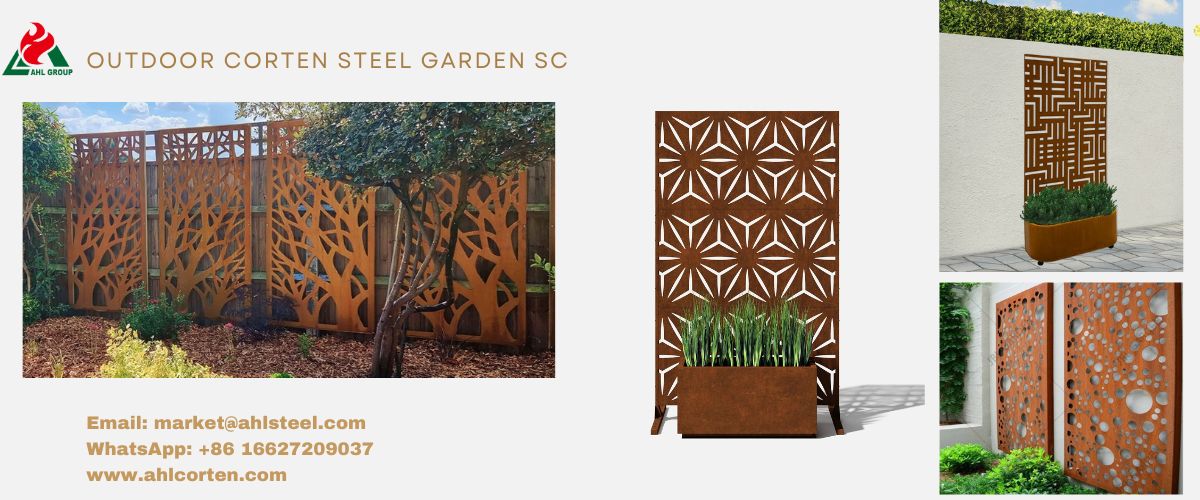
Creating private zones within open gardens to block views from neighbors or streets represents the most fundamental practical value of weathering steel screens. As garden privacy screens (Corten screen garden), their height should be customized as needed: full privacy requires 6-8 feet, while partial screening can be achieved with 4-5 feet.
Install along property boundaries while adhering to local building codes, ensuring setbacks, height restrictions, and homeowners association requirements to avoid compliance risks.
2. Garden Zoning and Space Division
Using weathering steel screens as garden dividers clearly separates dining, relaxation, play, and planting zones, creating multiple intimate spaces within larger gardens. Compared to fully enclosed partitions, partially transparent screens achieve a “separate yet connected” effect, lending spaces a sense of fluidity. Height is flexibly adjustable: 3-4 feet suits subtle zoning, while 5-6 feet achieves distinct separation. L-shaped and corner-style screens adapt to diverse courtyard layouts with exceptional versatility.
3. Focal Point for Planting
Metal garden screens serve as striking backdrops for perennial borders, creating powerful visual focal points. Its vintage rust hue pairs beautifully with purple, blue, or silver foliage plants for striking color contrast. The rough metal texture complements soft plant forms, enhancing landscape depth. Recommended companion plants include ornamental grasses, sage, lavender, and yucca. Even as seasons change, the screen provides consistent structural interest, preventing winter barrenness.
4. Windbreak Barrier and Microclimate Creation
Outdoor privacy screens function as windbreaks, shielding delicate plants from prevailing winds while creating warm microclimates within the garden. This provides ideal growing conditions for thermophilic plants. Perforated and solid panels offer distinct wind protection: perforated panels channel wind flow, while solid panels directly block strong gusts.
Installation requires precise alignment with prevailing wind directions and robust foundation design to ensure structural stability during high winds. Wind load calculations should be performed when necessary.
5. Architectural Focal Points and Courtyard Art Installations
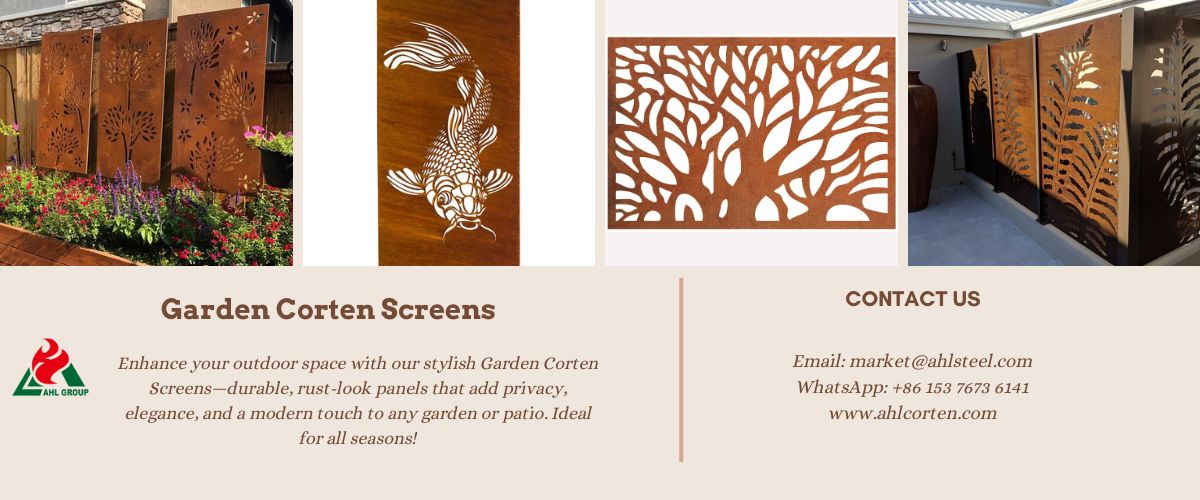
Freestanding rust screen panels serve as sculptural focal points in courtyards. Laser-cut patterns create distinctive shadow effects when illuminated, enhancing the artistic ambiance of the space. Custom designs can incorporate personal symbols or brand logos, transforming the screen into a signature memory point for the courtyard. Enhance the screen's nighttime presence through backlighting, uplighting, or integrated LED strips, allowing the garden to radiate distinctive charm after dark. Installation should prioritize primary viewing angles to maximize visual impact.
Functional zones like air conditioning units, heat pumps, pool equipment, trash bins, and composting areas can be discreetly concealed with decorative garden screens, enhancing the garden's overall tidiness. For equipment requiring ventilation, perforated screens are recommended to ensure proper operation. Designs should incorporate removable panels or movable sections for convenient maintenance and repairs, balancing practicality with aesthetics.
7. Enhancing Water Feature Ambiance
Using laser-cut metal screens as backdrops for fountains or water walls intensifies the visual depth of water features. Alternatively, integrating custom water channels or pipes into the screens creates cascading waterfalls. Pair these with small ponds or reflecting pools below to cultivate a dynamic, fluid ambiance. Note the potential impact of rust runoff on water quality and implement protective measures in advance. Simultaneously, the screens amplify the reflection of water flow sounds, fostering a richer natural ambiance.
8. Vertical Garden Supports and Trellis Alternatives
Perforated decorative metal screens for privacy serve as climbing plant supports, accommodating roses, clematis, jasmine, and other vines to achieve “green wall” effects. In summer, foliage covers the screen to form a natural pergola; in winter, when leaves fall, the screen maintains the structural landscape of the courtyard. When securing plants, use soft ties to avoid scratching the patina layer. Select climbing plants with compatible growth habits to ensure long-term stability.
9. Driveway and Parking Area Screening
Weathering steel screens soften the harshness of hard landscaping around driveways and parking areas, creating ceremonial entrance pathways. Partially open designs conceal vehicles without obstructing views, ensuring courtyard safety. During installation, account for headlight reflections to prevent glare in courtyard seating areas. Select durable materials and sturdy foundations for high-traffic applications.
10. Commercial and Public Space Applications
Rusted steel screens are equally suited for commercial settings: creating private dining zones on restaurant patios, defining landscape layers in hotel courtyards, enhancing architectural texture on office building exteriors, and forming public art installations in parks and municipal projects. Their vandal-resistant properties and public safety attributes make them ideal for high-traffic environments. Customizable patterns and dimensions align with commercial needs, reinforcing brand identity and spatial aesthetics.
Design Principle: Seamlessly Integrating Screens into Courtyards
1. Scale and Proportion Control
Screen dimensions should align with courtyard size to avoid overwhelming small spaces with oversized screens or creating jarring contrasts in large areas with undersized ones. Adhere to the golden ratio principle when designing screen height and width to ensure visual balance. Panel dimensions may be standard or custom-made. Large gardens can employ multiple panels to create layered depth, avoiding the monotony of a single panel. Smaller gardens benefit from streamlined screen designs that emphasize refinement.
2. Color Coordination and Material Pairing
The patina of weathering steel evolves over time, transitioning from light orange to deep brown. Plan its color harmony with existing garden elements. Rust tones complement wood, stone, concrete, and glass seamlessly, enhancing spatial style through material combinations. Plant selection should follow color theory: pair naturally with green foliage, create striking contrasts with purple or blue plants, and achieve sophisticated textures with silver-leafed species—avoiding color clashes.
3. Pattern Selection and Density Considerations
Screen pattern density directly impacts privacy and ventilation:
Solid panels offer maximum privacy but poor airflow; a 15%-30% perforation rate provides light screening, while a 45%-60% perforation balances privacy and natural light. Pattern styles should align with garden aesthetics: geometric patterns suit modern minimalist gardens, botanical textures complement natural-style gardens, and classic motifs work for vintage gardens. Custom patterns must balance complexity with visual appeal and manufacturing feasibility.
4. Orientation and Layout Strategy
Analyze the garden's sunlight angles before installation to optimize light and shadow through screen placement: use perforated screens on sun-facing sides to filter harsh light, and solid screens on shaded sides to block cold winds. Simultaneously, frame views with screens to highlight key garden features while concealing blind spots. Angled installations enhance the corten steel screens' dynamic visual impact, while multi-panel layered arrangements create richer spatial depth, avoiding the monotony of uniform layouts.
5. Lighting Integration: Balancing Day and Night Aesthetics
Lighting design amplifies the screens' nocturnal effect: uplighting accentuates textures and forms, backlighting creates unique patterns through perforations, and integrated LED strips outline the screens for a warm ambiance.
Warm white lighting accentuates the rustic patina of weathering steel. Pairing with a smart lighting control system allows brightness and modes to adjust per scene, enhancing both the functionality and ambiance of the courtyard.
Installation Guide: Professional Methods and DIY Practices
1. Pre-Installation Planning and Site Preparation
Conduct a site assessment before installation: Verify terrain and soil conditions at the installation location, inspect underground utilities (contact local utility hotlines for assistance), and confirm compliance with local building codes and permitting requirements to avoid non-compliant construction. Prepare all necessary materials and tools, establish a detailed construction schedule, and account for the natural weathering cycle of weathering steel. Avoid installation during severe weather to ensure quality.
2. Foundation and Support System Selection
Permanent installations should utilize concrete foundations to ensure long-term stability. For steel column support systems, control embedment depth to prevent wind-induced tipping. Surface-mounted solutions are suitable for hard surfaces without excavation. Temporary or movable screens may employ weighted bases for enhanced flexibility. Calculate wind loads based on local conditions to adjust foundation dimensions and support strength, ensuring structural safety during extreme weather.
3. Installation Methods and Hardware Selection
Frame systems may utilize aluminum or steel materials, with concealed fasteners enhancing visual appeal. Allowance for thermal expansion gaps is essential during installation to prevent panel deformation from temperature fluctuations. Stainless steel hardware is recommended to prevent electrochemical corrosion and extend service life. For uneven terrain, use adjustable brackets to ensure level installation. When joining multiple panels, maintain uniform gaps to enhance overall aesthetics.
4. Step-by-Step Installation Process
Step 1: Mark installation lines to determine screen position and height.
Step 2: Install base and support columns, ensuring vertical alignment and stability.
Step 3: Secure screen panels, adjusting for levelness and gap consistency.
Step 4: Apply sealing and finishing treatments to protect screen edges.
Step 5: Implement initial weathering protection to prevent rust-colored runoff from staining surrounding surfaces.
After installation, inspect the screen's stability to ensure no loosening or tilting, guaranteeing safe usage.
5. DIY vs. Professional Installation: Decision Guide
DIY installation suits simple designs and small-sized screens, requiring basic construction skills, specialized tools, and proper safety precautions. For complex designs, large-scale screens, or commercial projects, professional installation teams are recommended to ensure quality and compliance. Cost comparison shows DIY saves labor expenses but carries installation error risks. Professional installation, though higher cost, guarantees long-term performance and avoids future maintenance hassles. AHL Corten Group offers professional installation partnerships to facilitate efficient construction.
Common Pitfalls and Solutions for Weathering Steel Screens
1. Neglecting Wind Load Requirements
Pitfall: Failure to account for wind forces results in inadequate foundation and support design, causing screen collapse. Solution: Perform wind load calculations based on local wind classifications. Design foundation dimensions and support strength appropriately to ensure structural stability.
2. Improper Drainage Planning
Misconception: Poor drainage around screens causes water accumulation, leading to base corrosion or surface staining. Prevention: Design drainage slopes and install gutters away from screens to prevent prolonged water contact with screens and surfaces.
3. Incorrect Pattern Density Selection
Issue: Pattern density mismatches privacy requirements or wind conditions, resulting in poor user experience. Solution: Select perforation rate based on scenario needs—choose low perforation for high privacy, high perforation for windy areas to facilitate wind flow.
4. Insufficient Post Embedment Depth
Issue: Shallow post embedment causes screen tilting when soil loosens.
Prevention: Embed posts to a depth of at least one-third of the screen height. Further deepen in unstable soil to ensure secure support.
5. Inappropriate Hardware Components
Issue: Using standard hardware causes electrochemical corrosion, shortening screen lifespan.
Prevention: Use only stainless steel hardware to prevent chemical reactions with corten steel and ensure stable connections.
6. Ignoring Local Building Codes
Misconception: Failure to verify code beforehand results in non-compliant screen height or placement, risking rectification. Solution: Before installation, verify local setback distances, height restrictions, and other requirements. Obtain construction permits when necessary.
7. Expecting Instant Patina Formation
Misconception: Hoping for rapid, stable patina formation leads to uneven results from improper accelerator use. Solution: Allow a 12-18 month natural weathering cycle. Organically developed patina achieves greater uniformity, stability, and superior texture.
8. Scale Selection and Spatial Imbalance
Misconception: Mismatched screen dimensions relative to courtyard size create oppressive spaces or disproportionate visuals. Solution: Select screen dimensions based on courtyard scale. Test the visual impact with mock-ups before finalizing the design.
1. How Long Does It Take for a Corten Screen to Fully Rust?
A: Weathering steel will not rust through completely. A stable protective patina typically forms within 12-18 months, though the exact time depends on local climate. The patina formed through natural weathering is more uniform and effectively blocks deeper corrosion.
2. Will Corten Screens Stain Garden Surfaces or Lawns?
A: During the initial weathering phase (first 6-12 months), orange-red rust runoff may occur and potentially stain surfaces. This can be prevented by installing protective barriers or elevating the screens. Once the patina stabilizes, staining significantly diminishes.
3. Can the Rusting Process Be Accelerated?
A: Salt spray and hydrogen peroxide applications can accelerate rusting. However, the patina formed through natural weathering offers superior texture and stability. Natural weathering is the preferred method.
4. Is Corten Steel Suitable For Coastal Environments?
A: Yes, but proper installation protection is essential. Avoid direct salt spray zones within 50 feet of waves. Select appropriate thickness and support systems to ensure the screen withstands sea breeze corrosion.
5. Does Corten Steel Require Sealing or Special Treatment?
A: No sealing or special treatment is needed. This protective patina acts as a natural “protective layer.” Painting or coating would disrupt the natural weathering process, compromising both corrosion resistance and aesthetic appeal.
6. How Should Rusted Steel Screens Be Cleaned?
A: Rinse with clean water for routine maintenance. Use a soft-bristle brush to remove stubborn stains without detergents. Never use high-pressure washers, metal brushes, or corrosive chemicals, as these will damage the patina layer.
7. Can Plants Be Grown on Corten Steel Screens?
A: Yes. Perforated screens serve as ideal supports for climbing plants. Secure plants with soft ties to prevent scratching the patina layer. Select compatible climbing plants to ensure stable growth.
Crafting Your Ideal Garden with Corten Steel Screens
Rusted steel screens seamlessly blend functionality and aesthetics. They offer practical benefits like privacy protection and wind deflection while serving as architectural focal points that elevate your garden's artistic appeal. With exceptional durability and low maintenance requirements, they evolve alongside your garden over time, developing a unique patina. By following the design principles, installation methods, and maintenance tips outlined here, and tailoring them to your garden's style and needs, you can make a corten screen the crowning touch of your outdoor space. AHL Corten Group delivers high-quality weathering steel screens and customized solutions through precise engineering design and masterful craftsmanship, providing full support from design consultation to installation. Launch your garden transformation project today! Whether as a standalone focal screen or an integrated screening system, weathering steel screens create outdoor spaces that blend aesthetic appeal with practicality, transforming your garden into a personal sanctuary that reflects your unique style and taste.
AHL Corten Group · Exclusive Services
1. Browse our complete screen catalog: Hundreds of patterns and sizes available; 2. Request complimentary samples: Experience material and craftsmanship firsthand before ordering; 3. Custom design consultation: One-on-one support from our professional design team to create tailored solutions; 4. Installation partner network: Connect with local expert installers to ensure quality execution; 5. Free planning guide: Access PDF planning templates and worksheets to streamline project implementation.

.jpg)

.jpg)
.jpg)
 Fill In The Inquiry