Corten steel edging, with its distinctive vintage rust patina, exceptional corrosion resistance, and durability, has become the ideal choice for defining spaces and delineating boundaries in modern landscape design. Whether used for garden beds, lawn edges, heavy-duty driveways, or retaining walls, the thickness of the edging panels directly determines their load-bearing capacity, resistance to deformation, and service life.
Selecting the correct thickness ensures metal landscape edging perfectly aligns with functional requirements while avoiding cost inefficiencies from excessive thickness or frequent maintenance due to insufficient thickness.
This article guides you in precisely determining the optimal rusted steel edging thickness for your project through foundational knowledge, core selection factors, and scenario-specific recommendations.
Weathering steel is supplied in plate form with a wide range of thicknesses, from 0.5mm to 40mm. However, thickness selection for metal landscape edging applications tends to be concentrated:
Standard landscape scenarios (flower beds, lawns, and small pathways) prioritize 1–6mm thickness; heavy-duty applications (driveways, parking lots, and high retaining walls) require 10–12mm or thicker plates. Thickness directly correlates with edging panel strength and must match actual load-bearing requirements.
2. Thickness Differences Between Weathering Steel and OtherEdging Materials
Beyond weathering steel, stainless steel, mild steel, and galvanized steel are common materials for metal lawn edging, each with distinct thickness considerations: Stainless steel and mild steel offer multiple standard thicknesses to suit diverse landscaping needs. Galvanized steel typically has a maximum usable thickness of 5mm; exceeding this requires hot-dip galvanizing to ensure corrosion resistance. However, the high temperatures of hot-dip galvanizing may cause deformation in thinner sheets—a critical consideration during selection.
Core Factors for Selecting Corten Edging Thickness
1. Project Purpose and Load Requirements
Different landscape projects experience varying stress levels, leading to distinct requirements for corten edging thickness. These can be categorized into three scenarios:
Light Load Scenarios: Suitable for flower beds, decorative dividers, and lightweight garden borders, where 3–6mm thickness suffices. This thickness balances flexibility with a clean aesthetic, effortlessly creating modern, minimalist landscape borders without adding unnecessary weight.
Medium Load Scenarios: For walkways, lawn edges, and high-traffic landscape areas, 6–10mm thickness is recommended. This thickness effectively withstands soil pressure and daily wear, offering enhanced stability to prevent displacement or deformation over time.
Heavy Load Scenarios: Areas subject to significant pressure, such as driveways, parking lots, and small retaining walls, require 10–12mm thickness. Thicker panels readily withstand soil weight and vehicular, ensuring long-term structural integrity and extended service life.
2. Soil and Environmental Conditions
Surrounding soil properties and climatic conditions directly impact the performance of steel garden bed edging, influencing thickness selection:
Loose Soil Environments: Soft soil prone to settling and deformation requires 8–12mm thick panels to enhance support and prevent metal lawn edging from sinking into the ground.
High Wind/Erosion Environments: In areas with strong winds or prone to soil erosion, increased thickness improves displacement resistance and weathering durability, preserving boundary integrity.
Coastal/High-Salinity Environments: High salinity accelerates weathering steel corrosion. Add 2–3 mm to the standard thickness or apply protective coatings to enhance corrosion resistance and extend service life.
3. Structural Height and Support Methods
The height and support design of decorative metal garden edging are key factors determining their thickness. Greater height increases lateral soil pressure on the edging, demanding higher thickness and more robust support structures.
4. Aesthetic and Design Requirements
Thickness not only impacts functionality but also alters the visual style of the landscape, necessitating alignment with the overall design concept:
Modern Minimalist Gardens: Thin plates of 3–6mm create a clean, lightweight modern feel, allowing for smoother boundary lines without disrupting the landscape's simplicity.
Industrial/Rustic Landscapes: Thicker 8–12mm panels enhance rugged, substantial textures. Paired with natural rust patinas, they align with industrial-vintage design aesthetics.
Safety and Finish Design: Steel garden bed edging without top flanges offers visual simplicity but features sharp edges and reduced structural rigidity. Preformed systems mitigate these issues, enhancing safety and stability while maintaining aesthetics.
Recommended Corten Edging Thickness by Project Height
1. 100–300mm Height: Standard Garden Edge Boards
Suitable for small vegetable gardens, flower beds, lawn borders, and narrow pathways with moderate soil pressure. Thickness selection must balance flexibility and stability:
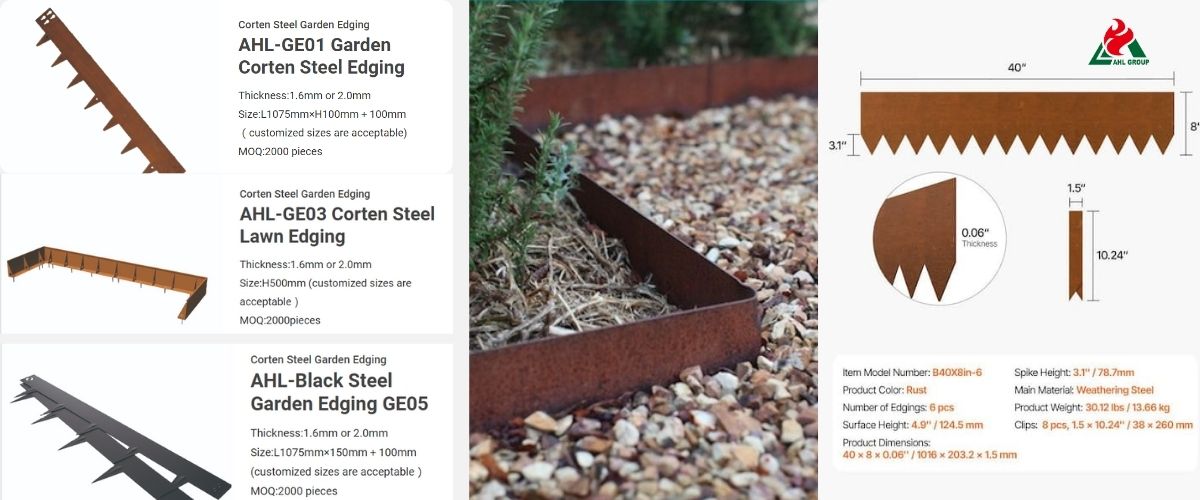
1.6–2mm thickness: Ideal for small vegetable gardens or flower beds. Advantages include balanced strength and flexibility, suitability for low soil pressure scenarios, and on-site bending into curved shapes. Disadvantages: Only suitable for straight-edge installations under 150mm height (except for special forming), difficult straight-edge forming, and prone to shifting after installation.
4mm thickness: Suitable for flower beds, lawns, and small pathways. Advantages include significantly enhanced durability, strong resistance to soil pressure deformation, extended service life, and a clean, professional finish after installation. Disadvantages include heavier weight, increased installation difficulty, and higher cost compared to thinner sheets.
6mm and above thickness:Suitable for heavy-duty residential applications like driveways. Advantages include ultimate durability, withstanding heavy soil loads without deformation, and delivering a premium, robust visual effect. Disadvantages include substantial weight, requiring prefabrication and potentially on-site welding, resulting in the highest cost. Use in standard home gardens may lead to material waste.
2. 300–600mm Height: Raised Flower Beds
When weathering steel garden edgingheight exceeds 300mm, the lateral pressure from soil weight significantly increases. Pre-formed systems are the preferred choice to ensure structural stability. If opting for a design without a top fold-over edge, pay close attention to the following issues:
Safety: Exposed edges are sharp and require protective treatment to prevent cuts. Structural Rigidity: The absence of a fold-over edge reduces the strength of the edging board, making it prone to deformation in high-traffic areas.
Edge Corrosion: Exposed edges are susceptible to rust. If powder-coated, damage to the coating accelerates corrosion, affecting longevity and aesthetics. Aesthetics: Raw, unfinished edges appear coarse and may clash with high-end landscape designs. Maintenance: Sharp edges trap debris, complicating routine upkeep.
Preformed systems resolve all these issues while preserving the texture of 7mm-thick panels, eliminating trade-offs between functionality and aesthetics.
3. 600–1200mm Height: Retaining Walls
At this height, metal landscape borders bear significant soil pressure and function as load-bearing structures, necessitating structurally certified systems. Professional structural calculations are required to ensure the edge panels withstand soil loads. Simply increasing thickness is insufficient for safety; professional support design and structural-grade weathering steel must be employed to guarantee safe use.
Practical Guide: Balancing Cost, Installation, and Lifespan of Edging
1. Cost-Benefit Analysis: Thin Panels vs. Thick Panels
Thin Panel Advantages: Lower cost, easier transportation and installation, suitable for small projects with limited budgets and light loads.
Disadvantages: Insufficient strength, shorter lifespan, and potential long-term maintenance or replacement costs.
Thick Plate Advantages: Structural stability, high durability, minimal maintenance requirements, suitable for heavy-duty, high-frequency use scenarios.
Disadvantages: Higher material and transportation costs, complex installation requiring professional teams, and significant upfront investment.
2. Installation Techniques for Different Thicknesses
Thin Plates (1–6mm): Lightweight, allowing manual on-site shaping adjustments for high installation efficiency without specialized tools; however, ensure secure fastening to prevent post-installation shifting.
Thick Plates (10–12mm and above): Heavy weight precludes manual adjustments, requiring pre-fabricated shaping; installation necessitates lifting equipment and may involve on-site welding for fixation, best handled by professional construction teams.
3. Durability Trade-offs: Choose “Right” Over “Thick.”
The core principle for thickness selection is not “thicker is better,” but “matching requirements.”
For example, using 10 mm-thick corten steel edgings for small decorative flower beds not only increases costs but also appears bulky, disrupting landscape harmony. Conversely, using 2mm thin plates for driveways will lead to deformation and damage within a short timeframe, ultimately increasing long-term costs.
Optimal balance between functionality, aesthetics, and cost is achieved by matching thickness to project-specific factors like load, height, and environment.
Ready to Customize an Edging Thickness Specifically For Your Garden?
Choosing the thickness of weathering steel edging is a matter of both function and aesthetics. The key is to precisely match the thickness to the project's purpose, load, height, environment, and design style, rather than blindly pursuing "thick" or "thin." Following the selection tips in this article will allow weathering steel edging to fully leverage its corrosion resistance and durability, while also enhancing the design of your landscape boundaries, achieving a "one-time installation, long-term benefit" effect, adding a unique vintage feel and practical value to your landscape space. Contact us now for a free catalog and quote for corten steel edging in different thicknesses!
1. Is Thicker Always Better for Weathering Steel Edging?
No. Thickness must align with project requirements. Excessive thickness wastes resources and may disrupt visual harmony, while insufficient thickness fails to meet load-bearing and deformation resistance needs. The key is selecting an appropriate thickness based on load, height, environment, and other factors.
2. Is a Preformed System Mandatory For Edging Exceeding 300mm In Height?
Its use is strongly recommended. Corten steel edging over 300mm must withstand significant soil pressure. Preformed systems enhance structural rigidity, prevent deformation, and address safety and corrosion concerns associated with non-returned decorative metal garden edging designs. Non-preformed systems require compensatory measures like increased thickness and reinforced support structures, but these offer inferior performance and stability compared to preformed solutions.
3. How Does the Coastal Environment Affect Corten Edging Thickness?
High-salinity coastal environments accelerate weathering steel corrosion. We recommend adding 2–3mm to standard thickness recommendations to enhance corrosion resistance reserves. Alternatively, specialized protective coatings can further slow corrosion rates and extend service life.


.jpg)

 Fill In The Inquiry