Should I Seal a Corten Steel Planter to Stop It Rusting?
Date:2026.07.15
Share to:
When many homeowners and landscape designers first encounter corten steel planters, they all have the same question: Does the rust-colored surface mean the material is damaged?
Influenced by the common perception that ordinary ironwork rusts and gradually decays, people’s first instinct is to quickly paint it, seal it, or spray it with a sealant to stop it from rusting further.
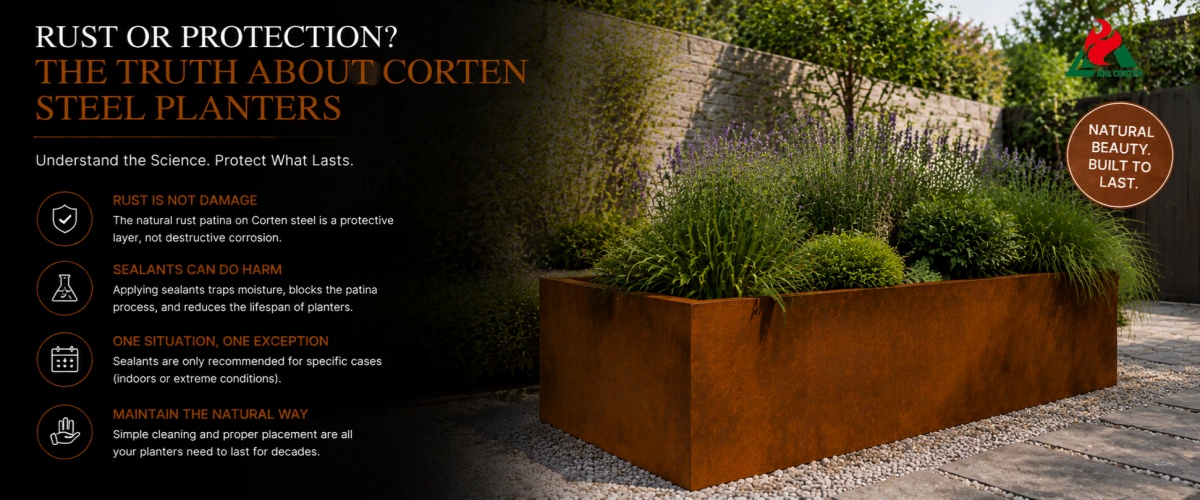
But this is a classic misconception. The rust patina on weathering steel is completely different from the destructive rusting of ordinary iron. Blindly applying sealants to prevent rust not only fails to protect the planter but shortens its lifespan.
This article will comprehensively address the core issue of rust prevention for weathering steel planters from various angles—including material principles, the hazards of sealants, the only suitable application scenario, and scientific maintenance methods—to help you avoid 90% of common maintenance pitfalls.
The Truth About Corten Steel Planters: Rusting Doesn’t Make Them Worse
1. Ordinary Steel vs. Weathering Steel: Two Completely Different Rusting Mechanisms
Rusting in ordinary steel is a form of aggressive corrosion. The rust layer is loose and porous, continuously absorbing moisture and oxygen, which steadily erodes the base material from the inside out, eventually leading to rust-through, fractures, and powdery flaking.
Weathering steel, on the other hand, is an alloy steel specifically developed for outdoor environments. It possesses a unique, controllable weathering mechanism; rusting is a self-protective process, not a sign of material degradation.
2. The Passivated Rust Layer: Weathering Steel’s Natural Protective Armor
When weathering steel planters are left outdoors for extended periods, the surface naturally develops a dense, uniform patina through cycles of wetting by rain and drying in the sun and wind. This stable, dark brown rust film effectively seals out air, moisture, and salt, protecting the underlying material and preventing deep corrosion at its source. Simply put: the rusting of weathering steel is a process of self-repair and self-protection that eventually stabilizes; it will not rust indefinitely or corrode through.
Precisely for this reason, high-quality weathering steel planters develop a richer texture over time. The vintage patina that develops with age is a landscape advantage that ordinary planters simply cannot replicate.
Key Conclusion: Outdoor Corten Planters Do Not Require Any Sealant Application to Prevent Rust
For all outdoor settings—including yards, patios, outdoor gardens, and commercial landscapes—here is the most authoritative conclusion: Under no circumstances should you seal, paint, or spray sealant on weathering steel planters to prevent rust. The vast majority of people who proactively apply sealants to prevent rust are engaging in practices that damage the performance of weathering steel and shorten the product’s lifespan.
1. Sealants Interfere with Weathering Steel’s Film-Forming Mechanism
The protective rust layer on weathering steel must rely on natural outdoor cycles of wet and dry conditions, ventilation, and exposure to sunlight to gradually form, cure, and become dense. Applying sealing paint or clear sealants prematurely is like wrapping the steel in an airtight layer of plastic wrap, completely blocking the exchange of air and moisture. This directly prevents the natural protective layer from forming, completely negating the core weathering performance of weathering steel.
2. Sealing Treatments Will Inevitably Lead to Severe Problems Later On
Exposure to outdoor UV radiation, diurnal temperature fluctuations, and the moist, warm air from the soil inside the planter will continuously erode the surface sealing coating. Within just 1–2 years, the sealing coating will begin to age, yellow, become brittle, crack, and peel off. Cracks allow moisture to seep in, creating a sealed, high-humidity, oxygen-deprived microenvironment beneath the sealing layer that promotes corrosion. Eventually, the surface of the flower pot will develop snake-skin-like blistering, mottled paint peeling, and localized pitting corrosion. Not only will this completely ruin its appearance, but it will also drastically shorten its structural lifespan.
3. Subsequent Repair Costs are Extremely High
Once the sealing coating has aged and deteriorated, there is no simple repair solution. To restore the surface, the entire old sealing layer must be completely removed using paint strippers or sandblasting. The entire process is time-consuming, labor-intensive, and costly, and it can also damage the substrate—making it completely not worth the effort.
The Only Exception: Sealing Is Permitted Only in This Type of Setting
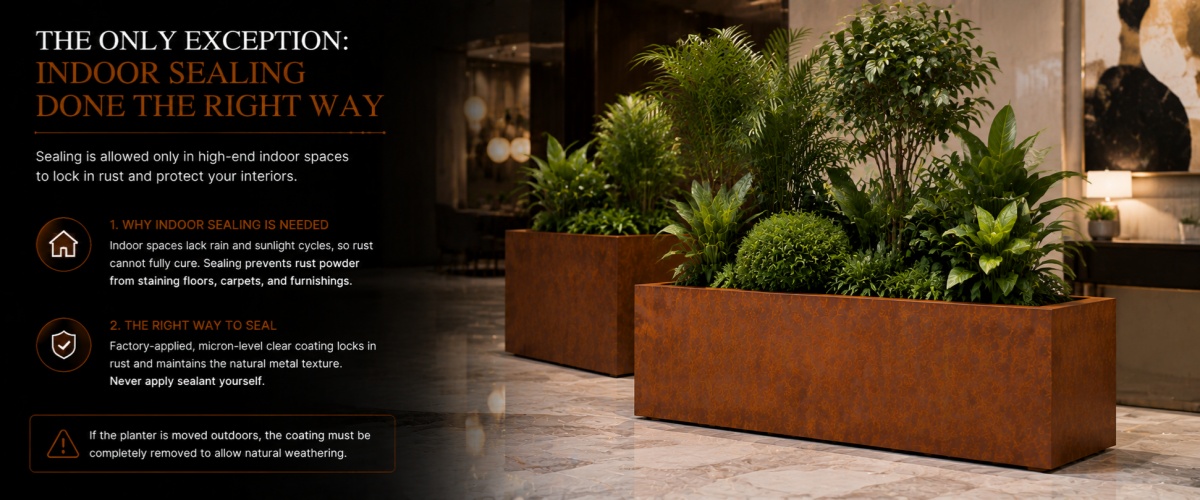
The application of sealant is strictly prohibited in outdoor settings, but there is one specific exception—a scenario recognized as the industry-standard practice. In purely indoor, high-end, enclosed spaces—such as hotel lobbies, upscale entryways, and indoor exhibition halls—professional sealing may be performed.
1. Reasons for Indoor Sealing
Indoor environments are dry and draft-free, lacking the moisture-drying cycles caused by rain and sunlight, so weathering steel cannot naturally complete the curing of its rust layer. Fine rust powder will remain on the surface for extended periods; daily wiping or contact can easily cause this powder to fall off, staining light-colored marble, high-end carpets, and soft furnishings.
2. The Correct Method for Indoor Sealing
Indoor rusted steel planters must be sprayed with a micron-level transparent hardening protective coating by the manufacturer before leaving the factory to lock in the surface rust and preserve the metallic texture. Users are strictly prohibited from applying paint or sealants themselves afterward. Hand-applied sealant layers are uneven in thickness and are highly prone to rapid aging and cracking. Also, please note: Whenever the planter is moved outdoors for use, the sealant layer must be thoroughly removed to restore the steel’s natural weathering conditions.
The Correct Approach to Protection: Protect the Floor, Not the Planter
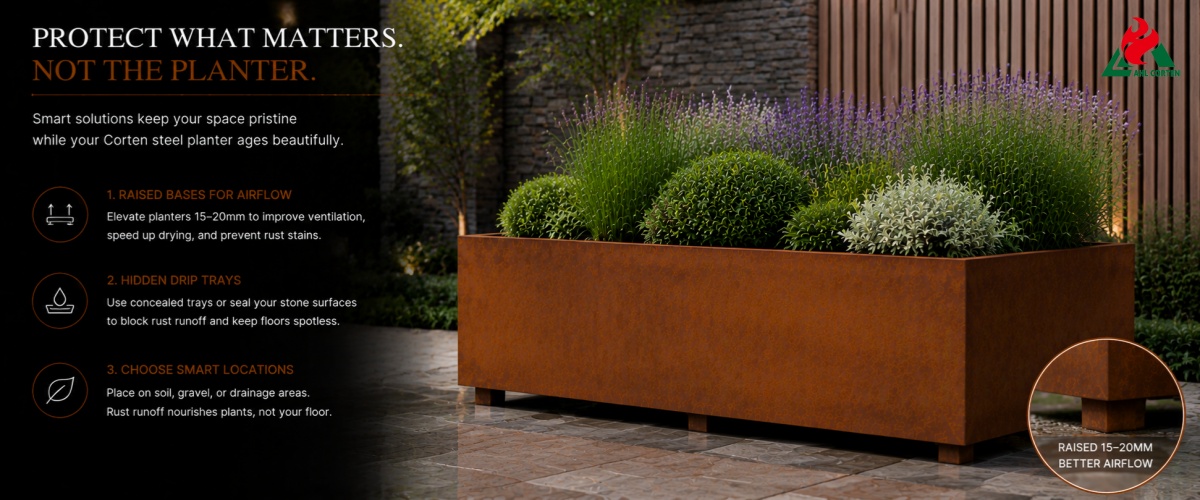
The primary reason many people want to apply sealant is the concern that rust water will stain the stone flooring during the initial period. This issue does not require sealing; it can be effectively avoided through proper precautions. During the first 3–6 months after installation, rusted steel planters are in an active weathering phase, during which trace amounts of iron ions will leach from the surface with rainwater, forming a light rusty runoff. This is a normal phenomenon and will disappear on its own once the rust layer has fully cured. To protect high-end paving, simply adopt one of the following three professional solutions.
1. Install Raised Bases for Elevated Ventilation
Add 15–20 mm raised feet made of the same material to the bottom of the planter, lifting the entire planter off the ground. This allows for air circulation, which accelerates drying at the bottom and promotes even curing of the rust layer, while also allowing rainwater to drip off and evaporate quickly, preventing staining of the ground.
2. Install a Concealed Drip Tray
For high-end stone surfaces or wooden decks, install a concealed drip tray at the bottom of the planter. Alternatively, apply a waterproofing and stain-resistant sealant to the stone surface beforehand to prevent rusty water from seeping into the stone’s pores; a simple rinse with clean water will restore the surface to its original condition later on.
3. Choosing the Right Location for Natural Drainage
Place planters on soft surfaces such as lawns, gravel beds, or drainage ditches. Initially, trace amounts of rusty water that seep into the soil will be converted into iron—a nutrient essential for plants—causing no harm to greenery and eliminating ground contamination at its source.
4 Minimal Maintenance Guidelines for Corten Planters: Hassle-Free and Durable for Decades
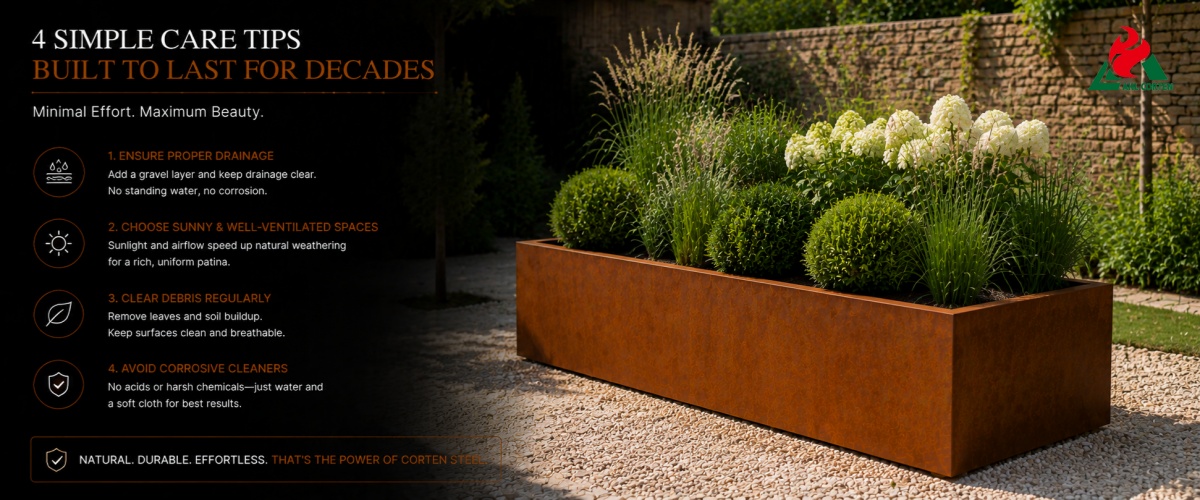
High-end outdoor materials never require cumbersome maintenance. By following these four basic guidelines, you can ensure decades of reliable use for your planters.
1. Ensure Unobstructed Drainage to Prevent Prolonged Water Logging
Weathering steel’s protective mechanism relies on cycles of drying and wetting; standing water is its greatest enemy. Before filling with soil, lay a 5–10 cm layer of gravel or expanded clay pellets at the bottom to create a drainage layer, separated by geotextile fabric, to ensure no standing water remains within 10 minutes after heavy rain. Chronic waterlogging causes the rust layer to dissolve and fail, leading to severe localized corrosion.
2. Choose a Sunny, Well-Ventilated Location to Accelerate Natural Weathering
Avoid placing the planter in enclosed, dark corners or areas surrounded by dense vegetation. Prioritize sunny, well-ventilated, open areas; exposure to sunlight and air drying accelerates the formation of a dense rust layer, resulting in a more uniform color and a more refined texture.
3. Regularly Clear Debris Accumulated in Corners
Fallen leaves, decaying soil, and dead branches that accumulate over time in the corners of flower pots will continuously absorb moisture, creating a localized damp and stuffy environment. It is recommended to perform a simple cleanup each season to keep the outer walls of the flower pots clean and unobstructed, allowing the steel to breathe evenly and age naturally.
4. Avoid Acidic or Alkaline Corrosive Cleaners
Never use corrosive chemicals such as oxalic acid, bleach, or strong toilet cleaners to wipe down the flower pots. These agents will instantly destroy the formed passivated rust layer, exposing the base material and causing rapid localized rusting. For daily cleaning, simply wipe with clean water and a soft cloth; this provides the best results for natural aging.
Why Are Weathering Steel Planters a Long-Term, High-Value Investment?
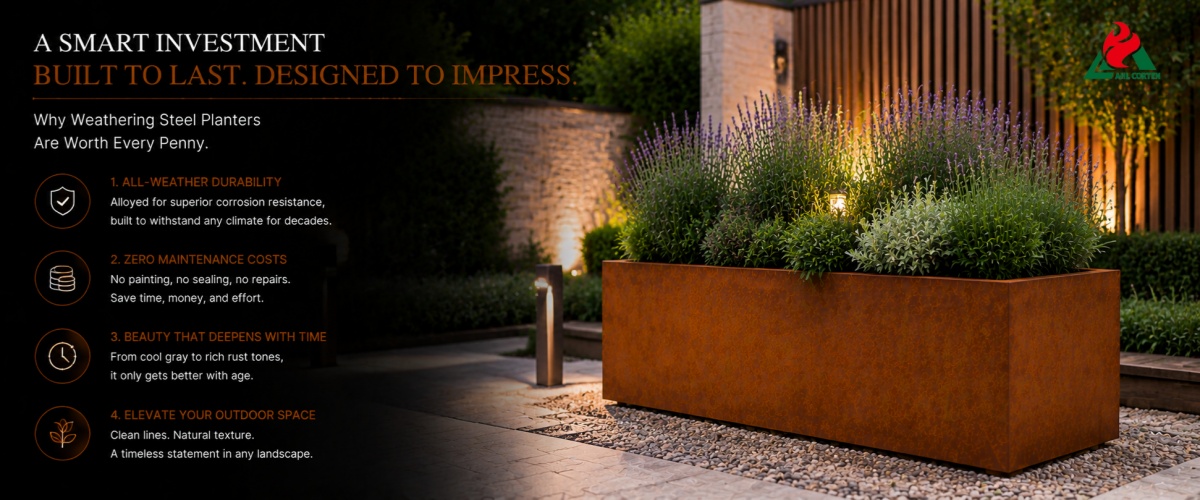
1. Exceptional Weather Resistance, Suitable for All Outdoor Climates
Genuine weathering steel is alloyed with elements such as copper, chromium, and nickel, giving it 4 to 8 times the atmospheric corrosion resistance of ordinary carbon steel. It withstands extreme conditions—including intense sunlight, heavy rain, sub-zero temperatures, and coastal salt fog—and remains structurally stable and durable, with a service life spanning decades.
2. Zero Maintenance Costs—Say Goodbye to Frequent Renovations
Unlike pressure-treated wood that requires annual oiling, standard wrought iron that needs annual rust removal and repainting, and plastic planters that age and become brittle, weathering steel planters require virtually no ongoing maintenance. A one-time installation ensures long-term use, significantly reducing labor and material costs, and offering exceptional overall value.
3. Enhanced by Time: A Look That Grows More Refined with Use
While most outdoor materials age and lose value over time, weathering steel becomes more refined with use. Starting with an initial cool gray, it gradually transitions to orange-red and reddish-brown, eventually settling into a rich, vintage chocolate brown that naturally embodies the patina of time.
4. Elevate the Overall Aesthetic of Your Garden
With clean, metallic lines and a natural, vintage texture, these planters pair perfectly with greenery, stone, and natural wood elements. Whether in private gardens, rooftop terraces, commercial complexes, or hotel landscapes, they serve as visual focal points that elevate the overall design aesthetic.
Ideal Users and Scenarios for Weathering Steel Planters
Corten steel planter boxes are not merely trendy items, but high-end landscaping materials tailored to specific needs—particularly suited for four types of users. First, modern homeowners seeking low-maintenance gardens who do not want to spend a lot of time tending to outdoor landscaping features. Second, gardening enthusiasts who prefer modern minimalism, industrial style, or natural wabi-sabi aesthetics—these planters complement a wide range of design styles. Third, users living in regions with extreme climates—such as coastal areas, extremely cold regions, or hot and rainy regions—who need durable and robust planting containers. Fourth, professional landscape designers who use them to create high-end gardens, commercial landmarks, and model landscape projects.
Frequently Asked Questions: Clear Up All Your Purchasing and Maintenance Concerns at Once
Q1: Will Corten Steel Planters Continue to Rust Until They Eventually Rust Through and Become Unusable?
No. While ordinary steel undergoes severe, continuous corrosion, weathering steel rapidly forms a stable passivation layer that prevents deep corrosion. Once formed, the rust layer remains stable and does not continue to corrode inward, ensuring the structure remains stable for decades.
Q2: Can I Spray Varnish Or Sealant On Outdoor Weathering Steel Planters Myself To Prevent Rust?
Absolutely not. Applying sealant outdoors on your own is a common maintenance mistake. It prevents the natural formation of the rust layer, leading to peeling, bubbling, and pitting later on, which significantly shortens the product’s lifespan.
Q3: How Can I Completely Solve The Problem Of Rust Water Staining The Ground During The Initial Stage?
There’s no need to apply a sealer. Simply elevate the planter, lay down a layer of gravel as a barrier, or apply a ground-sealing agent. After waiting 3–6 months for the rust layer to fully cure, rust water will no longer form.
Q4: Do Tall Corten Steel Planters Require Regular Rust Removal, Repainting, Or Sealing Maintenance?
Absolutely not. The core advantage of weathering steel is that it is maintenance-free—no rust removal, repainting, or sealing is needed. Simply clean away debris daily and ensure proper drainage.
Q5: Can Weathering Steel Planters Be Used To Grow Edible Plants Such As Vegetables And Herbs?
It is completely safe. As weathering steel oxidizes, it releases only trace elements of iron and manganese—which plants need—and contains no heavy metal toxins. It is more eco-friendly and healthier than pressure-treated wood or plastic planters, making it suitable for growing all kinds of fruits, vegetables, and foliage plants.
Are You Ready To Choose a Corten Steel Planter That’s Right For You?
Summary of key takeaways: For all outdoor bottomless corten steel planters, painting, sealing, or applying sealants to prevent rust is neither necessary nor recommended.
The rust on weathering steel is not a defect; it is a natural protective system bestowed by nature and creates a unique aesthetic texture. Artificial sealing interventions will only disrupt the material’s inherent protective mechanism, making it more trouble than it’s worth.
Truly professional maintenance of weathering steel planters does not rely on chemical coatings, but rather on scientific placement, drainage, ventilation, and simple daily cleaning. By embracing the natural weathering process and allowing time to develop a rich, sophisticated vintage patina, you can ensure your garden landscape remains beautiful and durable for years to come. Looking for authentic, durable corten steel planters and a customized garden layout plan? Contact us for expert guidance on product selection, installation, and how to avoid common pitfalls.



 Fill In The Inquiry