The corten steel BBQ grill has long been the centrepiece of garden barbecues, combining industrial-chic luxury with exceptional durability. The unique patina that develops over time on this outdoor metal BBQ grill serves both as an aesthetic signature and a natural protective barrier.
Unlike conventional barbecues, however, the material properties of weathering steel necessitate specific safety protocols. Whether novice or seasoned outdoor cook, mastering scientific usage and maintenance methods is essential to savouring delicious meals while upholding safety standards.
This guide integrates the latest 2026 safety standards with the principles of weathering steel, comprehensively covering safety essentials from pre-use preparation to emergency response. Transform your rusted steel BBQ grill into a secure and enduring outdoor companion.
Site selection forms the first line of defence for barbecue safety, requiring strict adherence to distance regulations and compatibility with corten steel properties.
Maintain Safe Distances: Position at least 3 metres (10 feet) from buildings, 5 feet from flammable vegetation and trees, 3 feet from wooden furniture, and over 10 feet from children's play equipment. Ensure the garden BBQ grill maintains sufficient distance from all potential hazards to eliminate safety risks.
Preferred Placement Surfaces: Position the Corten BBQ grill on level, non-combustible surfaces. Concrete, brickwork, or paving stones are optimal choices. Avoid direct placement on wooden decking (requires fireproof mats) or lawns (sparks may ignite fires) – fundamental principles for outdoor BBQ grill positioning.
Special note for weathering steel: During the initial 12-18 months of use, the rusting period may cause oxide leakage. Place on dark gravel or specialised rust-proof mats to prevent staining light-coloured stone surfaces.
Grill Equipment Integrity Check
Inspect all equipment components before use, distinguishing between normal rust patina and structural damage.
Structural Stability: Inspect for cracks, loose legs, detached handles, etc. The cooking surface must remain level. Surface rust is normal, but cease use immediately if structural corrosion is present.
Ventilation and Ash Management: Ensure chimneys and vents are unobstructed. Clean ash collection trays thoroughly. Alkaline ash mixed with rainwater corrodes the grill's firebox rust layer; do not allow accumulation.
Fuel System Inspection: Verify vent functionality ensures unimpeded airflow for complete wood/charcoal combustion. Simultaneously inspect the firebox for debris buildup, which compromises combustion efficiency and safety.
Surrounding Environment and Emergency Preparedness
Anticipate environmental risks and prepare emergency provisions.
Weather Assessment: Cease barbecuing when wind speeds exceed 15 miles per hour (risk of flying sparks and uneven combustion). During rain, protect ignition components from water exposure. Monitor fire danger ratings closely during dry conditions.
Perimeter Clearance: Remove all combustibles within 3 feet of the grill, including dry leaves and paper. Keep a fire extinguisher and water source ready. Ensure children and pets remain under adult supervision and away from the grill.
Chimney Starter (Safest Method): Fill the chimney starter with charcoal, place newspaper or dedicated firelighters at the base, ignite the bottom fuel, and wait 20-30 minutes until the charcoal turns white. Using heat-resistant gloves, carefully transfer the charcoal to the corten steel BBQ grill. This method is suitable for all types of wood/charcoal outdoor BBQ grills.
Electric Igniter: Pile charcoal into a pyramid shape. Insert the electric igniter into the centre. Power on for 15-20 minutes, then switch off and remove. Allow charcoal to fully turn white before use.
Absolutely Prohibited Hazardous Practices
Never use flammable liquids such as petrol, kerosene, solvents, or alcohol for ignition. These substances may cause explosive flash fires, potentially resulting in severe burns or life-threatening injuries. Special Warning for Weathering Steel: Avoid prolonged concentrated heating of any single section of the grill using a blowtorch. Localized extreme temperatures may compromise the stability of the rust layer, leading to steel deformation and rust layer detachment.
Safe Use of Firelighting Fluid (Use Only When Absolutely Necessary)
Apply sparingly to cold charcoal only. Never add to hot coals or flames, and under no circumstances use indoors.
Strictly control quantity: Follow product instructions for application, as excessive amounts may cause dangerous flash fires. After application, wait one minute to allow the fluid to fully permeate the charcoal before igniting.
When igniting, use a long lighter or matches with arms fully extended and body leaning back, anticipating the risk of sudden flame surges. Immediately reseal the bottle cap after use and store it in a safe area at least 10 feet away from the grill.
Corten steel possesses exceptional heat retention. Monitor temperatures continuously to prevent overheating, which may cause grill deformation or food charring. Use a thermometer to regulate flame intensity via ventilation ports.
Preventing Flare-Ups: Trim excess fat from meat before grilling to minimize grease dripping and potential flare-ups. Should a flare-up occur, promptly move food to a safe area, close the vents, and cover the grill briefly to smother the flames. Never extinguish grease fires with water.
Burn Prevention and Personal Protection
During cooking, the surface temperature of weathering steel can exceed 500°F (approximately 260°C) and remain hot for 30-60 minutes after extinguishing the fire. Heat-resistant gloves must be worn throughout.
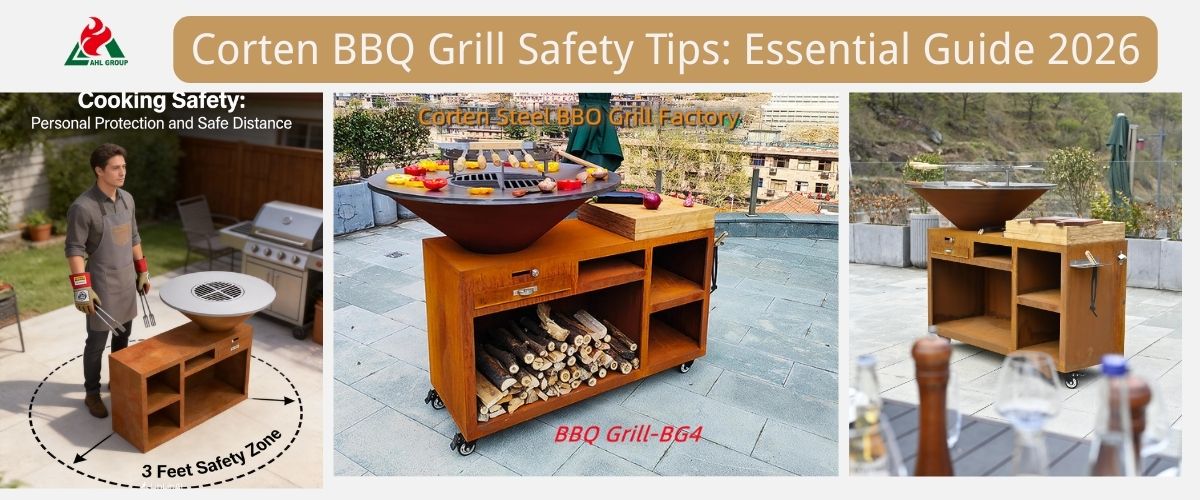
Use utensils with handles longer than 12 inches and avoid touching any metal parts of the grill. Wear short sleeves or close-fitting long sleeves with an apron. Avoid loose clothing or scarves that could catch fire. Do not wear synthetic fabrics (which may melt). Establish a 3-foot "safety zone." Children and pets should be kept away. Maintain constant supervision at all times; never leave the grill unattended for extended periods.
Essential Safety Equipment
Prepare full protective gear before cooking: heat-resistant gloves rated for temperatures above 500°F, long-handled barbecue tools, a water spray bottle (to control small flames), an ABC or K-rated fire extinguisher, an apron, and a first-aid kit.
Use a meat thermometer to ensure thorough cooking:
- Beef and pork: Internal temperature of no less than 145°F (approx. 63°C), rest for 3 minutes before serving - Ground meat: No less than 160°F (approx. 71°C) - Poultry: No less than 165°F (approx. 74°C) (approx. 74°C). Insert thermometer into thickest part of the food, avoiding bones and fat. Test each piece separately. Clean probes after use to prevent cross-contamination.
Prevent Cross-Contamination
Handle raw and cooked foods separately, using dedicated chopping boards, utensils and containers. Store raw meat on the bottom shelf of the refrigerator to prevent juices from contaminating other foods. Thoroughly wash your hands after handling raw meat.
Marinades used for raw meat must not be applied directly to cooked meat directly; if reused, boil for one minute before application. Use separate tools for basting during grilling.
Ingredient Storage and Time Management
Prior to grilling, store perishable ingredients in a cooler (below 40°F/4°C) to minimise time at room temperature. Avoid prolonged exposure of ingredients to the danger zone between 40-140°F (4-60°C). Do not leave at room temperature for more than 2 hours, or 1 hour in hot weather (above 90°F/32°C).
Weathering Steel Specific Food Safety Guidance
The rust layer on the weathering steel exterior of the bbq grill is safe and harmless. However, the cooking surface must be maintained with oil treatment. Regular application of oil forms a protective film, preventing surface corrosion and food sticking, while ensuring food hygiene.
When wind speeds exceed 15 miles per hour, it is advisable to postpone barbecuing or relocate the garden BBQ grill to a sheltered area. This prevents sparks from causing fires and avoids the rusted BBQ grill toppling over.
During rainfall, use a grill cover or relocate to a sheltered position to prevent igniter malfunction from rain exposure. Note that rain accelerates rust formation on weathering steel, which is a normal phenomenon requiring no undue concern.
High Temperatures and Wildfire Season
In hot weather, reduce the exposure time of food to the hazardous temperature range to one hour. Implement sun protection and cooling measures to prevent operator heatstroke.
During bushfire season, consult local fire restrictions beforehand and strictly adhere to usage limitations. Expand the cleared perimeter around the grill to prevent sparks from igniting dry vegetation.
Winter Safety
Clear ice and snow from around the grill before use to ensure slip-resistant surfaces. Avoid operating the grill in garages to prevent carbon monoxide poisoning. Due to lower temperatures, extend the grill's preheating time to ensure optimal cooking results and equipment stability.
Coastal Region Specific Recommendations
Salt spray in coastal areas accelerates rust formation on weathering steel, resulting in thicker, darker rust layers. Increase the cleaning frequency of cooking surfaces to promptly remove salt residue accumulation and prevent salt corrosion of the surface.
Post-Cooking Safety Procedures and Maintenance for Barbecue Grills
Safe Shutdown Protocol
For wood/charcoal-fired corten steel grills: cease adding fuel, close all vents, secure the lid, and allow flames to extinguish naturally. Wait 24-48 hours to ensure embers are fully cooled before handling. Patience is essential during the shutdown process; never rush to clear embers. Ashes must be placed in a metal container, thoroughly soaked with water, and left for 24 hours before disposal. Never pour into plastic containers or near buildings/wooden surfaces (residual heat may cause fires). Additional note: For wood/charcoal grills, no additional fuel valve closure is required. Control combustion entirely via the ventilation ports. After cooling, thoroughly clean residual charcoal and ashes from the firebox to prevent moisture corrosion.
Weathering Steel Maintenance Techniques
Cleaning Timing: Once the grill has cooled to a non-scorching temperature (approximately 40-50°C), scrape away cooking residues from the surface and apply a thin layer of olive oil or grape seed oil to prevent atmospheric salt corrosion.
Regular Ash Removal: Regardless of usage frequency, promptly clear ashes to prevent alkaline residue from mixing with rainwater and eroding the fire bowl's rust layer, compromising its protective properties.
Storage Method: Weathering steel can overwinter outdoors without needing to be brought indoors. Covering the grill with a protective cover will slow rust formation. Avoid sealing the rust layer; natural ventilation promotes stability of the protective coating.
Frequently Asked Questions about Corten Steel Barbecue Grills
Q1: Will Corten Barbecue Grills Eventually Rust Through?
A1: Not under normal use and maintenance. High-quality weathering steel grills feature 3-10mm thick steel. The rusting process is self-limiting; once the rust layer forms, the internal corrosion rate approaches zero. With proper care, the service life exceeds 25 years.
Q2: If Patina Is Intentional, Why Oil The Cooking Surface?
A2: They serve distinct purposes. The grill's exterior rusting provides aesthetics and protection, while oiling the cooking surface (maintenance) ensures hygiene, prevents food sticking, and avoids pitting damage.
Q3: Is Uneven Colouration a Quality Defect?
A3: No, this is inherent to weathering steel. Humidity, sunlight and temperature fluctuations all influence rust layer formation, with the colour gradually deepening from bright orange to dark chocolate brown. To achieve more uniform colouring, lightly spray non-cooking areas with a diluted saltwater solution.
Q4: How Can Weathering Steel Rust Stains Be Removed From a Patio?
A4: Use a specialised stone rust remover or a diluted citric acid solution to wipe the surface. For root-cause prevention, pre-rust the grill before installation. Allow the rust layer to stabilise before placement.
Q5: Can a Blowtorch Be Used To Ignite a Weathering Steel Barbecue Grill?
A5: Yes, but avoid prolonged concentrated heating on a single area. Localised extreme heat causes uneven steel heating and impacts the rust layer, leading to flaking that compromises both performance and appearance.
Why Is a Weathering Steel Barbecue Grill a Safe Long-Term Investment?
Durability and safety combined: The stable rust layer and robust steel construction of a Corten steel BBQ grill withstands the high temperatures of wood/charcoal combustion. Compared to ordinary barbecues, it offers superior durability, significantly reducing maintenance risks. Its lifespan far exceeds that of conventional outdoor BBQ grills, making it more cost-effective over time.
Aesthetics and Functionality Combined: Unlike ordinary barbecues, Corten steel develops a distinctive patina over time, growing more characterful with use while maintaining safety standards. It becomes a living work of art within your outdoor space.
Significant Low-Maintenance Advantage: Requiring only basic oiling and ash removal, it eliminates the need for repainting or sealing. This makes it ideal for frequent outdoor cooking, saving both time and effort.
Ready to Customise Your Very Own Outdoor Corten Steel BBQ Grills?
Safe operation of outdoor Corten BBQ grills hinges on understanding the material's properties and adhering to scientific handling and maintenance protocols. Mastering the key points in this guide allows you to enjoy the outdoor cooking delights of a garden BBQ grill while safeguarding your family and premises. Contact us today for a quote.


.jpg)
(1).jpg)


 Fill In The Inquiry