10 Essential Tips to Keep Your Corten BBQ Grill in Peak Condition
Date:2026.01.13
Share to:
Owning a Corten steel BBQ grill is like owning an outdoor piece that blends high-end cookware with architectural artistry. Its rugged rust-colored appearance is inherently designed to withstand the elements, but its grilling performance hinges entirely on how you maintain the cooking surface and fire bowl.
As experts with 15 years of engineering experience in weathering steel products, AHL Corten Group understands that a well-maintained grill not only lasts longer but also delivers superior cooking results. This guide shares 10 professional-level maintenance tips—from initial seasoning to winter storage—to help you keep your grill in peak condition year-round.
10 Core Maintenance Tips to Protect Your Weathering Steel Grill
1. Master the “Initial Seasoning”: Laying the Non-Stick Foundation
The cooking surface (grill plate) of weathering steel grills is typically made of high-carbon steel. Without proper seasoning, it not only rusts easily but also causes severe food sticking.
Procedure: First clean the grate with warm water. Heat it until piping hot, then apply a paper-thin layer of high-smoke-point oil (such as flaxseed oil or grapeseed oil).
Pro Tip: Repeat this process 5 times before first use. The goal is to form a deep, glossy black polymer coating. This layer becomes a natural non-stick surface, ensuring smooth cooking experiences.
2. Develop a “Scrape While Hot” Habit
Never allow food residue to cool and harden on the pan. Once solidified, these residues form a “carbonized crust” that is difficult to remove and can damage the non-stick coating formed during seasoning.
Method: While the pan remains above 150°C (300°F), use a flat-edged stainless steel scraper to push grease and food residue into the fire bowl.
Pro Tip: For stubborn stains, add a few drops of water to the hot tray to “steam-clean”—the steam will do most of the work, eliminating the need for vigorous scrubbing.
3. Avoid Soap and Harsh Chemicals
Dish soap primarily breaks down grease. Using it on a seasoned grill tray will strip away the non-stick coating you spent time developing.
Key reason: Chemicals also seep into the steel's porous structure, affecting the flavor of your next grill session and robbing steaks and meats of their natural savory notes.
Pro tip: If a cleaner is truly needed, use only water or opt for a food-safe, pH-neutral grill cleaner specifically formulated for grills.
4. Clear Ashes After Every Use
Ashes are hygroscopic, absorbing and trapping moisture. Left in the fire bowl long-term, it forms a damp paste that accelerates internal corrosion of weathering steel—even though weathering steel itself resists rust, it struggles against this persistent moisture.
Method: Once the grill has fully cooled (typically 12-24 hours), scoop all ashes into a metal bucket.
Pro Tip: This ash makes excellent natural fertilizer (rich in potassium) for garden watering, but keep it away from the grill base to prevent residual moisture from affecting the support structure.
5. Monitoring the External Rust Patina: Proper Maintenance Without Damage
The rust-colored surface layer on corten steel grills is a “living” protective coating. It requires no painting but needs air circulation and alternating dry/wet conditions to remain stable.
Procedure: If cooking grease splatters onto the rusted base, avoid vigorous scrubbing.
Expert insight: The rust layer will naturally absorb and conceal grease marks within 4-8 weeks. Scrubbing creates “bright spots” that take months to blend back into the overall rust patina, compromising visual uniformity.
While the rusted steel BBQ grill base can withstand rain, the cooking grate cannot tolerate standing water. Pooled water causes “pitting corrosion” on the grate and leads to severe red rust.
Action: After each cleaning, apply a thin layer of oil to the grate.
Pro Tip: When not in use, cover with the AHL custom stainless steel lid or dust cover. This prevents rainwater from pooling in the center of the grate, avoiding rust.
7. Choosing the Right Fuel: Hardwood vs. Charcoal
Inexpensive charcoal briquettes often contain fillers and chemicals that leave residue on the grate after burning, affecting cooking performance and food safety.
Method: Opt for dry, air-seasoned hardwoods (e.g., oak, beech, ash) or 100% natural lump charcoal.
Pro Tip: Hardwoods produce higher flame temperatures, maintaining ideal “warmth” along the grill pan edges for more even cooking.
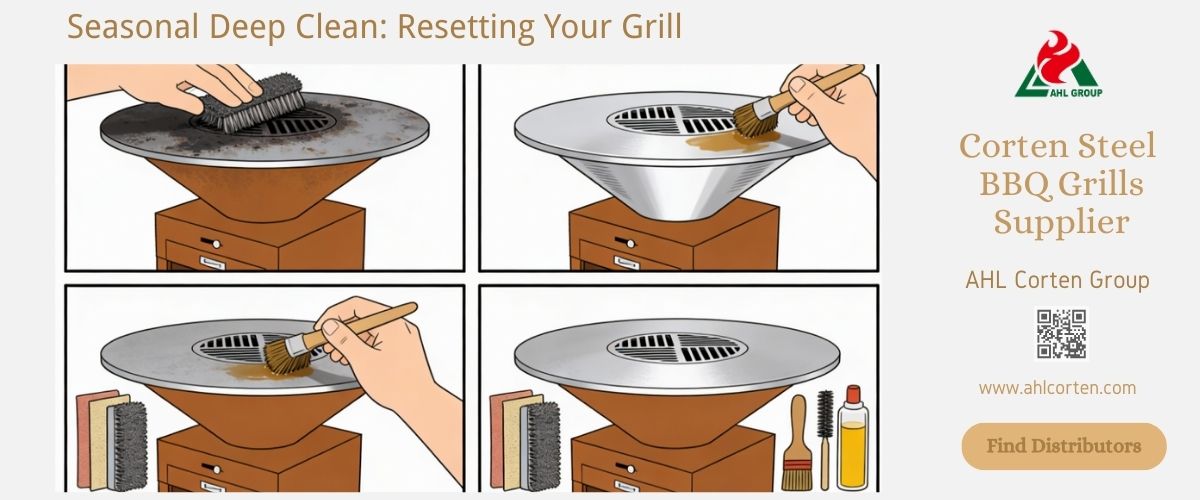
8. Seasonal Deep Clean: Resetting Your Grill
Once a year (or after a long winter), if the carbon layer on the cooking grate is excessively thick or unevenly distributed, perform a “reset” cleaning.
Method: Use a wire brush or fine-grit orbital sander to strip the grate down to bare metal, then immediately repeat the 5-step seasoning process from Tip 2.1.
Pro Tip: This is also the ideal time to inspect structural bolts and vents for blockages. Clean or tighten them promptly to ensure safe grill operation.
9. Coat All Edges with Oil: Prevent Rust Spread from Omissions
Many people only oil the central cooking area, neglecting the grill pan's edges. Long-term omission allows rust to spread from the edges toward the center, damaging the entire pan.
Method: When oiling after cooking, thoroughly wipe the outer rim and vertical sides of the cooking surface.
Pro Tip: A silicone pastry brush is the ideal tool for oiling hot vertical edges—it ensures even coverage while preventing finger burns.
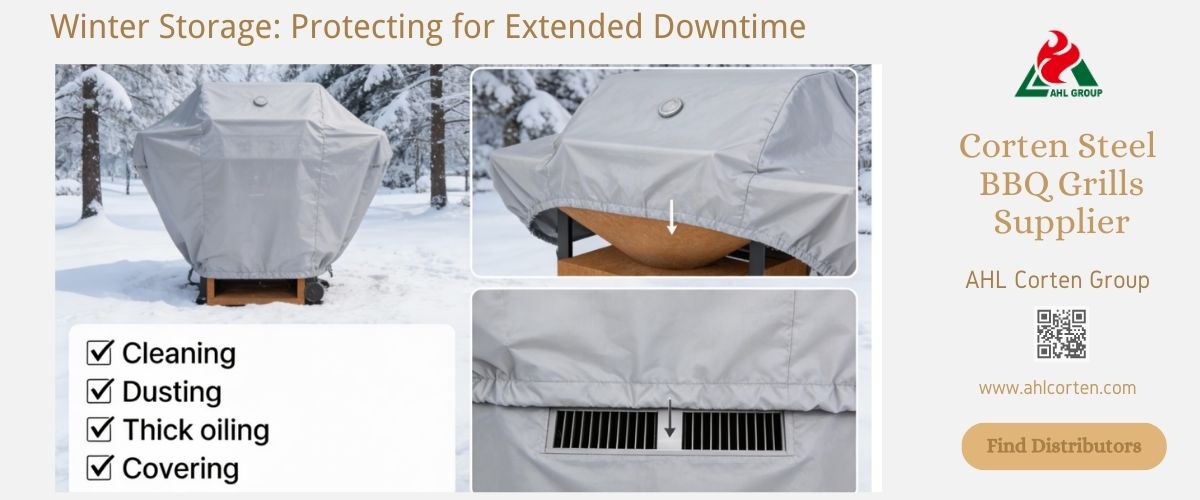
10. Winter Storage: Protecting for Extended Downtime
If you live in a humid or snowy region, the off-season is when outdoor charcoal BBQ grills are most vulnerable. Persistent dampness and cold accelerate steel corrosion and damage the seasoning layer.
Procedure: Thoroughly clean the grill, remove all ashes, apply a thick layer of vegetable shortening to the cooking surface, then cover with a breathable, waterproof dust cover.
Expert tip: Ensure there is a ventilation gap under the dust cover to prevent "sweating"—this enclosed and humid environment can cause mold to grow on the coating after the pot has been opened.
Troubleshooting and Common Issues for Steel Barbecue Grills
Q1: Red Rust Appears On the Grill Pan. Is It Unusable?
A: Absolutely not. Scrub off the red rust with a steel wool pad, clean thoroughly, and season it again. This red rust is merely surface oxidation that does not compromise the structural integrity of the steel and poses no safety risk during use.
Q2: Can I Use a Pressure Washer to Clean My Weathering Steel Grill?
A: No. High-pressure water will strip the rust-protective layer from the base and force water into the ash collection area, causing leaks and internal rust. This makes repairs very difficult later.
Q3: Why Does Food Stick to the BBQ Grill Plate Even After i'Ve Oiled It?
A: Typically two reasons: either the bbq grill plate wasn't sufficiently heated before placing food on it, or the seasoning layer formed during seasoning was too thin. The correct approach is to wait until the grill plate is smoking slightly before adding meat or other ingredients.
Q4: How Often Does a Weathering Steel Grill Plate Need to Be Re-Seasoned?
A: Re-seasoning is required after deep cleaning; it's also necessary if food starts sticking during regular use. Under normal usage, re-seasoning every 2-3 months is sufficient.
Q5: Can The Corten Steel Grill Remain Outdoors Year-Round?
A: Yes. As long as you implement the winter protection measures outlined in Tip 2.10 and use AHL's breathable dust cover, it can safely stay outdoors. The rust patina naturally develops in outdoor environments and requires no special indoor storage.
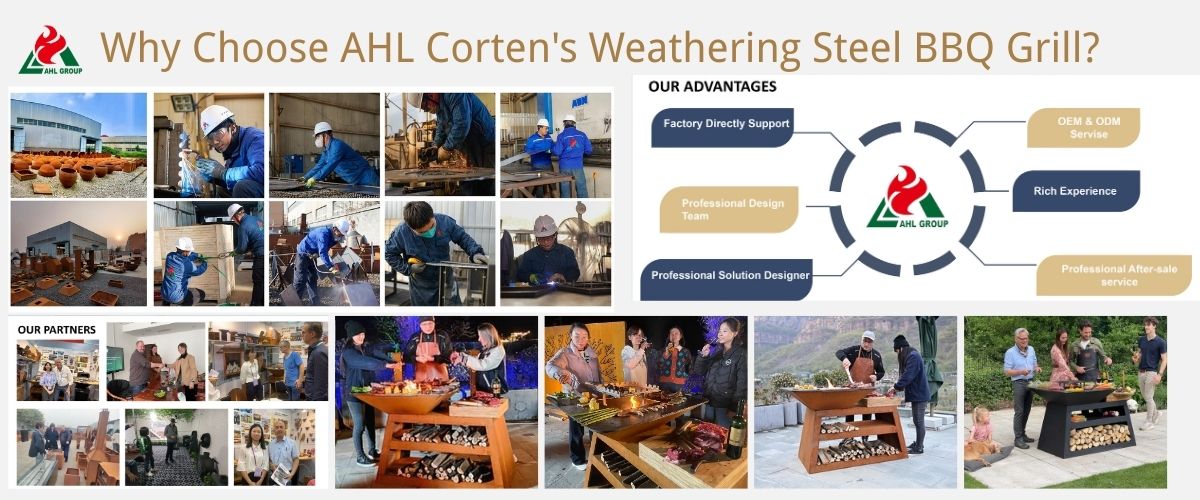
With 15 years of weathering steel engineering expertise, AHL Corten Group deeply understands the core needs of outdoor cooking. Our weathering steel grills combine durability and performance with customizable accessories (like specialized lids and dust covers), plus professional maintenance guidance—ensuring worry-free ownership from purchase to use.
One Investment, Years of Premium Grilling Enjoyment
A weathering steel grill is more than a cooking tool—it's an investment in your outdoor lifestyle. Follow these 10 essential maintenance tips to keep it as the centerpiece of your garden gatherings, providing decades of joyful moments.


 Fill In The Inquiry