Corten Steel BBQ Grill Buying Guide: How to Choose the Right Size, Thickness & Design
Choose the Right Grill Before You Buy
Selecting a corten BBQ grill is more than a style decision. The right size, steel thickness, cooking surface, fuel type and level of customisation determine how well the grill performs, how long it lasts and how safely it can be used in your specific environment.
Key factors to consider:
- Size and cooking area: Determines how many people you can cook for and how much food you can prepare at once.
- Steel thickness: Affects durability, heat retention and resistance to warping under repeated high temperatures.
- Cooking plate: Thickness, material and surface finish influence searing performance and food safety.
- Application: Residential garden, hotel terrace, restaurant outdoor kitchen or event catering each have different demands.
- Customisation: Size, height, storage, wheels, logos and integrated features allow the grill to fit your space and brand.
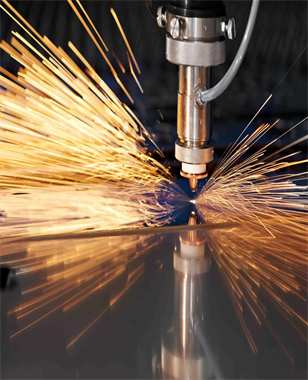
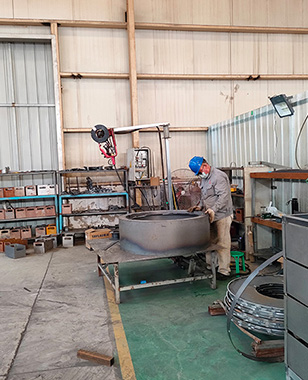
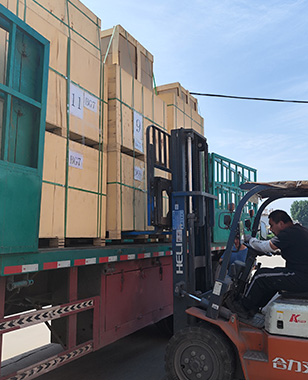
AHL is a factory-direct manufacturer of weathering steel BBQs, fire pits, planters, screens and edging, with in-house laser cutting, bending and welding capabilities and the ability to produce custom sizes and configurations for residential and commercial projects.
Top 4 Best-Selling Corten Steel BBQ Grills in 2026
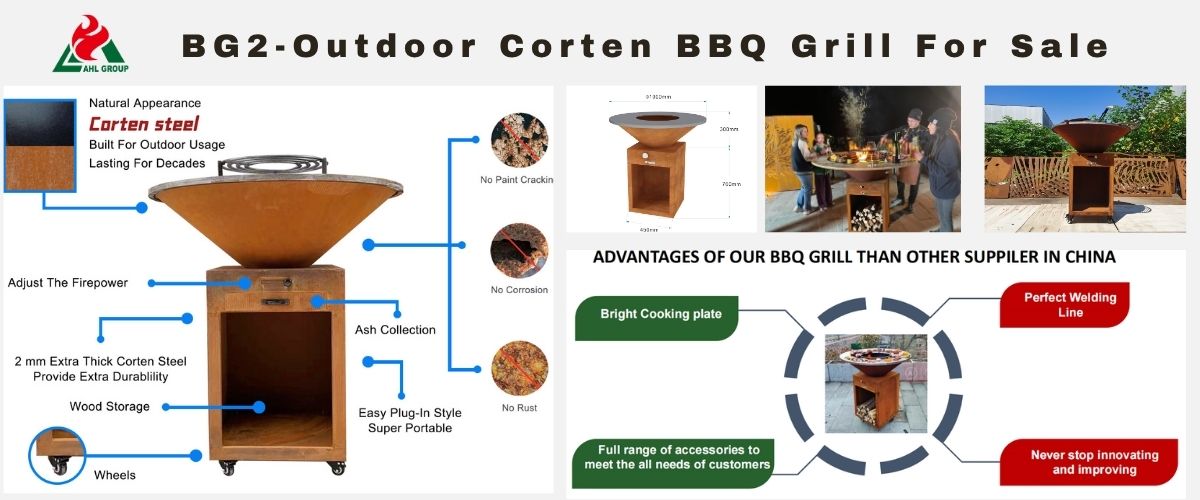
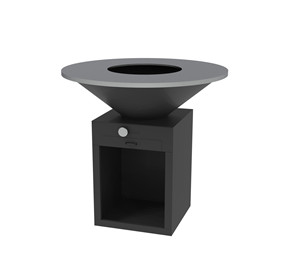
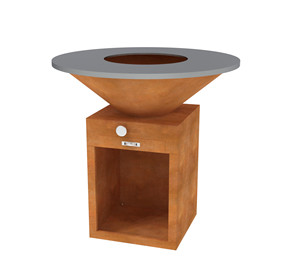
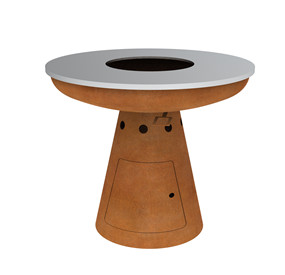
1. BG2 Mobile Round Corten Steel BBQ Grill Table with Wheels & Ash Collector
Crafted from 2mm extra-thick Corten steel for unmatched weather resistance, the BG2 barbecue grill features a classic round fire bowl with an integrated air intake drawer for easy flame adjustment. Designed with a convenient ash collection system, spacious bottom wood storage, and heavy-duty caster wheels, this mobile outdoor grill combines exceptional cooking efficiency with effortless mobility for any patio or backyard.
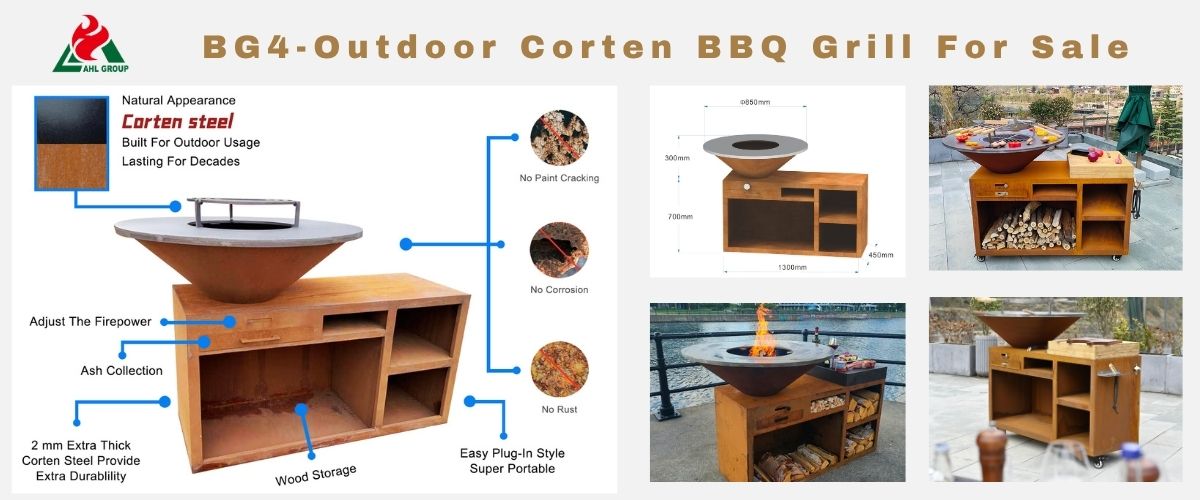
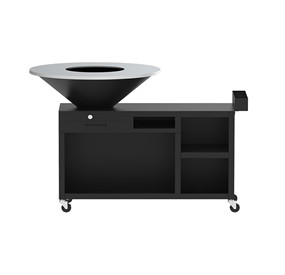
2. BG4 Heavy-Duty Corten Steel BBQ Grill Station with Preparation Table & Storage
The BG4 metal BBQ grill is an all-in-one outdoor kitchen station featuring a premium round cooking plate mounted on an extended Corten steel base. Built for large gatherings, it includes a dedicated food prep workspace, multi-compartment wood storage, and smooth-rolling wheels. Its durable 2mm weatherproof construction and precise airflow control ensure professional-grade grilling in residential gardens or commercial venues.
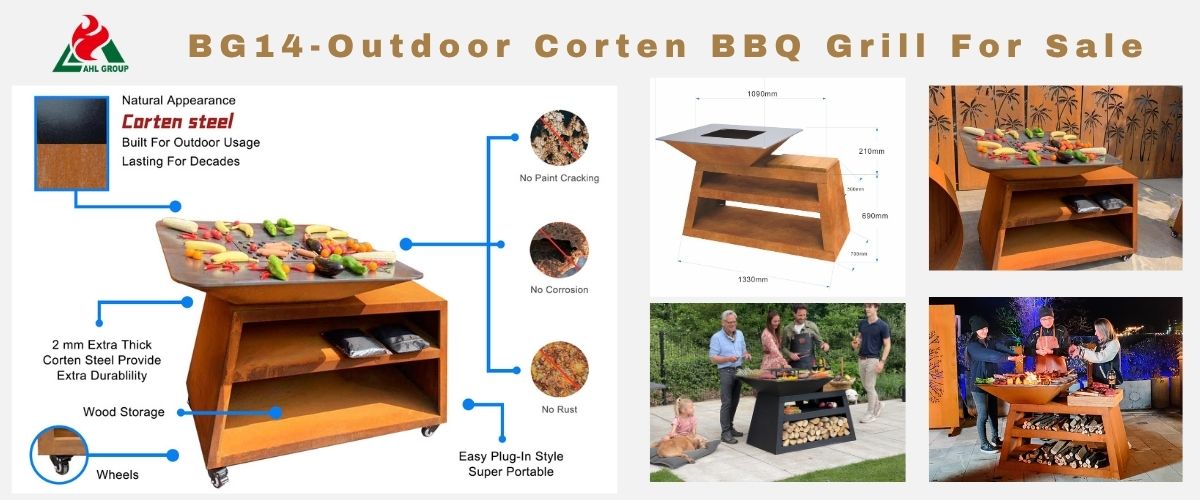
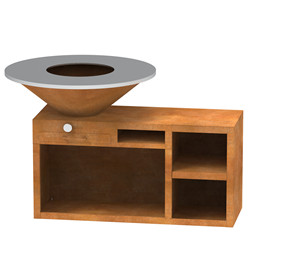
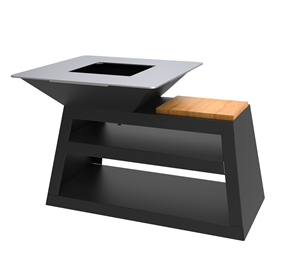
3. BG14 Modern Rectangular Corten Steel BBQ Plancha Grill with Double Shelf Storage
Sporting a sleek modern aesthetic, the BG14 resort outdoor kitchen bbq grill features a large rectangular flat-top plancha cooking surface made for versatile grilling, searing, and frying. Constructed from rugged 2mm Corten steel, this portable grill is equipped with two spacious open shelves for cookware and firewood storage, alongside durable wheels for seamless positioning across outdoor entertainment areas.
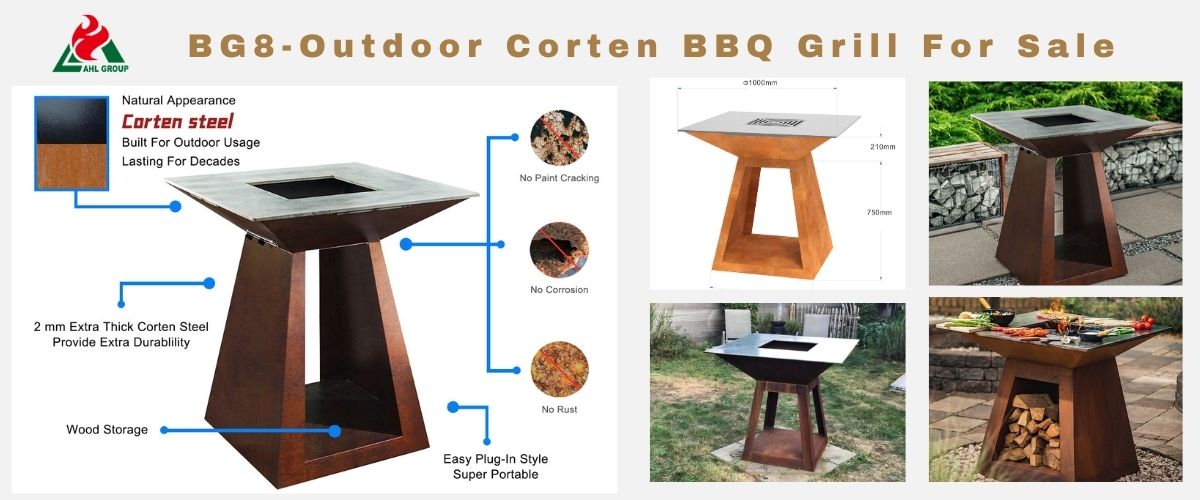
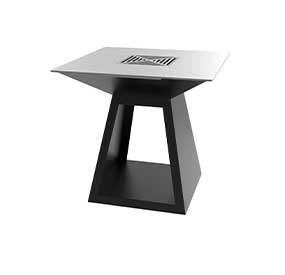
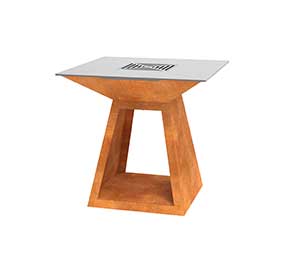
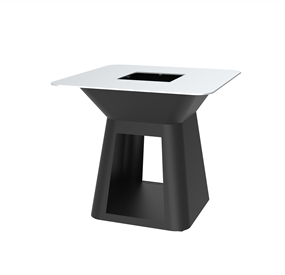
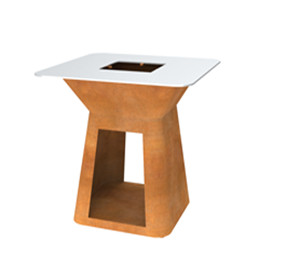
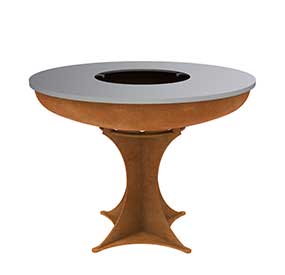
BG8 Pedestal Square Corten Steel Fire Pit BBQ Grill Table for Patio & Garden
The BG8 corten steel fire pit grill combines contemporary architectural design with high-performance outdoor cooking. Featuring a geometric pedestal base made from premium Corten steel and a wide square cooking plate, this compact grill serves as both a stylish fire pit feature and a functional BBQ station. Its open-base wood compartment allows for quick refueling while offering a natural, rust-patina aesthetic that withstands all weather conditions.
How to Choose the Right Corten Steel BBQ Grill Size?
Application & Capacity
|
Recommended Size / Dimensions
|
Corresponding Models
|
Key Features & Advantages
|
Compact Residential / Small Patio
(2–4 People)
|
85(D) * 100(H) cm
|
BG1, BG2
|
Compact diameter, low footprint, integrated base storage; ideal for small backyards and cozy family meals.
|
Standard Family & Garden Gathering
(4–8 People)
|
100(D) * 90(H) cm
100(D) * 100(H) cm
|
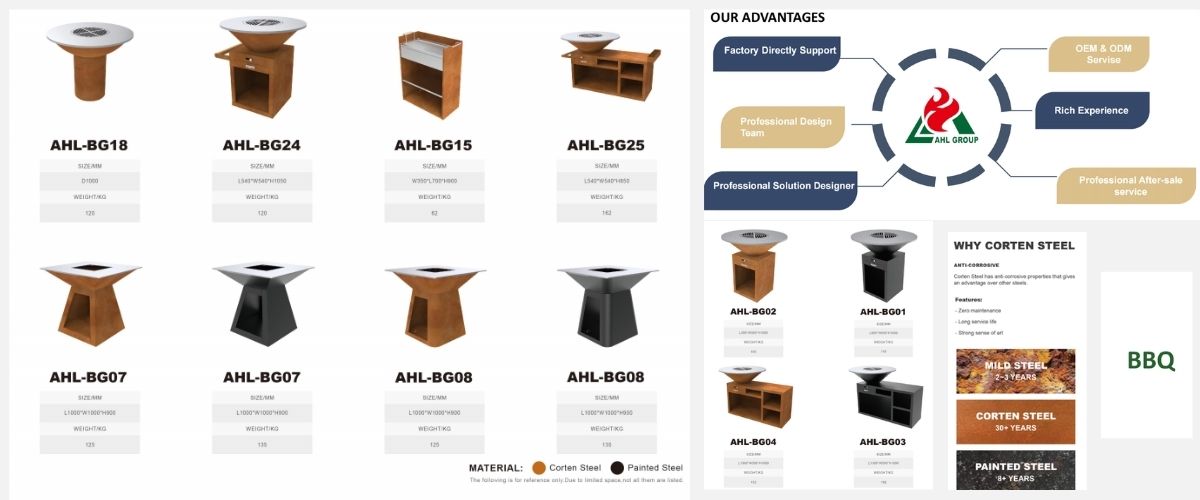
BG1, BG2, BG5, BG6, BG7, BG8, BG10
|
Popular standard diameter; wide cooktop with dual heat zones, ideal height for comfortable standing cooking.
|
Extended Worktop / Outdoor Kitchen
(6–12 People)
|
100(D) * 130(L) * 100(H) cm
100(D) * 170(L) * 90(H) cm
|
BG3, BG4, BG17, BG18
|
Integrated preparation side-table and shelving; provides ample counter space for food prep, tools, and firewood storage.
|
Low Lounge & Sunken Fire Pit
(Seated Socializing)
|
100(D) * 30(H) cm
100(D) * 53(H) cm
100(D) * 70(H) cm
|
BG11, BG12, BG13, BG19, BG20
|
Low-profile / pit-style height; designed for low seating arrangements, campfire-style entertaining, and ambient warmth.
|
What Corten Steel Thickness Should You Choose?
Steel thickness is one of the most important factors affecting grill durability, heat performance and long-term value. However, "thicker is always better" is a misconception—optimal thickness depends on grill size, intended use, heat intensity and frequency of cooking.
Common Thickness Options
Outdoor corten grills are typically available in the following thickness ranges:
-
3–5 mm: Standard for residential and light commercial grills
-
6–10 mm: Heavy-duty construction for frequent or high-heat use
-
10 mm+: Specialised commercial or institutional applications
3–5 mm vs. 6–10 mm vs. Thicker Construction
Thickness Range
|
Best For
|
Advantages
|
Limitations
|
3–4 mm
|
Residential gardens, occasional family use, 70–85 cm grills
|
- Good balance of durability and weight
- Faster heat-up time
- Lower material cost
- Easier to move or relocate
|
- Less heat retention for very long cooking sessions
- Not ideal for daily high-volume commercial use
|
4–5 mm
|
Regular home use, frequent entertaining, 85–100 cm grills
|
- Excellent durability for most residential projects
- Strong heat retention without excessive weight
- Expected lifespan 30–50+ years outdoors
- Recommended "golden mean" for home grills
|
- Slightly longer preheat time than 3 mm
- Heavier to move without wheels or frame
|
6–10 mm
|
Commercial kitchens, hotels, restaurants, high-frequency use
|
- Superior heat retention for all-day cooking
- Minimal warping under extreme thermal stress
- Ideal for 100 cm+ grills with heavy fuel loads
- Withstands daily professional use for decades
|
- Significantly heavier and requires robust stand
- Longer preheat time (20–45 minutes)
- Higher material and fabrication cost
|
10 mm+
|
Institutional, community or specialised high-heat applications
|
- Maximum thermal mass and heat stability
- Virtually no risk of warping or burn-through
- Designed for continuous multi-hour operation
|
- Very long heat-up time
- Requires engineered support structure
- Overkill for typical residential use
|
Industry guidance recommends 4–5 mm for the main body and firebox of most residential corten grills, while 8–12 mm is suggested for flat-top cooking plates to prevent warping at high temperatures.
Why Thicker Does Not Always Mean Better
-
Heat-up time: Thicker steel takes longer to reach optimal cooking temperature. A 3–4 mm grill may be ready in 10–15 minutes, while 6–10 mm can require 20–45 minutes of preheating.
-
Weight and portability: Thicker grills are substantially heavier, making them harder to move, clean or reposition without a wheeled frame.
-
Cost: Material cost increases significantly with thickness, which may not be justified for occasional home use.
-
Use case mismatch: A 10 mm commercial-grade grill is over-engineered for a family that barbecues once a week.
-
Fuel efficiency: While thicker steel retains heat better, it also requires more fuel to reach and maintain high temperatures during the initial heat-up phase.
How Size, Structure, Heat and Frequency of Use Affect Thickness Selection
Factor
|
Impact on Thickness Choice
|
Grill diameter
|
Larger diameters (90–100 cm+) experience greater thermal expansion and benefit from 4–6 mm+ body thickness to resist warping.
|
Cooking frequency
|
Daily or near-daily use (commercial, hotel, restaurant) justifies 6–10 mm for long-term durability. Weekly home use is well-served by 3–5 mm.
|
Fuel type
|
Hardwood or high-intensity charcoal generates more heat and thermal stress, favouring 5 mm+ construction. Gas or moderate charcoal use works well with 3–4 mm.
|
Cooking style
|
Long, slow cooking (smoking, indirect grilling) benefits from thick steel's heat retention. Quick, high-heat searing works well with medium thickness.
|
Structural support
|
Thicker grills require more robust stands, frames or wheels to support the weight safely.
|
Climate
|
Coastal or high-humidity environments may benefit from thicker steel as additional corrosion allowance, though Corten's patina provides strong protection in most conditions.
|
Recommended Approach for Custom Projects
For custom or commercial projects, consider the following decision framework:
-
Define use case: Residential occasional use vs. commercial daily operation
-
Determine grill size: 70–85 cm (small/medium) vs. 90–100 cm+ (large)
-
Assess heat intensity: Charcoal/wood (higher thermal stress) vs. gas (more controlled)
-
Evaluate frequency: Weekly vs. daily multi-hour operation
-
Consider portability: Fixed installation vs. mobile catering or event use
Match thickness to application:
-
70–85 cm residential: 3–4 mm body, 8–10 mm cooking plate
-
90–100 cm residential/light commercial: 4–5 mm body, 10 mm cooking plate
-
100 cm+ commercial: 5–8 mm body, 10–12 mm cooking plate
How to Choose the Right Cooking Plate?
The cooking plate (or griddle) is the most critical component for actual cooking performance. It should be evaluated separately from the grill body because it experiences direct contact with food, extreme temperature gradients and the highest thermal stress.
Cooking Plate Thickness
-
5 mm: Standard for casual domestic use. Adequate for weekend barbecues but not recommended for commercial all-day cooking as it loses heat efficiency over long periods.
-
8–10 mm: Ideal for serious home enthusiasts and light commercial use. Provides excellent heat retention without excessive preheat time.
-
10–12 mm: Professional-grade for restaurants, hotels and community events. Maintains consistent high heat for multi-hour cooking sessions without warping.
-
15–20 mm: Specialised applications (e.g. continuous sausage sizzles, institutional cooking). Takes longer to heat but holds temperature exceptionally well with zero risk of buckling.
Heat Retention
Thicker cooking plates act as a "heat reservoir," absorbing thermal energy during preheating and releasing it evenly during cooking. This provides:
-
Stable surface temperature: Even when cold meat is placed on the plate, the temperature doesn't drop sharply.
-
Better searing: High thermal mass ensures immediate caramelisation and grill marks without food sticking.
-
Reduced hot/cold spots: Heat spreads from the centre (closest to the fire) to the edges through conduction, creating natural temperature zones for different cooking techniques.
Cooking Surface Size
Match the cooking plate diameter to your grill body and typical guest numbers:
-
70 cm grill: ~0.25–0.35 m² cooking area, suitable for 2–4 people
-
85 cm grill: ~0.40–0.50 m² cooking area, suitable for 4–8 people
-
90 cm grill: ~0.50–0.60 m² cooking area, suitable for 6–12 people
-
100 cm grill: ~0.65 m²+ cooking area, suitable for 8–15+ people
Different Cooking Surface Designs
-
Flat solid plate: Best for searing steaks, burgers, vegetables and stir-fry. Provides maximum contact area and even heat distribution.
-
Grill grate (solid bars): Traditional grilling with char marks. Solid 8–12 mm bars retain heat better than thin wire grates (2–4 mm), preventing food from sticking.
-
Perforated or mesh: Allows fat and juices to drain away, reducing flare-ups. Better for fatty meats but less ideal for delicate items like fish.
-
Combination (half plate, half grate): Offers versatility—use the plate for vegetables and the grate for meats simultaneously.
-
Textured or grooved: Creates distinct sear lines and channels fat away from food.
Why the Cooking Plate Should Be Considered Separately from the Grill Body
-
Different thermal demands: The body primarily contains heat and protects the structure, while the plate directly transfers heat to food and must withstand repeated thermal cycling.
-
Different wear patterns: The plate experiences direct contact with utensils, acidic foods, salt and cleaning tools, requiring higher surface durability.
-
Replaceability: In well-designed grills, the cooking plate can be replaced or upgraded independently of the body (e.g. swapping from flat plate to grate).
-
Optimisation: You might choose a 4 mm body for weight savings but a 10 mm plate for superior cooking performance—this hybrid approach balances cost, portability and cooking quality.
Key takeaway: For most residential 85–100 cm corten grills, a 4–5 mm body with a 10 mm cooking plate provides an excellent balance of durability, heat retention and value. Commercial installations should consider 5–8 mm body with 10–12 mm plate for professional-grade performance.
Is Corten Steel Suitable for Outdoor BBQ Grills?
What Corten Steel Is
Corten steel is a high-strength, low-alloy structural steel. Formulated with small amounts of copper, chromium, nickel, and phosphorus, it possesses exceptionally high tensile strength and high-temperature deformation resistance.
How Its Protective Patina Develops
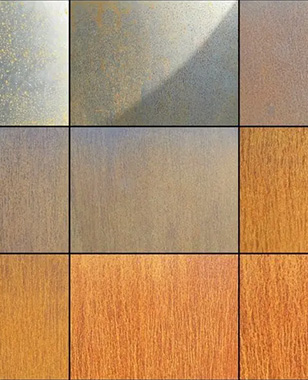
When exposed to natural outdoor moisture, oxygen, and wet-dry weather cycles, corten steel oxidizes to form a dense, tightly adhering protective rust layer (patina). Unlike standard carbon steel, which flakes away continuously, this patina seals the underlying metal from further oxygen and moisture intrusion, halting deep structural corrosion.
Outdoor Weather Resistance
Corten steel performs exceptionally well in outdoor environments, offering 4 to 10 times the corrosion resistance of mild steel. It withstands severe rain, snow, UV rays, high thermal expansion from fire pits, and seasonal freeze-thaw cycles without requiring protective paints, chemical sealers, or routine rust treatments.
Why Cooking-Contact Areas Require Appropriate Materials
While corten steel makes an ideal material for the structural base, housing body, and wood/charcoal burning chamber, direct contact with food requires specialized cooking surfaces:
-
Structural Safety vs. Food Hygiene: The porous rust patina on Corten steel can release fine iron oxides or trap food grease and debris, making it difficult to sanitize thoroughly according to food safety standards.
-
Recommended Cooking Surface Materials: Professional OEM corten steel barbecues feature food-grade stainless steel, heavy-duty cast iron, or solid carbon steel griddles/cooking plates (typically 10mm–12mm thick). These surfaces hold heat evenly, season into natural non-stick cooktops, and are easy to clean.
Rain, Humidity, and Outdoor Storage Considerations
-
Avoid Stagnant Water Pooling: Ensure the fire bowl and ash drawer feature adequate drainage holes. Prolonged standing water prevents the patina from stabilizing properly.
-
Managing Early-Stage Rust Runoff: During the initial 6–18 months of natural oxidation, rain runoff may carry mild iron staining. Place new grills on gravel, dark stone, or protective ground mats when located near porous, light-colored concrete or marble paving.
-
Humid & Off-Season Storage: When stored long-term or left unused during rainy seasons, wipe the food-grade cooktop with a light layer of vegetable cooking oil to prevent surface flash rust, and cover the unit with a breathable waterproof cover.
How to Choose a BBQ Grill for Different Applications
Private Garden & Residential Patio
-
Compact Footprint: Select compact round or square fire-pit grills (600mm–800mm cooktop diameter) that double as garden fire features during cooler evenings.
-
Easy Outdoor Entertaining: Look for models with built-in wood storage bases, removable ash drawers, and integrated caster wheels or lightweight bases for easy repositioning across patios or lawns.
Restaurant, Hotel & Hospitality Venues
-
Larger Cooking Capacity: Choose large ring-top plancha grills (1000mm–1200mm diameter) capable of serving 10–20 guests simultaneously with distinct heat zones (high heat near the center, warm hold near the outer edge).
-
Heavy-Duty Construction: Specify thick structural steel bases (3mm–5mm) and heavy-gauge cooking plates (10mm–12mm carbon/stainless steel) engineered for continuous high-temperature commercial use.
-
Frequent-Use Features: Look for inward-sloping cooking plates (to keep cooking oils from dripping onto outdoor dining floors), oversized ash trays for quick daily cleanouts, and modular removable grates.
Hotel & Commercial Landscape Architectural Projects
-
Sculptural Aesthetic: Select bold geometric designs (cylindrical, conical, or hexagonal forms) that function as year-round landscape art installations.
-
Durability & Vandal Resistance: Ensure heavy anchor plates for permanent mounting on public plaza concrete pads.
-
Project-Specific Dimensions: Partner with suppliers capable of matching custom heights, integrated granite/timber food-prep counters, and pre-weathered surface treatments for immediate design sign-off.
Wholesale & Retail Distributors
-
Multiple Product Lineups: Stock a versatile mix of entry-level compact path/patio grills, mid-size garden plancha tables, and premium commercial units.
-
Optimized Export Packaging: Specify flat-pack / knock-down (KD) bases or nested packaging configurations to maximize sea-container loading density and reduce international shipping costs.
-
OEM / Private Label Requirements: Ensure factory capabilities for custom laser-cut brand logos, customized instruction manuals, pre-rusting finish options, and certified retail packaging.
Standard Corten BBQ Grill vs. Custom BBQ Grill
When sourcing Corten steel grills for residential, commercial, or wholesale projects, choosing between standard factory models and custom-engineered designs depends on lead times, project constraints, and specific branding requirements.
Feature / Category
|
Standard Models
|
Custom Models
|
Lead Time & Delivery
|
Faster Selection & Delivery: Readily available in standard catalog sizes, eliminating prototyping lead times and allowing rapid shipment for urgent projects.
|
Full OEM/ODM Production: Requires design review, prototyping, and custom fabrication based on client CAD drawings, 3D models, or site plans.
|
Dimensions & Sizing
|
Catalog Standards: Fixed dimensions, fire bowl depths, and footprints based on standard production lines.
|
Custom Dimensions: Tailor the overall diameter, base height, steel thickness, and footprint to fit specific outdoor kitchen counters or landscape niches.
|
Cooking Surface & Plate
|
Proven Specifications: Standard factory-tested cooktop materials and griddle plate configurations.
|
Customized Cooking Surface: Choose specific materials (food-grade carbon steel, stainless steel, cast iron), custom plate thicknesses (10mm–12mm+), or specialized grates.
|
Features & Accessories
|
Established Performance: Standard structural weight tolerances, fixed airflow, and built-in drainage designs.
|
Structural Upgrades: Add integrated side tables, granite/timber preparation counters, lockable caster wheels, custom ash drawers, or protective rain covers.
|
Branding & Packaging
|
Standard Factory Branding: Comes with standard factory branding and standard export packaging.
|
Logo & Packaging Customization: Laser-cut client or hotel logos directly into the housing, specify private-label branding, and customize retail/export packaging.
|
Best For & Cost
|
Cost-Effective: Ideal for standard residential backyards, small patios, and regular retail inventory without tooling/engineering fees.
|
Bespoke Projects: Ideal for luxury commercial hospitality, hotels, architectural projects, and brand distributors requiring exclusive designs.
|
Have a special BBQ grill requirement? Send us your dimensions, CAD drawings, or reference images for a direct factory quotation!
How to Choose the Right Model from Our BBQ Grill Range
To select the ideal metal BBQ grill from our product catalog, compare model specifications against your project's specific operational requirements.
Key Comparison Criteria
When reviewing our model numbers and technical specification sheets, evaluate the following parameters:
-
Overall Size & Dimensions: Match the grill diameter and height to your available landscape area and user ergonomics.
-
Body Material & Gauge: Verify steel thickness (typically 3mm–5mm Corten steel) for structural stability and weather resistance.
-
Plate Specification: Check the cooking griddle diameter, thickness (10mm or 12mm), and material type based on expected cooking volume.
-
Fuel Type Compatibility: Determine whether the model is optimized for wood logs, charcoal, or dual-fuel setup.
-
Application Environment: Differentiate between light-duty residential models and reinforced, heavy-duty commercial units.
-
Order Quantity & Logistics: Consider flat-pack capability versus pre-assembled units when ordering in bulk for wholesale or container shipping.
Corten Steel BBQ Grill FAQ
Q1: What thickness is suitable for a Corten steel BBQ grill?
For the main body and housing, a thickness of 3mm to 5mm Corten steel provides the optimal balance of structural strength, thermal retention, and weather resistance without adding excessive weight. For the cooking plate (griddle ring), a heavy-duty thickness of 10mm to 12mm (in carbon steel or stainless steel) is recommended to prevent warping under intense direct heat and to maintain consistent heat distribution.
Q2: What size BBQ grill is suitable for a family?
A cooktop diameter of 800mm to 900mm is ideal for standard family gatherings (4–8 people). It offers ample cooking surface with distinct heat zones—allowing you to sear meats near the center opening while keeping vegetables or cooked items warm along the outer rim. For smaller yards or 2–4 people, a compact 600mm–700mm model is sufficient.
Q3: Can I customize the BBQ grill size?
Yes. We offer fully customizable dimensions including overall height, fire bowl depth, base footprint, and cooking plate diameter to suit specific residential outdoor kitchens, commercial patios, or landscape niches.
Q4: Can you manufacture according to our drawings?
Absolutely. As a direct-factory manufacturer, we can fabricate custom Corten BBQ grills based on your CAD drawings, 3D models, or technical sketches. Our engineering team can also review your designs to optimize laser cutting, structural welding, and airflow efficiency.
Q5: Can I customize the cooking plate?
Yes. You can customize the cooking plate material (food-grade carbon steel, stainless steel, or cast iron), plate thickness (10mm or 12mm), central grill grate pattern, and surface geometry (such as an inward slope to direct excess cooking oil into the fire bowl).
Q6: Do you offer OEM and private-label packaging?
Yes. We provide full OEM and ODM services, including laser-cutting your brand logo directly into the Corten housing, customized product manuals, bespoke hardware accessories, and export-ready flat-pack or private-label retail packaging.
Q7: What is the MOQ for wholesale orders?
Our standard minimum order quantity (MOQ) for wholesale orders is typically 5 to 10 units for standard catalog models. For custom OEM designs or mixed-container shipments, we offer flexible MOQ terms to support distributors, contractors, and project planners.
Q8: How can I get a factory quotation?
Simply submit your inquiry through our website contact form or email us directly with your required model numbers, dimensions, target quantities, and custom drawing files. Our sales team will provide a detailed direct-factory quotation within 24 hours.


.jpg)
.jpg)
.jpg)
.jpg)
.jpg)
.jpg)